IT
Milan
Design and Fashion Capital
Design and Fashion Capital
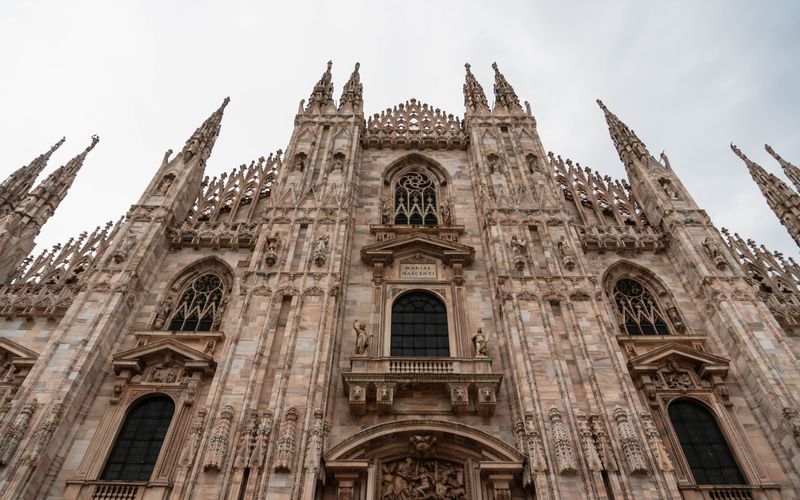
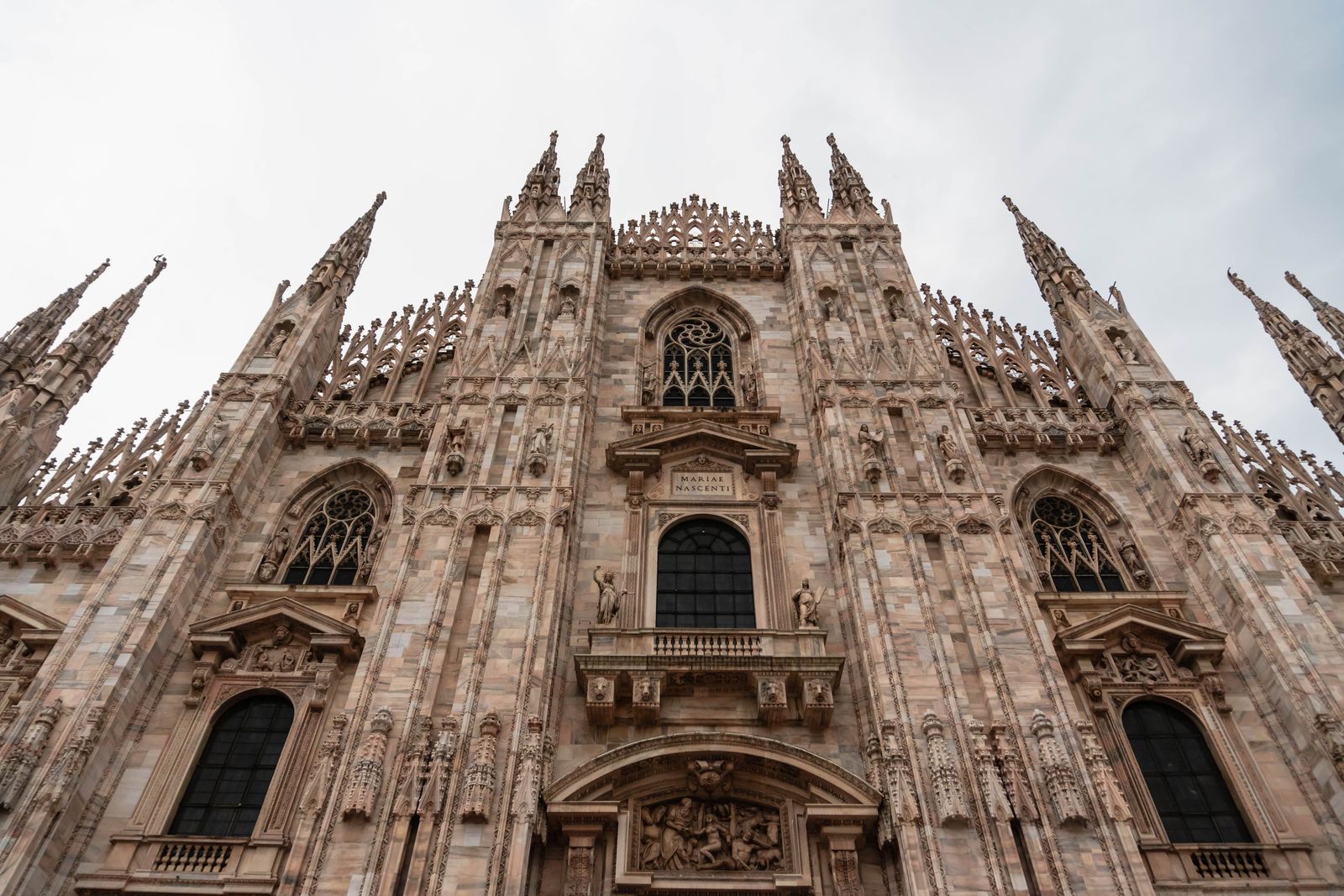
The Duomo took nearly six centuries to build (1386–1965) and has 135 spires, 3,400 statues and enough marble to confuse any visitor into extended silence. The rooftop terrace (€15 by stairs, €20 by lift) is the correct perspective: you walk among the spires at eye level, the city spread below. Book online. The interior is free; the treasury museum is €7 extra.
💡 Book the Duomo rooftop (€18; duomomilano.it) — the terrace between the Gothic spires is more impressive than the ground view. Go at 9am opening for the fewest visitors. Interior is free; rooftop requires a ticket.

Leonardo da Vinci’s Ultima Cena is in the refectory of Santa Maria delle Grazie and requires a reservation months ahead — not weeks. Slots are released in batches at vivaticket.com. Entry is in groups of 25 for exactly 15 minutes. The painting is 4.6 metres tall and painted directly on the wall; it covers an entire end of the room. Book this the moment your dates are set.
💡 Requires booking months ahead at cenacolovinciano.vivaticket.it — slots release 3 months ahead and sell out same day. Book the 8:15am slot for the fewest other visitors. Each visit lasts exactly 15 minutes.
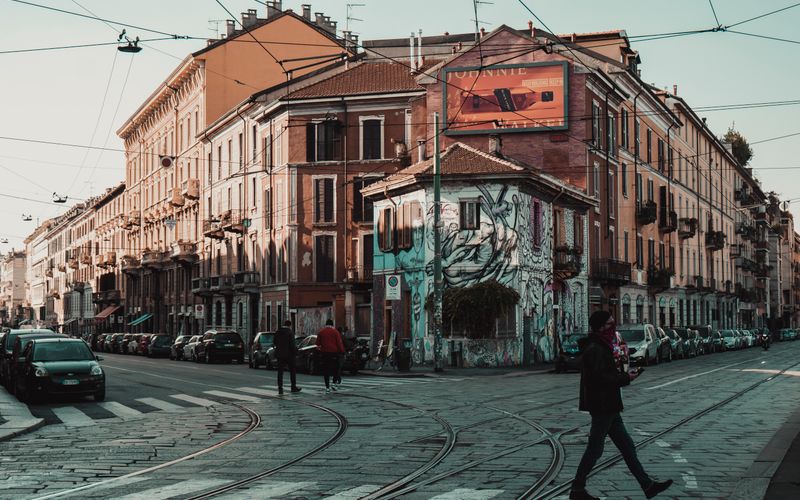
The Pinacoteca di Brera (€15) has one of the best collections of northern Italian Renaissance painting outside Florence: Raphael, Caravaggio, Mantegna’s Dead Christ. The neighbourhood around it — Brera — is Milan’s most pleasant: bookshops, antique dealers, serious wine bars and restaurants where the food is genuinely good.
💡 The Pinacoteca di Brera (€15; pinacotecabrera.org) holds Raphael’s Marriage of the Virgin and Mantegna’s Dead Christ in adjacent rooms. Two of the most important paintings in Italy. Allow 2 hours.
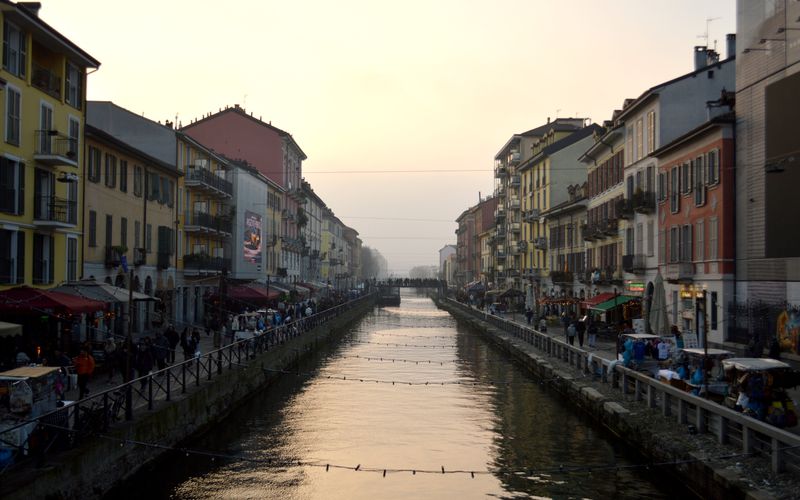
Two 16th-century canals (Naviglio Grande and Naviglio Pavese) lined with bars, restaurants and studios. From 6pm onwards, every bar sets out the aperitivo spread alongside a €8–12 drink. This is the most cost-efficient way to eat and drink in Milan. Sunday morning the Naviglio Grande antiques market (300 vendors, first Sunday of the month) is one of the best in Italy.
💡 Navigli aperitivo (6–9pm) turns canal-side bars into buffets included in the drink price (€8–12). Best Thu–Sat when the buffet selection is largest. Walk the full Naviglio Grande (3km) before eating.
Milan’s signature dishes are not what you ordered in every Italian restaurant outside Italy. Risotto alla Milanese (saffron risotto, an almost luminous yellow) is the city’s oldest dish and paired with ossobuco (braised veal shank) in every serious trattoria. Cotoletta alla Milanese (a breaded veal cutlet, bone in, genuinely enormous) is the other canonical dish — it predates the Wiener Schnitzel and Milanese chefs will tell you so. Neither dish is cheap; neither is disappointing in a good restaurant.
The aperitivo is the affordable alternative. Between 6 and 9pm, bars across Navigli, Brera and Porta Venezia set out a buffet of food alongside cocktails. The drink costs €8–12; the food is included. The quality varies from bar to bar — the best aperitivo spreads are in Brera and Porta Romana, not in the tourist centre near the Duomo. Campari was invented in Milan in 1860 and the Campari Soda (in its distinctive triangular bottle) is the correct local aperitivo choice.
The ATM metro network has four lines (M1 red, M2 green, M3 yellow, M4 blue). A single ticket is €2.20; a 24-hour pass €4.80. Tram lines cover Navigli and Brera directly from the centre. Tram 2 from Piazza Duomo to Naviglio Grande takes 15 minutes. Milan is flat and the cycling lane network (BikeMi city bikes, €4.50/day) covers the city well. The Last Supper is a 15-minute walk from Cadorna metro station.
April–May and September–October are the obvious choices. Fashion Week (late Feb and mid-Sep) fills hotels at double the normal rate. Milan in December has excellent Christmas markets in the streets around the Duomo and the Navigli.
Milan is Italy’s most expensive city for accommodation. Food ranges from very affordable (aperitivo, markets) to very expensive (Michelin-starred restaurants are among Italy’s best). Per person per day, couple travelling.
Aperitivo-as-dinner in the Navigli saves significantly on food costs. €10 covers drinks and a full spread.
The Last Supper (€17 + booking fee) requires advance planning but is the single most important sight in Milan.
La Scala opera season runs December–July; the opening night (7 Dec, Sant’Ambrogio) is Milan’s social event of the year. Tickets from €20 for the gallery up to €2,500 for the best boxes.
Milan rewards three to four days — enough to see the major sights, explore Brera and Navigli properly, and make a day trip to the lakes.
Check in. Walk to Navigli for aperitivo at 7pm. This is the correct introduction to Milan — not the Duomo, not a restaurant, but a bar stool on a canal with a Campari and a plate of free food and the entire city out doing the same thing.
💡 The Navigli at sunset is Milan’s finest first evening: canal reflections, aperitivo bars, flower stalls. Walk from the Duomo to Naviglio Grande in 25 min through the Ticinese neighbourhood.
Book the first Duomo rooftop slot. Galleria Vittorio Emanuele II (walk through). Piazza della Scala and La Scala opera house exterior. The Last Supper (pre-booked) in the afternoon. Brera neighbourhood in the evening.
💡 The Duomo and the Last Supper are 15 minutes’ walk apart. With a Last Supper booking at 8:15am, the Duomo rooftop at 10am works perfectly after — the light is best in the morning.
Brera gallery in the morning (€15). Lunch in the neighbourhood. Afternoon: Porta Venezia and the corso Buenos Aires area — less tourist-heavy and good for understanding the everyday city. Evening: try an aperitivo in Porta Romana.
💡 Porta Venezia and the Corso Buenos Aires (Europe’s longest shopping street) combine well with the Brera gallery. The Botanical Garden behind Brera (free) is worth 30 minutes.
Train from Milan Centrale to Varenna-Esino (40 min). Ferry to Bellagio (15 min). Walk the lakeside promenade. Ferry back to Varenna. Train back to Milan in time for dinner. Alternatively, Bergamo (50 min) has an extraordinary medieval upper city (Città Alta) accessible by funicular.
💡 Varenna (1h from Milano Centrale; €8 return) is the finest village on Lake Como with no road traffic. Ferry to Bellagio (15 min; €8) for the classic Como view.
There are 25 people per 15-minute slot and only a few slots per day. Tickets at vivaticket.com release in batches months ahead.
The rooftop closes when the sun goes down, which makes the last slot the correct one.
Feb/Sep Fashion Week doubles room prices and fills the central restaurants. Everything else works better. If you’re not there for Fashion Week, go in April or October instead.
In Navigli, the aperitivo from 6–9pm includes enough food for a meal. A Campari Soda or Aperol Spritz (€8–12) comes with a substantial buffet.
The 1877 iron-and-glass shopping arcade linking the Duomo to La Scala is one of the great 19th-century interiors in Europe.
Varenna (on the eastern shore, smaller, less crowded than Bellagio) is 40 minutes from Milan Centrale by regional train.
Official Milan metro, tram and bus app. Journey planner, real-time routes and contactless ticket purchase. Includes M4 airport line (Linate).
Free
High-speed connections to Rome (3h), Florence (1h45), Venice (2h30), Turin (1h). Regional trains to Lake Como (40 min) and Bergamo (50 min).
Free
Restaurant reservations in Milan. Book Beppe e i Suoi Formaggi and Ristorante Berton via the app; both fill on weekends.
Free
Official Duomo app for rooftop booking, audio guide and timed entry. All tickets purchased here are verified at the entrance.
Free
Milan city bike-share: dock map, real-time availability and day pass (€4.50). The flat city makes cycling between Navigli, Brera and the Duomo faster than any metro.
Free
Download Milan offline. Useful for navigating Navigli canal streets and the Brera neighbourhood lanes without signal.
Free
Discover more of Italy's great destinations.