VN
Hue
The Imperial Capital
The Imperial Capital
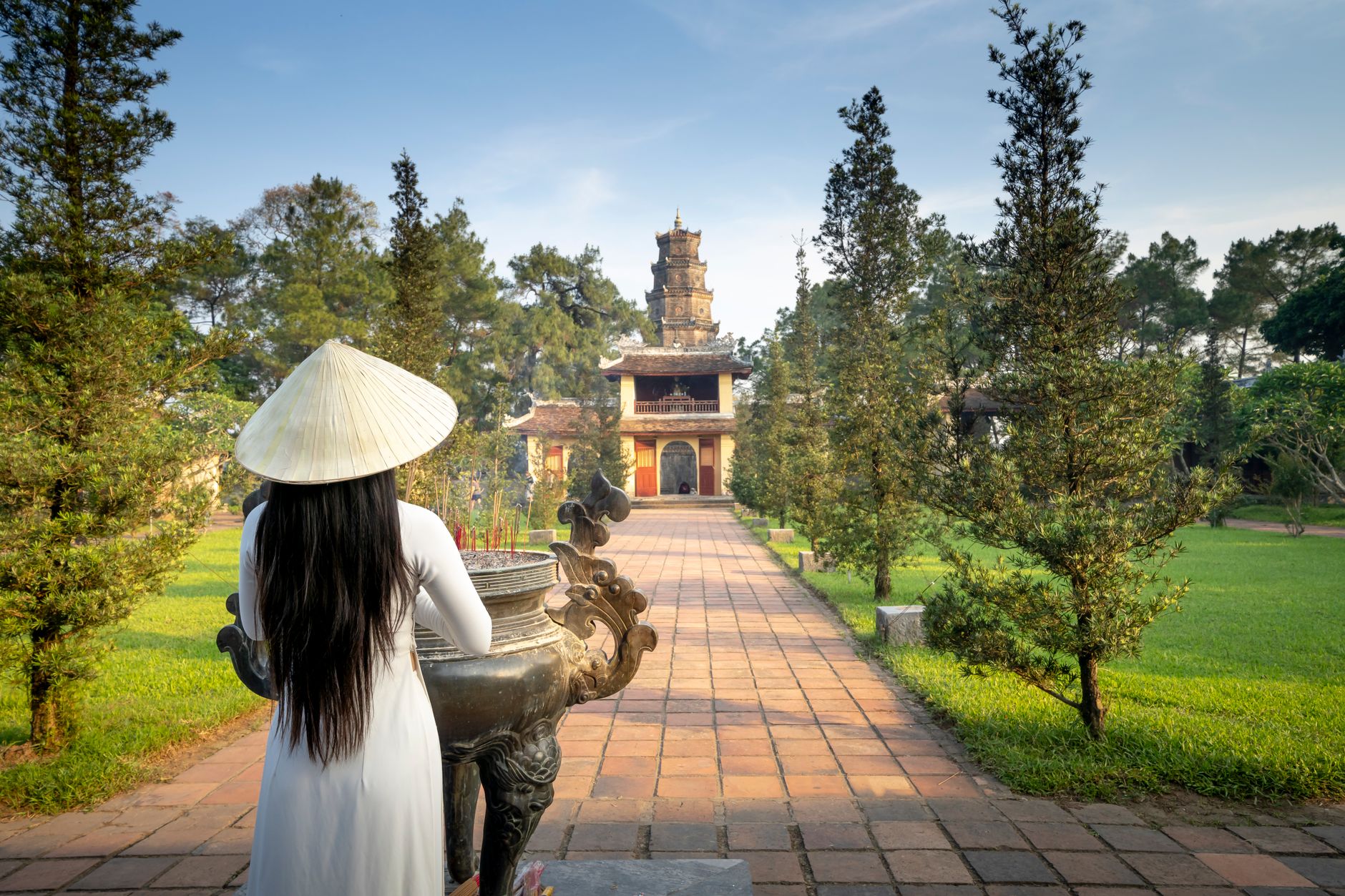
The Thien Mu Pagoda’s seven-storey Phuoc Duyen tower, built in 1844, is the tallest Buddhist tower in Vietnam. The Austin car that drove activist monk Thich Quang Duc to his 1963 self-immolation protest in Saigon is displayed in the monastery behind.
💡 Thien Mu Pagoda is best reached by dragon boat from Toa Kham Pier — the river approach is the finest view. Walk back into town or take a xe om (₫30,000) after visiting.

Tu Duc’s mausoleum complex (1864) was built by the emperor himself over 3 years as a private retreat — pavilions over lotus lakes, a theatre, and a stele inscribed with his own self-critical epitaph. The finest garden architecture in Hue.
💡 Tu Duc is the least-visited of the major mausoleums and the most rewarding — arrive before 9am when the lotuses on the lake are open and the grounds are quiet. 15km south by motorbike.
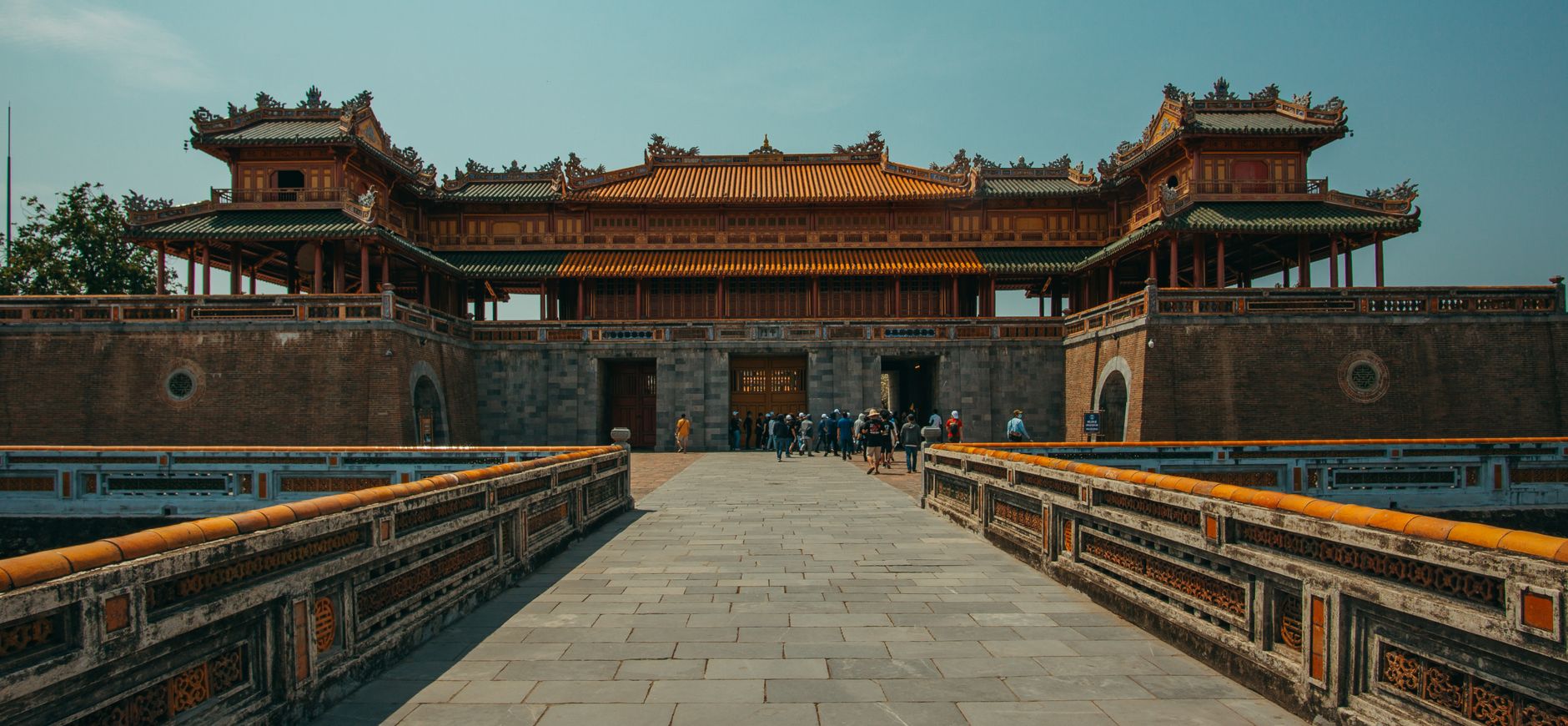
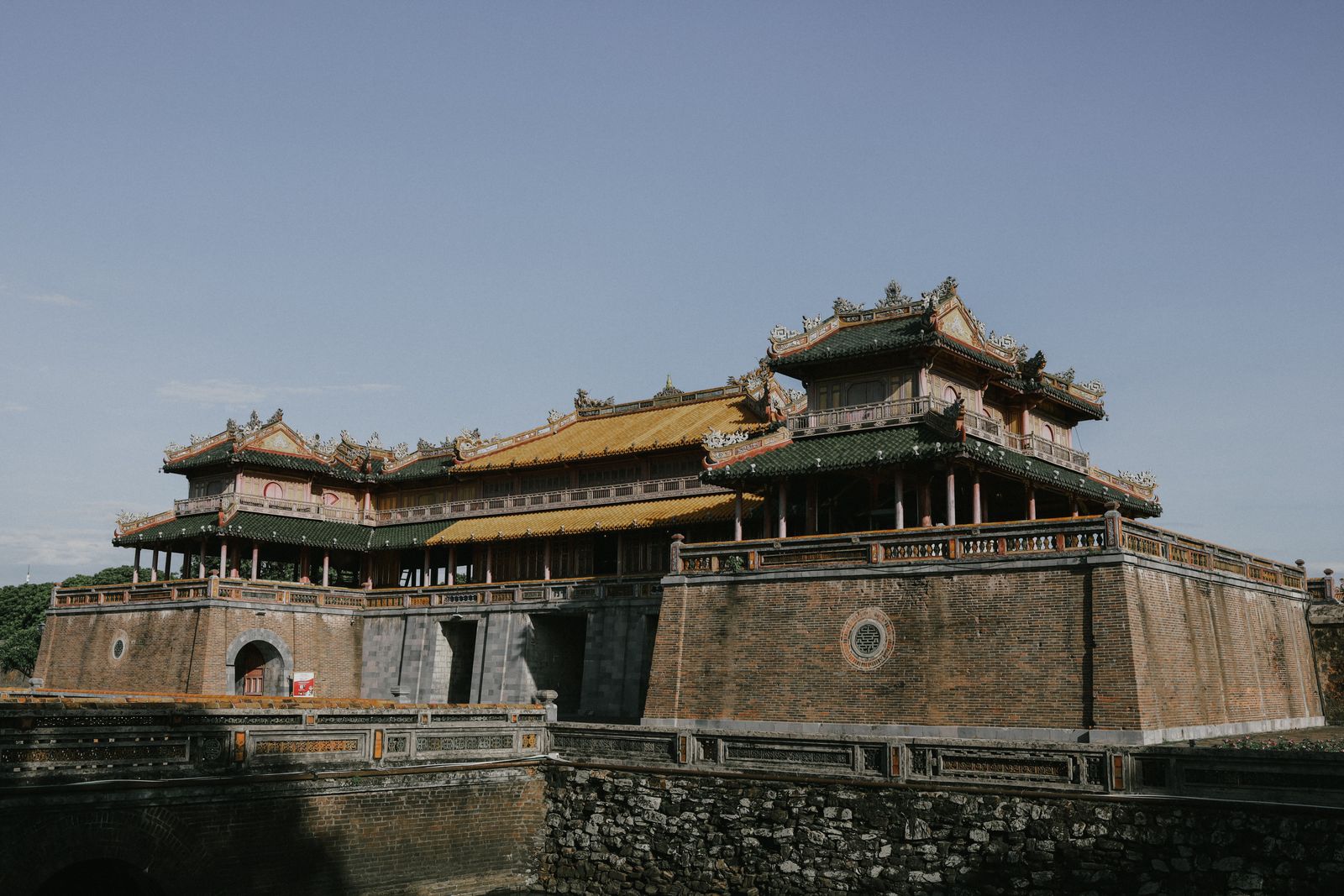
The Hue Citadel is a 10km-perimeter walled city on the north bank of the Perfume River — 10,000 workers built it between 1802 and 1832. The Ngo Mon (Noon Gate) is the finest ceremonial entrance in Vietnam.
💡 The Hue Citadel is best walked anticlockwise from the Ngo Mon Gate — the inner halls lead to the Forbidden Purple City ruins at the rear. Allow 2 hours for the full circuit.

Hue’s food culture is the most complex in Vietnam — the Nguyen imperial court demanded a different dish at every meal, producing over 1,700 recipes. Bun bo Hue, banh khoai, banh beo, and com hen are the four essential dishes.
💡 Bun bo Hue from Co Tuyet on Le Quy Don (₫35,000; opens 6am) is the finest bowl in Hue — thick round noodles in lemongrass broth, distinguished from Hanoi pho by the richness and the pork knuckle.
Hue’s restaurant culture is defined by the royal culinary tradition and the street food that derived from it: the bún bò Huế (the spicy beef noodle soup; the city’s signature dish; available from every market stall and restaurant from 6am; VND 30,000–50,000; significantly spicier than Hanoi’s pho and more complex in flavour), the bánh khoái (the sizzling rice crepe; the thick crispy crepe filled with shrimp, pork and bean sprouts, fried in a small cast-iron pan; folded and eaten wrapped in rice paper with the Hue dipping sauce of ground fermented soybean, sesame and pineapple; the Lac Thien and Lac Thanh restaurant cluster on Dinh Tien Hoang Street has served this dish since the 1960s and is staffed by deaf family members — ordering is by pointing at the menu), and the Hue banh mi (the bánh mì bà Loan at 14 Lê Huấn Street; the most elaborate filling combination in Vietnam; the house-made sausage; the pate; the cha Hue; the herbs; VND 20,000–30,000).
The Hue city centre (the north bank; the Citadel; the Dong Ba market; the hotel district) is best navigated by bicycle (VND 30,000–50,000/day from any hotel; flat terrain; 2km from the Citadel to the Dong Ba market; 5km to the Thien Mu Pagoda along the north river bank). The Perfume River dragon boat (the scenic approach to the Thien Mu Pagoda from the city piers; VND 100,000–200,000/h for a private boat; the crew also runs tourist circuits visiting the Thien Mu, Hon Chen Temple and the Dong Khanh Mausoleum in a single morning river trip) is the most enjoyable Hue transport. For the southern mausoleums (Tu Duc, Minh Mang: 6–7km south of the Citadel): Grab (VND 60,000–100,000 one way; the most practical) or the xe om motorbike taxi (negotiate VND 30,000–50,000 one way from the Citadel area). A rental motorbike (VND 100,000–150,000/day) gives the most flexibility for visiting all 7 mausoleums in a single day.
Bun bo Hue — thick round noodles in a rich lemongrass and crab paste broth with pork knuckle — is the finest noodle soup in Vietnam.
Minh Mang (1843) is the most architecturally refined of the Nguyen royal mausoleums &mdash.
The dragon boat from Toa Kham Pier to Thien Mu Pagoda takes 45 minutes upriver &mdash.
The Forbidden Purple City (the inner Nguyen Citadel, destroyed in 1968) is undergoing restoration — the Theatre Pavilion (Duyet Thi Duong) has royal performances staged at 10am and 3pm on weekdays.
The Hai Van Pass (17km between Hue and Da Nang) is the finest coastal drive in Vietnam — rent a motorbike and ride the pass before continuing to Hoi An.
Banh khoai (the Hue crispy pancake, smaller and more fragile than the southern banh xeo) is best at Dong Ba market from the stalls near the main entrance &mdash.
Feb–May and Aug–Nov are the dry seasons (22–30°C). Oct–Dec is the wettest season in Vietnam — bring waterproof layers. The biennial Hue Festival (April, even years) transforms the Imperial Citadel into performance spaces.
Two days: bun bo at dawn, the Citadel, the Perfume River boat to Thien Mu, Dong Ba market, and the royal mausoleum motorbike circuit.
Bun bo Hue at 6am. Dragon boat to Thien Mu Pagoda. Imperial Citadel — Ngo Mon Gate, the halls, the Forbidden Purple City ruins. Dong Ba Market for banh khoai at noon.
💡 The Imperial Citadel’s Theatre Pavilion stages royal performance re-enactments at 10am and 3pm on weekdays (₫200,000 including Citadel entry). The finest way to understand the ceremonial life of the Nguyen court.
Motorbike south: Tu Duc Mausoleum (the finest), then Minh Mang (the most architecturally refined), then Khai Dinh (1920–31; the strangest, built in a European-Asian hybrid style). Return by 4pm.
💡 Minh Mang’s landscape was designed by the emperor himself — symmetrical paths, seven pavilions over one lake, and the mausoleum visible only from the final approach. The finest architectural composition in Hue.
Hue is the most affordable major destination in Vietnam. The bun bo (VND 40,000), the com hen (VND 20,000), and the banh khoai (VND 25,000) make Hue exceptional food value. Per person per day.
The com hen (VND 20,000), the banh mi (VND 20,000), the Lac Thien banh khoai (VND 25,000) and the bun bo Hue (VND 40,000) give four distinctly Hue meals for under VND 110,000 (€4).
The Tropical Garden Restaurant (27 Chu Van An Street; the Nguyen imperial court cuisine tasting menu with live traditional music; 7 courses of dynasty-era dishes; VND 400,000–800,000 pp) is the finest culturally specific dining.
The La Residence Hotel.
Motorbike taxi and car rides for the royal mausoleums circuit, Dong Ba Market and Thien Mu Pagoda.
Free
Hue restaurant discovery and table booking for the finest imperial Vietnamese cuisine restaurants.
Free
Bus and minibus tickets for Hoi An, Da Nang, and all Vietnam intercity routes via the Hai Van Pass.
Free
Hue street food discovery and cooking class booking for the imperial Nguyen culinary tradition.
Free
Royal mausoleum guided tour booking including Minh Mang, Tu Duc, and the Khai Dinh complex.
Free
Download the Hue offline map before arrival — essential for navigating the Citadel and the mausoleum circuit without data.
Free
Explore more of Vietnam’s extraordinary cities and landscapes.