HU
Budapest
The Paris of the East
The Paris of the East
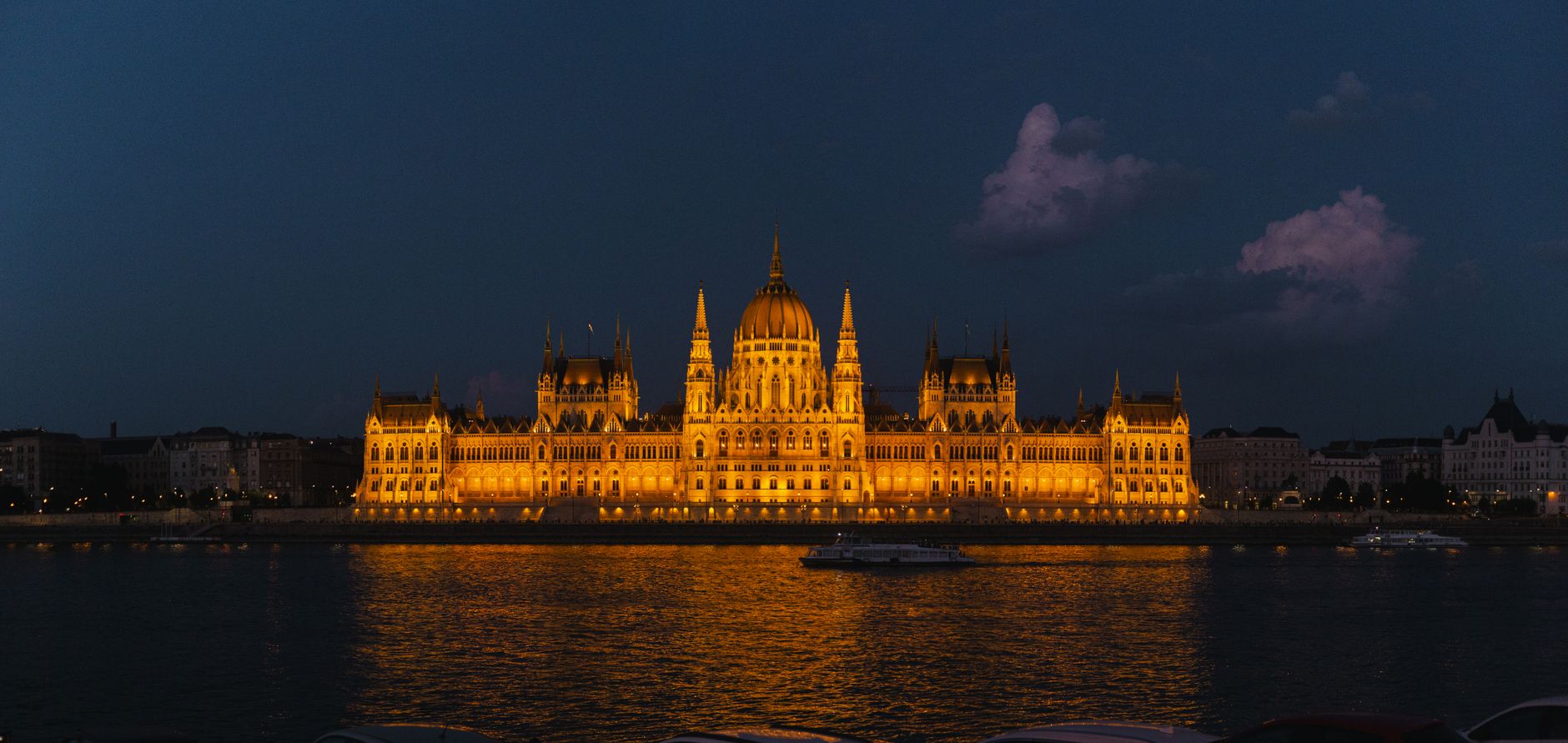
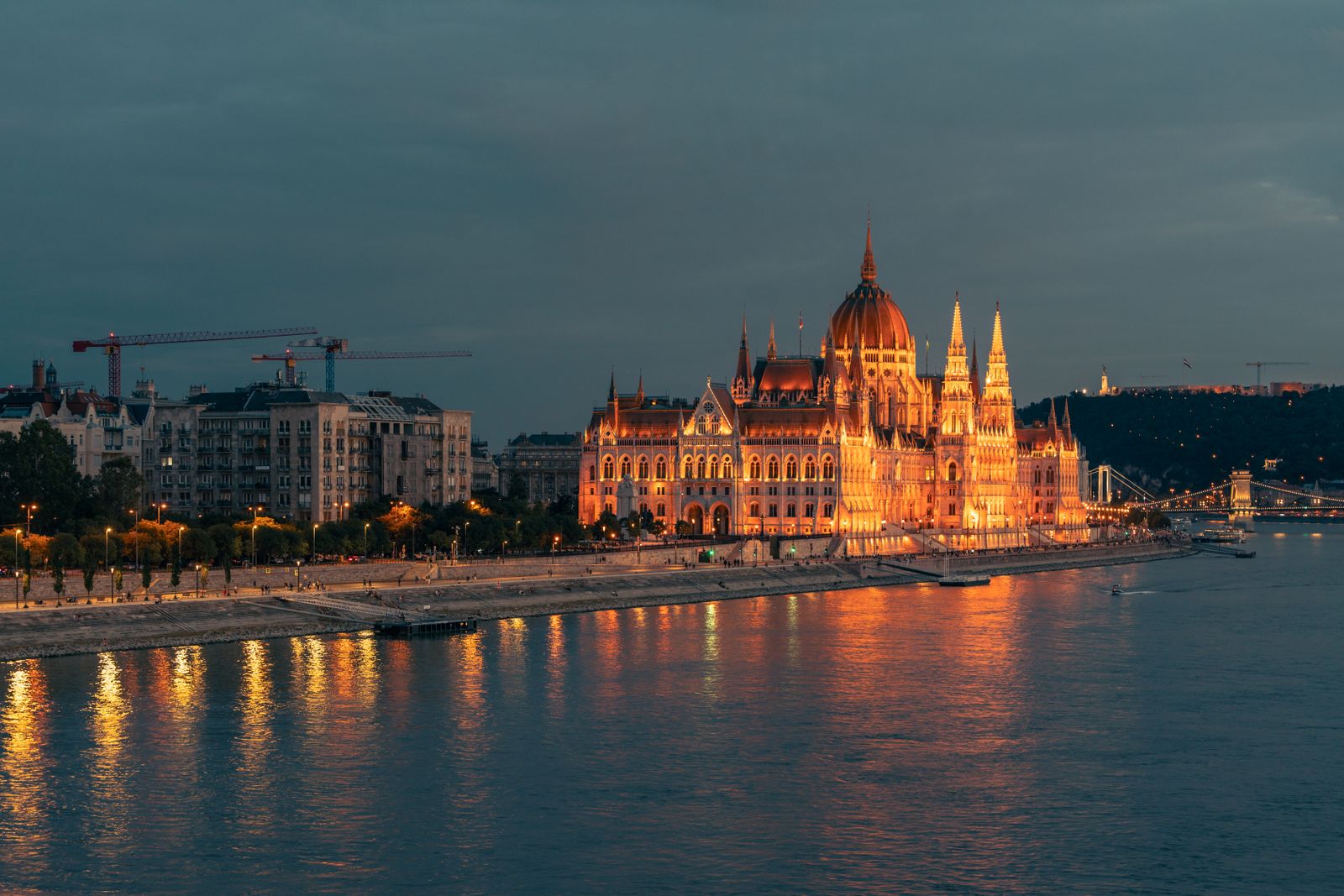
The Hungarian Parliament (1902; Neo-Gothic; 268m long; 691 rooms; the largest building in Hungary; guided tour €16 EU nationals; book at jegymester.hu) is the most impressive Parliament building in the world. The view of the Parliament from the Buda side at dawn — the Neo-Gothic towers reflected in the Danube — is the finest single view in Central Europe.
The Hungarian Parliament from the Buda side at dawn (the Neo-Gothic towers reflected in the Danube; 6am; free to view) is the finest single view in Central Europe. The guided tour (€16 EU; book at jegymester.hu) departs Gate X from 8am.
Hungarian Parliament tours →
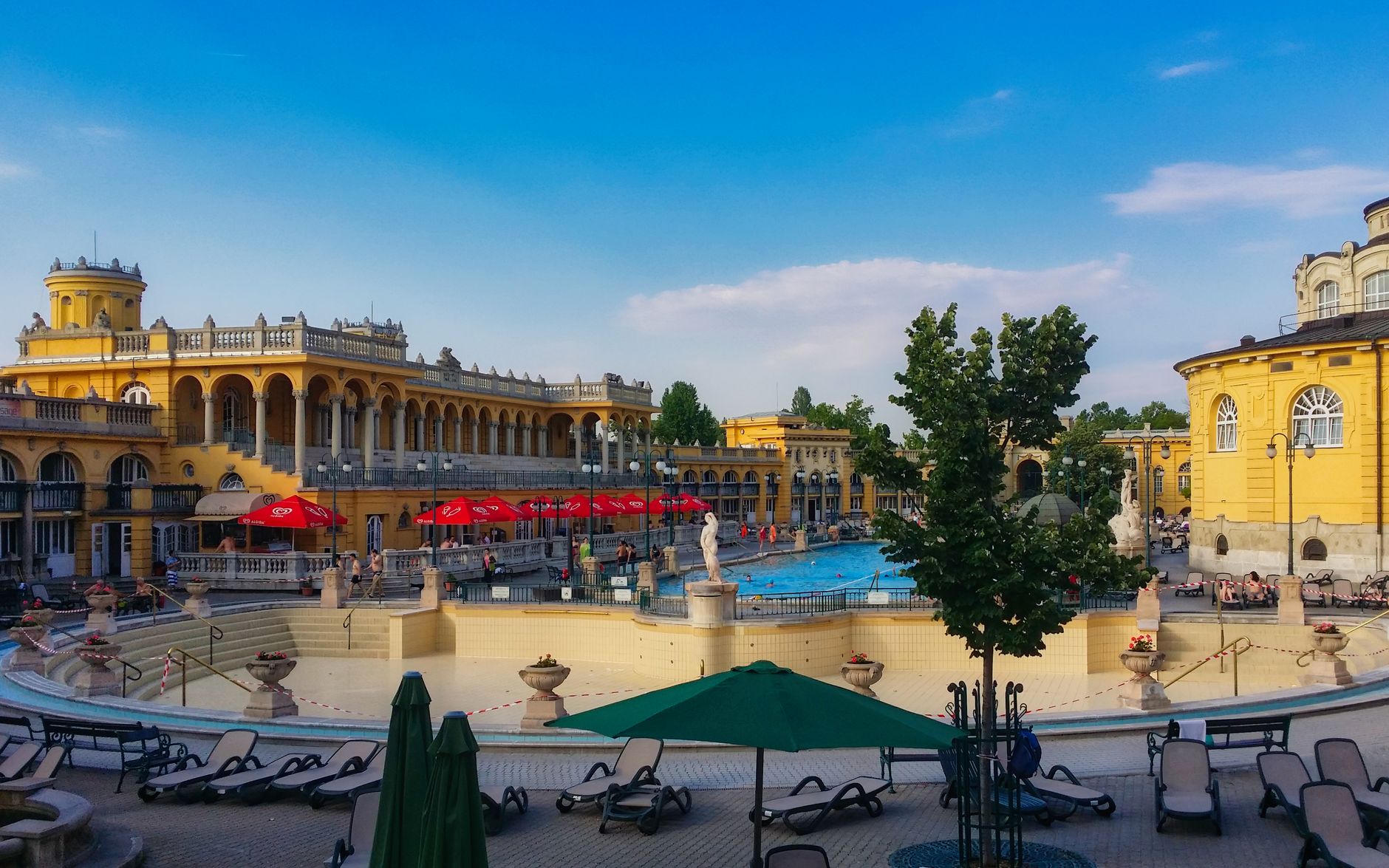
Budapest has 118 geothermal springs producing 80 million litres of thermal water daily — the Széchenyi (the largest medicinal bath in Europe; Ft 5,600; the 38°C outdoor pools; the chess players in the water) and the Gellért (the finest Art Nouveau bath interior in Europe; Ft 6,400; the stained glass indoor pool) are the two finest bath complexes in Central Europe.
Széchenyi Thermal Bath (Ft 5,600; book at szechenyibath.com; arrive 9am; the 38°C outdoor pools; the chess players in the water) is the finest thermal bath experience in Budapest.

Castle Hill (Várhegy; the UNESCO Buda Castle quarter; the Buda Castle Royal Palace — the Hungarian National Gallery and the Castle Museum; the Matthías Church Ft 3,000; the Fisherman’s Bastion (free; Ft 1,200 for the turret access; the finest Danube panorama in Budapest) form the most photographed skyline in Hungary.
Castle Hill at 7am (the Sikló funicular from the Chain Bridge; Ft 1,200 one-way) has the Fisherman’s Bastion (free; the finest Danube panorama in Budapest) with morning mist and fewer than 20 visitors.

The 7th district ruin bars (the Jewish Quarter; the ruins of pre-war Jewish Budapest repurposed as nightlife venues in the 2000s) are the finest bar district in Central Europe — the Szimpla Kert (the original ruin bar; Kazinczy utca 14; open daily noon–4am; the courtyard and the vintage car; free entry until midnight) is the most photographed bar interior in Europe.
Szimpla Kert (Kazinczy utca 14; open daily noon–4am; free entry until midnight; the courtyard with the mismatched furniture and the vintage car) is the most photographed bar interior in Europe.
Budapest food culture spans from the most specific Hungarian peasant cooking (the gulyás — the beef goulash; the paprikás csirke — the chicken paprikash; the lecsó — the tomato and pepper stew; the húls — the Hungarian sausage; the túllós csusza — the pasta with cottage cheese and sour cream and bacon — the most unexpectedly rich Hungarian comfort food) to the most sophisticated modern Central European fine dining (Costes — the first Michelin-starred restaurant in Hungary; Onyx — two Michelin stars; Stand25 — the most widely praised Budapest mid-range modern Hungarian restaurant; € 25–40 pp) at prices that make the equivalent Vienna or Prague meals seem expensive. The lángos (the deep-fried flatbread with sour cream and cheese; the most characteristic Hungarian street food; Ft 800–1,500 / € 2–4; at the Great Market Hall ground floor and any outdoor market; the most specifically Hungarian edible souvenir of the Budapest visit), the kürtős kalács (the chimney cake; the spiral dough cooked on a rotisserie; the Christmas market and outdoor festival standard; Ft 1,000–1,500 / € 2.50–4), and the palacsinta (the Hungarian crêpe; sweet or savoury; the Hortobágyi palacsinta — the meat-filled savoury crêpe with paprika sauce and sour cream — the most specifically Hungarian version) define the Budapest street food scene. The Great Market Hall (Nagy Vásárcsarnok; IX. Vám ház krt. 1–3; the largest covered market in Hungary; 1897; the ground floor for the fresh produce; the upper gallery for the lángos, the embroidery and the paprika souvenir) is the finest single Budapest food-and-market experience.
The BKK metro (4 lines; M1/M2/M3/M4; Ft 450 single; 24h Ft 2,500; the Budapest Card covers all; validate before boarding), the tram (tram 2 along the Danube Pest bank — the finest city tram ride in Central Europe; trams 4 and 6 on the Grand Boulevard), and the night bus (the “Ejjeli” night bus network) cover all areas until the metro stops at midnight. The Millennium Underground Railway (Metro M1; the first underground on the European continent; 1896; the wooden carriages; the most atmospheric metro line) runs beneath the Andrássy Avenue. Bolt (the ride-share app; the most reliable and cheapest taxi alternative in Budapest; always use Bolt rather than street taxis). The Budapest Card (€ 33/24h; € 52/48h; € 68/72h; all BKK transport + free entry to 30 museums and attractions + thermal bath discounts) is excellent value for a 3-day visit.
🛂 Entry rules: EES and ETIAS
Hungary is in the Schengen area, which has two EU border systems for non-EU visitors.
EES (in force): since 10 April 2026 the EU’s Entry/Exit System registers non-EU visitors’ passport details, fingerprints and a photo the first time they enter the Schengen area, replacing passport stamps. Allow extra time at the border on your first trip; later crossings are quicker. EU, EEA and Swiss citizens are not registered.
ETIAS (not yet running): a €20 online travel authorisation for visitors who don’t need a visa, such as UK, US, Canadian and Australian citizens. It hasn’t started and no start date has been confirmed, so nobody can apply yet; ignore websites that offer to “pre-register” you for a fee.
Visa-free visitors can stay up to 90 days in any 180-day period across the whole Schengen area, not per country.
Official information: EU: Travel to Europe (EES & ETIAS) · Reviewed September 2026
Széchenyi Thermal Baths (7,200 HUF; opens 6am daily; outdoor pools at 38°C year-round) are most atmospheric in winter when steam rises around chess players. Book a weekday morning visit.
The Hungarian Parliament (English tours 10am and 2pm; Ft 8,000; jegymester.hu; the Holy Crown and Blue Dome staircase) sells out weeks ahead. Book online before arriving in Budapest.
Szimpla Kert’s Sunday flea market (VII. district; 9am–2pm; free entry; the finest vintage hunting in Budapest) is more interesting than the regular bar. Arrive before 10am for the best finds.
The ruin bar district (7th district; Jewish Quarter) is the finest bar culture in Central Europe.
The Hungarian State Opera (Ft 1,000–3,500 standing; opera.hu; the finest 19th-century opera house interior in Europe) offers exceptional value. Standing tickets occasionally available on the day.
The Great Market Hall upper gallery (free to browse; embroidery, paprika, Tokay wine stalls; lángos at the south end) is for tourists. The ground floor meat and produce stalls are the finest food market in Budapest.
May–Jun and Sep for the finest weather and manageable crowds. Jan–Feb for the thermal baths in winter steam and the lowest accommodation prices. August for the Sziget Festival. Dec for the Vörösmarty Christmas market.
Day 1: Parliament, Chain Bridge, thermal bath. Day 2: Castle Hill, Great Market Hall, ruin bars. Day 3: Andrássy Avenue, the Opera, the Jewish Quarter.
Parliament from Buda at dawn (the Danube reflection; 6am; free view). Castle Hill at 7am (the Sikló funicular; the Fisherman’s Bastion; the Danube panorama). Matthías Church (Ft 3,000). Buda Castle Royal Palace.
The Budapest 24h transport card (Ft 1,650; covers all metro, tram, and bus lines; valid 24h from validation) is the best-value for a 2-day visit — tram 2 along the Danube Pest bank gives the finest view of the Buda skyline.
Széchenyi Thermal Bath at 9am (Ft 5,600; book ahead; the 38°C outdoor pools; the chess players). Dohány Street Synagogue (Ft 5,000; the largest in Europe; the Holocaust memorial). Szimpla Kert ruin bar in the evening.
The Széchenyi Bath at 9am (book online; arrive before the tourist groups) has the outdoor chess game in full swing by 10am — the regular players set up magnetic boards in the outdoor 38°C pool every morning regardless of weather.
Andrássy Avenue walk (the UNESCO boulevard; the Opera House exterior; the Terror House museum Ft 4,000; the finest 20th-century history museum in Hungary). Citás liget park. Gellért Thermal Bath (Ft 6,400; the Art Nouveau indoor pool).
The Danube Bend day trip (Szentendre + Visegrád + Esztergom; the finest medieval river landscape in Central Europe) is best done by the MAHART ferry from Budapest Vigadó pier — the full circuit takes a full day.
Budapest is the most affordable European capital for Western visitors. A full day including a thermal bath, a Parliament tour and dinner costs what a single Michelin meal costs in Vienna. Per person per day.
The Budapest thermal bath is the single most cost-effective cultural experience in Central Europe at &euro.
The Budapest Opera standing ticket (Ft 1,000–3,500 / € 2.50–9; the 1884 Neo-Renaissance opera house; the gilded horseshoe auditorium; the most affordable major opera house in Europe) and the Stand25 restaurant.
The Four Seasons Gresham Palace (V. Roosevelt tér 5–6; the finest hotel in Hungary; the restored Art Nouveau palace directly on the Pest end of the Chain Bridge; the view from the Chain Bridge-side rooms of the Buda Castle Hill, the)
Ride-hailing with upfront fares, where available in Budapest.
Free
Download the Budapest offline map before arrival — Castle Hill’s lanes and the 7th district ruin bar network require offline navigation.
Free
Download the Hungarian offline pack and use camera mode for menus and signs.
Free
Book tours, day trips and skip-the-line tickets in and around Budapest.
Free
Quick answers to the questions travellers most often ask before visiting Budapest.
Spring (April-June) and autumn (September-October) offer pleasant weather and thinner crowds. Summer is warm and busy, while winter is cold but atmospheric — and the thermal baths are especially inviting.
Three days for Buda Castle and the Fisherman’s Bastion, the grand Parliament, a soak in the Széchenyi thermal baths, a Danube cruise and the lively ruin bars.
By a cheap, efficient network of metro (one of the world’s oldest lines), trams and buses; the centre is walkable. No car needed.
The Danube dividing hilly Buda and flat Pest, its stunning riverside Parliament, a famous thermal-bath culture, Buda Castle, the ruin-bar nightlife, and being one of Europe’s more affordable capitals.
Explore more of Hungary’s extraordinary cities and landscapes.
Planning a wider trip? Our Hungary travel guide covers getting there, costs, when to go and more.