IL
Haifa
Bahá'í Gardens and Mount Carmel
Bahá'í Gardens and Mount Carmel
⚠️ Travel advisory: check before you go
Governments advise travellers to reconsider travel to Israel, and against travel to areas near Gaza, Lebanon and Syria, because of the ongoing regional conflict. Rocket and drone alerts and flight disruptions can occur at short notice.
Latest official advice: UK FCDO · US State Department · Reviewed September 2026

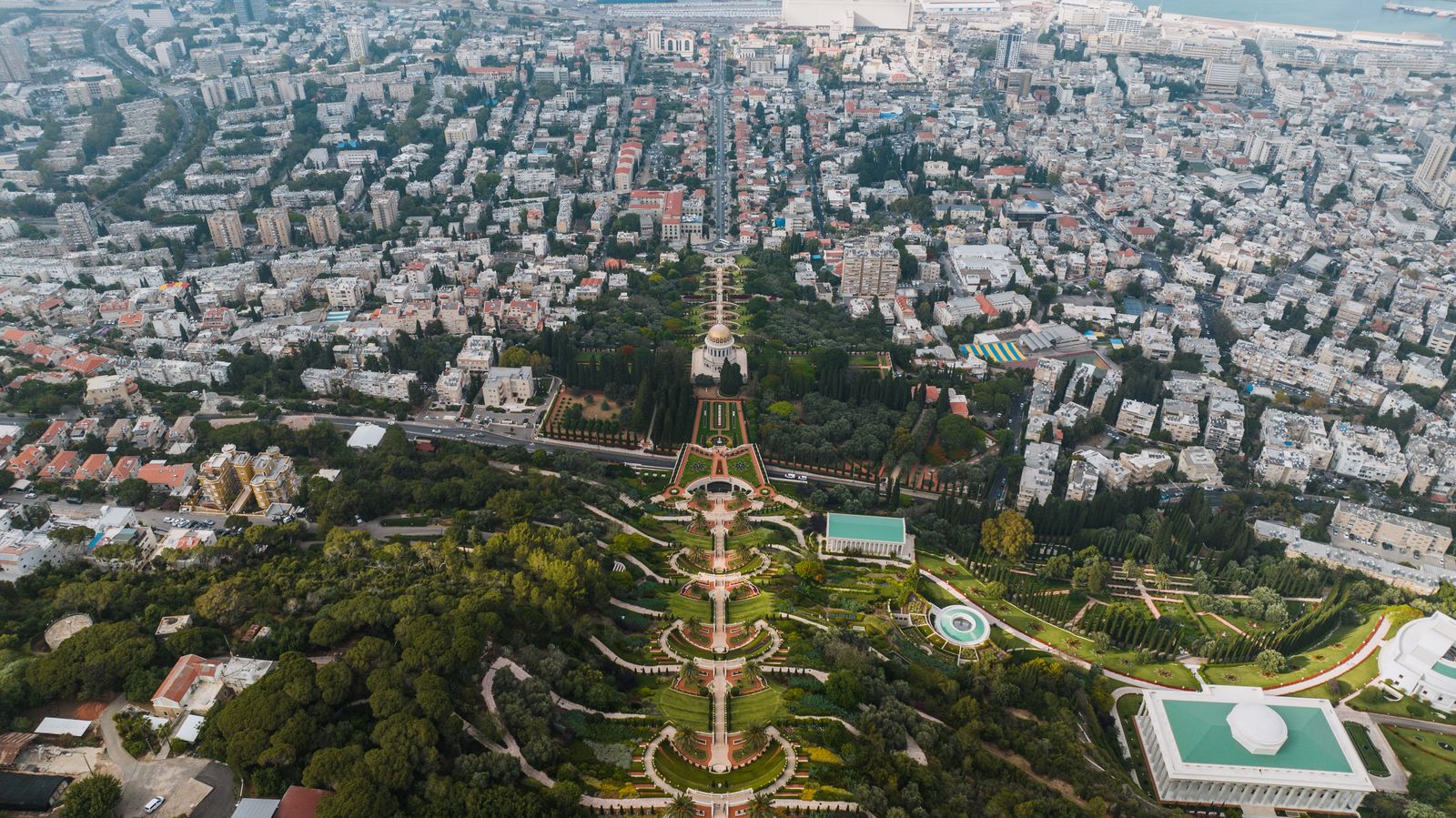
The Bahá’í Terraced Gardens (UNESCO World Heritage Site 2008; free; guided tour daily 9am except Wednesday; departs top Louis Promenade terrace) are 19 descending terraces of perfectly maintained gardens covering 1km of Mount Carmel in a precise axis between the golden-domed Shrine of the Báb above and the German Colony below. The gardens are the most visited tourist attraction in Israel outside Jerusalem and one of the finest examples of landscape architecture in the Middle East.
Take the Carmelit funicular to the top station (Carmel Centre; ₪6) and walk to the Louis Promenade for the 9am free guided garden tour (1.5h; descends all 19 terraces to the German Colony). The tour also explains the Bahá’í Faith, the history of the Shrine, and the architectural decisions behind the garden design.

The German Colony (Hatzionut Boulevard; the pedestrian street running north from the base of the Bahá’í gardens) was built by the German Templer Society between 1868 and 1910 — 19th-century stone houses with biblical inscriptions above the doors, now occupied by cafes, restaurants, and boutique hotels. The colony is the most atmospheric neighbourhood in Haifa, aligned on the exact axis of the garden terraces above, with the golden shrine dome visible on the mountain at every northward glance.
Visit the German Colony on Friday morning (the busiest and most atmospheric time; fresh bread from the bakeries, the gardens still quiet above). Fattoush restaurant (David HaMetaped 38; Lebanese; ₪60–100/person for a full mezze) is the finest dinner option in the neighbourhood.
Photo: StateofIsrael, CC BY-SA 2.0
Wadi Nisnas (the Arab cultural neighbourhood; 15 minutes walk east of the German Colony) is the most authentic Arab urban quarter in Israel outside Jerusalem — a dense area of family businesses, hummus restaurants, spice markets, and the House of Life street art project (60+ murals by Israeli and Palestinian artists on the neighbourhood walls; free; self-guided). The Friday morning market (from 8am) is the finest weekly market in Haifa.
Hummus Eliyahu (Wadi Nisnas; open from 6am; closes when sold out — usually noon; ₪25–35 for a full spread) is the finest hummus in Haifa. The House of Life mural trail (self-guided; downloadable map from the Wadi Nisnas cultural centre) takes 45 minutes and covers the most significant works in the neighbourhood.

The Carmelite Monastery of Stella Maris (Carmel; free; open daily; 10 minutes from the Carmel Centre by foot or taxi) is the world headquarters of the Carmelite monastic order — a 19th-century church on the site of a medieval chapel built over the cave where the prophet Elijah is said to have sheltered. The adjacent lighthouse and terrace (open during monastery hours) provides the finest panorama of Haifa Bay and the Mediterranean. The Carmelit funicular (“Israel’s subway”; 6 stations; runs since 1959) is itself worth riding for the engineering curiosity.
Take the Carmelit from the German Colony (HaHagana Station; ₪6 single) back to the Carmel Centre and walk 10 minutes west to Stella Maris. The monastery chapel (open to visitors between services; dress respectfully) has a painted baroque interior and a rare Elijah relic.
Photo: זאב שטיין, CC BY 2.5
Haifa has the finest Arab food scene outside Jerusalem. Hummus Eliyahu (Wadi Nisnas; open from 6am; closes when sold out by noon; ₪25–35) is the finest hummus in the city. Fattoush (German Colony; Lebanese mezze; ₪60–100/person; the finest dinner restaurant in Haifa) and Uri Buri (northern Haifa near Akko; the finest seafood restaurant in northern Israel; ₪100–200/person) are the two destination restaurants. The Talpiyot Market (Haifa Municipal Market; mornings on weekdays; closed Shabbat) is the finest fresh produce and spice market in the city. For coffee: the German Colony cafes opening from 8am are the finest morning setting in Haifa, with the Bahá’í golden dome visible above.
8:30am: Carmelit funicular from Paris Square to Carmel Centre (₪6; 8 mins). Walk to Louis Promenade for 9am free Bahá’í garden tour (1.5h descent). Pre-arranged taxi picks up at German Colony base (₪20). German Colony lunch at Fattoush (Lebanese; ₪60–100; book ahead). Afternoon: Wadi Nisnas mural trail (45 mins; free; self-guided). Carmelite Monastery at Stella Maris (Carmelit back up; 10 mins walk; free; sea view). Dinner at the German Colony. Day 2 option: Day trip to Akko (30 mins by train; ₪10; Crusader underground city, best Old City market in the north).
The guided tour (free; 9am daily except Wednesday; from Louis Promenade at Carmel Centre; 1.5h descending) is the only way to enter the central garden terraces.
The Carmelit (₪6 single; ₪10 return; runs 6am–midnight except Shabbat; 6 stations from Paris Square at the port to Carmel Centre at the top) is the most efficient and atmospheric way to navigate Haifa’s vertical dimension.
Hummus Eliyahu (open 6am, closes when sold out by noon; ₪25–35) and the Friday market produce stalls (fresh za’atar, olive oil, and Arab pastries at prices 30–40% below Tel Aviv) are the Wadi Nisnas essentials.
Most Israeli cities effectively close on Shabbat (Friday sunset to Saturday sunset).
Akko (30 mins from Haifa HaMifratz by train; ₪10; the Underground Crusader City + Khan al-Umdan caravanserai + the finest Old City market in northern Israel) is consistently underrated by international visitors and one of the finest day trips in Israel.
The Israel Railways route Tel Aviv HaShalom to Haifa HaMifratz runs along the Mediterranean coast for much of its length, with sea views from the right side of the train heading north.
Israeli metered taxi app. Essential for the Carmelit funicular connection and Stella Maris visits.
Free
From Tel Aviv’s beaches to Jerusalem’s sacred sites and Eilat’s Red Sea reefs.
Planning a wider trip? Our Israel travel guide covers getting there, costs, when to go and more.