TN
Carthage
Ruins of a rival to Rome
Ruins of a rival to Rome
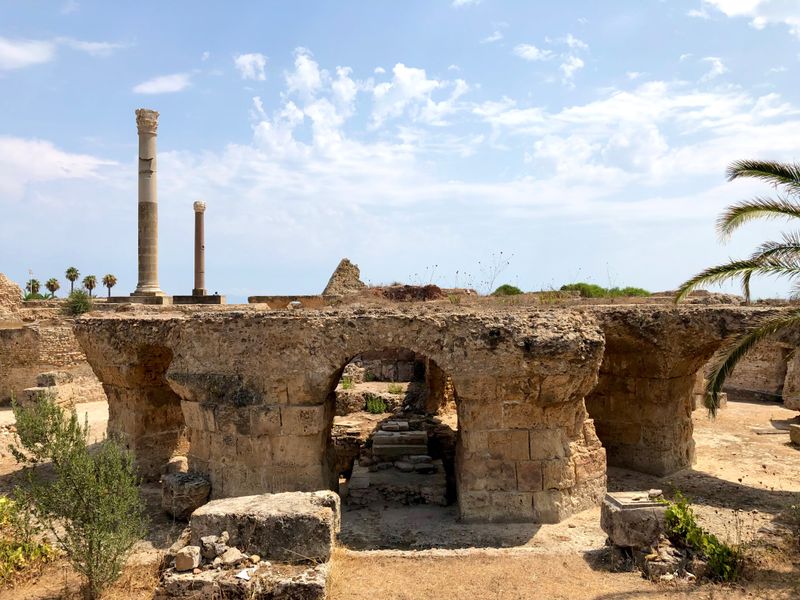
The largest Roman baths in Africa and among the biggest in the whole empire — a colossal 2nd-century complex tumbling down to the sea, where towering columns and vaulted foundations hint at the scale of the vanished bathing halls above. Set against the blue Gulf of Tunis, it’s the most spectacular and photogenic of Carthage’s sites.
💡 This is the highlight — the seaside setting is magnificent; a single Carthage site ticket covers the baths and the other main ruins, so keep it for the day.
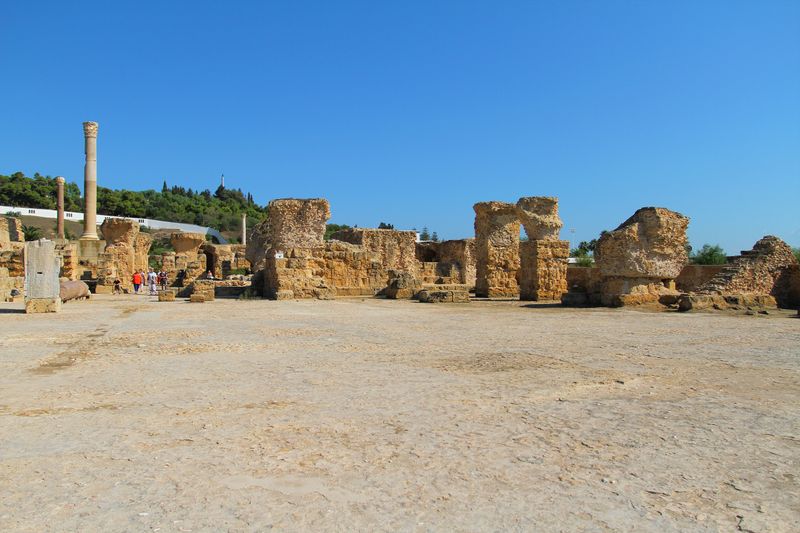
The acropolis where Carthage began and ended — legendary Queen Dido’s founding hill, later the last redoubt in the Roman siege — crowned now by the Saint-Louis Cathedral and the Carthage National Museum. From the top, Punic-era ruins lie exposed and the view sweeps over the whole site, the suburbs and the sea beyond.
💡 Byrsa gives the best overview and context — start or end here; the museum’s Punic artefacts and the excavated houses on the slope bring the Phoenician city to life.
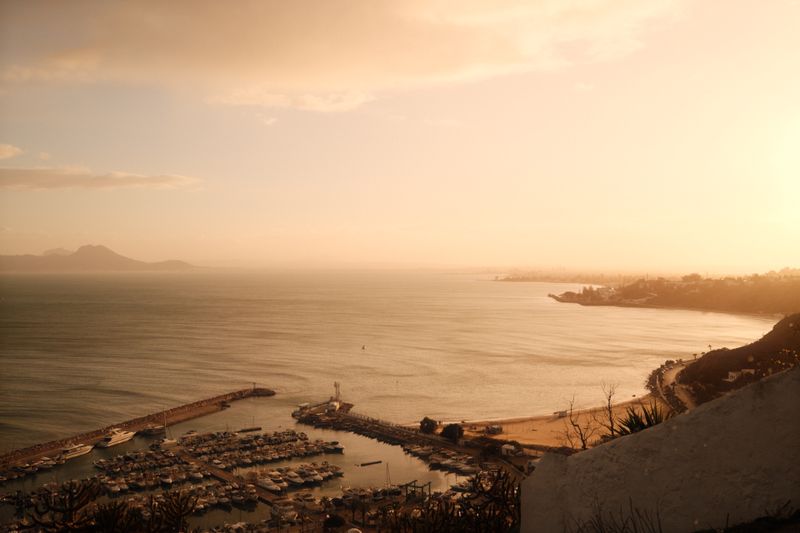
Down by the shore, the curious circular and rectangular Punic ports — once the naval harbour of a maritime superpower, able to hide hundreds of warships — are now quiet lagoons. Nearby, the Tophet, a sanctuary and burial ground of urns, is a poignant, atmospheric trace of Punic religion, wrapped in the debated history of the ancient city.
💡 The ports are now peaceful lagoons that take imagination to read — the small on-site information helps; the Tophet is quietly moving and rarely crowded.
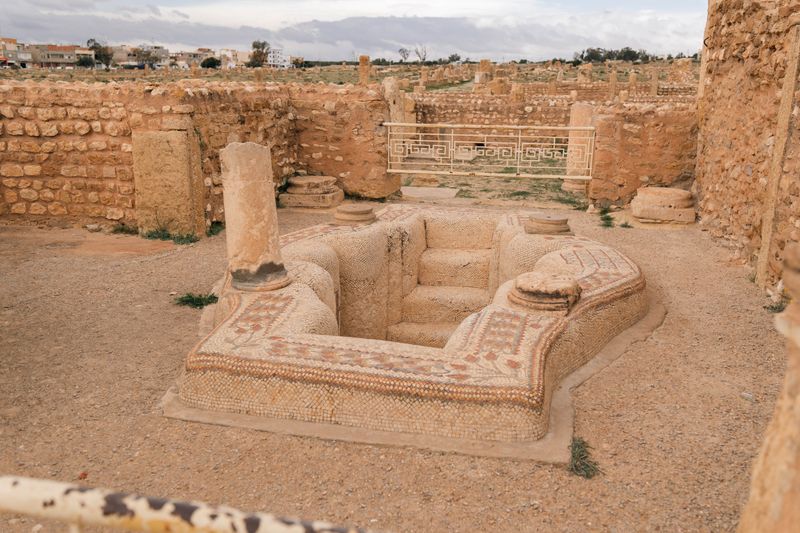
Scattered across the site are the remains of Roman Carthage’s grandeur — the Roman Villas quarter with mosaic floors and a reconstructed peristyle overlooking the sea, the huge La Malga cisterns that watered the city, an amphitheatre and a theatre still used for festivals. Together they conjure the wealthy provincial capital that rose from the ruins of Punic Carthage.
💡 The Roman Villas’ sea-view mosaics and the sheer scale of the cisterns are worth the extra walking; wear good shoes and bring water and sun cover.
Carthage itself is a leafy, upmarket residential suburb rather than a dining destination, but its seaside setting and the neighbouring villages serve you well. A handful of cafes and restaurants near the sites and the marina do Tunisian and Mediterranean fare — grilled fish and seafood are the local strength here on the Gulf of Tunis — alongside brik, salads and couscous. Most visitors, though, time their day to eat in adjacent Sidi Bou Saïd, whose clifftop cafes serve mint tea with pine nuts and bambalouni doughnuts with a stunning sea view, or back in central Tunis. Bring water and snacks for the ruins themselves, as the sites are spread out and shade is limited. A fresh-fish lunch by the marina after a morning among the ancient stones is the classic Carthage combination.
Start on Byrsa Hill for the overview, the museum and the Punic ruins where Carthage was founded and destroyed — the essential context, with the whole site and sea below.
Descend to the magnificent Antonine Baths tumbling toward the blue Gulf of Tunis — the site’s spectacular highlight — then the Punic ports and Roman villas nearby.
Hop the TGM one stop to the blue-and-white cliff village of Sidi Bou Saïd for mint tea with pine nuts, bambalouni doughnuts and a sweeping Mediterranean view.
Return along the coast to central Tunis for dinner — or linger for sunset over the Gulf from Sidi Bou Saïd before heading back to the capital.
Carthage is a cheap 30-minute TGM train ride from central Tunis, with several stops among the sites — hop off at Carthage-Hannibal for the baths, on to Sidi Bou Saïd after.
Carthage isn’t one compact site but several across a leafy suburb — there’s real walking involved; wear good shoes, and one ticket covers all the main sites.
The ruins are open and exposed — bring water, a hat and sunscreen, especially in summer, and go early in the day for cooler, quieter sites.
Sidi Bou Saïd is one TGM stop away — the perfect pairing; do the ruins in the morning and the clifftop cafes in the afternoon.
The ruins reward some background — read up on Punic and Roman Carthage, or take a guide, to turn scattered stones into a vivid story.
Base in Tunis and day-trip out — Carthage, Sidi Bou Saïd and the coast make an easy, low-cost day from the capital.
TGM and walking directions among the scattered Carthage sites and to Sidi Bou Saïd.
Free
The main ride-hailing app in the Tunis area — handy for reaching the sites or getting back.
Free
Multi-currency card with strong rates — useful for the region; carry dinar cash on site.
Free
The medina capital of Tunis, ancient Carthage, the blue-and-white village of Sidi Bou Saïd, the holy city of Kairouan and the island of Djerba — Tunisia layers Mediterranean, Roman and Saharan worlds.