HT
Haiti
First Black republic — the Citadelle, Vodou & revolutionary soul
First Black republic — the Citadelle, Vodou & revolutionary soul
⚠️ Travel advisory: most governments advise against travel
Governments advise against all travel to Haiti because of widespread gang violence, kidnapping and civil unrest, and the main airport has been repeatedly closed. This guide is kept for background and future planning.
Latest official advice: UK FCDO · US State Department · Reviewed September 2026
Haiti is the first Black republic in history — the first nation born from a successful slave rebellion, declared independent on 1 January 1804 after defeating Napoleon’s army in a revolution that shook the foundations of the colonial world. This history of courage gives Haiti a cultural depth and spiritual intensity that no other Caribbean nation can match. The country is challenging to visit and has faced severe difficulties, but for those who engage with care and sensitivity, Haiti repays it richly: the mountaintop citadel of Sans-Souci Palace and La Citadelle La Ferrière (UNESCO), the living spiritual world of Haitian Vodou, the raw genius of Port-au-Prince’s Iron Market and the Haitian visual arts — widely considered the greatest naif art tradition in the world — make this a destination of genuine and irreplaceable significance.
Haiti’s north, particularly the Cap-Haïtien area, is the most accessible and rewarding region for tourism and is recovering steadily from the difficulties that have affected the capital. The Labadee beach resort on the north coast is a separate story; independent travel to the Citadelle is deeply rewarding.
A UNESCO World Heritage Site and the most striking monument in the Caribbean — a massive stone fortress built between 1805 and 1820 by King Henri Christophe on a 900-metre mountain peak to defend the new Black republic against a French reconquest that never came. The scale is staggering: walls 3.5 metres thick, 365 cannons, capacity for 5,000 soldiers, and panoramic views across the entire northern plain. The 2-hour horse ride or hike up from Milot stays with you for good.
At the foot of the Citadelle trail, the ruins of Henri Christophe’s royal palace — once dubbed “the Versailles of the Caribbean” — are a haunting and beautiful reminder of Haiti’s post-independence ambition. Damaged by earthquake in 1842 and partially restored, the palace, its fountains and formal gardens form the second component of the UNESCO World Heritage Site.
Haiti’s second city and northern capital, known as Cap or Cap-Haïtien, is a city of faded colonial elegance — once the richest city in the Caribbean (“the Paris of the Antilles”) when Saint-Domingue was France’s most profitable colony. The iron-grille balconied houses, the cathedral and the crowded, noisy market retain the character of a place with a past. The nearby beaches of Cormier and Labadie are excellent.
Haiti’s visual arts tradition is one of the great naive art movements — the Centre d’Art in Port-au-Prince (founded 1944) and the Musee du Pantheon National Haitien document both art and history. Vodou — the syncretic Afro-Caribbean religion that helped coordinate the Haitian revolution and remains a living, powerful spiritual tradition — is expressed in ceremonial paintings, sculptures and ritual objects found in galleries and artist studios across the country.
Pork marinated in citrus and Scotch bonnet, then braised and fried until crisp — usually served with pikliz and fried plantain.
A vinegary condiment of shredded cabbage, carrots and Scotch bonnet peppers fermented in white vinegar — Haiti’s essential table sauce, served alongside griot, beans and rice and any fried food. An entirely Haitian invention with no equivalent elsewhere.
The Haitian national staple — red kidney beans or black beans cooked with coconut milk, garlic and thyme into a thick sauce, then rice is cooked in this liquid so each grain absorbs the beans’ flavour. Known as diri kolè (stuck rice).
A hearty broth with beef, plantain, yam and greens — a Saturday tradition.
Pumpkin and beef soup eaten every 1 January to mark independence in 1804; UNESCO added it to its intangible heritage list in 2021.
Haiti’s best-known rum, double-distilled from cane juice and aged in oak.
Toussaint Louverture International (PAP) in Port-au-Prince is the main gateway. US airlines have been barred from flying to Port-au-Prince since November 2024 because of gang violence, and the ban has been extended; check current status. Non-US carriers may still operate some routes. Check current travel advisories before booking.
Miami (2h) is the closest US hub with the most frequent service. Multiple US carriers operate direct PAP routes.
Air France operates a direct Paris service (9h). Santo Domingo (45 min, on the same island of Hispaniola) is the easiest regional connection, and sharing a land border makes an overland Haiti-Dominican Republic itinerary straightforward.
Domestic flights (Sunrise Airways connects PAP to CAP and other cities) are recommended for reaching northern Haiti safely and quickly. Road travel requires current security assessment; conditions change and local advice is essential.
A trusted local guide and driver is essential for Haiti travel — not as a luxury but as a safety and logistical necessity. The guide provides current security intelligence, facilitates interactions and unlocks access to communities and sites that are effectively inaccessible to unaccompanied foreign visitors.
November to March is the driest and most comfortable window (24–28°C). December to March is peak. April to June is the first rainy season; August to October is hurricane season and the second rainy season. Check current travel advisories — security conditions vary significantly by region.
📅 Haiti is in its best season in January, February, March, November, December. See where else is good to go in those months, or browse where to go by month.
Haiti uses the Haitian Gourde (HTG, approx 130 HTG = 1 USD). US dollars widely accepted. One of the cheapest destinations in the Caribbean for local costs; security conditions require a guide.
Griot (pork shoulder marinated in sour orange, garlic and Scotch bonnet, then boiled and deep-fried until crisp outside, served with pikliz)
Barbancourt rum (produced since 1862 at the Barbancourt distillery near Port-au-Prince)
Hôtel Oloffson (a Victorian Gothic gingerbread mansion in Port-au-Prince — built 1895, once the home of Haitian presidents and the model for the Hôtel Trianon in Graham Greene’s The Comedian)
Port-au-Prince for one day, Jacmel for one, Citadelle for one, Cap-Haïtien for one, Labadie for one, Pic Macaya for one, Saut-d’Eau for one. Haiti — the first Black republic and the only successful slave revolt in history — has the greatest fortress in the Americas, art and music, and a history unlike any other nation on earth. Check current advisories before visiting.
Port-au-Prince — the capital of Haiti (the western third of Hispaniola, population 12 million, the first Black republic in the world — established 1 January 1804 after the Haitian Revolution, the only successful slave revolt in history to produce an independent nation) with the Musée du Panthéon National Haïtien (MUPANAH — the museum of Haitian history, containing the anchor of the Santa María, Christopher Columbus’s flagship that wrecked on the Haitian coast on Christmas Day 1492).
The Haitian Revolution (1791–1804 — a 13-year uprising of enslaved Africans and free people of colour against French colonial rule, led by Toussaint L’Ouverture, Jean-Jacques Dessalines and Henri Christophe) is the only successful large-scale slave revolt in history that produced an independent nation. Haiti’s declaration of independence on 1 January 1804 was the first declaration by a Black-led nation anywhere in the world, and the second republic in the Western Hemisphere after the United States.
Jacmel (a UNESCO Creative City of Crafts and Folk Art, 80km south of Port-au-Prince over the mountains — a beautifully preserved 19th-century colonial town of French and New Orleans-influenced cast-iron balcony architecture, the centre of Haitian visual art with the finest concentration of painters, sculptors and papier-mâché mask makers in the Caribbean, and the Jacmel Film Festival — the most important cultural event in the country).
Haitian art (le mouvement St Soleil and the Naïf tradition — a tradition of flattened, non-perspective painting with intense colour and complex narrative content, emerging from the 1940s without formal training, now displayed in the major museums of Paris, New York and London) is the most internationally celebrated art form produced by any Caribbean nation. The Centre d’Art in Port-au-Prince (founded 1944) was the catalyst; the murals it commissioned from Haitian artists for the Cathédrale de la Sainte Trinité were considered masterpieces before the 2010 earthquake destroyed the cathedral.
The Citadelle Laferrière (UNESCO World Heritage — a mountaintop fortress built 1805–1820 by King Henri Christophe on a 970m peak in northern Haiti, the largest fortress in the Americas, capable of housing 10,000 soldiers — built to defend the new republic against the French reconquest that never came, with cannon balls still stacked in pyramids in the courtyard after 200 years) and the Sans-Souci Palace (the ruined royal palace of Christophe below, modelled on Versailles).
The Citadelle Laferrière (built 1805–1820, a 40m-high fortress of cut stone on a 970m mountaintop, requiring 20,000 workers and taking 15 years to construct) was built as a symbol of Haitian sovereignty and defiance against the expected French return. The fortress is 200km from the nearest French garrison and 970m above the sea — an engineering achievement comparable to the great European fortresses of the same era, built by a country that had been a colony just one year before construction began.
Cap-Haïtien (the historical capital of French Saint-Domingue — once the wealthiest colonial city in the Caribbean, the “Paris of the Antilles”, now a provincial city of 300,000 with restored colonial architecture on the waterfront and the Plage de Cormier — the finest beach near Cap-Haïtien) and the nearby site of Columbus’s first landing on Hispaniola (26 December 1492) and the founding of La Navidad — the first European settlement in the Americas.
La Navidad (founded on 26 December 1492 on the northern coast of Hispaniola by Christopher Columbus after his flagship the Santa María ran aground — the first permanent European settlement in the Americas) was built from the timbers of the wrecked ship and garrisoned by 39 men. When Columbus returned in 1493, the settlement had been destroyed and all 39 men killed, probably by the Taino people they had mistreated. It was the first example of European colonial violence in the Americas.
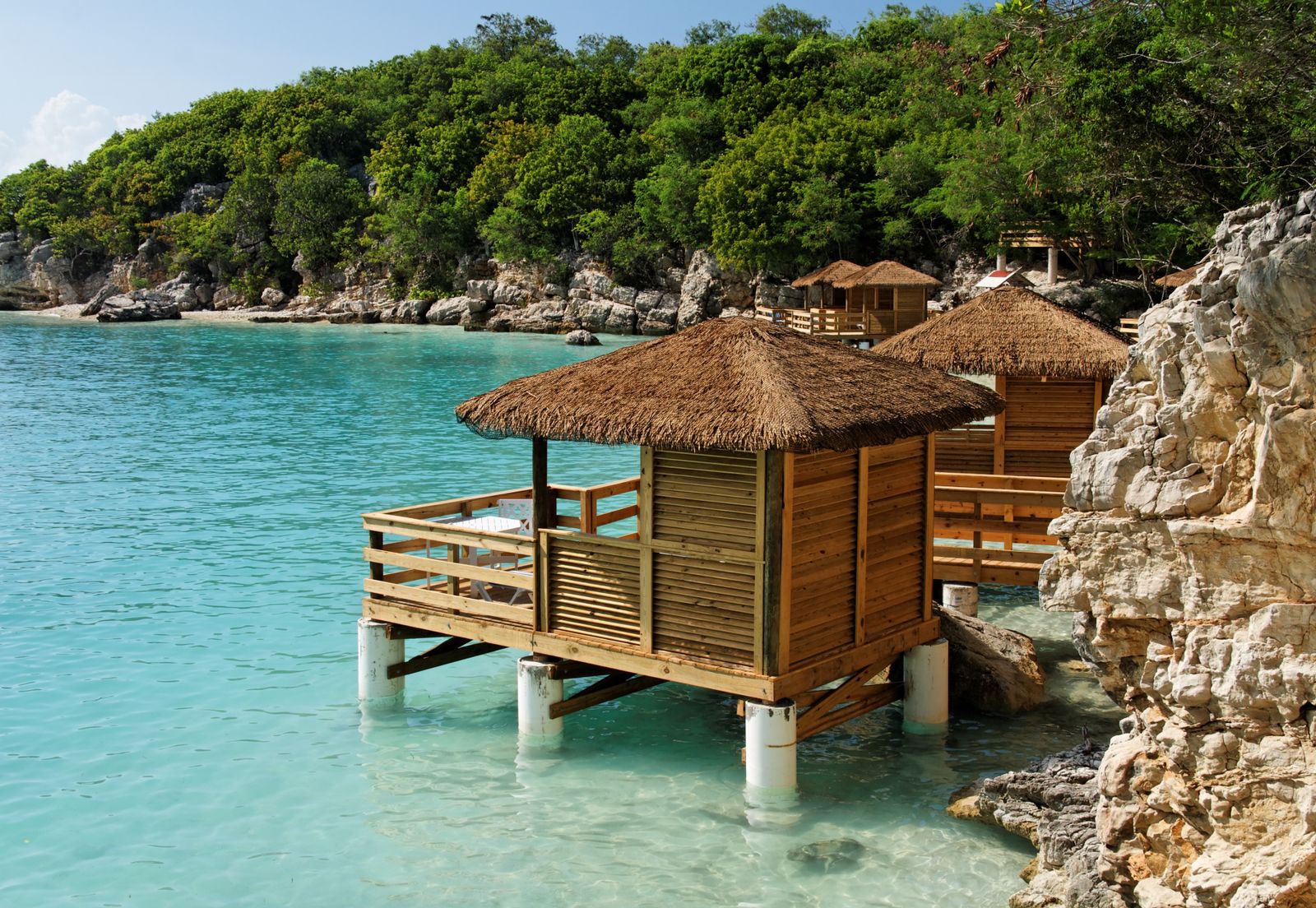
Labadie (a private peninsula on the northern coast of Haiti leased by Royal Caribbean cruise line — the most visited tourist site in Haiti paradoxically, with 700,000+ cruise passengers per year who arrive at a sanitised resort enclave entirely separated from Haitian reality by fences and security — also accessible independently as the beach is technically public) and the traditional fishing villages between Cap-Haïtien and Labadie.
Labadie (leased by Royal Caribbean International since 1986, extensively developed as a private cruise destination with zip lines, private beaches, restaurants and watersports, visited by 700,000+ cruise passengers per year) is one of the most visited locations in Haiti but completely invisible to most Haitians — the enclave’s security perimeter separates guests from the surrounding Haitian communities entirely. The anomaly of this arrangement has been extensively discussed in travel ethics and tourism impact literature.
Pic Macaya National Park (the highest point in the southern peninsula of Haiti, 2,347m — one of only two intact cloud forests remaining in Haiti after the catastrophic deforestation that has reduced forest cover from 60% in 1920 to approximately 1% today, with the largest remaining population of the Hispaniolan solenodon — a venomous shrew-like mammal whose lineage dates back 76 million years, one of the most evolutionarily distinct mammals on earth).
Haiti has lost approximately 99% of its original forest cover since 1920 — the most severe deforestation of any country in the Western Hemisphere. The causes are complex: charcoal dependence for cooking (90% of Haitian households use charcoal), post-earthquake agricultural clearing, extreme poverty and political instability. The loss of forest has accelerated soil erosion, landslides and flooding; the 2010 earthquake killed 316,000 people in part because deforested hillsides collapsed onto Port-au-Prince.
Saut-d’Eau (a sacred waterfall in the mountains of the Artibonite Department — the most important Vodou pilgrimage site in Haiti, visited by thousands each year on the feast of Notre-Dame du Carmel (16 July) when Catholic and Vodou traditions merge in a mass ritual bathing at the foot of the falls, one of the most striking religious experiences in the Caribbean). Fly from Port-au-Prince (PAP).
Haitian Vodou (a syncretic religion combining West African Fon and Ewe religious traditions with elements of French Catholicism, developed among enslaved Africans in Saint-Domingue — not to be confused with the Hollywood “voodoo” caricature) is the majority religion of Haiti, practised openly alongside Catholicism. The Vodou lwa (spirits) are invoked through song, dance and possession; the Saut-d’Eau pilgrimage combines the Catholic feast of Our Lady of Mount Carmel with Vodou ceremonies dedicated to the lwa Erzulie Fréda.
Check your government’s current travel advisory before visiting Haiti. The security situation particularly in Port-au-Prince requires careful assessment. The north (Cap-Haïtien) is generally safer and more accessible for independent travel.
Toussaint Louverture International Airport (Port-au-Prince) and Hugo Chavez International (Cap-Haïtien) receive direct flights from Miami, New York and Montreal. Cap-Haïtien is the recommended entry for Citadelle visits.
Both US dollars and Haitian gourdes are used. USD is widely accepted at hotels and tour operators. Carry cash as ATMs and card facilities are unreliable.
Using reputable local guides and tour companies is strongly recommended — both for safety and to ensure tourism income benefits local communities directly.
Photographing Vodou ceremonies requires invitation and respectful permission. Haitian culture deserves to be engaged with genuine curiosity and respect for its history of resistance and resilience.
Quick answers to the questions people most often ask about travel to Haiti.
Security is a serious concern, particularly in and around Port-au-Prince, and many governments advise against travel to Haiti. Conditions vary by region and change quickly. Check your government's current advice, and if you do travel, use reputable local guides and operators.
International flights serve Toussaint Louverture Airport in Port-au-Prince and Cap-Haïtien in the north, mainly from Miami and other US cities. Flight availability has been disrupted at times, so check current schedules.
November to March, the driest and most comfortable period (24–28°C). August to October is hurricane season.
The Haitian gourde (HTG), with US dollars widely accepted at hotels and by tour operators. Carry cash.
Haitian Creole is spoken by everyone, and French is also official. Some English is spoken in the tourism sector.
— The dominant mobile provider in Haiti; SIM cards available at Port-au-Prince and Cap-Haïtien airports.
Free— Works in major towns; download offline maps for the Citadelle area and rural regions before arriving.
Free— Essential for navigating the gourde/dollar dual-currency system and getting accurate exchange rates.
FreePoint your camera at menus, signs or street text for instant translation. Download the language pack offline before you arrive for full use without data.
FreeFind and book hotels, guesthouses and apartments with free cancellation on most rates — one of the widest selections of accommodation worldwide.
FreeBrowse millions of traveller reviews for restaurants, attractions and hotels — helps identify the best local spots and avoid tourist traps.
FreeHaiti sits within easy reach of several other destinations — each with a completely different character.


