ID
Yogyakarta
The Cultural Capital of Java
The Cultural Capital of Java
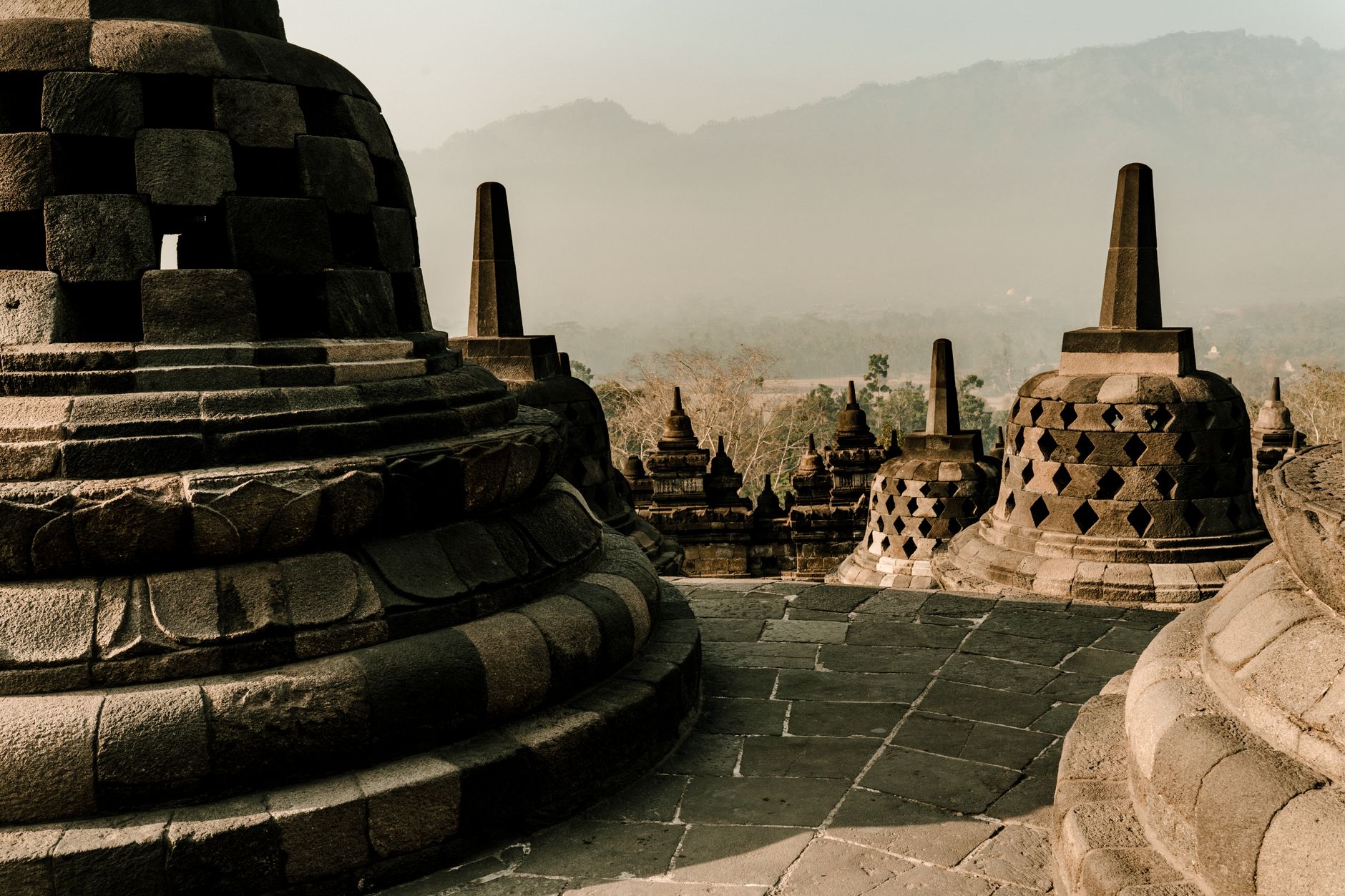
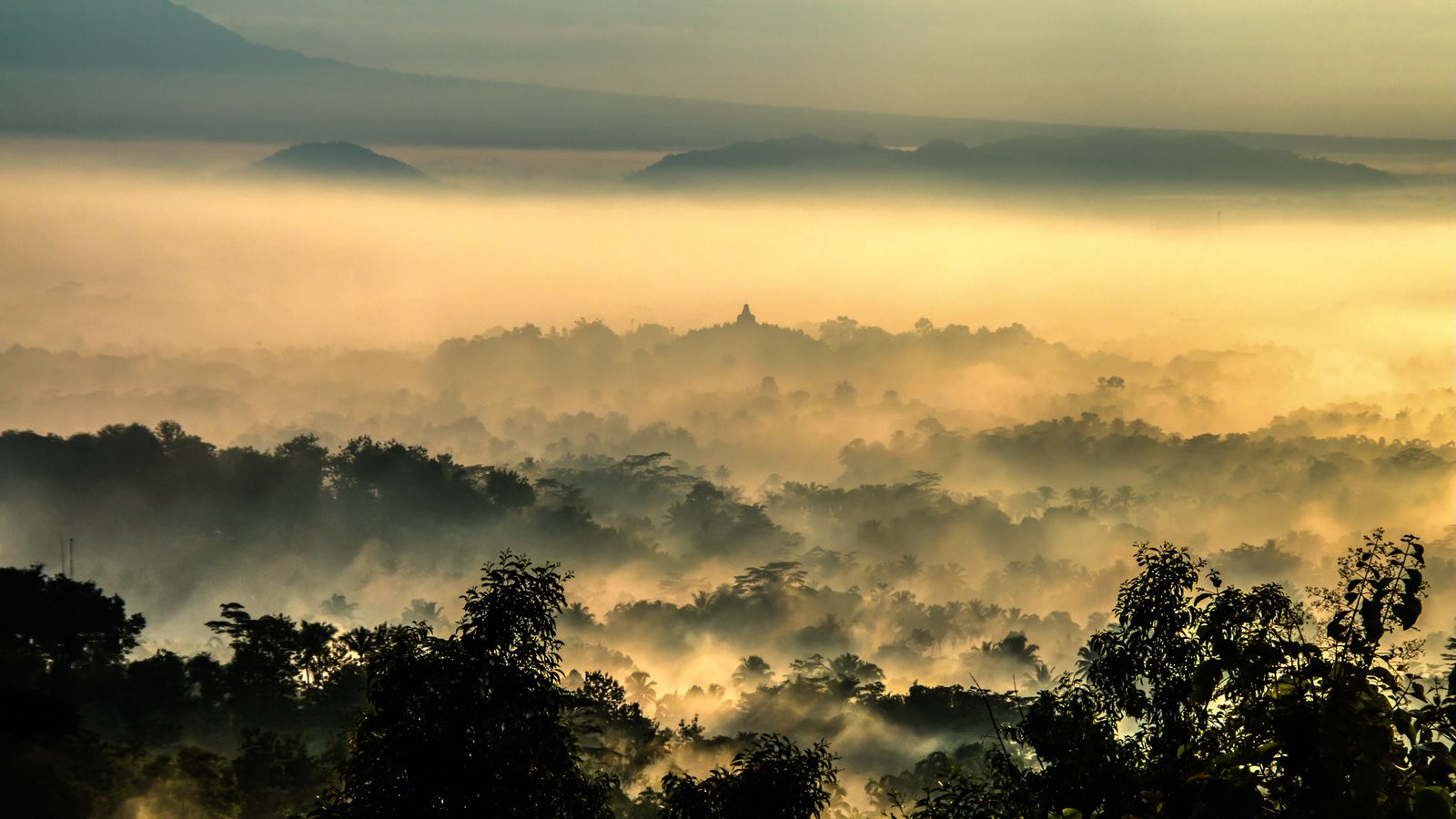
Borobudur is the largest Buddhist temple in the world — 72 stupas containing seated Buddha figures arranged across nine levels of volcanic andesite stone, completed in 820 AD. The sunrise from the upper terrace, with the cone of Mount Merapi appearing above the morning mist, is the finest single view in Indonesia.
Book the Borobudur sunrise ticket at least 2 weeks ahead at manohara.borobudurpark.com — the 4:30am entry gives you the upper terraces in the mist before the main gates open. The ticket sells out in peak season months ahead.
Borobudur Park official tickets →
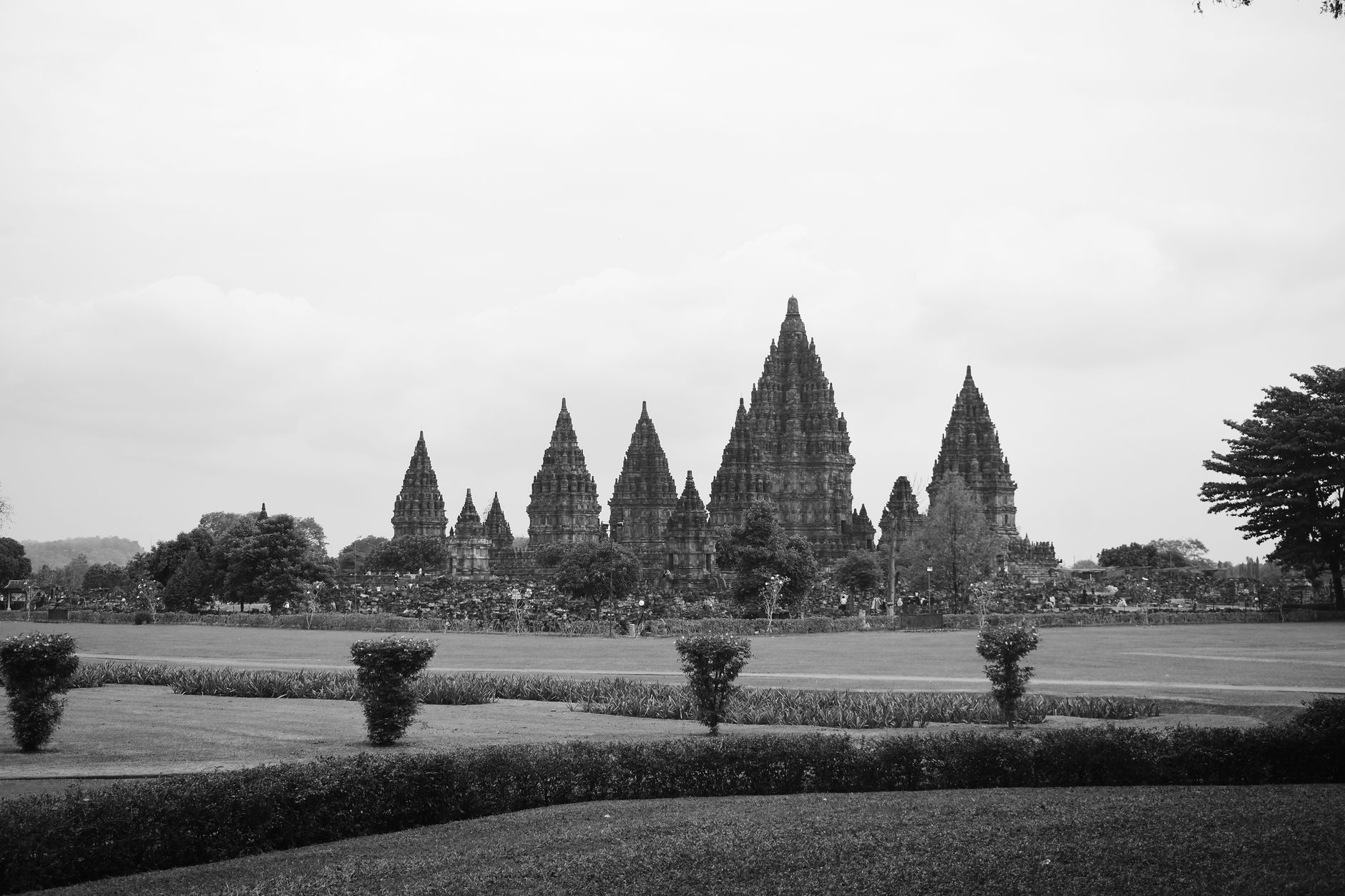
Prambanan’s three central Trimurti towers — Brahma, Vishnu, and Shiva — rise to 47 metres and represent the finest Hindu temple architecture in Southeast Asia outside India. Built in 856 AD, the complex originally comprised 240 temples; the main group of eight survived later earthquakes and lava flows.
Prambanan at 4pm — when the three Trimurti towers turn gold in the western light — is the finest time to visit. The entrance fee includes the smaller Plaosan complex 1km north; walk there before the light goes.

The Keraton is the walled palace of the Sultan of Yogyakarta — the only royal house in Indonesia with a constitutional role (the Sultan is simultaneously Governor of Yogyakarta Special Region). The inner palace museum (Rp 15,000) displays royal regalia, royal portraits, and ceremonial gamelan ensembles.
Gudeg warungs on Jalan Wijilan (500m east of the Keraton gate) open at 6am — the young jackfruit curry with rice, chicken, egg, and krecek (dried buffalo skin crackling) for Rp 15,000–25,000.
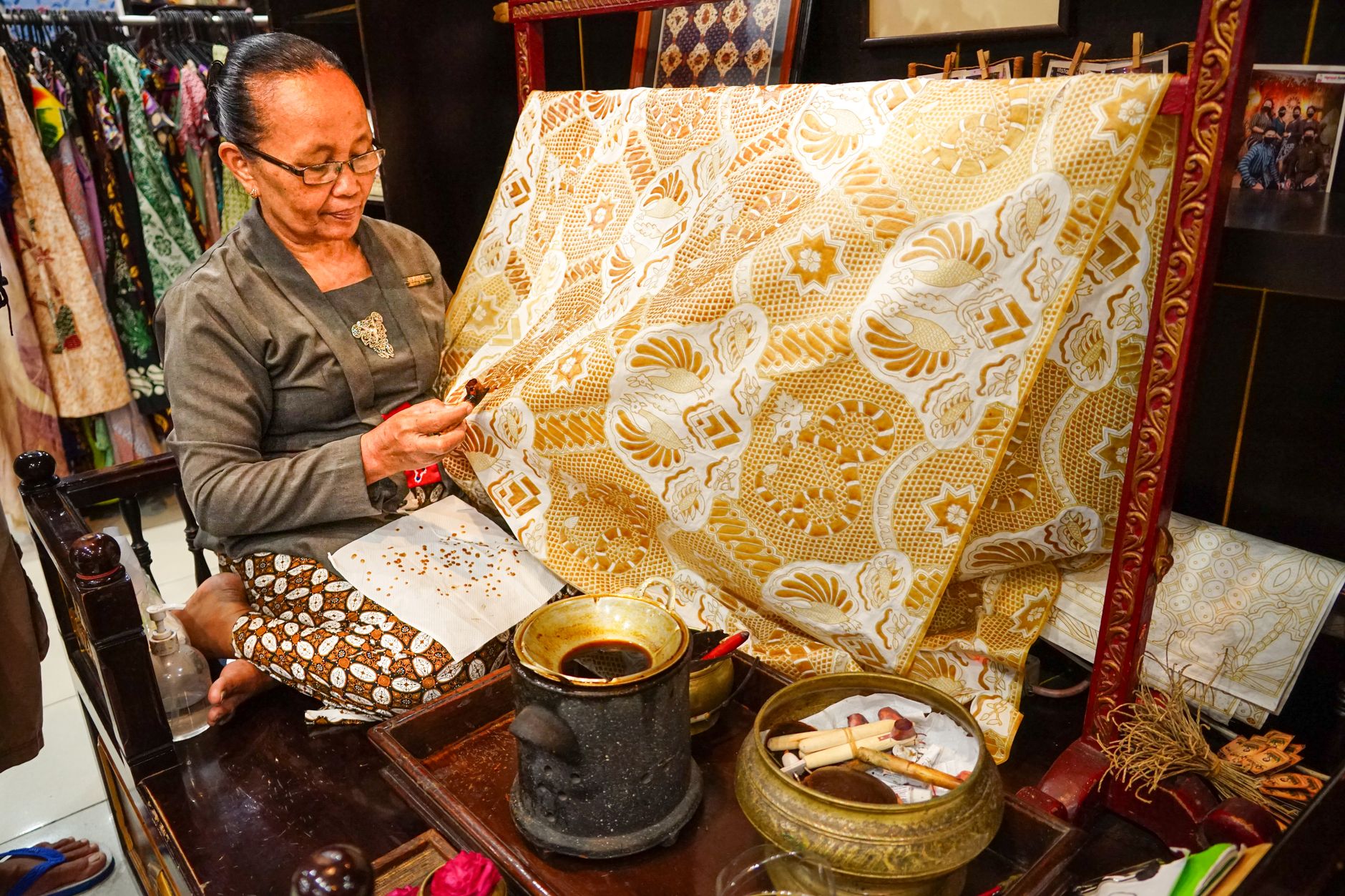
Malioboro is the most atmospheric market street in Java — 1km of batik shops, silver jewellery stalls, warung food carts, and becak rickshaws extending from the train station to the Keraton gate. The finest handdrawn batik in Indonesia is made in the workshops in the alleys behind Malioboro.
The Keraton palace guide (included in entry; Rp 15,000) is essential — without a guide the significance of the royal regalia, the gamelan ensembles, and the Sultan’s ongoing constitutional role is entirely lost.
Yogyakarta’s food culture is Javanese and defined by the gudeg: the jackfruit stew that is the defining Yogyakarta dish (the young jackfruit slow-cooked in coconut milk and palm sugar for 6–8 hours; sweet, slightly salty, served with white rice, the opor ayam (the white coconut milk chicken stew), the krecek (the spicy dried buffalo skin), the boiled egg and the sambal; IDR 15,000–25,000 at any gudeg warung; available from 6am; the Yu Djum gudeg on Jalan Wijilan — the most celebrated gudeg street in Yogyakarta — is the correct address). The Jalan Wijilan gudeg street (the 50-metre lane devoted entirely to gudeg restaurants; the most concentrated single-dish eating in Java; open from 6am; most sell out by noon), the Pasar Beringharjo market eating section (the noodle soup; the soto ayam chicken soup; the most affordable food in central Yogyakarta; IDR 10,000–20,000), and the Malioboro night street stalls (from 9pm; the lesehan — the floor-seating style; the grilled corn; the tempeh; the complete night market atmosphere) make Yogyakarta the most authentically Javanese food experience in any Indonesian city.
Gojek (the most practical city transport; IDR 15,000–40,000 for Malioboro and Keraton journeys; IDR 80,000–120,000 for Prambanan) is the correct taxi for all city journeys. The becak (the cycle rickshaw; negotiate IDR 20,000–40,000 for a short ride; IDR 50,000–80,000 for a 30-min Malioboro to Keraton circuit; the most atmospheric way to see the city streets but the slowest) and the Trans Jogja bus (IDR 4,500; the public bus covering all main sights) cover the central sightseeing. For Borobudur (42km northwest): a hired car with driver (IDR 200,000–300,000 for the Borobudur sunrise tour; the hotel arranges; depart 4am for the 6am sunrise) or the organised sunrise tour (IDR 350,000–600,000 pp including entry) is the standard approach. For Prambanan (16km east): Gojek (IDR 80,000–120,000 one way) or the Trans Jogja bus 1A (IDR 4,500; 45 min).
Pre-book the Borobudur sunrise ticket (manohara.borobudurpark.com; Rp 450,000–600,000) at least 2 weeks ahead — the 4:30am entry gives you the upper terraces before the main gates open at 6am.
Prambanan’s three Trimurti towers are best photographed at 4pm when the stone turns gold — the entrance fee (Rp 350,000) includes both Prambanan and the smaller Plaosan complex 1km north.
Gudeg (young jackfruit cooked in coconut milk; Rp 15,000–25,000) is the most specifically Javanese dish and the correct Yogyakarta breakfast.
A half-day batik workshop (Batik Plentong on Jalan Tirtodipuran; Rp 150,000–300,000) teaches the wax-resist dyeing technique and produces a piece to take home.
Wayang kulit (shadow puppet theatre; 45-minute excerpt at the Keraton daily at 9am; Rp 15,000) is the most accessible introduction to Javanese classical culture — the dalang (puppeteer) controls 60+ characters simultaneously.
The Mount Merapi 4WD jeep tour (Rp 400,000–600,000; 3–4 hours; departs Kaliurang village 25km north) drives to the 2010 eruption exclusion zone.
Apr–Oct is the dry season (26–32°C; clearest Borobudur sunrise; best Prambanan sunset). May–Aug is peak. Nov–Mar: the rainy season — lush countryside; Borobudur in the mist is atmospheric; fewer tourists; lower prices.
Three days: Borobudur sunrise, the Keraton and wayang kulit, the gudeg market, Prambanan at sunset, and the Merapi jeep tour.
4:30am departure for Borobudur sunrise (45km; pre-booked ticket). Upper terrace in the mist. Main gates open at 6am for the lower levels. Return by 10am for gudeg breakfast on Jalan Wijilan.
Borobudur and Prambanan in one day is possible — 45km apart, each needing 2–3h. Borobudur at 4:30am (sunrise) and Prambanan at 4pm (golden hour) is the ideal single-day circuit by rental car.
Keraton palace (9am; the Sultan’s museum and wayang performance). Malioboro Street (batik shopping; becak ride). Prambanan at 4pm for the golden hour towers.
Malioboro’s best shopping is in the alleys behind the main street — the handdrawn batik workshops produce pieces genuinely different from the printed batik on the main strip. Ask the hotel for the correct alley address.
Gojek to Kaliurang village (25km north). Mount Merapi 4WD jeep tour (3–4h; the 2010 eruption zone; the buried mosque). Return for a batik workshop afternoon.
The Merapi jeep tour combined with Dieng Plateau makes a superb 2-day itinerary — Merapi in the morning, drive to Wonosobo for the night, Dieng tri-coloured crater lakes at dawn the next day.
Yogyakarta is the most affordable city in this Indonesia guide. The gudeg (IDR 15,000; €0.85) is the cheapest complete meal in Southeast Asia. The Borobudur sunrise ticket (IDR 850,000; €48) is the main single spend. Per person per day.
The gudeg (IDR 15,000 ≈ €0.85) is the cheapest complete meal in Southeast Asia.
The Prambanan temple (IDR 350,000; approximately USD 22; the 47m Shiva tower; the finest Hindu temple in Southeast Asia) is the best value major archaeological experience in Indonesia — comparable to Angkor Wat in architectural.
The Borobudur sunrise ticket (IDR 750,000–850,000 pp; the pre-dawn access; the 4am departure from Yogyakarta; the 6am sunrise from the upper terrace of the world’s largest Buddhist monument; the Merapi volcano in the mist) is.
Gojek rides across Yogyakarta and car hire for the Borobudur–Prambanan temple circuit.
Free
Yogyakarta restaurant and wayang performance discovery with Malioboro and Prawirotaman filtering.
Free
Download the Yogyakarta and Borobudur offline map before arrival — essential for the temple circuit without data.
Free
Download the Indonesian offline pack and use camera mode for menus and signs.
Free
Quick answers to the questions travellers most often ask before visiting Yogyakarta.
The dry season (May-September) is the best time to visit, especially for the temples and Mount Merapi. The October-April wet season brings heavier rain.
Two to three days for the great temples of Borobudur and Prambanan, the Sultan’s Kraton palace, the Malioboro street and the batik and silver crafts, with a possible Mount Merapi excursion.
Malioboro and the centre are walkable, with becak pedicabs, the Grab app and taxis for longer trips; tours and trains reach the temples. Sunrise tours are popular for Borobudur.
The cultural heart of Java — the magnificent Buddhist temple of Borobudur and the Hindu temples of Prambanan nearby, the Sultan’s Kraton palace, batik and silver crafts, the Malioboro street, and the smouldering Mount Merapi.
Explore more of Indonesia’s extraordinary cities and landscapes.
Planning a wider trip? Our Indonesia travel guide covers getting there, costs, when to go and more.