TK
Tokelau
The most remote and tranquil atolls in the Pacific
The most remote and tranquil atolls in the Pacific

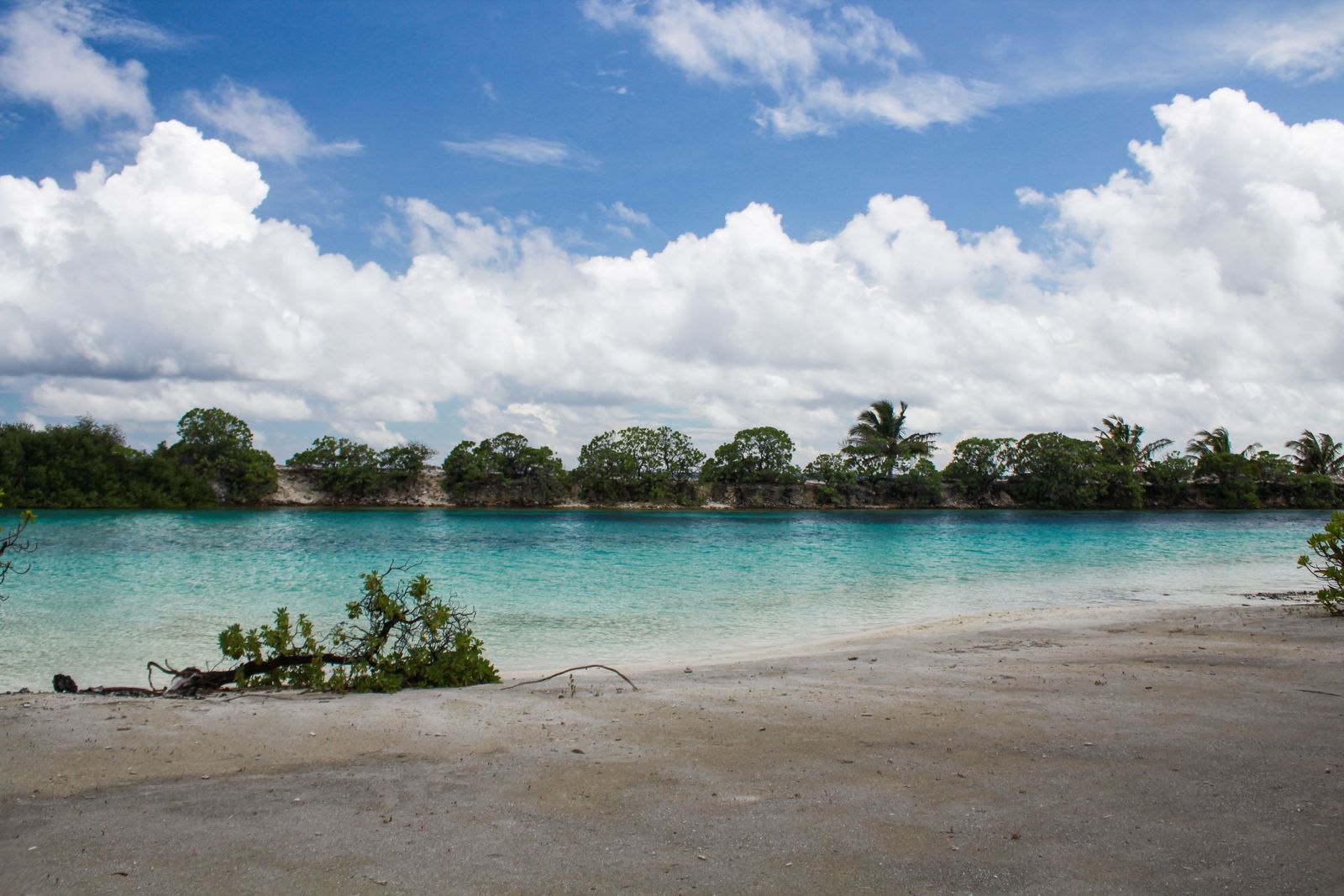
The northernmost and most visited of Tokelau’s three atolls — a classic low-lying coral atoll surrounding a vivid turquoise lagoon. The atoll is roughly 8km long, and the village sits on a single motu (islet) at its southwestern corner. Snorkelling in the lagoon is excellent.
Photo: CloudSurfer, CC BY-SA 3.0
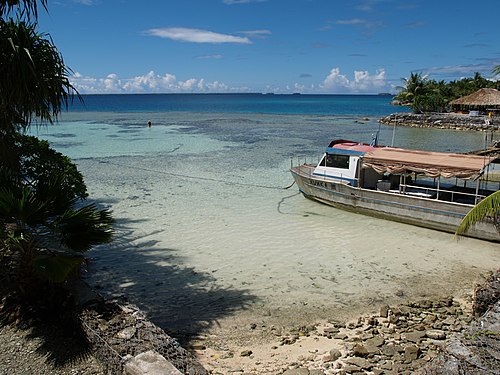
The largest atoll of the three, with the biggest lagoon in Tokelau — predominantly Catholic (while Atafu and Fakaofo are predominantly Congregationalist), Nukunonu has a different cultural character. The lagoon is the largest in Tokelau.
Photo: CloudSurfer, CC BY 2.5

The most densely populated of Tokelau’s atolls — historically the most powerful of the three, and long regarded as the cultural heartland of Tokelau. The village church is the main landmark.
Photo: Department of Foreign Affairs and Trade, CC BY 4.0
Three clear turquoise lagoons enclosed by narrow coral ribbon atolls — the snorkelling and free-diving in the lagoons is excellent, with reef fish, reef sharks and turtles in very clear water.

Tokelau operates entirely on the inati — a communal sharing system where all food caught, grown or produced is pooled and distributed equally regardless of who caught or made it. It remains central to village life, alongside a small cash economy.
Photo: CloudSurfer, CC BY 2.5
In 2012 Tokelau switched its power supply to solar — each atoll has a solar array with battery storage, and the project was widely described as the first in the world to cover a whole territory. Backup generators still cover cloudy spells.
Tokelau (Wikipedia) →Raw tuna marinated in lime juice with coconut cream, cucumber and tomato — the same poisson cru tradition found throughout Polynesia, made daily in Tokelau with fish caught that morning in the lagoon. The fish is usually caught the same day.
Communal meals cooked in an umu (underground stone oven) — all food is shared under the inati system regardless of who prepared it. Feasting is communal; visitors are invited as equals to the shared table.
Spiny lobster and reef fish caught daily in the lagoon — grilled over coals or baked in the umu. Seafood is the core of the local diet.
Sweet or fermented coconut sap tapped daily from coconut palms — drunk fresh as a sweet juice or left to ferment into a mildly alcoholic toddy. The primary source of liquid refreshment on atolls where fresh water is scarce.
The two staple carbohydrates of Tokelau — taro grown in shallow freshwater pits and breadfruit from ancient trees. Both are baked in the umu for large communal feasts.
Straight from the husk, machete-opened — the daily drink of Tokelau, where coconut palms are the dominant tree on every atoll. On remote atolls with limited freshwater, coconuts are a vital resource.
No airport, no harbour. All access is by the MV Tokelau supply vessel from Apia, Samoa (24–36h). Entry permits are required in advance from the Tokelau Administration. For trip planning, see the official Tokelau portal.
The government ferry is the only transport to and from the atolls. The 10–14 day interval between vessel arrivals determines the minimum stay. Passengers sleep on deck; bring a sleeping mat, sunscreen and patience.
Apia (Samoa) is the gateway for Tokelau. It is reachable from Auckland (3h30), Sydney (4h30) and Honolulu (5h30). All Tokelau permit applications and vessel bookings are handled through the Tokelau Administration office in Apia.
Entry permits are the primary logistical barrier — Tokelau issues a very limited number of tourist permits per vessel trip. The process requires a letter explaining the purpose of visit, accommodation confirmation (community guesthouse) and advance notification to the relevant faipule.
Tokelau atolls are 200–400m wide at most and a few kilometres long — a 10-minute walk reaches any point on any atoll. There are no motor vehicles; the community uses bicycles, canoes and feet.
Year-round is hot and humid (28–30°C). May to October is the drier, slightly less hot season — the best time for visiting the atolls. November to April is the wetter season with occasional cyclone risk.
📅 Tokelau is in its best season in May, June, July, August, September, October. See where else is good to go in those months, or browse where to go by month.
The New Zealand dollar (NZD) is the currency. Extremely limited facilities; costs are very low once on the island.
There are no shops, no restaurants and no cafes on any Tokelau atoll — the community provides meals as part of the homestay arrangement.
The logistics of visiting Tokelau (permit application 4+ weeks ahead, booking a berth on the ferry, the 24&ndash)
Tokelau stamps and coins (issued largely for collectors; together with fishing licence fees and the .tk internet domain, these have been among the territory’s few sources of outside income)
Atafu for two days, communal life for one, lagoon fishing for one, Nukunonu for one, Fakaofo for one, return voyage for one. Tokelau has no airstrip, runs mostly on solar power and keeps strong communal traditions; the only way in is the ferry from Samoa.
Atafu — the northernmost of the three Tokelau atolls (Tokelau is a New Zealand territory of about 10km² of land — three coral atolls in the central Pacific north of Samoa, population around 1,600, with no airstrip and no deep-water harbour; referendums on self-government in free association with New Zealand in 2006 and 2007 both fell short of the two-thirds majority required) with the village of Atafu (almost the whole atoll population lives in a single village).
Tokelau has no airstrip — the atolls are low (around 5m at most) and narrow (a few hundred metres wide). The only scheduled access is the government ferry from Apia, Samoa, which typically sails every couple of weeks and calls at each atoll. The journey takes 24–36 hours from Apia; passengers sleep on deck.
Atafu village (around 500 people in a single settlement; land is held by extended families, the village council of elders (taupulega) makes most decisions, and the inati sharing system still operates) with its cooperative fishing and weaving.
The inati system (the Tokelauan practice of sharing communal catches and produce among households) is one of the clearest surviving examples of traditional Polynesian resource-sharing.
The Atafu lagoon (a 17km² coral atoll lagoon with healthy reefs and little commercial fishing — fishing is managed by village rules at subsistence level — snorkelling from the beach on reef fish, sea turtles and the daily traditional fishing with hand lines and nets from outrigger canoes).
Fishing in the lagoons is governed by village rules, including seasonal and area closures. Ask before swimming or snorkelling in any area, and follow local guidance.
By supply vessel: Nukunonu (the largest Tokelau atoll at 4.7km² — the Catholic atoll in a territory where Atafu is Protestant and Fakaofo is mixed — known for traditional handicrafts such as plaited mats and baskets woven from pandanus and coconut leaf — and the Nukunonu lagoon, the largest of the three Tokelau lagoons at 98km²).
The religious division of Tokelau (Atafu — Protestant; Nukunonu — Catholic; Fakaofo — mixed) dates from the arrival of different missionary orders in the 1860s, who each claimed different atolls as their territory and established different Christian traditions that have been maintained to the present. Each atoll has its own village life and traditions, despite the short distances between them.
Fakaofo (the main village on Fale islet is one of the most crowded settlements in the Pacific, with homes packed onto a tiny islet; the rest of the atoll is used for gardens and fishing).
Tokelau has no fixed capital — the role of Ulu-o-Tokelau (head of government) rotates each year among the leaders (faipule) of Atafu, Nukunonu and Fakaofo, so that no single atoll dominates the others.
The Tokelau renewable energy system (since 2012, three solar arrays with battery banks have replaced most of the diesel generation — around 4,000 panels and more than 1,300 batteries — one of the most cited small-island renewable-energy projects) and the climate change discussions with village leaders about rising sea levels.
Tokelau’s solar project was completed in 2012 with New Zealand funding (around NZD 7 million). The system powers homes, desalination plants (the only source of fresh water) and the refrigeration systems essential for food storage on coral atolls with no groundwater.
The return voyage to Apia, Samoa (24–36 hours by ferry, south to Samoa — with flying fish, frigatebirds and occasional whale sightings in the open ocean) followed by a connection from Apia to onward destinations. All departures are by the same supply vessel.
The Tokelau ferry (government-run, connecting the three atolls to Apia roughly every two weeks) carries freight, government officials, returning Tokelauans and the very small number of tourists who visit. The vessel is the primary lifeline for all three atolls; the fortnightly schedule determines the rhythm of community life on each atoll.
There is no airport on any of Tokelau’s atolls. The ferry departs Apia (Samoa) roughly every two weeks; passenger berths are available but extremely limited. Book through the Tokelau National Government months in advance.
All visitors require prior permission from the Office of the Tokelau Government in Apia, Samoa. The application process ensures the tiny community (around 1,600 people) can manage visitor numbers.
There are no hotels, restaurants, ATMs or tourist facilities on any atoll. Accommodation is with local families (arranged through the government); all food is shared communally. Expect a quiet, community-based stay.
The inati system means most daily needs are met communally; bring NZD for any small purchases or gifts. There are no ATMs or card facilities.
There are no hospitals on Tokelau. Serious medical emergencies require evacuation by boat to Samoa or emergency air transport; travel insurance with evacuation cover is essential.
Tokelau’s atolls have no waste processing facilities beyond the communal. Visitors are expected to carry out everything they bring in; the community’s environmental ethic is strict.
Quick answers to the questions people most often ask about visiting Tokelau.
Only by sea. Tokelau has no airport, so all visitors travel on the supply vessel from Apia in Samoa — a crossing of roughly a day or more that calls at all three atolls. Sailings run about every couple of weeks and passenger berths are very limited, so book months in advance.
Yes. Every visitor needs prior permission from the Tokelau Government, whose office is in Apia, Samoa. Apply at least four weeks before you plan to travel.
No. There are no hotels, restaurants, ATMs or tourist facilities on any of the atolls. Visitors usually stay with local families, arranged in advance, making a trip to Tokelau true expedition travel.
May to October, the slightly drier and less hot season. Tokelau is hot and humid all year (28–30°C), and November to April is wetter with some cyclone risk.
The New Zealand dollar (NZD). There are no ATMs, so bring cash — though daily costs on the atolls are very low, and the boat passage is the main expense.
Tokelau sits in the central Pacific surrounded by Samoa, Fiji, Tonga, New Zealand and Vanuatu — the wider Polynesian Pacific world of which Tokelau is the quietest and most remote outpost.
Tokelau is one of the world’s least-visited places. See all 90 in our guide to the world’s least-visited countries & territories.

