TO
Tonga
Swim with humpback whales in the world's last Polynesian kingdom
Swim with humpback whales in the world's last Polynesian kingdom
Tonga is the only Pacific nation never to have been colonised by a European power — an independent Polynesian kingdom of 176 islands stretching across the South Pacific, where humpback whales come to breed and give birth between July and October, making Tonga the world’s premier destination for swimming with humpback whales in the open ocean. The Vava’u island group is a sheltered archipelago of emerald islands and turquoise lagoons for sailing and kayaking; the Ha’apai group offers Robinson Crusoe isolation on uninhabited islands of pure white sand. Tongan culture — Christianity, chiefly hierarchy, kava ceremony and elaborate traditional dance — remains vital and proud.
From July to October, humpback whales come to Tonga’s warm waters to breed and give birth. Tonga is one of the few places on earth where swimming with humpback whales in the wild is legally permitted — a face-to-face encounter with a 30-tonne animal in crystal-clear Pacific water. The Vava’u and Ha’apai groups are the primary whale-watching and swimming areas.
A magical archipelago of over 50 islands with the finest sailing in the South Pacific — the Port of Refuge, one of the Pacific’s great natural harbours, is surrounded by islands of beauty. Kayaking between uninhabited islands, exploring sea caves and snorkelling over healthy reefs make Vava’u an island-hopper’s paradise.
The “Stonehenge of the Pacific” — a massive coral limestone trilithon built around 1200 AD by the Tu’i Tonga empire to mark solstice alignments. The structure, on the main island of Tongatapu, is the most impressive ancient monument in Polynesia outside Easter Island.
Tonga (Wikipedia) →raw fish marinated in lime juice and coconut cream — a Polynesian ceviche) is the defining dish.
Corned beef and onion wrapped in taro leaves, cooked in coconut cream in the underground umu (earth oven) — Tonga’s most important feast dish.
A refreshing drink of watermelon or mango blended with coconut milk and sugar — the Tongan national drink, sold at every market and Sunday feast.
lamb wrapped in taro leaves and coconut cream, baked in an umu earth oven) is the Sunday celebration meal.
a mildly narcotic drink made from the pepper plant root, mixed with water and drunk from a coconut shell) is the central ceremony of Tongan social life — kava circles are where village decisions are made and relationships forged.
Fua’amotu International (TBU) on Tongatapu is the main gateway. Fiji Airways and Air New Zealand connect via Fiji and Auckland; Qantas via Sydney. For trip planning, see the official Tonga tourism portal.
Auckland (3h30) and Sydney (4h) are the closest major gateways. Fiji (2h) is the natural combination for a central Pacific circuit.
Los Angeles is 12h total via Fiji; Honolulu (7h via Fiji) is the most convenient US gateway. The Fiji–Tonga leg (2h) is simple and frequent.
Real Tonga (domestic carrier) connects the island groups. The overnight ferry between groups is cheap but very slow — domestic flights (TOP 80–200) are strongly recommended for Vava’u and Ha’apai.
Tongatapu is flat and easily driven; car hire is the best option. Vava’u is the premier yacht charter destination in the South Pacific — boats available for bareboat or skippered hire from Vava’u’s Port of Refuge.
May to October is the best window — the dry season, the humpback whale season (July–October, the highlight of Tonga), the coral at its clearest. July to September are the best months. November to April is the wet season — warm, humid and the Ha’apai atolls can be hard to reach by boat.
📅 Tonga is in its best season in June, July, August, September, October. See where else is good to go in those months, or browse where to go by month.
Tonga uses the Tongan Pa’anga (TOP). It is mid-range for the Pacific — cheaper than Fiji but more expensive than Samoa, with limited budget options on the outer islands.
Kava (a mildly sedative drink prepared from the ground root of the kava plant, Piper methysticum, mixed with water and strained through coconut fibre)
Coconut crab (Birgus latro, the world’s largest land invertebrate, up to 4kg, endemic to tropical Pacific islands, with claws strong enough to crack open a coconut) is the finest delicacy in Tonga, available at good restaurants in Nuku’alofa and Vava’u for TOP 60&ndash.
Fafa Island Resort (a 15-minute boat from Nuku’alofa, a private island with 13 bungalows and the only overwater bungalows in Tonga, from TOP 400–900/night) and Matangi Island Resort are Tonga’s most exclusive addresses.
Tongatapu for two days, Vava’u for two, Ha’apai for two, Niuas for one. Tonga — the last Polynesian monarchy — is the most culturally traditional and undeveloped island nation in the Pacific.
Nuku’alofa — the capital of Tonga (the last remaining Polynesian monarchy) on the island of Tongatapu — with the Royal Palace (1867, a Victorian wooden palace built by the first Tongan king to unite the islands, still the residence of the current monarch King Tupou VI) and the Ha’amonga ‘a Maui Trilithon (a massive coral stone arch built around 1200 AD — two vertical stones 4.7m high supporting a 6-ton lintel — the most mysterious megalithic structure in the Pacific, purpose unknown).
The Ha’amonga ‘a Maui Trilithon (the “burden of Maui”) has been interpreted as a calendar, a gateway to a royal compound, or a symbol of the unity of the Tui Tonga’s two sons. King Täufa’ahau Tupou IV discovered in the 1960s that the lintel has notches aligned with the sunrise on the summer and winter solstice, suggesting an astronomical function similar to Stonehenge.
The Langi (royal tombs — large rectangular stepped earthen mounds covered in stone casing, the burial sites of the Tui Tonga kings from the 13th century, built in a style unique in the Pacific) and the Mapu ‘a Vaea blowholes (natural lava tube blowholes on the south coast that shoot seawater 20m into the air when swell enters the lava cavities — the most impressive blowholes in the Pacific, active in all but the calmest seas).
The Tui Tonga dynasty was one of the most extensive imperial systems in the Pacific — at its peak in the 12th–13th centuries, the Tui Tonga tribute network extended from Fiji in the west to Niue in the east, covering 2,000km of ocean. The Ha’amonga Trilithon was built by the 11th Tui Tonga around 1200 AD.
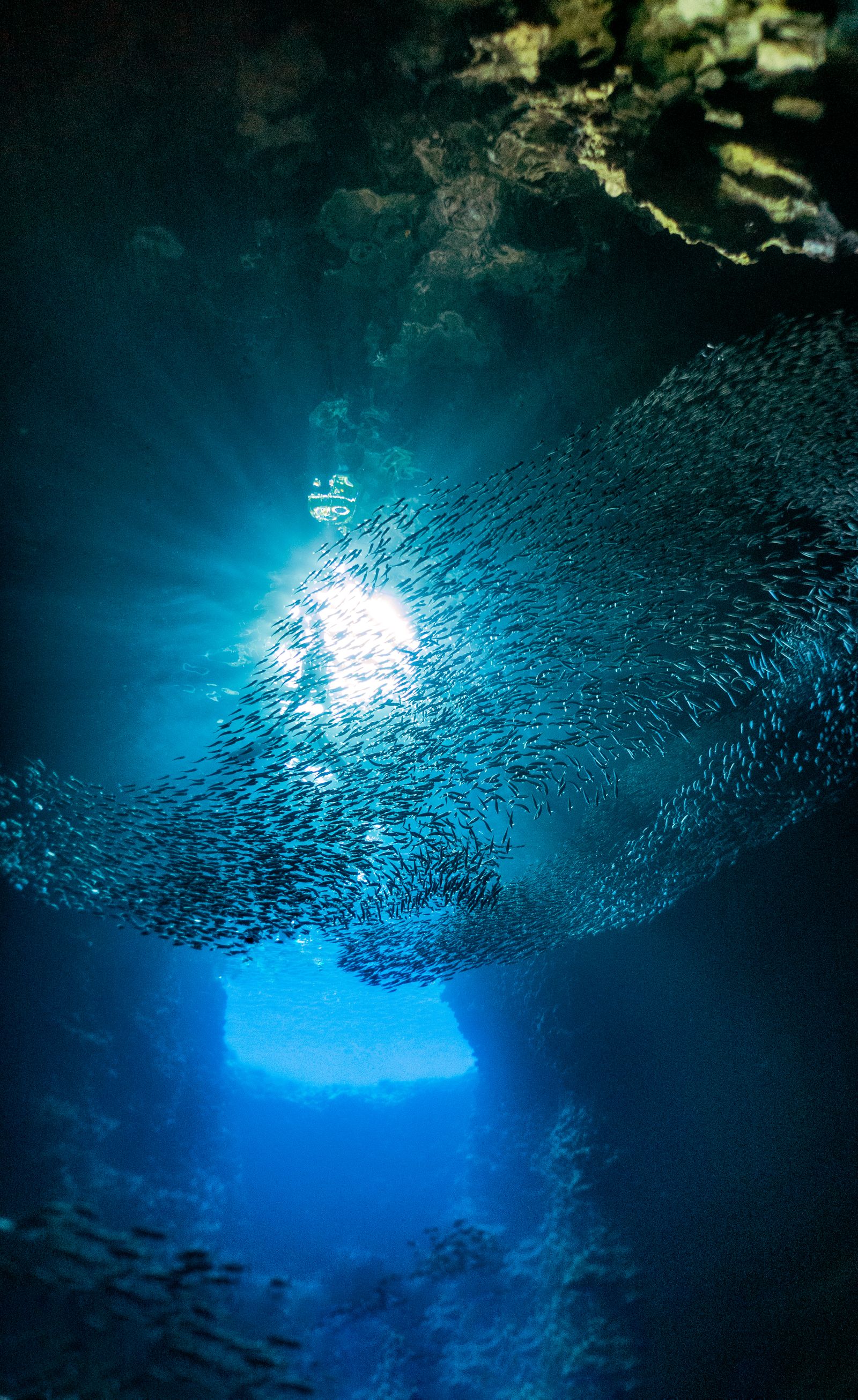
1h flight from Tongatapu. Vava’u — a group of 60 islands with the finest natural harbour in the South Pacific (Port of Refuge — a large, perfectly sheltered bay enclosed by islands, the most popular yacht charter base between Fiji and the Cook Islands) — with the swimming caves (Mariner’s Cave, an underwater tunnel entry accessible by freediving that opens into a large air-filled sea cave).
Vava’u was the base of the English adventurer William Mariner (1791–1853), who survived the Tongan massacre of his ship’s crew in 1806 and lived for 4 years as an adopted son of the Tongan chief Finau ‘Ulukalala. His 1817 account “An Account of the Natives of the Tonga Islands” remains the most detailed contemporary description of Polynesian culture before mass European contact.
July to October: the humpback whale encounter (Tonga is one of three places in the world where swimming with humpback whales is permitted — the whales migrate from Antarctica to calve and mate in the warm Tongan waters, with mothers and calves visible in protected bays, and male singers underwater audible without even getting in the water).
Tonga is considered the finest place in the world to swim with humpback whales — permitted under strict guidelines (no flippers, no touching, maximum 4 swimmers per whale at a time, minimum entry angle from the side). The whales (up to 14m and 30 tonnes) approach curious snorkellers voluntarily. Mothers with calves are the most frequently encountered; males sing continuously from August to October.
40 min from Vava’u. Ha’apai — the most remote and undeveloped island group in Tonga (50+ flat coral islands and atolls, population 6,000, no paved roads, virtually no tourism) with the finest undeveloped beaches in the South Pacific (the Uoleva Island beach — 5km of white sand, no development, no other tourists in sight in most months) and the most intact traditional Tongan village culture.
Ha’apai was the location of the Bounty mutiny’s aftermath — Captain Bligh set adrift after the mutiny on the Bounty (April 1789) passed through Ha’apai waters during his extraordinary 6,700km open-boat voyage to Timor. The Tongan islands he encountered were hostile; he escaped by rowing through the night. His navigation feat — covering 6,700km in a 7m launch with no charts — is considered one of the greatest of the Age of Sail.
2h+ from Ha’apai. The Niua Islands (Niuafo’ou and Niuatopupau — the most remote inhabited islands in Tonga, on the edge of the Pacific Ring of Fire, with Niuafo’ou (Tin Can Island — mail was once delivered by swimmers who collected it from tins thrown from passing ships) having an active volcano in the middle of a crater lake.
Niuafo’ou is called Tin Can Island because from 1882 until 1983, mail was delivered by swimming — passing ships anchored offshore, sealed the mail in tobacco tins and threw them overboard; swimmers collected them and swam to shore. The island’s crater lake (Lake Vai Lahi) sits inside the active Niuafo’ou volcano, which last erupted in 1985.
Return to Tongatapu. The traditional umu (earth oven feast — pig, fish, root vegetables and taro leaf parcels cooked in a ground oven lined with hot volcanic stones for 3–4 hours, then served in a communal feast on woven mats) — one of the most important social occasions in Tongan culture, performed at weddings, funerals, church fundraisers and royal celebrations. Fly from Tonga (TBU).
The Tongan umu feast is typically organised to raise money for the church — Protestant Christianity (the Free Wesleyan Church of Tonga, founded by Methodist missionaries in the 1820s) is the dominant religion, and Sunday is observed with great strictness (no sport, no commerce, no swimming — enforced by law until 2003). The role of the church in Tongan society is comparable to its role in Samoa.
Visa on arrival free for most nationalities for up to 31 days.
Nuku’alofa airport (TBU) on the main island has connections to Auckland and Sydney. Inner islands (Vava’u, Ha’apai) need domestic connections via Real Tonga.
Tonga is deeply Christian and Sunday is a day of rest. Nearly everything closes. Do not swim or sunbathe on public beaches on Sunday.
Humpback whales migrate to Tonga’s Vava’u Group June-November to breed. Swimming with humpbacks (including mothers and calves) is legal and one of the world’s great wildlife experiences.
Book operators months in advance for July–October whale swimming. Reputable operators are certified by the Tonga Tourism Authority.
Tonga strictly observes the Christian Sabbath — virtually everything closes on Sunday.
Quick answers to the questions people most often ask before visiting Tonga.
May to October is the best window — the dry season, the humpback whale season (July–October, the highlight of Tonga), the coral at its clearest. July to September are the best months.
Fua'amotu International (TBU) on Tongatapu is the main gateway. Fiji Airways and Air New Zealand connect via Fiji and Auckland; Qantas via Sydney.
Expect roughly TOP 80–150 a day on a budget and TOP 250–450 mid-range, or TOP 800+ for a more luxurious trip, per person and excluding flights.
Tonga uses the Tongan Pa'anga (TOP).
Plug types: Type I (Australian, 240V).
Point your camera at menus, signs or street text for instant translation. Download the language pack offline before you arrive for full use without data.
FreeReal-time and offline exchange rates for all world currencies — converts prices instantly so you always know what you are paying in your home currency.
FreeFind and book hotels, guesthouses and apartments with free cancellation on most rates — one of the widest selections of accommodation worldwide.
FreeBrowse millions of traveller reviews for restaurants, attractions and hotels — helps identify the best local spots and avoid tourist traps.
FreeTonga sits within easy reach of several other destinations — each with a completely different character.
