WS
Samoa
Fa'a Samoa — the Polynesian way
Fa'a Samoa — the Polynesian way

A giant natural swimming hole connected to the sea by an underground tunnel: a 30m ladder descends into teal-green water surrounded by tropical gardens.

Consistently named the finest beach in the South Pacific: white sand, clear water and traditional open-air fale guesthouses on the beach for USD 30/night.

The highest waterfall in Samoa (100m): a viewpoint over a cliff where the Papapapaitai River drops into a jungle gorge.

The main market town of Savaii: a ferry crossing from Upolu to the quieter, larger island and the most authentic weekly market in Samoa.
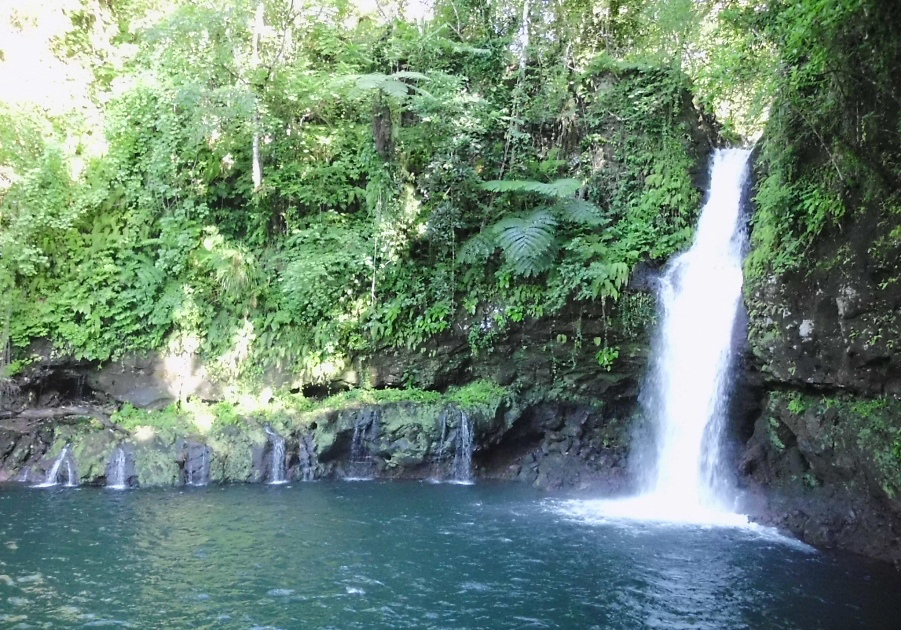
A cool freshwater pool beneath a 3m waterfall in the Savaii jungle: the clearest natural swimming pool in Samoa.

The sacred rainforest at the western tip of Savaii: the Falealupo canopy walkway and the legend of the spirit world entrance.

The Vailima estate where the author of Treasure Island lived from 1890 until his death in 1894: his home preserved as a museum.

A cave accessible through a low river tunnel: the endemic Savaii swiftlet (pe’apea) nests inside and the cave system extends 200m underground.
Samoa (Wikipedia) →Young taro leaves cooked in coconut cream: the most distinctively Polynesian dish, shared across Samoa, Tonga and Fiji.
Food wrapped in banana leaves and cooked on hot stones in a pit: the Sunday umu is the weekly communal feast. Chicken, fish, pork and palusami all cooked together.
Glass noodles with pork, soy sauce and vegetables: introduced by Chinese traders and adopted as a Samoan staple.
Coconut cream curry of taro and pumpkin: the most common vegetable dish in Samoa.
The national lager, brewed in Apia: cold and correct at any resort.
Roasted cacao beans ground into cocoa blocks and dissolved in water: a thick, bitter-sweet drink drunk for breakfast throughout Samoa.
A macheted green coconut: the universal Pacific rehydration drink.
Canned corned beef and coconut cream wrapped in taro leaves and steamed in the umu: a Pacific Islands staple.
Faleolo International (APW) west of Apia is the main airport. Samoa Airways and Fiji Airways are the main carriers. Auckland, Sydney and Fiji are the primary gateways. For trip planning, see the official Samoa tourism portal.
💡 From Europe, route via Auckland (5h from APW) or Sydney (4h30). Auckland is the most natural stopover; Air New Zealand and Samoa Airways connect regularly.
💡 Auckland is the most frequent gateway — multiple weekly direct services from both AKL and SYD. Fiji (2h30) is the natural Pacific hub for multi-island trips combining Fiji, Tonga and Samoa.
💡 Local buses (colourful, decorated, playing Samoan music at volume) connect Apia to most Upolu villages for WST 2–6. The Mulifanua–Salelologa ferry (2h30, WST 10–20) is the only connection to Savai’i.
💡 Car hire in Apia (WST 80–150/day) is strongly recommended for Savai’i, where bus frequency is low. Upolu is manageable by bus + taxi. Driving is on the right (changed from left in 2009 — Samoa changed sides to align with Australia and New Zealand).
May to October is the dry season — beaches calm, Lalomanu the finest beach in the Pacific accessible, the To Sua Ocean Trench swimmable. June to September are the best months (25–28°C). November to April brings cyclone risk; Samoa was devastated by Cyclone Evan (2012) and Cyclone Gita (2018).
Samoa is one of the most affordable Pacific island destinations — fale beach accommodation with meals is genuinely cheap, and local food and transport are inexpensive. The Samoan Tala (WST) is the currency.
The Samoan fale beach stay (open-sided thatched hut + sleeping mat + mosquito net + breakfast + dinner prepared by the host family, typically fresh fish, taro, breadfruit and coconut cream) costs WST 60&ndash.
Vailima beer (brewed in Apia since 1978, named for Robert Louis Stevenson’s estate, the most famous Pacific island lager) costs WST 4–8 at a local bar.
Sinalei Reef Resort (on the south coast of Upolu, the most complete resort in Samoa, with a private reef, spa and excellent food) and Taufua Beach Fales at Lalomanu (the original fale experience on the best beach in the Pacific) represent.
Apia for one day, the To Sua Ocean Trench for one, Lalomanu Beach for one, the Saanapu Mangroves for one, Savai’i Island for two, the Alofaaga Blowholes for one. Samoa is the most authentically Polynesian country in the Pacific — fa’a Samoa (the Samoan way) still governs daily life.
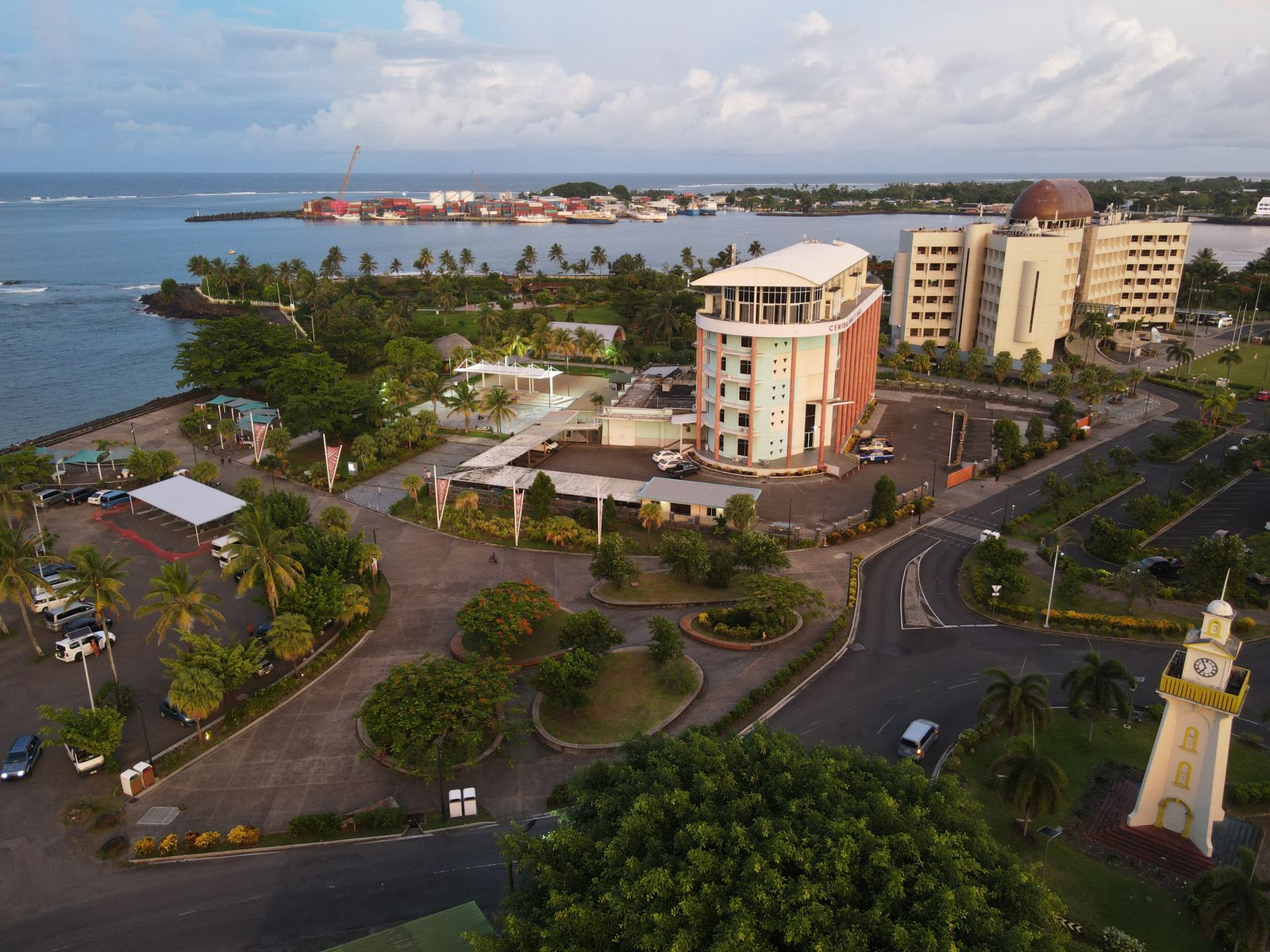
Apia — a small, unhurried capital of 36,000 people on the north coast of Upolu — with the Apia Market (the social hub of the city, every Saturday morning, with fresh fish, taro, coconut cream, handwoven fine mats and the finest oka (raw fish) in the Pacific), the Robert Louis Stevenson Museum (Vailima, the Victorian mansion where Stevenson lived from 1890 until his death in 1894) and Palolo Deep Marine Reserve.
💡 Robert Louis Stevenson (author of Treasure Island, Kidnapped and Strange Case of Dr Jekyll and Mr Hyde) moved to Samoa in 1890 at age 39, seeking a warm climate for his tuberculosis. He fell in love with Samoa, learned basic Samoan, and was given the honorific name “Tusitala” (“teller of tales”). He died of a cerebral haemorrhage at Vailima in 1894; 60 Samoans carried his body to the summit of Mount Vaea.
1h30 from Apia. To Sua Ocean Trench — a 30m-deep, 15m-wide natural swimming hole on the south coast of Upolu, accessible via a wooden ladder descending the cliff, connected to the sea by an underground lava tube (visible during big swells when water surges through). The electric turquoise water is sheltered, warm and completely clear.
💡 To Sua means “giant swimming hole” in Samoan. The trench was formed when a coastal lava tube collapsed inward, creating a circular opening connected to the sea at depth but sheltered on the surface. The turquoise colour comes from the depth and the absence of sediment — the water is entirely clear to the bottom. It is widely considered one of the most unusual natural swimming sites on earth.
45 min from To Sua. Lalomanu — a 1km beach of white sand and clear turquoise water on the southeast tip of Upolu, with a fringing reef visible from the beach, local fale (open-sided beach huts) for overnight stays and the offshore Aleipata Islands in the distance — is consistently described as the finest beach in the Pacific by those who have visited widely.
💡 Lalomanu’s fale accommodation — open-sided, palm-thatched beach huts with a sleeping mat, mosquito net and meals cooked by the family — is the most authentic beach experience in the Pacific, costing WST 80–150/night (approximately US$30–55), including breakfast and dinner of freshly caught fish, taro and coconut cream prepared by the host family.
2h30 ferry from Mulifanua to Salelologa. Savai’i — the largest island in Polynesia outside Hawaii and New Zealand (1,700km²), with fewer than 45,000 inhabitants, no traffic lights, active lava fields from the 1905–1911 eruption of Mount Matavanu (which buried villages under 5–15m of lava and dammed rivers, creating new lakes) and the Pulemele’s ancient star mound.
💡 The 1905–1911 eruption of Mount Matavanu on Savai’i was one of the largest volcanic events in Polynesia in the 20th century — the lava flow lasted 6 years, covered 50km², buried 3 villages and the Catholic Mission church (still partially visible), dammed three rivers and added 5km² of new land to the north coast. 3,000 villagers were displaced.
The Alofaaga Blowholes (Pe’ape’a, the south coast of Savai’i) — lava tubes where the sea pressure builds and releases through narrow rock openings, projecting columns of seawater 20–30m into the air — are the most dramatic coastal spectacle in Samoa. The Saleaula Lava Fields (the 1905 flow, now hardened into a black lunar landscape with the ghost church and a buried village visible at the edge).
💡 The Alofaaga Blowholes work on the principle of a natural hydraulic pump — each incoming wave compresses air and water in the lava tube and forces it through the narrowing exit at pressure. The height of the spout depends entirely on wave size and tube geometry; in a strong south swell, the spouts reach 30m. Locals throw coconuts into the intake and watch them launched skyward.
The Afu Aau Waterfall (Olemoe Falls, a tiered waterfall in the highland rainforest of central Savai’i, falling into a natural cold freshwater pool) and the Dwarf’s Cave (Pe’ape’a Cave — a lava tube cave accessible by torchlight, named for the swiftlets (pe’ape’a, the Samoan name) that nest inside and navigate by echolocation like bats).
💡 The Samoan swiftlet (Aerodramus sawtelli) nests in the Pe’ape’a Cave and is one of only four cave-nesting bird species that use echolocation for navigation in the dark — the others are the edible-nest swiftlet (whose nests are used in bird’s nest soup), the oilbird of Trinidad, and the cave swiftlet. The Samoan swiftlet makes a small clicking sound audible to the human ear in the cave.
Ferry back to Upolu and the Apia Saturday night — a fiafia (a traditional Samoan cultural performance of fire dancing, slit drum, siva Samoa and the final fire knife dance, performed at resorts but with genuine technical skill) and the Apia waterfront at night, when the fish market vendors set up barbecues. Fly from Faleolo (APW).
💡 The umu (earth oven — heated volcanic stones lined in a pit, covered with banana leaves and taro, breadfruit, fish and pork, sealed and left to slow-cook for 3–4 hours) is the central cooking method of Samoan culture and is still prepared every Sunday morning for the family meal that follows church — which runs from 9am to 12pm in most Samoan villages.
Apia to Lalomanu: 1.5h. To Sua Trench from Apia: 1h.
A fale beach stay: WST 50-100 (USD 18-37). A restaurant meal in Apia: WST 20-60.
Being invited to share an umu on a Sunday is one of the Pacific’s great cultural privileges.
Village visits require conservative dress; ask permission before photographing; observe the sa (evening prayer quiet time).
Daily ferries: 1 hour, WST 13. The larger island is significantly less visited.
Digicel has the better coverage outside Apia.
The South Pacific cyclone belt: insurance essential.
Talofa (hello) and fa’afetai (thank you): the two Samoan words for every visitor to learn.
Book To Sua Ocean Trench visits, Alofaaga Blowholes tours, Samoan cultural village days and island adventures.
FreeBook island tours, snorkelling trips and beach activities across Samoa.
FreeSamoa’s primary messaging platform — contact beach fales, guesthouses and local tour operators.
FreeBook beach fales, resorts and guesthouses across Upolu and Savai’i.
FreeBook private bungalows and traditional fales on both main Samoan islands.
FreeTrack WST (Samoan Tālā) exchange rates — ATMs are only reliable in Apia; carry cash for outer areas.
FreeHarbour-capital Apia, the To Sua Ocean Trench, the beaches of Lalomanu, wild Savai’i and car-free Manono — five sides of Samoa.
Samoa sits within easy reach of several other destinations — each with a completely different character.


