ML
Mali
Timbuktu, Dogon cliff villages & the Great Mosque of Djenné
Timbuktu, Dogon cliff villages & the Great Mosque of Djenné
Mali is West Africa’s greatest historical and cultural destination — the heartland of three successive medieval African empires (Ghana, Mali and Songhai) that controlled the trans-Saharan gold and salt trade and produced centres of Islamic scholarship that rivalled the universities of medieval Europe. Timbuktu, once the most famous city in the world and the symbol of impossible remoteness, was the intellectual capital of the Islamic world in the 15th century; its mosques and manuscript libraries are UNESCO World Heritage Sites. The Dogon Country — cliff-face villages of the Dogon people on the Bandiagara Escarpment, whose extraordinary cosmological traditions and astronomical knowledge pre-date Islam — is one of the most remarkable cultural landscapes in Africa. Check current travel advisories carefully before planning a visit.
The legendary city at the edge of the Sahara was the 15th-century world’s most important centre of Islamic learning — the Sankore, Djinguereber and Sidi Yahia mosques are UNESCO World Heritage Sites built of mud and wood in the distinctive Sudano-Sahelian style. The Ahmed Baba Institute holds over 400,000 ancient manuscripts. Accessible by short flight or Niger River boat from Mopti.
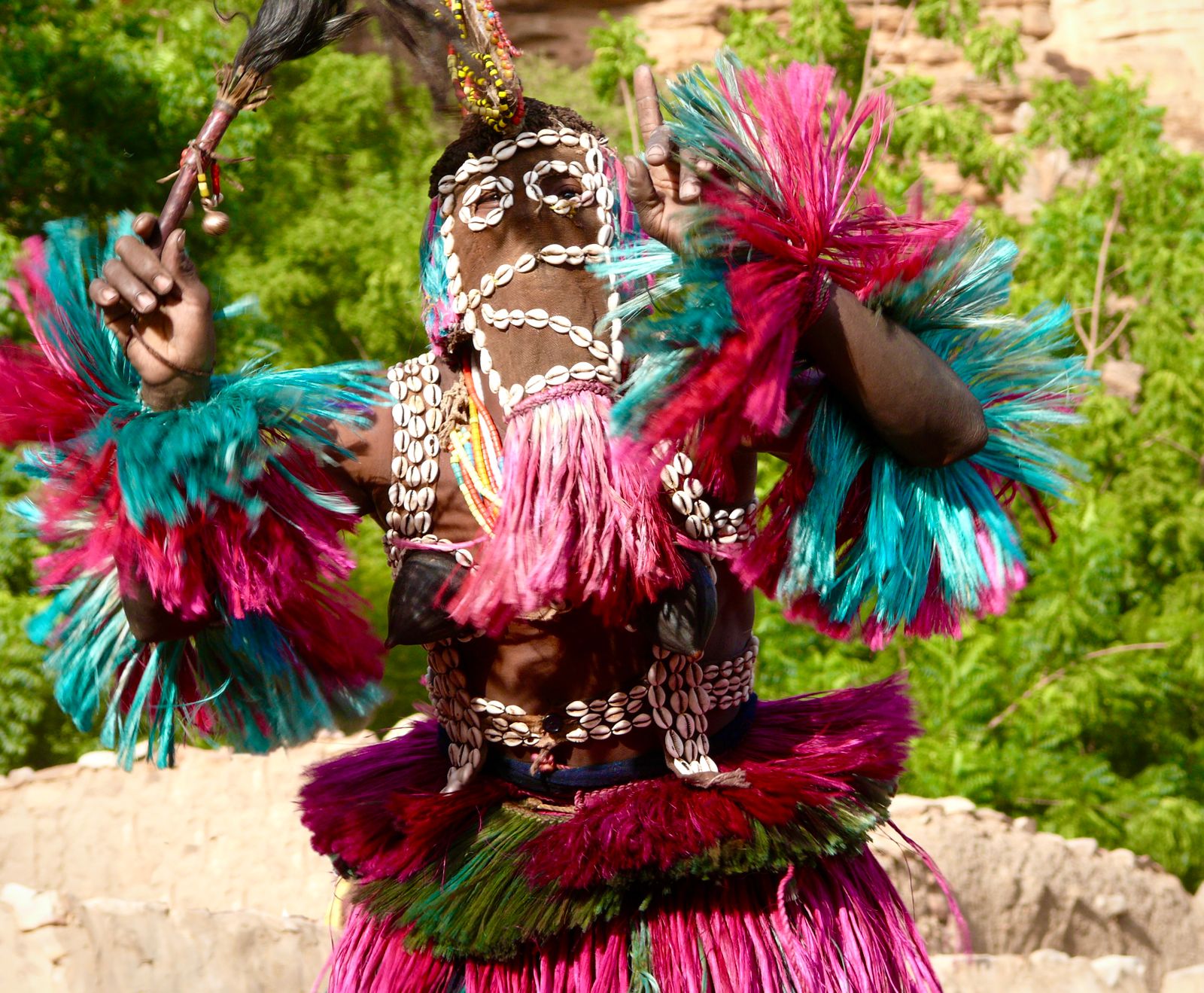
The Bandiagara Escarpment — a 200-kilometre sandstone cliff face — is home to the Dogon people, who built their villages in the cliff face to protect against Fulani slave raiders. The Dogon’s mask ceremonies, their extraordinary knowledge of the Sirius star system (rediscovered by Western astronomers only in the 20th century), their cliff granaries and their intricate cosmology make this one of the world’s most fascinating living cultures.
The Great Mosque of Djenné — the world’s largest mud-brick building and a UNESCO World Heritage Site — is rebuilt with the community’s help after each rainy season as part of a living architectural tradition. The weekly Monday market around the mosque is one of West Africa’s most atmospheric.
peanut stew with chicken or lamb over rice — the national dish) is rich and warming.
Nile perch, grilled over charcoal at riverside restaurants) is outstanding.
dolo) is brewed by Dogon women in enormous clay pots;
Fresh ginger blended with water, lime juice and sugar — sold ice-cold from street stalls throughout Mali, intensely spicy and deeply refreshing in the heat. The universal non-alcoholic drink of the Sahel, considered a tonic for everything from fatigue to illness.
from the Niger floodplains in season are extraordinary.
Modibo Keita International Airport (BKO) in Bamako is the main gateway. Air France, Ethiopian Airlines and Royal Air Maroc serve major routes.
💡 Paris (6h30, Air France) and Casablanca (3h30, Royal Air Maroc) are the most direct European connections. Brussels Airlines (6h direct) is a strong alternative.
💡 Dakar (1h30) and Abidjan (1h30) are the closest hubs. Ethiopian Airlines (Addis Ababa, 7h) connects East Africa directly.
💡 Bamako centre is 20 minutes from the airport. Segou, Djenne and Mopti are all reachable by bush taxi on reasonable roads; Dogon Country and Timbuktu require guided arrangements with security protocols.
💡 Bush taxis connect Bamako with Segou, Mopti and the main southern towns. Dogon Country and river delta travel require 4WD and a local guide; pinasse boats are the traditional and most atmospheric way to explore the Niger Inland Delta.
November to February is the cool dry season — the only comfortable window for most of Mali (20–30°C). December and January are the coolest. March to May brings extreme heat (40–50°C in the north). The north (Timbuktu/Dogon) requires careful safety assessment; check current FCO/State Dept travel advisories before planning.
The West African CFA franc (XOF) is the currency. Very affordable.
Tigadege (groundnut sauce — the most beloved dish in Mali, a rich peanut-based stew with fish or meat, palm oil and local spices, served over rice — available at local restaurants throughout Mali for US$2–6) is.
The Monday market at Djenné (the largest weekly market in the Sahel, surrounding the Grand Mosque on three sides — the best day to visit is always Monday when traders arrive from across the Niger Inland Delta by pinasse boat)
A private Dogon anthropologist guide from Bamako (US$150–300 for a multi-day Bandiagara Escarpment circuit, including access to villages and ceremonies not accessible without trusted local contacts) provides the deepest.
Bamako for one day, Segou for one, Djenne for one, Mopti for one, Dogon Country (security permitting) for one, Timbuktu (security permitting) for one, Bamako music farewell for one. Mali — the Sahel heartland — has the largest mud mosque on earth, the most extraordinary cliff villages in Africa, 700,000 ancient manuscripts in Timbuktu and the greatest musical tradition in West Africa. Check current security advisories before visiting northern areas.
Bamako — the capital of Mali (population 21 million, the ninth-largest country in Africa, independent from France since 1960, with a government in Bamako struggling to control the vast desert north where jihadist groups have operated since 2012) — with the National Museum of Mali (the finest collection of Malian art and archaeology in the world, including Tellem and Dogon sculptural objects), the Grand Marché and the Niger River embankment.
💡 Mali’s 2012 crisis (the military coup of March 2012 + the MNLA Tuareg rebellion + the jihadist takeover of northern Mali by AQIM and Ansar Dine — which captured Timbuktu and Gao and began destroying UNESCO World Heritage sites) was halted by the French Operation Serval intervention of January 2013. Northern Mali remains unstable; travellers should check current UK FCO, US State Dept and French MEAE advisories before visiting any region north of Bamako.
Ségou (the most atmospheric river city in Mali — the former capital of the Bambara Kingdom, with the finest bogolan (mud cloth) weaving workshops in Africa, the river port with traditional pinasse boats, the colonial French architecture and the magnificent evening light over the Niger floodplain — the most accessible cultural city in Mali, 240km from Bamako on a good paved road, safe and well-visited by travellers).
💡 Bogolan (mud cloth — the traditional Malian textile dyed with fermented mud and plant-based mordants to produce distinctive geometric patterns in brown, black and white on handwoven cotton — is the most distinctive artisanal product in Mali. Ségou is the primary production centre; each village and workshop has distinct patterns, and the technique takes years to master. Bogolan has been incorporated into high fashion by designers including Chris Seydou and Yves Saint Laurent.
Djenné (UNESCO World Heritage — the ancient trading city on the inland delta of the Niger, with the Grande Mosquée de Djenné (the largest mud-brick building in the world, rebuilt in 1907 in the traditional Sudano-Sahelian style, requiring annual re-plastering by the community after the rains in a festival called the crepissage) and the extraordinary Djenné market (Monday market — the most atmospheric and unchanged market in West Africa, surrounding the Grand Mosque with all the trade goods of the Niger Bend region) — accessible from Bamako via Ségou.
💡 The Grande Mosquée de Djenné (first built in the 13th century, rebuilt 1834, rebuilt again in 1907 in the current form — the largest and finest example of Sudano-Sahelian mud-brick architecture in the world, with palm wood scaffolding beams permanently embedded in the walls for use during the annual re-plastering festival) is the defining building of the Sahel and the most photographed mosque in Africa after the Hassan II in Casablanca.
Mopti (the most important river port in Mali — at the confluence of the Niger and Bani rivers, with the finest collection of traditional Fulani and Bambara boats, the daily fish market, the Grand Mosque of Mopti and access to the Niger Inland Delta — the world’s largest inland delta, 30,000km² of floodplain, one of the most important wetlands in Africa for migratory waterbirds, with over a million waterfowl visiting annually).
💡 The Niger Inland Delta (the inland delta formed when the Niger River spills across the flat Malian plains between Djenné and Timbuktu, creating a 30,000km² seasonal floodplain that supports the largest Fulani cattle-grazing culture in West Africa (approximately 700,000 cattle) and the most important freshwater fishery in the Sahel, providing protein for millions of people in one of the most food-insecure regions on earth).
Dogon Country — check current FCO/State Dept advisories before visiting. The Bandiagara Escarpment (UNESCO World Heritage — a 150km sandstone cliff with Dogon villages built on the cliff face, with traditional animist religion, Tellem granary ruins 1,000 years old, complex mask ceremonies and the most extraordinary village architecture in Africa — in better security conditions this is one of the greatest cultural experiences in the world; current conditions require careful research and a guide from a reputable Bamako agency).
💡 The Dogon (approximately 700,000 people living in the villages on and below the Bandiagara Escarpment — have maintained a complex cosmological and ritual system with no known parallel in West Africa, including the Sigui festival held every 60 years (last held 1967–1973), the Awa society masks depicting 80+ mythological characters, and an astronomical knowledge including precise records of the Sirius binary star system that were unknown to Western astronomy until the 1970s).
Timbuktu — current security situation in the north is serious; check advisories. In better conditions: Timbuktu (the legendary “city of 333 saints” on the edge of the Sahara — the world’s greatest centre of Islamic learning in the 14th–16th century, with 180 Quranic schools and the Ahmed Baba Institute housing 700,000 ancient Arabic manuscripts, the three UNESCO World Heritage mosques of Djinguereber, Sankore and Sidi Yahia — currently in a security risk zone requiring armed escort or MINUSMA protection).
💡 The Timbuktu manuscripts (estimated 700,000 ancient Arabic texts — collected by the Ahmed Baba Institute, covering astronomy, mathematics, medicine, law and Islamic theology from the 13th–17th century, the largest collection of African intellectual heritage outside Egypt — were partially evacuated to Bamako in 2013 when jihadist groups captured the city. The Ahmed Baba Institute’s preservation programme for the manuscripts is the most significant cultural heritage project in West Africa.
A final evening in Bamako: the Palais de la Culture (the national arts centre with traditional and modern Malian music performances), the bars and clubs of the Hippodrome quarter (where kora, ngoni and djembe music flows all night) and the record stores of the Grand Marché selling the full catalogue of Malian music — before flying from Modibo Keita International Airport (BKO).
💡 Mali’s musical legacy (the Mandé griot tradition, the kora players of Wassoulou, the electric guitar desert blues of Tinariwen, the Wassoulou singers including Oumou Sangare, the instrumental virtuosity of Toumani Diabaté — has produced more internationally celebrated musicians per capita than any other African country, and Bamako’s music scene is recognised by UNESCO as one of the world’s great living musical cities.
Check your government’s current travel advisory carefully. The north and centre of Mali have significant security concerns; Bamako, southern Mali and guided Dogon tours are more accessible, but advisories must be consulted.
The north (including Timbuktu) and much of central Mali have faced a severe jihadist insurgency since 2012. Most Western governments advise against all travel outside Bamako and the south. Check current advisories carefully.
Connected to Paris (Air France), Casablanca and regional African hubs.
The XOF is shared across 8 West African countries. Pegged to the Euro. Carry sufficient cash; ATMs unreliable outside Bamako.
Visa required for most nationalities — apply at a Malian embassy before departure.
Point your camera at menus, signs or street text for instant translation. Download the language pack offline before you arrive for full use without data.
FreeReal-time and offline exchange rates for all world currencies — converts prices instantly so you always know what you are paying in your home currency.
FreeFind and book hotels, guesthouses and apartments with free cancellation on most rates — one of the widest selections of accommodation worldwide.
FreeBrowse millions of traveller reviews for restaurants, attractions and hotels — helps identify the best local spots and avoid tourist traps.
FreeMali sits within easy reach of several other destinations — each with a completely different character.
