FI
Finland
Land of a thousand lakes and northern lights
Land of a thousand lakes and northern lights

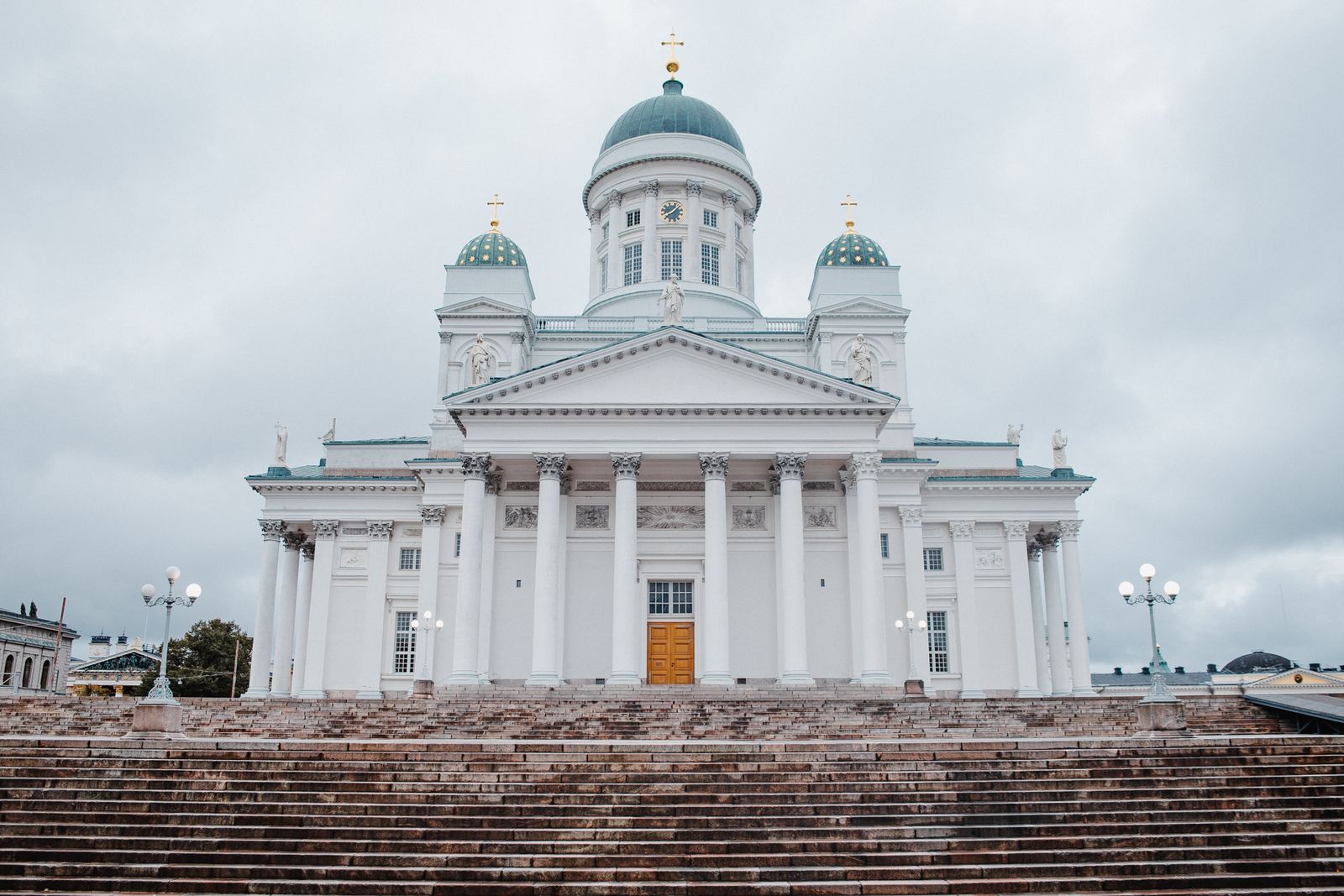
The Market Square, the UNESCO sea fortress of Suomenlinna (reachable by 15-min ferry), the Helsinki Cathedral on Senate Square and the Design District’s 200 design shops, galleries and museums.
Photo: Tomisti, Public domain

Rovaniemi: Santa Claus’s official home town (on the Arctic Circle), husky safaris, reindeer sleigh rides and the Arktikum Museum. Northern Lights season: September-March.
Photo: Ninara, CC BY 2.0

Levi and Yllas are Finnish Lapland’s finest ski resorts: tree-lined runs, smoke sauna villages and the highest probability of Northern Lights sightings in any ski resort in the world.
Photo: Ninara from Helsinki, Finland, CC BY 2.0

The fourth-largest lake in Europe: 14,000 islands connected by waterways, smoke sauna cabins on private islands and the Saimaa ringed seal (the world’s most endangered seal, with only 400 individuals).
Photo: Petritap, CC BY-SA 3.0

Finland’s oldest city (1229): the Turku Castle (13th century), the Turku Cathedral and the summer riverside restaurants that fill every evening with warm Finnish summer energy.
Photo: User: (WT-shared) Ypsilonatshared at wts wikivoyage, Public domain

Finland’s inland city on a rapid between two lakes: the smoke sauna at Rajaportti (the world’s oldest working public smoke sauna, 1906) and the Muumimuseo (Moomin Museum).
Photo: Pete, CC BY 2.0

The hill above Lake Pielinen that inspired Jean Sibelius and Akseli Gallen-Kallela: the quintessential Finnish landscape of forest, lake and granite, best in autumn.
Photo: Lobke Thijssen, CC BY-SA 2.5

A Swedish-speaking autonomous archipelago between Finland and Sweden: 6,700 islands, medieval churches and the finest cycling landscape in Finland.
Finland (Wikipedia) →Photo: Pjt56, CC BY-SA 3.0
Thin slices of reindeer sauteed in butter with onion, served with mashed potato, lingonberry jam and pickled cucumber. The definitive Lapland meal.
Fresh Baltic herring (silakka) fried or pickled, and gravlax-style cured salmon: the cornerstone fish dishes of Finnish coastal culture.
A large, ear-shaped cinnamon and cardamom roll: the Finnish version of the kanelbulle, eaten with coffee at every Finnish cafe.
A thin rye crust filled with rice porridge, pinched at the edges into an oval: eaten with egg butter at every Finnish breakfast. The most distinctively Finnish snack.
The Arctic cloudberry (lakka): only grows in bogs above 60 degrees north, harvest season is 2 weeks. Made into jam, liqueur and pastry filling. Finland’s national fruit.
The Finnish sauna is not a luxury but a philosophy: 3.3 million saunas for 5.5 million people. The correct sequence is heat, steam (loyly – water on hot stones), cold lake or snow, beer and silence.
Vodka mixed with salty liquorice (salmiakki): Finland’s most divisive drinking experience. Either extraordinary or repulsive.
Finland has the world’s highest per-capita coffee consumption. The filter drip tradition (Juhla Mokka) is dominant; the specialty scene is growing fast in Helsinki.
Helsinki Vantaa (HEL) is the main hub; Rovaniemi (ROI) and Oulu (OUL) are the main Lapland gateways. Finnair is the national carrier. VR is the national rail network. For trip planning, see the Visit Finland tourism portal.
Helsinki is 3 hours from most European capitals — one of the closer Scandinavian destinations. Finnair and British Airways serve Heathrow direct; budget carriers cover Gatwick and Stansted.
Finnair’s polar routing between Europe and Asia makes Helsinki one of the fastest connections between East Asia and Western Europe. Used as a stopover hub by many Asian travellers.
Direct charter flights from UK/European airports to Rovaniemi and Kittilä operate December–March for the winter tourism season — check TUI, Jet2 and specialist operators for direct Lapland packages.
The Helsinki Airport Ring Rail (I-line) connects Vantaa Airport to Helsinki Central in 30 minutes for €4 — by far the fastest and cheapest airport link. Runs every 10 minutes, 24 hours.
Finland has two distinct seasons worth visiting. June to August: the Midnight Sun in the north (Lapland), long warm days, archipelago sailing, midsummer celebrations. November to March: the Arctic north for Northern Lights, husky safaris, ice fishing, Santa Claus village and frozen lake landscapes. Helsinki is good year-round.
📅 Finland is in its best season in June, July, August. See where else is good to go in those months, or browse where to go by month.
Finland is expensive by European standards — comparable to Norway or Switzerland. Helsinki in particular is one of the most expensive cities in the EU for restaurants and accommodation.
The Finnish lunch buffet (lounas) is the best-value meal in Helsinki — most restaurants offer all-you-can-eat salads, soup, a hot main and bread for €11–14 between 11am and 2pm, including coffee. The quality is excellent.
Dinner at Nolla or Grotesk in Helsinki — modern Finnish cuisine using foraged and fermented northern ingredients — costs €60–90pp for a la carte. The food scene has quietly become one of the most interesting in Northern Europe.
The Arctic glass cabins at Kakslauttanen Arctic Resort (“Igloo Village”) near Saariselkä give unobstructed Northern Lights views from a heated glass bedroom — from €500/night and worth every cent for a clear February evening.
Helsinki for two days, Turku archipelago for one, Rovaniemi and Lapland for three days. Two weeks would be better — Finland reveals itself slowly — but this gives both the city and the Arctic north.
Helsinki is compact, clean and serious about design. The Kauppatori Market Square on the harbour for fresh Baltic herring, wild mushrooms and the famous mustard-covered grilled sausages. The Temppeliaukio Church (1969, excavated entirely into a granite rock, 24m diameter of bare stone walls).
The Helsinki Card covers public transport, the Suomenlinna fortress ferry and entry to 30+ museums — €55 for 24h, worth it for any full day in the city. Buy at the Tourist Information office on Pohjoisesplanadi.
The Design District — 25 blocks south of the centre with design studios, galleries and the Design Museum (Finnish design from Aalto through to Nokia through to Marimekko). Suomenlinna sea fortress (UNESCO World Heritage Site) — an 18th-century island fortification, 15 minutes by ferry, with museums, tunnels and excellent views back over Helsinki.
Alvar Aalto’s Finlandia Hall and the National Museum represent Finnish architecture at its most assured. The Ateneum (Finnish art) and Kiasma (contemporary art) are both excellent — Kiasma’s building by Steven Holl is the most interesting piece of architecture in the city.
2h drive from Helsinki. The Turku Archipelago has over 20,000 islands and islets — the archipelago trail by bicycle or car over the chain of ferries (free) is one of the most beautiful slow-travel routes in Scandinavia. Turku itself is Finland’s oldest city and former capital, with a medieval castle on the river.
The Turku Archipelago ferries are free and run hourly between the islands. The route from Turku to Hanka by road and ferry covers 9 ferry crossings — allow a full day and bring a bicycle.
1h15 flight from Helsinki to Rovaniemi (ROI) — the capital of Finnish Lapland and the official home of Santa Claus (the Santa Claus Village straddles the Arctic Circle line). The Arktikum museum covers the history, culture and science of the Arctic and the indigenous Sámi people.
The Arctic Circle marker at Santa Claus Village (free to visit) is at 66.5°N. Crossing it is a rite of passage — you can get a certificate. The village is commercial but entirely good-natured.
A husky dog safari — driving a 6–10 dog sled team through birch forest at dawn, temperature -15 to -25°C, complete silence except for the panting dogs — is one of the great physical experiences in Europe. A reindeer farm visit for a different understanding of Sámi reindeer herding culture.
A husky safari of 8–12km takes 45–90 minutes and costs €80–150pp. The dogs are enthusiastic — they sprint, not plod — and the experience of driving a sled solo through a frozen forest is not equivalent to anything else.
November to March offers a 70–80% chance of seeing the Aurora Borealis on a clear night. A guided Northern Lights snowmobile or husky night safari typically departs at 9pm, heading into the wilderness away from light pollution. Ice fishing on a frozen lake at -20°C.
The best Northern Lights viewing is 30–50km from Rovaniemi in the forest — away from the town’s light dome. Apps like My Aurora Forecast give the KP index (3+ is visible, 5+ is impressive).
Morning snowshoe hike through the forest. Afternoon: a proper Finnish sauna — wood-fired, 80–90°C, followed by rolling in snow or a hole cut in the frozen lake. Fly back from Rovaniemi to Helsinki for onward international connections.
The Finnish sauna is not a tourist experience — it is a genuine cultural institution, practised by 90% of Finns at least weekly. The correct etiquette: silence, no phones, go when invited, throw water on the stones when offered.
🛂 Entry rules: EES and ETIAS
Finland is in the Schengen area, which has two EU border systems for non-EU visitors.
EES (in force): since 10 April 2026 the EU’s Entry/Exit System registers non-EU visitors’ passport details, fingerprints and a photo the first time they enter the Schengen area, replacing passport stamps. Allow extra time at the border on your first trip; later crossings are quicker. EU, EEA and Swiss citizens are not registered.
ETIAS (not yet running): a €20 online travel authorisation for visitors who don’t need a visa, such as UK, US, Canadian and Australian citizens. It hasn’t started and no start date has been confirmed, so nobody can apply yet; ignore websites that offer to “pre-register” you for a fee.
Visa-free visitors can stay up to 90 days in any 180-day period across the whole Schengen area, not per country.
Official information: EU: Travel to Europe (EES & ETIAS) · Reviewed September 2026
Uber, Bolt and local Lähitaksi all work in Helsinki.
A restaurant meal: EUR 15-30. The lake district B&Bs and camping are very affordable.
Helsinki to Tampere: 1h45. Helsinki to Turku: 1h45. Book at vr.fi.
There is no “I don’t do saunas” in Finland. The smoke sauna experience, done correctly, is one of the finest wellness experiences on earth.
If you are invited to someone’s summer cottage, you will be offered the sauna. Accept.
Finns do not fill silence with conversation. Sitting quietly with a stranger is a form of respect.
December in Rovaniemi is booked months ahead. Book by August at the latest.
Service is included in Finnish prices. Rounding up is sufficient.
Quick answers to the questions people most often ask before visiting Finland.
Finland has two distinct seasons worth visiting. June to August: the Midnight Sun in the north (Lapland), long warm days, archipelago sailing, midsummer celebrations.
Helsinki Vantaa (HEL) is the main hub; Rovaniemi (ROI) and Oulu (OUL) are the main Lapland gateways. Finnair is the national carrier. VR is the national rail network.
Expect roughly €80–120 a day on a budget and €180–280 mid-range, or €350+ for a more luxurious trip, per person and excluding flights.
Finland uses the euro (€).
Plug types: Type C / F (two-pin, 230V).
Finnish State Railways app — buy intercity and Pendolino train tickets between Helsinki, Tampere and Oulu.
FreeHelsinki’s official transit app — buy tram, metro, bus and ferry tickets; also covers the airport train.
FreeFood delivery across Finnish cities — founded in Helsinki and has the widest local coverage.
FreeBook Helsinki fortress tours, Finnish sauna experiences, Northern Lights trips and Lapland activities.
FreeBook Stockholm–Helsinki ferry cruises — one of the most popular ferry routes in the world.
FreeExplore Finland’s top city destinations — from Turku to Helsinki, each with its own distinct character.
Finland sits within easy reach of several other destinations — each with a completely different character.


