SE
Sweden
Viking heritage and Nordic natural beauty
Viking heritage and Nordic natural beauty

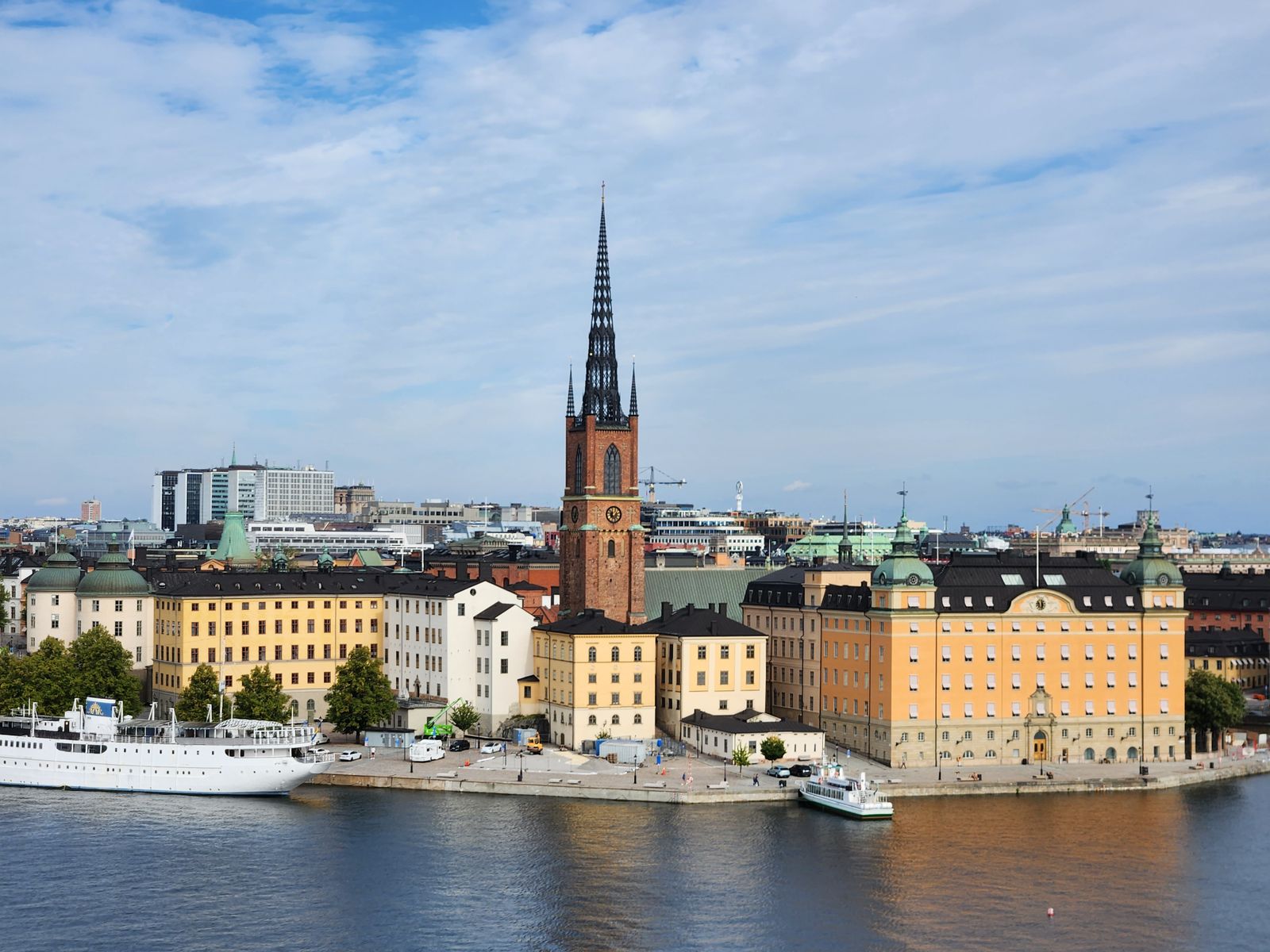
Gamla Stan’s 13th-century old town on its own island (Nobel Museum, Royal Palace, Storkyrkan), the Vasa Museum (an intact 1628 warship recovered from Stockholm harbour in 1961) and the ABBA Museum.
Photo: Tunegravity, CC0

A hotel rebuilt each December from 1,000 tonnes of Torne River ice: individually sculpted suites, an ice bar and the Northern Lights above the frozen river.
Photo: Pavel.shyshkouski, CC BY-SA 4.0

Scandinavia’s largest amusement park (Liseberg), the West Coast archipelago’s summer shrimp boats and the finest seafood restaurants in Sweden.
Photo: Crannofonix, CC BY-SA 4.0

The Abisko National Park: the clearest Northern Lights sky in Sweden (a weather microclimate keeps clouds away), reindeer herding by the Sami people and Midnight Sun trekking in summer.
Photo: W.carter, CC BY-SA 4.0

A medieval walled city on a Baltic island: Visby’s 3.5km UNESCO city wall (the best-preserved in Scandinavia), the Medieval Week festival (August) and the island’s distinctive Raukar limestone sea stacks.
Photo: Schorle, CC BY-SA 3.0

A city connected to Copenhagen by the 16km Oresund Bridge (one of the great engineering achievements in modern European history): Malmo’s Turning Torso (the tallest building in Scandinavia) and the multicultural food scene.
Photo: Richard Dennis, CC BY 2.0

The King’s Trail (Kungsleden): a 440km Arctic mountain walk from Abisko to Hemavan, through Europe’s last wilderness.
Photo: Alexandre Buisse (Nattfodd), CC BY-SA 4.0

Sigtuna (Sweden’s oldest city, founded 980 AD) and Uppsala (Sweden’s oldest university, 1477, with a Gothic cathedral that is the tallest church in Scandinavia).
Sweden (Wikipedia) →Photo: Helen Simonsson, CC BY-SA 4.0
Pork and beef meatballs in a cream sauce with lingonberry jam, pickled cucumber and boiled potatoes: IKEA has served 150 million of them annually. The Swedish original at a gastronomy restaurant is considerably finer.
Salmon cured with dill, sugar and salt: the Swedish treatment that became internationally famous. Served with mustard sauce on dark bread.
A soft yeast bun flavoured with cardamom and cinnamon, topped with pearl sugar. Sweden has its own Cinnamon Bun Day (October 4). Best at Espresso House or a local bakery.
A buffet of cold dishes: pickled herring (in mustard, onion or dill sauce), gravlax, meatballs, Janssons temptation (anchovy and potato gratin) and crispbread with cheese.
A Scandinavian spirit distilled with caraway and anise: drunk neat at Midsommar celebrations and Christmas julbord.
All alcohol above 3.5% in Sweden is sold by the state monopoly Systembolaget (closed Sundays). The selection is excellent; Swedish craft beer has grown rapidly.
The Swedish coffee break: coffee and a cinnamon bun or cardamom cake, taken mid-morning and mid-afternoon. As much a social institution as a meal.
Cardamom buns filled with almond paste and whipped cream: available only in January and February (and on Fat Tuesday specifically). Queues form outside the best bakeries.
Stockholm Arlanda (ARN) is the main hub; Gothenburg (GOT) and Malmö (MMX/CPH across the bridge) also have international connections. SJ (Swedish Rail) and SAS serve most routes. The Öresund Bridge connects Sweden to Denmark in 35 minutes. For trip planning, see the Visit Sweden tourism portal.
Flying into Copenhagen and taking the Öresund Bridge train to Malmö (35 min) is often cheaper than flying direct to Stockholm — and combines two countries in one trip.
SAS flies direct from multiple US cities to Stockholm. The airline operates a hub at Copenhagen for onward Scandinavian connections.
SJ night trains to northern Sweden are comfortable, practical and scenic — a cabin berth from Stockholm to Lulea costs from SEK 900 (€78) and saves a night’s accommodation.
The Arlanda Express (18 min, SEK 299) is premium priced. The SL commuter train (40 min, SEK 133) is half the price and nearly as fast — the better choice unless you’re in a hurry.
June to August is summer: long days (Midnight Sun above the Arctic Circle), outdoor life, the Stockholm archipelago in full swing. December to March is ski season in the north (Are, Hemavan). May and September are the shoulder sweet spots.
📅 Sweden is in its best season in June, July, August. See where else is good to go in those months, or browse where to go by month.
Sweden is expensive by European standards — comparable to Norway, pricier than Denmark. Stockholm is significantly more expensive than Gothenburg or smaller cities.
Dagens lunch — a set lunch including a main, salad bar, bread, soft drink and coffee — costs SEK 130–180 (€11–15) at almost every Swedish restaurant. It’s the best-value meal in Sweden and the way most Swedes eat at lunchtime.
Cinnamon buns (kanelbullar) — the official Swedish pastry, celebrated with a national day on 4 October — cost SEK 30–45 at a Stockholm café. Fika (the twice-daily coffee-and-cake ritual) is a genuine cultural institution.
Frantzén (three Michelin stars) is consistently ranked among the top 20 restaurants in the world — a SEK 3,500pp tasting menu of Nordic and Asian ingredients. One of the most technically accomplished restaurants in Europe.
Stockholm for three days, the archipelago for one, Gothenburg for two, a night train to the Swedish Lapland if extending.
Gamla Stan (Old Town) is a perfectly preserved 13th-century island city in the centre of Stockholm — the Royal Palace (the largest in Scandinavia, 1,430 rooms), the narrow alleys of Prästgatan. The Vasamuseet: a 17th-century warship that sank on her maiden voyage in 1628 and was salvaged intact in 1961 — 95% original wood.
The Vasa Museum is one of the finest museums in Scandinavia — the ship is excellent, and the curatorial approach to conservation and history is excellent. Allow 2–3 hours.
Djurgården island: the ABBA Museum (genuinely fun regardless of your relationship with ABBA), Skansen open-air museum (a full Swedish village transported to a hilltop in Stockholm, 150 buildings, living history). Södermalm — Stockholm’s bohemian south island, the best neighbourhood for food, bars and vintage shopping.
Södermalm’s Hornstull market on summer weekends is one of Stockholm’s best — food, vintage, design. The Monteliusvägen clifftop walk gives the finest panoramic view of Stockholm across the water.
Drottningholm Palace (the royal family’s actual residence, UNESCO listed, 30 min by boat from City Hall) has baroque gardens and an 18th-century theatre still in original condition. The Moderna Museet has one of the finest modern art collections in Scandinavia — Picasso, Dali, Warhol, Duchamp.
The boat to Drottningholm from Strömskajen (City Hall quay) takes 50 minutes each way — the approach from the water is the best view of the palace.
The Stockholm Archipelago: 30,000 islands between the city and the Baltic Sea, served by Waxölmsbåtarna and SL ferries. Växhôlm (1.5h) is the easiest — a fortress town with a 16th-century castle. Further out: Sandhamn (a sailing village with wooden cottages, 3h), Utö (the furthest inhabited island, with cycling and beaches, 3h30).
The archipelago ferry is part of Stockholm’s public transport network — an SL day ticket covers the inner islands. Bring a picnic and spend a day island-hopping.
3h by SJ high-speed train or overnight sleeper from Stockholm. Göteborg (Gothenburg) is Sweden’s second city and most underrated — a canal city with the best food scene in Sweden, the Liseberg amusement park, and the Universeum science centre.
The fish market at Feskekôrka (the Fish Church — named for its Gothic cathedral shape) is the freshest in Sweden. The shrimp from the quayside boats are bought and eaten on the dock, peeled over newspaper.
The Göteborg Southern Archipelago: car-free islands accessible by city ferry, with wooden houses, rocky coastlines and excellent swimming. Klädesålmen and Styrsö are the most popular. Afternoon: the Gothenburg Museum of Art (Scandinavian Impressionism — the best Zorn collection in Sweden).
The Göteborg archipelago ferries depart from Saltholmen (Tram 11 from the centre, 30 min). The entire archipelago trip — ferry there and back, a walk, a swim — costs one city transport fare each way.
Fly back to Stockholm (1h) for international departures — or extend north to Swedish Lapland: the icehotel in Jükkasjärvi (rebuilt every winter from the Torne river), dogsledding, and the Midnight Sun or Northern Lights depending on season.
The original Icehotel in Jükkasjärvi (200km north of the Arctic Circle) has been rebuilt every winter since 1989. Book the warm cabin annex if sleeping in a room made of ice is not your idea of fun.
🛂 Entry rules: EES and ETIAS
Sweden is in the Schengen area, which has two EU border systems for non-EU visitors.
EES (in force): since 10 April 2026 the EU’s Entry/Exit System registers non-EU visitors’ passport details, fingerprints and a photo the first time they enter the Schengen area, replacing passport stamps. Allow extra time at the border on your first trip; later crossings are quicker. EU, EEA and Swiss citizens are not registered.
ETIAS (not yet running): a €20 online travel authorisation for visitors who don’t need a visa, such as UK, US, Canadian and Australian citizens. It hasn’t started and no start date has been confirmed, so nobody can apply yet; ignore websites that offer to “pre-register” you for a fee.
Visa-free visitors can stay up to 90 days in any 180-day period across the whole Schengen area, not per country.
Official information: EU: Travel to Europe (EES & ETIAS) · Reviewed September 2026
Both work in Stockholm, Gothenburg and Malmo.
A restaurant meal: SEK 200-400 (EUR 17-35). Street food and supermarket shopping are more affordable.
Stockholm and Gothenburg have extensive bike hire networks (CityBikes) integrated with the transit system.
The most important Swedish holiday: celebrated in Dalarna with traditional costume, dancing around the maypole and herring.
Swedes communicate directly and without social padding. Warmth emerges after trust is established.
Stockholm to Gothenburg: 3h. Stockholm to Malmo: 4h30. Book at sj.se.
The Swedish concept of not too much, not too little – enough. The operating principle of Swedish social life.
Covers public transport, Vasa Museum, Skansen open-air museum and most major attractions.
Quick answers to the questions people most often ask before visiting Sweden.
Fly into Stockholm Arlanda (ARN) — about 2h20 from London — or Gothenburg. For Malmö, flying into Copenhagen and crossing the Øresund Bridge by train (about 35 minutes) is often easiest.
June to August for long days, the Stockholm archipelago and the midnight sun in the north. December to March is winter-sports and northern-lights season in Lapland.
Midsummer is celebrated on the Friday and Saturday closest to 21 June, with maypoles, dancing and herring feasts — many shops and offices close.
Yes, though usually cheaper than Norway. Expect around SEK 600–900 per day on a budget and SEK 1,800–2,800 mid-range. The currency is the Swedish krona (SEK), and many places are cashless.
Public transport and city bikes work well in Stockholm, Gothenburg and Malmö, and ride-hailing apps are available too.
Book Stockholm archipelago tours, ABBA Museum tickets, Vasa Museum entry and Swedish experiences.
FreeBudget intercity buses across Sweden and to neighbouring Scandinavian countries.
FreeExplore Sweden’s top city destinations — from Gothenburg to Stockholm, each with its own distinct character.
Sweden sits within easy reach of several other destinations — each with a completely different character.


