DK
Denmark
Fairy-tale kingdoms and Scandinavian design
Fairy-tale kingdoms and Scandinavian design

The Nyhavn canal’s coloured merchant houses (Hans Christian Andersen lived at No. 20), the Louisiana Museum of Modern Art (50km north, the finest in Scandinavia), Tivoli Gardens and the Strøget shopping street.
Photo: European Commission, CC BY 4.0

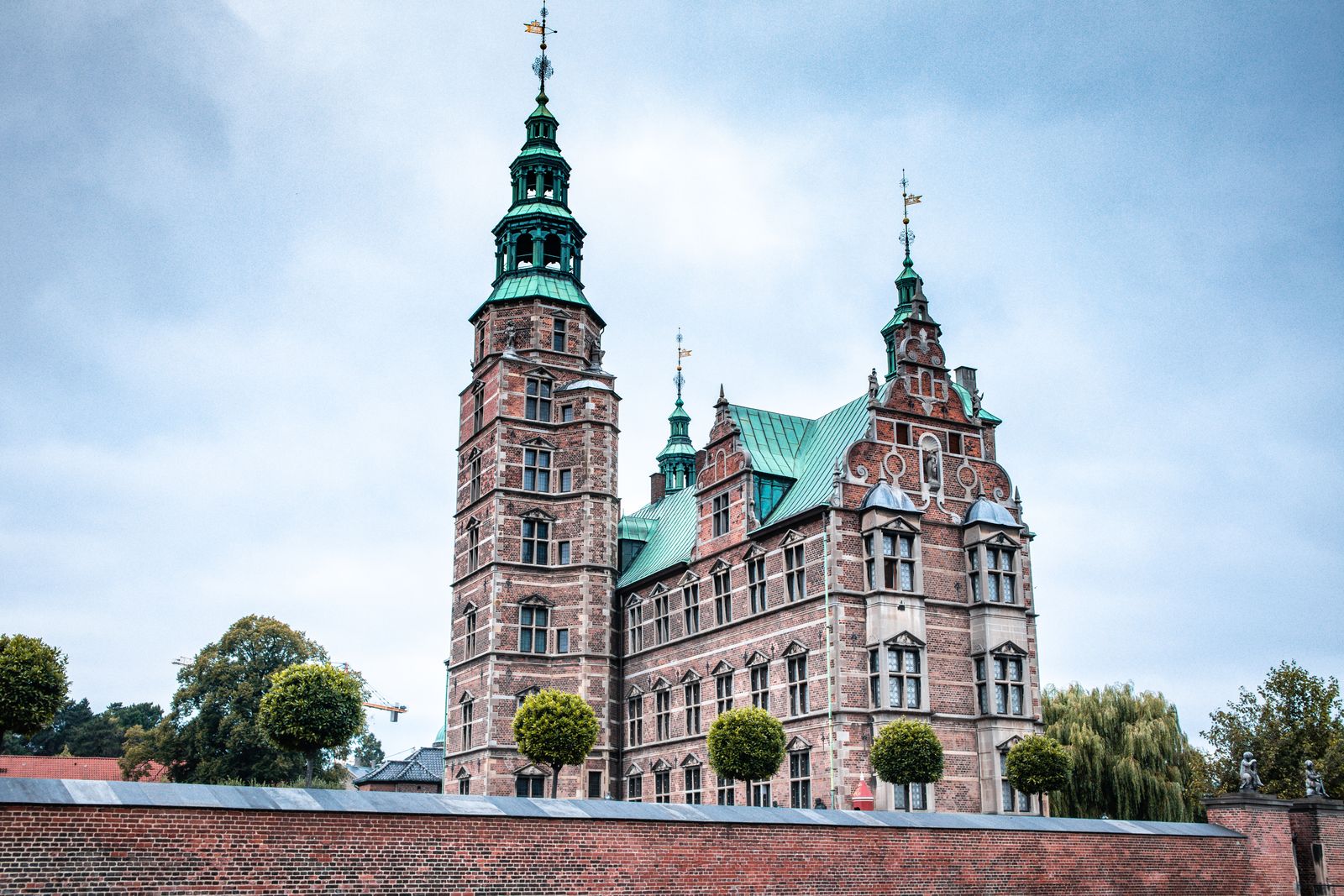
The Renaissance castle that gave Shakespeare his setting for Hamlet: a 16th-century fortress above the Oresund Strait, UNESCO-listed, the most visited castle in Scandinavia.
Photo: Artico2, CC BY-SA 3.0

Five original 11th-century Viking ships recovered from Roskilde Fjord, displayed in a museum on the water: the finest Viking maritime exhibition in the world.
Photo: Jami430, CC BY-SA 4.0

Legoland: the original (1968) park in Billund, home of the Lego brick. Bornholm: a Baltic island of medieval round churches, smoked herring and granite sea cliffs.
Photo: Thomas Dahlstrøm Nielsen, CC BY-SA 4.0

An open-air museum of 75 historical buildings from every era of Danish history, relocated and rebuilt: 16th-century merchant houses alongside a 1970s post office.
Photo: Smiley.toerist, CC BY-SA 4.0

A self-governing archipelago of 18 volcanic islands with turf-roofed villages on cliff edges: the most dramatic North Atlantic landscape accessible by direct flight from Copenhagen.
Photo: Sanshiro KUBOTA from London, UK, CC BY 2.0

The Design Museum’s collection of Danish Modern furniture (Arne Jacobsen’s Egg Chair, Hans Wegner’s The Chair), Noma’s legacy restaurant empire and the world’s most cycling-friendly urban infrastructure.
Photo: Helen Ilus, CC BY-SA 4.0

The Louisiana Museum of Modern Art: a Modernist building on a cliff above the Oresund with Giacometti in the garden, Picasso and Warhol inside and a café with the finest view of any museum in Europe.
Denmark (Wikipedia) →Photo: Helle Krog, CC BY 3.0
Open-faced rye bread with toppings: pickled herring with red onion and capers, smoked salmon with dill cream cheese, roast pork with pickled red cabbage. The definitive Danish lunch.
The butter-laminated pastry that the world calls “Danish”: the Danes call it Viennese (Wiener) in acknowledgment of its Austrian origin. The Copenhagen bakery standard is incomparably finer than any export version.
Pan-fried pork and veal patties with onion, egg and milk, served with pickled red cabbage and potatoes. Denmark’s most frequently eaten home-cooked dish.
Crispy fried pork belly with parsley sauce and boiled potatoes: voted Denmark’s national dish in 2014. Comfort food at its most direct.
A bitter herbal liqueur drunk in small glasses at breakfast: the most Danish spirit.
Carlsberg (“probably the best beer in the world” since 1847) and Mikkeller (the Copenhagen craft beer bar chain that has conquered the world’s best beer lists simultaneously): two Danish brewing philosophies.
Copenhagen has the most sophisticated specialty coffee scene in Scandinavia: The Coffee Collective and Democratic Coffee are the benchmarks.
Round spherical pancakes cooked in a special pan, served with powdered sugar and jam at Christmas markets throughout Denmark.
Copenhagen Kastrup (CPH) is the main hub and one of Scandinavia’s best airports. Denmark can also be reached by train from London via Brussels and Hamburg in a long day (around 12–14 hours), and the Øresund Bridge connects to Sweden. For trip planning, see the official Denmark tourism portal.
Copenhagen is under 2 hours from London by air. It’s also reachable by Eurostar and onward trains via Brussels and Hamburg in a long day (around 12–14 hours) — a carbon-friendly alternative if you have the time.
SAS flies direct from New York, Chicago and Los Angeles to Copenhagen. The Copenhagen hub also offers excellent onward connections to Norway, Sweden and Finland.
The Øresund Bridge train to Malmö runs every 20 minutes and takes 35 minutes — a practical half-day trip or a way to fly in/out of different Scandinavian cities.
Copenhagen Airport is 13 minutes from the city centre by airport express train — one of the most convenient airport connections in Northern Europe.
May to September is the warmest and most lively window. June and August are peak — Copenhagen’s outdoor scene is at its best and the Danish countryside at its greenest. December brings excellent Christmas markets and hygge season.
📅 Denmark is in its best season in June, July, August. See where else is good to go in those months, or browse where to go by month.
Denmark is expensive — comparable to Sweden and Norway. Copenhagen is one of the priciest capitals in Europe. Smørrebrød lunches and bakery food are the budget traveller’s best friends.
The Danish pølsevogn (hot dog cart — a red-and-white kiosk) is a national institution. A rød pølse (red sausage) in a bun costs DKK 25–40 and is eaten at the cart, standing up, with remoulade and crispy onions.
Aamanns 1921 serves the finest traditional smørrebrød in Copenhagen — open-faced rye bread with herring, roast beef, egg and shrimp combinations — at DKK 75–130 per slice. A 3-slice lunch is the standard approach.
Geranium (Copenhagen, three Michelin stars, World’s 50 Best) and Alchemist (two stars, 50-course “holistic cuisine” experience) are both among the most ambitious restaurants in the world. Book months ahead.
Copenhagen for four days, the North Sjælland castles for one, a day in Aarhus, and the coastal villages of Møn or Bornholm to finish.
Nyhavn — the canal lined with colourful 17th-century townhouses, the mooring point for the old sailing boats, and the address where Hans Christian Andersen lived at three separate houses — is the defining Copenhagen image. Walk to the Round Tower (1642, a 36m spiral ramp to the top) and Strøget, one of Europe’s longest pedestrian shopping streets.
The Nyhavn canal front is best seen in the early evening when the light hits the coloured facades at a low angle. It’s also significantly less crowded than in the afternoon.
The National Museum of Denmark has the finest collection of Viking-age artefacts in the world — the Trundholm sun chariot (1400 BCE), the Gundestrup cauldron, a complete Viking ship. Freetown Christiania: a 1971 squat-turned-autonomous-community within the city, unconventional but worth visiting for the architecture and the atmosphere.
Christiania’s Pusher Street operates openly but photography is explicitly prohibited — it’s enforced with genuine hostility. Don’t photograph.
Tivoli Gardens — the second-oldest amusement park in the world (1843), a beautiful pleasure garden of rides, performances and restaurants — is most atmospheric after dark when the 100,000 lights come on. The Design Museum Denmark in a Baroque hospital building — Danish and international design, furniture, fashion.
Tivoli is best visited on a weekday evening: fewer queues, full atmosphere, lights at their best after 9pm. Christmas Tivoli (November–December) is one of the best Christmas experiences in Europe.
Christianshavn — the canal island where Noma made its name — is Copenhagen’s most atmospheric neighbourhood: canals, wooden boats, the 17th-century canal houses. The food scene beyond Noma: Kadeau, Geranium, Alchemist — Copenhagen has more Michelin stars per capita than almost any city in the world.
Even without a reservation at the high-end restaurants, Copenhagen’s smørrebrød (open-faced sandwiches) culture is impressive — a good smørrebrøds lunch at Schønnemann or Aamanns costs DKK 150–280 and is one of the finest lunches in Scandinavia.
45 min north by train: Helsingør with Kronborg Castle (Elsinore, Shakespeare’s setting for Hamlet — the castle predate the play and is imposing). The Øresund Strait to Sweden is 4km wide here — you can see the Swedish coast from the battlements. The Louisiana Museum of Modern Art (1958, clifftop setting above the sea).
The Louisiana Museum is one of the finest modern art museums in Northern Europe — the building, the sculpture garden and the collection of Calder, Giacometti and Warhol are equally striking.
3h by IC train from Copenhagen. Aarhus is Denmark’s university city — younger, less polished than Copenhagen, with a strong food scene. The ARoS Art Museum (the rainbow panorama circular walkway on the roof — free with entry), the Latin Quarter, Den Gamle By (an open-air museum of original Danish buildings from four centuries).
The rainbow panorama on the ARoS roof (“Your Rainbow Panorama” by Olafur Eliasson, 2011) is a circular walkway of coloured glass 360° around the city — the view through each colour is different and unexpectedly moving.
Return to Copenhagen (3h) or take a detour to Møn Island: the Møns Klint white chalk cliffs (128m above the Baltic), and Europe’s first International Dark Sky Park on the island for stargazing.
Møns Klint is the only chalk cliff landscape in Scandinavia — the white cliffs above the Baltic look entirely unlike anything else in Denmark. The 6km forest trail along the cliff top is excellent.
🛂 Entry rules: EES and ETIAS
Denmark is in the Schengen area, which has two EU border systems for non-EU visitors.
EES (in force): since 10 April 2026 the EU’s Entry/Exit System registers non-EU visitors’ passport details, fingerprints and a photo the first time they enter the Schengen area, replacing passport stamps. Allow extra time at the border on your first trip; later crossings are quicker. EU, EEA and Swiss citizens are not registered.
ETIAS (not yet running): a €20 online travel authorisation for visitors who don’t need a visa, such as UK, US, Canadian and Australian citizens. It hasn’t started and no start date has been confirmed, so nobody can apply yet; ignore websites that offer to “pre-register” you for a fee.
Visa-free visitors can stay up to 90 days in any 180-day period across the whole Schengen area, not per country.
Official information: EU: Travel to Europe (EES & ETIAS) · Reviewed September 2026
The Bycyklen electric bike share system covers the entire city. 62% of Copenhageners cycle to work.
A smørrebrød lunch: DKK 100-200 (EUR 13-27). A Noma-tier tasting menu: DKK 1,500+ (EUR 200+).
Copenhagen to Aarhus: 3h. Copenhagen to Odense: 1h30.
Cosy candlelit dinners, thick woollen socks and long conversations: the principle organising value of Danish social life.
The city’s outdoor culture (canal swimming, rooftop bars, outdoor concerts) operates at maximum intensity in June and July.
Covers all transit and 73 museums for a fixed daily price.
The concept of Jante Law (the social pressure not to think you are better than others) produces a genuine social equality.
Book at noma.dk when reservations open (usually 3 months ahead). Otherwise explore the associated restaurants in the Noma family.
Quick answers to the questions people most often ask before visiting Denmark.
Fly into Copenhagen Airport (CPH), Scandinavia's main hub — about 2 hours from London and 1h30 from Amsterdam or Frankfurt. Billund and Aarhus also have international flights, and trains connect Copenhagen with Germany and, across the Øresund Bridge, Sweden.
May to September is the warmest and liveliest period, with June to August the peak for Copenhagen's outdoor life and the countryside. December brings Christmas markets and the height of hygge season.
Yes — Copenhagen is one of Europe's priciest capitals. Expect around DKK 500–750 per day on a budget and DKK 1,400–2,100 mid-range. Smørrebrød lunches and bakeries are the best-value meals.
The Danish krone (DKK) — Denmark doesn't use the euro. Cards, including contactless, are accepted almost everywhere, and many places are cashless.
By bike — Copenhagen is one of the world's most bike-friendly cities, with city bike-share and dedicated lanes everywhere. The metro is fast and runs around the clock.
Danish State Railways app — buy IC and regional train tickets; covers Copenhagen to Aarhus, Odense and beyond.
FreeDenmark’s national transit planner — covers all trains, buses and Metro in Copenhagen and across the country.
FreeBook Tivoli Gardens entry, Christiansborg tours, Viking Ship Museum tickets and Danish experiences.
FreeRent bikes in Copenhagen — the most popular city cycling app in one of the world’s great cycling capitals.
FreeExplore Denmark’s top city destinations — from Aarhus to Copenhagen, each with its own distinct character.
Denmark sits within easy reach of several other destinations — each with a completely different character.


