HR
Croatia
Stone towns above a clear blue sea
Stone towns above a clear blue sea

The pearl of the Adriatic: a UNESCO-listed medieval city of pale stone, terracotta roofs and the complete city walls (2km circuit, sea views). Walk the walls at dawn before the cruise ships arrive.
Photo: kallerna, CC BY-SA 4.0

16 terraced lakes connected by waterfalls in a forested canyon, with boardwalks at water level and boat crossings between them. The turquoise colour comes from calcium carbonate and algae. UNESCO World Heritage, extremely crowded: book in advance.
Photo: Someone35, CC BY-SA 3.0

A 4th-century Roman palace that became a medieval city: 3,000 people live and work inside its walls. The Peristyle square, the Cathedral (built inside Diocletian’s mausoleum) and the warren of medieval lanes.
Photo: Matti Blume, CC BY-SA 4.0

A long, thin island of lavender fields, Renaissance architecture in Hvar Town and the finest nightlife in the Adriatic. The Paklinski Islands for swimming, accessible by water taxi.
Photo: Carsten Steger, CC BY-SA 4.0

A pine-forested island with a medieval walled town of cypress-lined streets, claimed as the birthplace of Marco Polo. Quieter than Hvar, with excellent local wine (Posip) and oysters.
Photo: Joy, GPL

The most remote inhabited Dalmatian island, accessible only by catamaran from Split: the Blue Cave on Bisevo (accessible by excursion boat) and the fishing village of Komiza.
Photo: Carsten Steger, CC BY-SA 4.0

One of the best-preserved Roman amphitheatres in the world: a 1st-century arena with all four outer walls intact, still used for summer concerts. Pula’s other Roman monuments (Arch of the Sergii, Temple of Augustus) are within walking distance.
Photo: Diego Delso, CC BY-SA 4.0

An Istrian fishing town of Venetian-era pastel buildings on a peninsula, connected to the mainland by a narrow causeway: the most Italian-feeling town in Croatia.
Photo: Daniel Reust, CC BY-SA 4.0
Air-dried prosciutto from Dalmatia, cured in mountain bora wind and smoked with Mediterranean herbs. Served as the first act of any Dalmatian meal with sheep’s cheese (paski sir) from Pag Island.
Fresh sea bass (brancin) or sea bream (orada) grilled over charcoal with garlic, olive oil and blitva (Swiss chard with potatoes). The definitive Dalmatian coastal meal.
Cuttlefish ink risotto with cuttlefish, Dalmatian olive oil and parsley. A dish that looks alarming and tastes extraordinary: briny, rich and intensely of the sea.
Lamb, veal or octopus slow-cooked under a metal bell (peka) covered with glowing embers. The traditional Dalmatian method for the most tender meat.
Posip from Korcula (crisp, mineral white) and Prosek (a rich dessert wine of dried grapes) are Croatia’s two most distinctive wines.
Croatia’s two national lagers. Cold, light and inseparable from a fish lunch on any Dalmatian terrace.
A fisherman’s stew of mixed fish and shellfish in tomato, garlic and white wine. Every fishing village along the coast has its own version.
An Istrian spirit of grape marc macerated with mistletoe leaves: the local digestif offered at the end of every Istrian meal.
Zagreb (ZAG) is the main hub; Split (SPU) and Dubrovnik (DBV) are the main coastal gateways with direct European connections. Jadrolinija ferries connect the coast and islands. For trip planning, see the official Croatia tourism portal.
Dubrovnik has direct connections from most major UK airports in summer (April–October). Fly into Dubrovnik, out of Split (or vice versa) to avoid backtracking up the coast.
Zagreb is the most useful hub for connections from North America — Lufthansa and Austrian Airlines both route through Frankfurt and Vienna.
Book Jadrolinija ferries at jadrolinija.hr. In July–August the car ferries fill early — book car spots at least 4 weeks ahead. Foot passengers rarely have issues.
A hire car for the Dalmatian coast gives the most flexibility — the coastal road (Magistrala, route 8) between Split and Dubrovnik is one of the finest drives in Europe. Budget for parking in old town areas.
May, June and September are ideal — warm Adriatic water, empty-ish streets, prices below peak. July and August are the height of the season: busy, hot (35°C+), prices peak, Dubrovnik overwhelmed with cruise ship day-trippers. October is excellent for Istria and inland Croatia.
📅 Croatia is in its best season in June, July, August, September. See where else is good to go in those months, or browse where to go by month.
Croatia is mid-range for the Mediterranean — cheaper than Italy or France, comparable to Slovenia, more expensive than Bosnia or Montenegro. Prices spike dramatically in July–August.
A burek (flaky pastry filled with meat or cheese, from a pekara bakery) costs €1.50–3 and is the best cheap breakfast in Croatia. Available everywhere.
A plate of grilled sea bass (brancin) with olive oil, capers and lemon at a harbour-side konoba in Split or Hvar costs €18–30 — some of the best-value fresh fish dining in the Mediterranean.
Peljesac Peninsula wine — particularly Dingac and Postup (Plavac Mali grape) — is outstanding and criminally underpriced outside Croatia. Order a bottle at any good Dalmatian restaurant.
Zagreb for one day, Plitvice Lakes for one, Split for two days, the islands (Hvar or Brač) for one, Dubrovnik to finish.
Zagreb is Croatia’s capital and most underrated city — a Central European city of coffee culture, Austro-Hungarian architecture and excellent museums, completely unlike the Dalmatian coast. The Upper Town (Gornji Grad): St Mark’s Church with its coloured tile roof, the Lotrscak Tower, the Museum of Broken Relationships.
The Museum of Broken Relationships collects donated objects from failed relationships around the world, with donor-written explanations. Genuinely moving, completely original. One of the best small museums in Europe.
2h30 from Zagreb. Plitvice Lakes National Park is 16 terraced lakes connected by waterfalls and boardwalks — the colour of the water (turquoise, from dissolved minerals) is impressive and consistent across every photograph. A UNESCO World Heritage Site.
Arrive at Plitvice at opening time (7am in summer) or pre-book timed entry. The first 2 hours before the crowds arrive are entirely different from the experience after 10am.
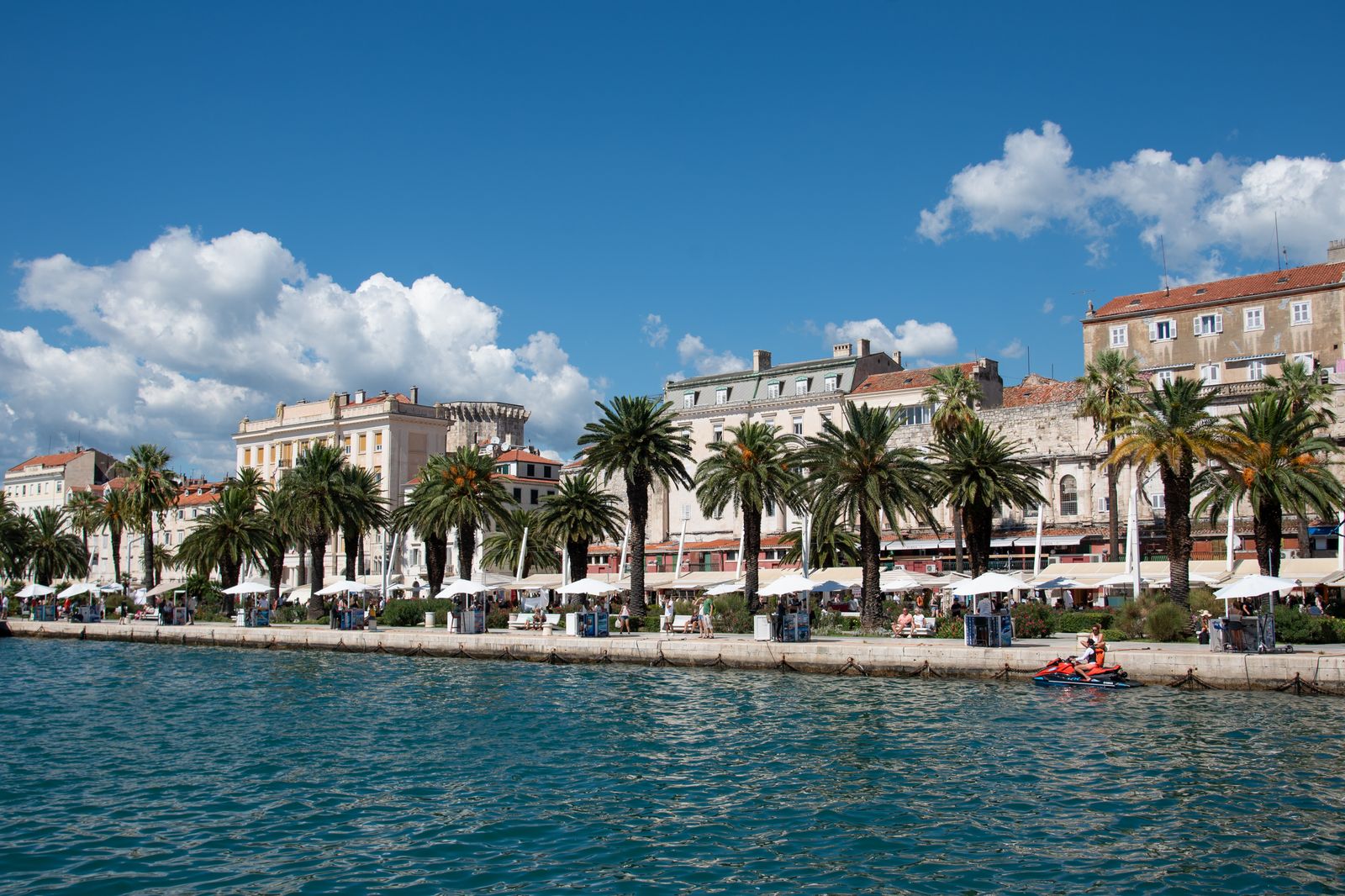
3h30 from Plitvice. Split’s old town is built inside the walls of the Roman Emperor Diocletian’s retirement palace (305 CE) — 3,000 people currently live within the palace walls. The Riva promenade, the Peristyle courtyard where concerts are held.
Split is best in the evening — the Riva fills at sunset and the palace complex is less crowded. The views from the cathedral bell tower across the rooftops to the Adriatic are among the best in Dalmatia.
Day trip by ferry to Brč Island (Zlatni Rat beach — a distinctive triangular shingle spit that changes shape with the current — is the most photographed beach in Croatia). Or stay in Split: the daily fresh market at the base of the Diocletian walls, the Mestrovic Gallery.
Zlatni Rat (“Golden Cape”) is photogenic in person but extremely crowded in July–August. The west-facing beaches north of Bol town are much quieter and equally good.
2h fast catamaran from Split. Hvar Town: a 15th-century Venetian fortress above the harbour, one of the most beautiful main squares in Dalmatia (the St Stephen’s Cathedral), lavender fields in the island interior. Known as Croatia’s most fashionable island.
Hvar Town can feel very expensive in summer — the bars and restaurants around the harbour are tourist-priced. Walk 10 minutes out of the main square and prices normalise.
1h flight from Split (SPU) to Dubrovnik (DBV) or 4h5 catamaran. Dubrovnik’s old walled city is one of the most intact medieval town centres in the world — the 2km city walls are walkable (CHF 35). The view from Mount Srđ above the city at sunset.
Book the Dubrovnik wall walk online in advance — entry is timed and limited. Walk it anti-clockwise (the crowd goes clockwise) for a less congested circuit. Go early morning or late afternoon.
Sea kayaking around the city walls (2–3 hours, views back to the limestone walls from the water) is the best way to see Dubrovnik’s position. Or: day trip to the Elafiti Islands for quieter beaches. Fly home from DBV airport.
Dubrovnik airport (DBV) is 20km from the old town. The Atlas bus shuttle costs €10 and takes 30 minutes — significantly cheaper than the taxis that swarm the airport.
🛂 Entry rules: EES and ETIAS
Croatia is in the Schengen area, which has two EU border systems for non-EU visitors.
EES (in force): since 10 April 2026 the EU’s Entry/Exit System registers non-EU visitors’ passport details, fingerprints and a photo the first time they enter the Schengen area, replacing passport stamps. Allow extra time at the border on your first trip; later crossings are quicker. EU, EEA and Swiss citizens are not registered.
ETIAS (not yet running): a €20 online travel authorisation for visitors who don’t need a visa, such as UK, US, Canadian and Australian citizens. It hasn’t started and no start date has been confirmed, so nobody can apply yet; ignore websites that offer to “pre-register” you for a fee.
Visa-free visitors can stay up to 90 days in any 180-day period across the whole Schengen area, not per country.
Official information: EU: Travel to Europe (EES & ETIAS) · Reviewed September 2026
Jadrolinija operates all island ferry routes. Book car ferries in advance in summer; foot passengers can usually board without a reservation.
Significantly more expensive in July-August. May-June and September prices are 30-40% lower with the same weather.
Dubrovnik is King’s Landing; Split’s Diocletian’s Palace is Meereen.
The Split-Hvar catamaran takes 1 hour; the car ferry 2 hours. Foot passengers: take the catamaran.
A genuine interest in their country and history produces extremely warm responses.
Both Dubrovnik and Hvar reach capacity in peak summer. June or September: same weather, half the people, lower prices.
The capital is frequently overlooked. The Upper Town, the Dolac market and the Museum of Broken Relationships justify a stopover.
Sea urchins are common on rocky Dalmatian shorelines. Water shoes are essential.
Quick answers to the questions people most often ask before visiting Croatia.
May, June and September are ideal — warm Adriatic water, empty-ish streets, prices below peak. July and August are the height of the season: busy, hot (35°C+), prices peak, Dubrovnik overwhelmed with cruise ship day-trippers.
Zagreb (ZAG) is the main hub; Split (SPU) and Dubrovnik (DBV) are the main coastal gateways with direct European connections. Jadrolinija ferries connect the coast and islands.
Expect roughly €50–80 a day on a budget and €120–180 mid-range, or €300+ for a more luxurious trip, per person and excluding flights.
Croatia uses the euro (€).
Plug types: Type C / F (two-pin, 230V).
Book ferries between Croatian islands and the mainland — Croatia’s official ferry operator with full schedule.
FreeBook boat tours, island day trips, Plitvice Lakes entry tickets and Dubrovnik walking tours.
FreeReserve tables at Croatian restaurants in Dubrovnik, Split and Zagreb.
FreeExplore Croatia’s top city destinations — from Split to Dubrovnik, each with its own distinct character.
Croatia sits within easy reach of several other destinations — each with a completely different character.


