AD
Andorra
Pyrenean micro-state of ski, duty-free & Romanesque churches
Pyrenean micro-state of ski, duty-free & Romanesque churches
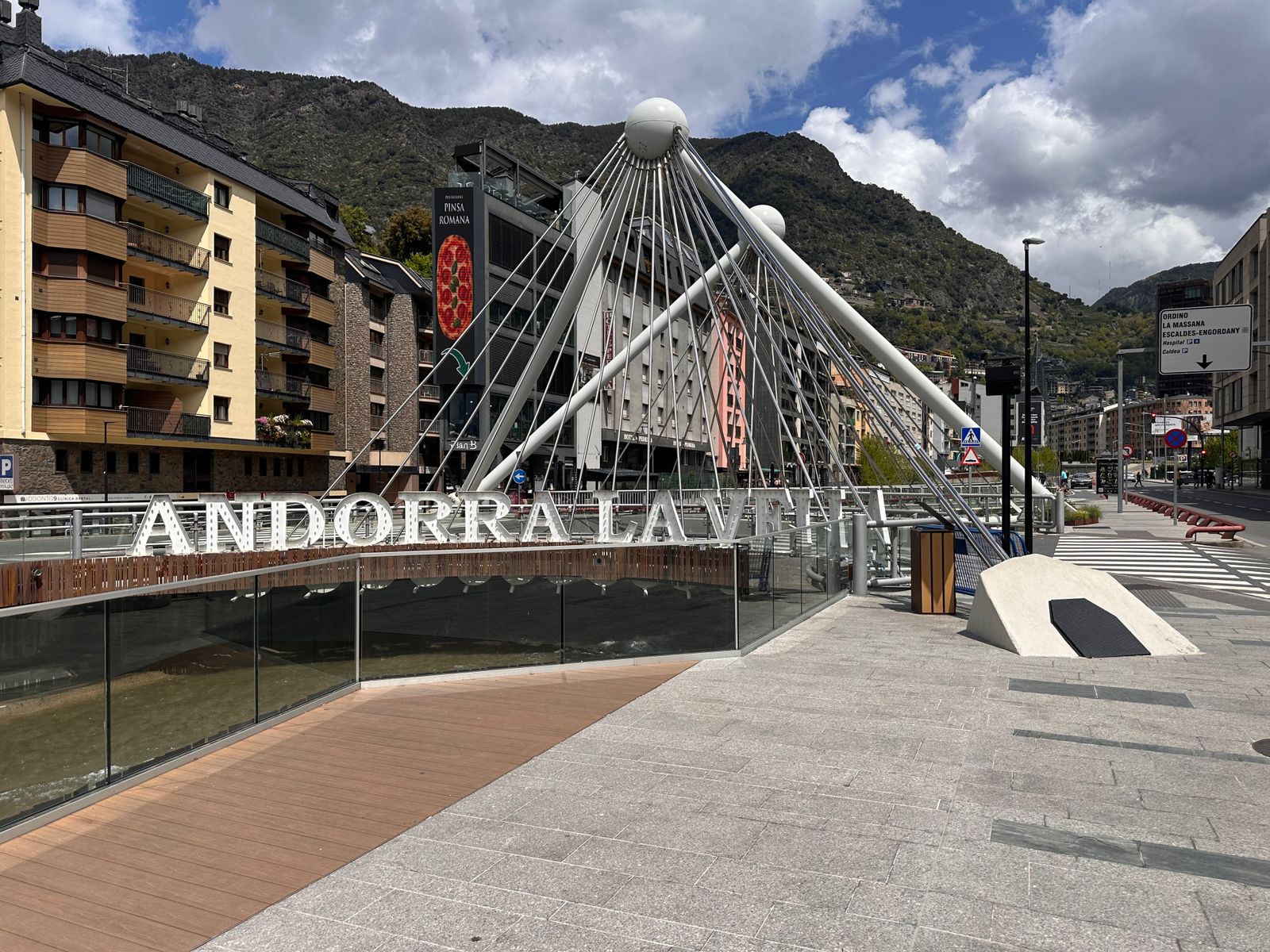
Andorra is a tiny co-principality folded into the Eastern Pyrenees between France and Spain, run jointly by the French President and the Bishop of Urgell since 1278 in one of the world’s oldest political arrangements. At 468 square kilometres it is one of Europe’s smallest countries — but its mountain landscape is impressive, its ski resorts among the best in the Pyrenees, and its tax-free shopping draws millions of bargain-hunters annually. Andorra la Vella, the world’s highest capital city at 1,023 metres, has a compact stone Barri Antic (old quarter) and the Casa de la Vall — a 16th-century parliament building — at its historic heart.
Andorra’s main ski area, Grandvalira, is the largest in the Pyrenees and one of the largest in southern Europe — 93 pistes covering 210 km of marked runs across six sectors. The altitude (1,710–2,640 metres), reliable snow record and significantly cheaper lift passes and accommodation than French or Swiss resorts make it an excellent value ski destination.
The Barri Antic (old quarter) contains the Casa de la Vall, the national parliament since 1702, and the Romanesque church of Sant Esteve. The old quarter contrasts with the surrounding duty-free shops and modern developments; it retains a quiet, authentic Catalan character.
Andorra’s UNESCO World Heritage Site — a glacially carved valley of intact alpine landscape, high pastures and traditional stone shepherd shelters (bordes). The valley covers nearly 10% of Andorra’s total territory and contains some of the finest hiking in the eastern Pyrenees.
A hearty broth with pork sausage, meatballs, pasta and root vegetables — the traditional Andorran Christmas and winter dish, Catalan in origin.
Cabbage and potato cake fried in lard with bacon — the mountain dish of the Pyrenees, filling and warming at altitude.
Herb and anise liqueurs from the Pyrenees are sold widely, along with tax-free wine and spirits.
Lamb from high mountain pastures, slow-roasted with garlic and rosemary or grilled over a wood fire.
River trout, often pan-fried with ham, appears on many mountain restaurant menus.
Andorra has no airport and no railway. The nearest airports are Barcelona El Prat (BCN) (3h) and Toulouse Blagnac (TLS) (3h). Direct bus services from both airports run year-round. For trip planning, see the official Andorra tourism portal.
Barcelona is the most practical gateway — direct buses from BCN Terminal 2 (Andorra by Bus, Alsa) run multiple times daily directly to Andorra la Vella in 3 hours. Toulouse is equally valid at the same distance.
The Andorra by Bus service from Barcelona El Prat airport directly to Andorra la Vella is the most efficient option for British and Northern European travellers — book online and it departs from the arrivals area.
Andorra borders are open 24h; passports are checked by Andorran customs (not EU Schengen — technically a non-EU state). There are strict limits on duty-free goods leaving Andorra: tobacco, alcohol and electronics are all subject to quantity restrictions at the Spanish and French borders.
Driving is the most flexible way to experience Andorra — the two ski areas (Grandvalira and Ordino-Arcalís) are 25–35 minutes from the capital. Car hire from Barcelona or Toulouse (return) is practical for 3–7 day trips.
December to March for skiing (Grandvalira, the largest ski area in the Pyrenees). June to September for hiking — the Pyrenean trails at their finest, the Madriu-Perafita-Claror Valley (UNESCO World Heritage Site) in full summer. October brings golden autumn colours. Andorra is also a year-round duty-free shopping destination.
📅 Andorra is in its best season in January, February, March, June, July, August, September, December. See where else is good to go in those months, or browse where to go by month.
Andorra uses the euro (as a non-EU microstate) but levies no income tax and minimal sales tax — duty-free prices on alcohol, tobacco, electronics and cosmetics are significantly lower than in France or Spain. Travel costs are comparable to mid-range Spain.
Trinxat — a Catalan dish (shared with Andorra and the Pyrenean Catalan region) of mashed potatoes and cabbage fried into a patty with cured pork fat (cansalada) — is Andorra’s most traditional winter mountain food.
Andorra’s wines — produced in the Encamp valley at 1,200–1,800m altitude, the highest commercial vineyards in the Pyrenees — are entirely consumed locally and almost never exported.
The Sport Hotel Hermitage & Spa (Grandvalira ski-in/ski-out, the finest hotel in Andorra, from €250–600/night) and the Hotel Plaza (Andorra la Vella, city-centre 5-star) are the country’s most celebrated addresses.
Andorra la Vella for one day, the Grandvalira ski area for two, the Madriu-Perafita-Claror Valley for one, the Casa de la Vall for one, the Caldea spa for one, the Escaldes-Engordany for one. Andorra — the sixth-smallest country in the world, 468km² — offers the finest skiing in the Pyrenees, the best-value duty-free shopping in Europe and mountain walking.
Andorra la Vella (at 1,023m, the highest capital city in the European Union — although Andorra is not an EU member, it is surrounded by EU territory) — the Casa de la Vall (the historic seat of the Consell General, the parliament of Andorra, a 16th-century stone house with one room for each of the seven parishes), the Barri Antic (the historic old quarter, pedestrianised) and the duty-free shops on Avinguda Meritxell.
Andorra is a co-principality — its heads of state are simultaneously the President of France and the Bishop of Urgell (Spain), a medieval feudal arrangement that has continued since 1278 without interruption. The two Co-Princes have never jointly visited Andorra. The arrangement has survived the French Revolution, Napoleon, two World Wars and the Spanish Civil War entirely intact.
Grandvalira (210km of pistes, 67 runs, 55 ski lifts, spanning from 1,710m to 2,640m) is the largest ski area in the Pyrenees — bigger than any resort in Spain or the French Pyrenees, with reliably good snow from December to April. The Pas de la Casa sector (facing France) for beginners; the Grau Roig sector for advanced.
Andorra has no airport, no rail connection, and only two road connections (to Spain and France). It has also never paid income tax to either country — Andorran residents pay zero income tax (though a modest 10% personal income tax was introduced in 2014). The combination of tax advantages and ski access has made it popular with Spanish and French residents.
A second day on the slopes — the Ordino-Arcalís sector (the quietest and most scenic, with views into both Spain and France from the 2,637m summit) for intermediate skiers. The Col d’Ordino (1,985m, accessible by telecabine, with 360-degree views of the Pyrenean range from Catalonia to the Basque country) for non-skiers.
Ordino-Arcalís was the training base for Andorra’s Olympic ski team — Andorra has sent athletes to every Winter Olympics since 1976, despite being a country of 77,000 people. The most celebrated Andorran skier was Joan Villamó (World Cup podium 2019). The sector’s quietness is due to its distance from the main road access.
The Madriu-Perafita-Claror Valley (UNESCO World Heritage Site — 9,959 hectares, 17% of the entire area of Andorra, a glacially carved valley with Bronze Age settlements, ancient irrigation channels and granite peaks above 2,800m) — the Madriu Valley floor trail (10km from Escaldes to the Fontverd refugi, through traditional herder settlements in use since 5,000 BCE).
The Madriu-Perafita-Claror Valley was inscribed as a UNESCO Cultural Landscape (not a natural site) because of 4,000+ years of continuous pastoral use — the valley shows the entire history of Pyrenean transhumance, from pre-Bronze Age hut circles and irrigation channels to 19th-century charcoal burning grounds. The landscape has changed very little in 1,000 years.
The Caldea thermal spa (1994, a striking glass-and-steel tower by French architect Jean-Michel Ruols, rising from the urban centre of Escaldes — the geothermal spring water from the Valira del Nord river feeds pools at 36°C, indoor and outdoor, with Pyrenean mountain views from the rooftop) is the largest thermal spa complex in Southern Europe.
The geothermal springs at Escaldes (the Spanish root is “escaldes” — “scalded”, referring to the hot water) reach 60°C at the source — used for centuries for washing and bathing. The Caldea complex processes 600,000 litres of natural hot water per day. Entry costs €38–55 for 3 hours.
Andorra has the finest concentration of Romanesque churches per square kilometre in the world — the Sant Joan de Caselles church (11th century, with a unique Romanesque bell tower and surviving fresco of the Apocalypse of St. John), the Sant Climent de Pal (12th century), the Sant Martí de la Cortinada (11th century — all with original frescoes in situ).
Andorra’s Romanesque churches (11th–12th century) were built when the principality was at the crossroads of the Camino de Santiago routes through the Pyrenees. Each parish church has its own slate-roofed bell tower, frescoed interior and medieval stone font. The concentration of 38 Romanesque sites in 468km² is unmatched anywhere in Europe.
Ordino — the most traditional and least commercialised of Andorra’s seven parishes, with a 17th-century stone church, the Armari del Senyor del Rossell (a painted wooden cupboard from 1619, the finest piece of Andorran decorative art) and the Museu d’Areny-Plandolit (a 17th-century noble family mansion, a complete time capsule of pre-modern Andorran domestic life). Drive to Barcelona (3h) or Toulouse (3h) for departure.
Andorra produces its own cattle breed (the Alberes cow — a small, dark, hardy variety from the eastern Pyrenees), grows tobacco (the only country in Western Europe to still grow tobacco commercially, producing 300 tonnes/year primarily for duty-free cigarette sales) and distils its own herbal liqueur (Aromes Natu-Roh, based on 18 Pyrenean herbs).
🛂 Entry rules: EES and ETIAS
Andorra has no border controls of its own for most visitors; you arrive through the Schengen area, so its rules apply.
EES (in force): since 10 April 2026 the EU’s Entry/Exit System registers non-EU visitors’ passport details, fingerprints and a photo the first time they enter the Schengen area, replacing passport stamps. Allow extra time at the border on your first trip; later crossings are quicker. EU, EEA and Swiss citizens are not registered.
ETIAS (not yet running): a €20 online travel authorisation for visitors who don’t need a visa, such as UK, US, Canadian and Australian citizens. It hasn’t started and no start date has been confirmed, so nobody can apply yet; ignore websites that offer to “pre-register” you for a fee.
Visa-free visitors can stay up to 90 days in any 180-day period across the whole Schengen area, not per country.
Official information: EU: Travel to Europe (EES & ETIAS) · Reviewed September 2026
No passport control at Andorra’s borders — though EU/Schengen entry and exit points are located on the French and Spanish sides of the valleys.
Andorra has no VAT on most goods — electronics, alcohol, tobacco and perfume are significantly cheaper than in Spain or France. Day-trippers come from both countries specifically to shop.
Andorra has no airport. The closest are Barcelona El Prat (3h by road) and Toulouse (3h). Direct bus services run from both airports.
Andorra is governed by two co-princes — the Spanish Bishop of Urgell and the French President. The only country to have a French president as its head of state.
Electronics, perfume, alcohol, tobacco and luxury goods are significantly cheaper than in France or Spain. Day-trippers come specifically to shop.
No airport or railway. Access by car or bus from Barcelona (3h) or Toulouse (3h). The mountain roads can be challenging in winter snow.
Quick answers to the questions people most often ask before visiting Andorra.
December to March for skiing (Grandvalira, the largest ski area in the Pyrenees). June to September for hiking — the Pyrenean trails at their finest, the Madriu-Perafita-Claror Valley (UNESCO World Heritage Site) in full summer.
Andorra has no airport and no railway. The nearest airports are Barcelona El Prat (BCN) (3h) and Toulouse Blagnac (TLS) (3h). Direct bus services from both airports run year-round.
Expect roughly €60–100 a day on a budget and €180–300 mid-range, or €400+ for a more luxurious trip, per person and excluding flights.
Andorra uses the euro (€).
Plug types: Type C / F (two-pin, 230V).
— Official ski resort app with piste maps, snow reports and lift status.
FreePoint your camera at menus, signs or street text for instant translation. Download the language pack offline before you arrive for full use without data.
FreeReal-time and offline exchange rates for all world currencies — converts prices instantly so you always know what you are paying in your home currency.
FreeFind and book hotels, guesthouses and apartments with free cancellation on most rates — one of the widest selections of accommodation worldwide.
FreeAndorra sits within easy reach of several other destinations — each with a completely different character.

