CK
Cook Islands
No traffic lights, no cruise ships — Polynesia’s most pristine lagoon
No traffic lights, no cruise ships — Polynesia’s most pristine lagoon
The Cook Islands is a Polynesian nation of 15 islands scattered across 2.2 million square kilometres of South Pacific Ocean — a self-governing territory in free association with New Zealand, whose citizens hold New Zealand passports and whose islands range from Rarotonga (a lush volcanic island with a mountain interior, a 31-kilometre circumference road and a diving lagoon) to Aitutaki (a triangular atoll with the most photographed lagoon in the South Pacific — a turquoise and aquamarine palette of impossible beauty). The Cook Islands has no traffic lights, no McDonald’s, no shopping malls and no cruise ship terminals — a deliberate policy of protecting the islands’ character. The result is one of the most authentically Polynesian and low-key tourism experiences in the Pacific.
Consistently rated one of the world’s top ten most beautiful lagoons — a 45-minute flight from Rarotonga reveals a triangular atoll enclosing a shallow lagoon of 15 distinct shades of blue and turquoise, studded with white-sand motu (islets). The One Foot Island (Tapuaeta’i) — a tiny sandbar at the lagoon’s far edge — is reachable only by boat and offers a perfect Polynesian castaway experience.
The volcanic interior of Rarotonga rises steeply to Te Manga (652m) through dense jungle — the Cross-Island Track and the Te Ara’oa trail traverse the mountain ridge with views of the entire island and lagoon. The interior is completely undeveloped; ancient marae (ceremonial stone platforms), waterfalls and endemic bird species are found on hiking trails.
The lagoon around Rarotonga has exceptional wall diving on the outer reef edge, with visibility of 30+ metres, large schools of fish, manta rays and turtles. Avaavaroa Passage and Muri Lagoon provide good snorkelling directly from shore.
Cook Islands culture — its exuberant dance (the Cook Islands style of hip movements is considered the most dynamic in Polynesia), its tivaevae (patchwork quilt) craft and its traditional drumming — is best experienced at the Te Vara Nui Cultural Village night show and the weekly Island Nights at local hotels.
Cook Islands (Wikipedia) →Raw fish marinated in lime juice and mixed with coconut cream and vegetables — the Cook Islands version of poisson cru.
Young taro leaves cooked slowly in fresh coconut cream until completely tender and silky — a Cook Islands delicacy where the earthiness of the taro is enriched by the sweetness of fresh coconut. Served at umu (earth oven) feasts and family celebrations.
An earth-oven feast of pork, taro, breadfruit and fish cooked over hot stones — served at celebrations and island nights.
Home-brewed beer made from oranges or other fruit, traditionally drunk at tumunu gatherings on Atiu.
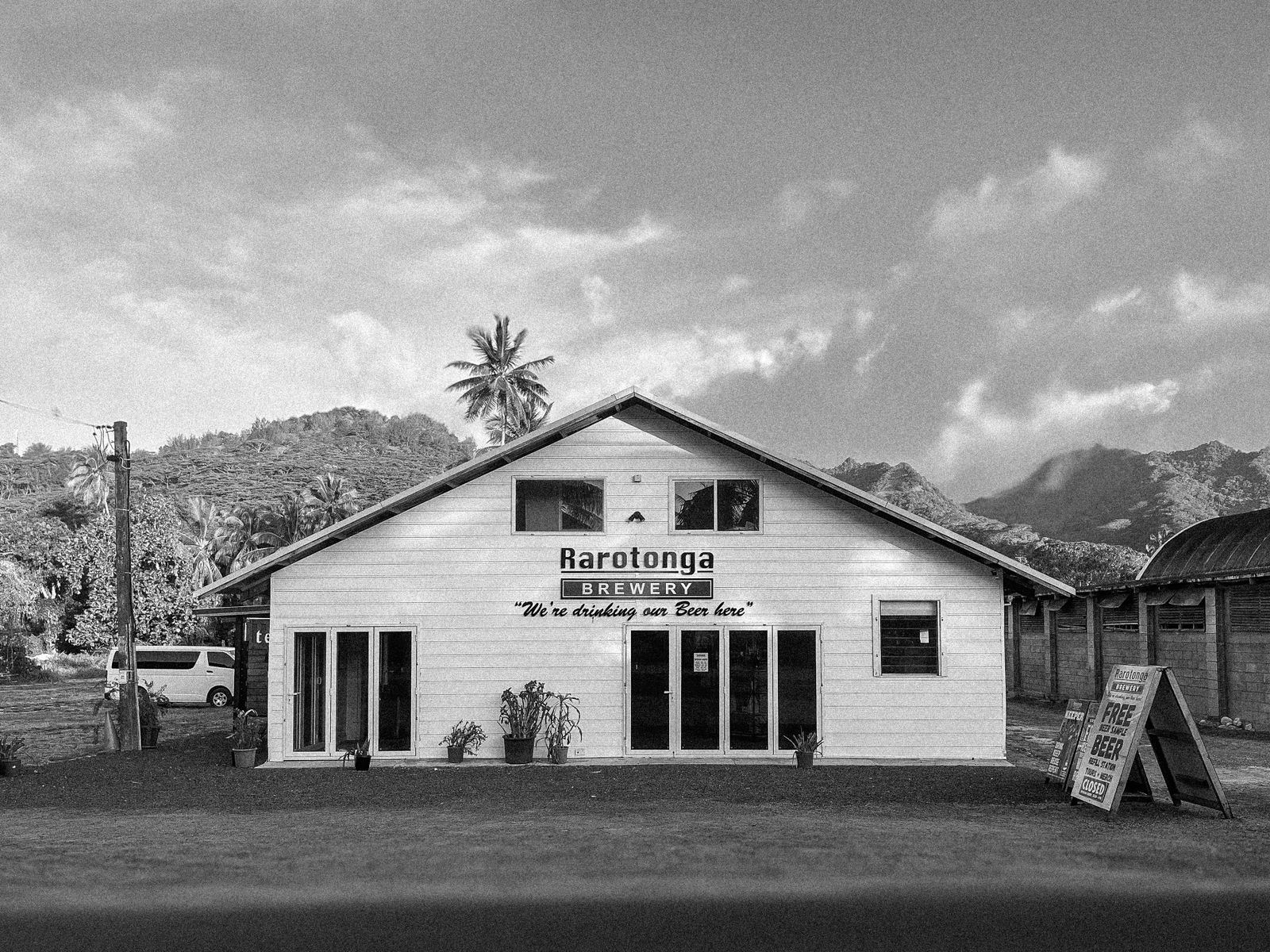
The commercial pale lager brewed locally in Rarotonga — available at every restaurant, bar and resort on the island. Cold and light, it is the default companion to an umu feast or a beach barbecue.
Rarotonga International (RAR) is the main gateway. Air New Zealand dominates from New Zealand and Australia; Jetstar and Pacific Airlines serve secondary routes. For trip planning, see the official Cook Islands tourism portal.
Auckland (3h30) and Sydney (5h) are the primary gateways. Air New Zealand dominates the Cook Islands market and offers excellent connections from all NZ cities.
Los Angeles (8h direct via Air New Zealand) makes the Cook Islands accessible from the US West Coast. Papeete (1h30) allows a French Polynesia + Cook Islands combination itinerary.
Air Rarotonga operates Twin Otter and Saab 340 aircraft between the southern group islands. Book Aitutaki well in advance (especially July–August) as the limited seats sell out.
A scooter (NZD 25–40/day) is the ideal Rarotonga transport — the island’s 32km ring road is flat, well-paved and signed. Allow 40 minutes to circle the entire island; most beaches and restaurants are directly on the road.
April to November is ideal — the dry season, cooler trade winds (24–27°C), excellent snorkelling. July to September is the sweet spot — less crowded, lower prices. December to March is the wet season with occasional cyclones; the humpback whales pass through June to October.
📅 Cook Islands is in its best season in April, May, June, July, August, September, October, November. See where else is good to go in those months, or browse where to go by month.
The New Zealand Dollar (NZD) is the currency. Mid-range for the South Pacific — comparable to Fiji, cheaper than French Polynesia.
Ika mata (raw fish marinated in fresh lime juice until the proteins denature)
Rukau (taro leaves cooked in coconut cream with corned beef or tuna — the most common Cook Islands home-cooked dish, available at island night feasts and local restaurants for NZD 12–25) is the definitive everyday Cook Islands.
Pacific Resort Aitutaki (overwater bungalows directly over the lagoon at NZD 600&ndash)
Rarotonga for two days, Muri Lagoon for one, Aitutaki for two days, Atiu for one, final Rarotonga for one. The Cook Islands — 15 islands in 1.8 million km² of ocean — has the most beautiful lagoon in the South Pacific at Aitutaki, Polynesian culture largely untouched by mass tourism and the finest black pearls in the Pacific at half the French Polynesia price.
Rarotonga — the main island of the Cook Islands (a self-governing state in free association with New Zealand — 15 islands spread across 1.8 million km² of ocean, population 17,000, the citizens are New Zealand citizens) with the Cook Islands Cultural Village (a living demonstration of traditional Cook Islands culture: dancing, weaving, coconut husking, fire-making and island food) and Avarua, the capital, with the Cook Islands National Museum.
The Cook Islands are a self-governing state in free association with New Zealand — Cook Islanders are New Zealand citizens with the right to live and work in New Zealand without restriction, but the Cook Islands has its own government, laws, currency considerations (NZD used) and foreign policy. This unique arrangement (in use since 1965) provides the benefits of New Zealand citizenship (emergency consular support, access to NZ welfare) while maintaining political independence.
The Cross-Island Track (a 3-hour return hike from Avarua to the south coast through the interior of Rarotonga, climbing through the ancient makatea forest to the base of Te Rua Manga — the Needle, a 413m volcanic pinnacle rising from the centre of the island) and the Rarotongan Interior (the central mountain core of Rarotonga, accessible only on foot, with the finest view of the island from the Te Manga summit at 652m — the highest point in the Cook Islands).
Te Rua Manga (the Needle — a 413m volcanic basalt pillar in the centre of Rarotonga, rising sharply from the surrounding rainforest) is not technically climbable — the final 50m is bare vertical rock requiring technical climbing equipment. The cross-island trail passes its base, providing the classic view of the pinnacle from below. The island’s interior forest is virgin rainforest; Rarotonga has no native land mammals (only bats) and a unique bird community including the endangered Rarotongan monarch.
Muri Lagoon (the finest lagoon in the Cook Islands — a 4km barrier reef enclosing a shallow turquoise lagoon studded with four small uninhabited islets, the motus of Taakoka, Koromiri, Oneroa and Motutapu, accessible by kayak or lagoon cruise, with snorkelling over coral bommies in 1–3m of water) and the Muri Night Market (the most popular food market in the Cook Islands, Thursday to Sunday evenings with local island kai food stalls).
The motus of Muri Lagoon were used in the 2000 Cook Islands TV production as filming locations — the lagoon’s photogenic quality has made it one of the most-photographed lagoon scenes in the Pacific. At very low tides, it is possible to wade to all four motus from the mainland shore; at high tide, the kayak crossing takes under 10 minutes.
30 min flight. Aitutaki — a low atoll with a lagoon consistently ranked the most beautiful in the world (the 7km² lagoon, enclosed by a barrier reef with One Foot Island — Tapuae — a crescent of white sand accessible only by boat, with a post office that will stamp your passport) — the Cook Islands’ main tourist destination for those who have seen Bora Bora and want somewhere quieter, emptier and arguably more beautiful.
Aitutaki lagoon was named the world’s most beautiful lagoon by BBC Travel and Lonely Planet multiple times — the combination of multiple shades of turquoise layered from pale aquamarine over the shallow sandy bottom to deep blue over the reef passages, the white sand motus, and the absence of large resort development (the tallest building is a two-storey boutique hotel) creates a low-key character that Bora Bora lost to development decades ago.
One Foot Island (Tapuae — the smallest and most famous of the Aitutaki motus, a crescent of white sand and a few coconut palms accessible by boat from the Aitutaki village, with the world’s most remote post office (a corrugated iron shed on an uninhabited island that opens only when tourist boats arrive, staffed by a postal worker who arrives by boat to stamp passports) and a traditional Cook Islands umu lunch of taro, breadfruit, fish and coconut cream on the beach).
The One Foot Island post office (the most remote functioning post office in the Pacific — the postmaster arrives by boat from Aitutaki village specifically to stamp passports when tourist lagoon cruises are scheduled, then returns by boat when the tourists leave) is the most sought-after passport stamp in the Pacific. The name Tapuae (One Foot — footprint in Maori) refers to a legend of a father who escaped his enemies by carrying his son on his back, leaving only adult footprints on the sand.
1h flight. Atiu — the most geologically distinctive island in the Cook Islands (a raised coral island, the interior ringed by a wall of sharp makatea — raised coral limestone with a unique cave ecosystem, the Anatakitaki Cave with Kopeka swiftlets (Aerodramus sawtelli — a bird found only on Atiu, that navigates in total darkness by echolocation, the only bird in the Pacific to do so) and the traditional tumunu — a bush beer school where men brew orange beer in clay pots in the forest).
The Kopeka (Atiu Swiftlet, Aerodramus sawtelli) is found only on Atiu island in the Cook Islands and uses echolocation (like a bat) to navigate in the total darkness of the Anatakitaki Cave — the only bird in the Pacific and one of only two bird species in the world known to echolocate. The species has a total population of approximately 700 individuals; the cave is a protected reserve and visits are by guided tour only.
A final day on Rarotonga with the Beachcomber Gallery (black Tahitian pearls — the finest Pearl shopping in the Cook Islands, farmed in the northern atolls of Manihiki and Penrhyn and sold at significantly lower prices than in French Polynesia) and an Island Night Show (the most electric traditional dancing in Polynesia — drum dance, hula and string-band music at one of the beachfront resorts, the finest cultural performance in the Cook Islands). Fly from Rarotonga (RAR).
Cook Islands black pearls (cultivated in the Manihiki lagoon — the “Pearl of the Pacific”, the world’s most productive black pearl atoll outside French Polynesia — are indistinguishable in quality from Tahitian pearls at 30–50% lower prices. Manihiki pearl farmers have cultivated Pinctada margaritifera oysters since the 1970s; the industry is the Cook Islands’ most valuable export.
Visa-free for most nationalities for up to 31 days (extendable).
Flights from Auckland (3.5h) and Sydney (5h). Air Rarotonga connects to Aitutaki (45 min) and outer islands.
The One Foot Island lagoon cruise is Cook Islands’ most sought-after experience and books out weeks ahead in peak season (June-October).
The NZD is used. Cards accepted in Rarotonga; carry NZD cash on outer islands.
Daily Air Rarotonga flights (45 min) — book well in advance as the lagoon cruise fills quickly.
The most common way to explore Rarotonga’s 31km ring road; drive on the left (NZ convention).
Quick answers to the questions people most often ask before visiting the Cook Islands.
Fly into Rarotonga International Airport (RAR). Direct flights take about 3h30 from Auckland and around 5–6 hours from Sydney and Melbourne, with flights from Los Angeles too.
Air Rarotonga flies from Rarotonga to Aitutaki several times a day in about 45 minutes. Book early — flights and the famous lagoon cruises to One Foot Island fill up in peak season.
Most nationalities can visit visa-free for up to 31 days, which can be extended. Check the rules for your passport before travel.
April to November, the dry season (24–27°C), with July to September a sweet spot. December to March is wetter, with occasional cyclones. Humpback whales pass through in the southern winter.
The New Zealand dollar. Cards are accepted on Rarotonga, but carry cash on the outer islands. The Cook Islands are mid-range for the South Pacific — cheaper than French Polynesia.
Download offline maps before you travel so navigation works without mobile data — essential for walking, driving and finding local spots.
FreePoint your camera at menus, signs or street text for instant translation. Download the language pack offline before you arrive for full use without data.
FreeReal-time and offline exchange rates for all world currencies — converts prices instantly so you always know what you are paying in your home currency.
FreeFind and book hotels, guesthouses and apartments with free cancellation on most rates — one of the widest selections of accommodation worldwide.
FreeCook Islands sits within easy reach of several other destinations — each with a completely different character.
Cook Islands is one of the world’s least-visited places. See all 90 in our guide to the world’s least-visited countries & territories.


