NL
Netherlands
Life happens on a bicycle
Life happens on a bicycle

The UNESCO canal ring at dusk: 165 canals, 1,500 bridges and 17th-century canal houses leaning at odd angles. The Rijksmuseum (Rembrandt, Vermeer, Hals) and the Van Gogh Museum are within walking distance.
Photo: Dietmar Rabich, CC BY-SA 4.0

7 million flower bulbs in 79 hectares, open for 8 weeks only (mid-March to mid-May): one of the world’s largest flower gardens and an easy day trip from Amsterdam.
Photo: Wikimedia Commons contributor, Public domain

A city rebuilt after WWII bombing, with bold modern architecture: the Cube Houses, the Markthal (a market hall with an artwork-covered interior vault), the Depot Boijmans van Beuningen (a publicly accessible art storage building).
Photo: Tolga Bakı, CC BY 4.0

The birthplace of Vermeer and the home of Delftware blue-and-white ceramics: the Markt square, the Nieuwe Kerk (where the Dutch royal family is entombed) and the Royal Delft pottery factory.
Photo: Zairon, CC BY-SA 4.0

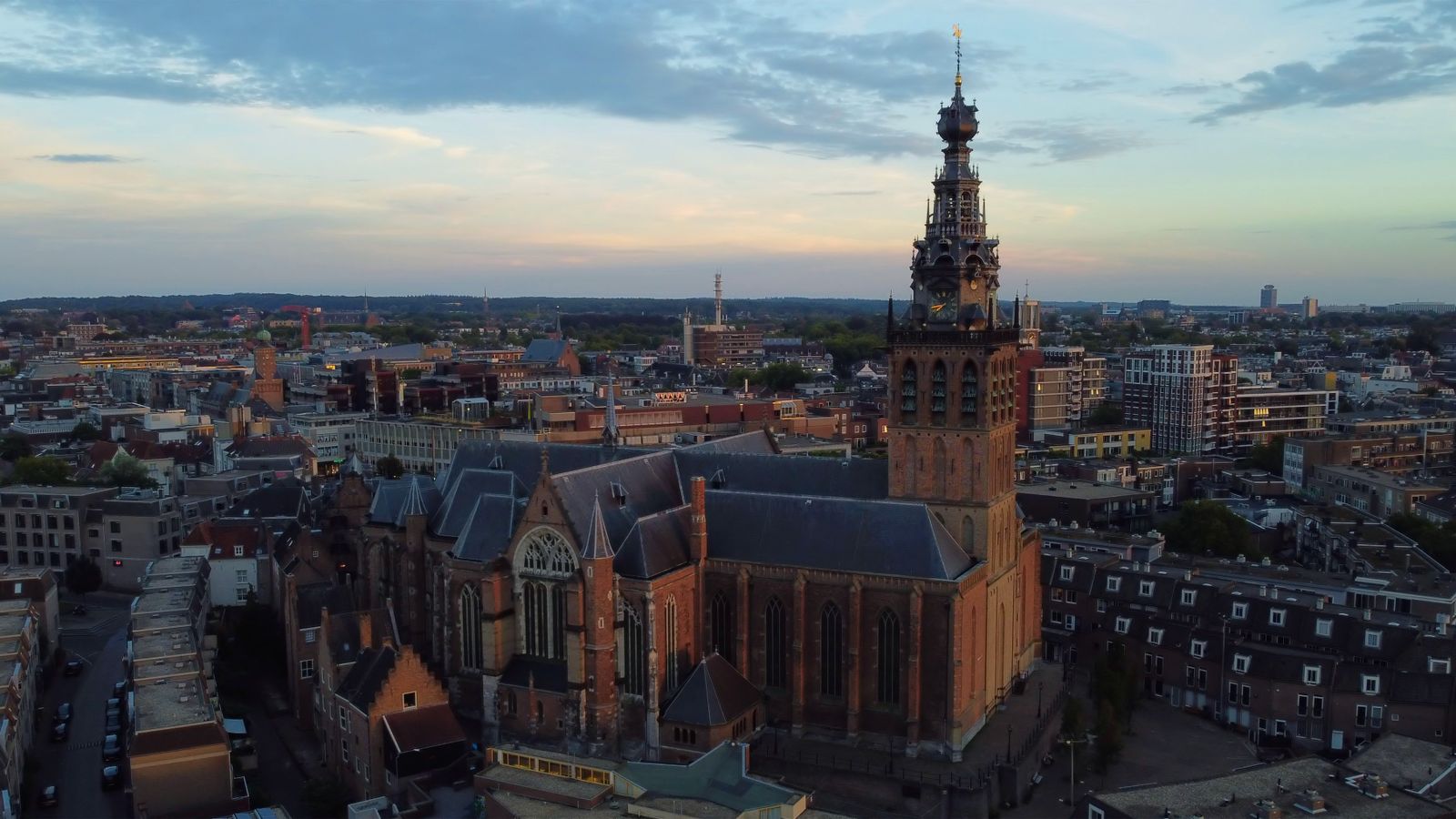
A medieval city with an unusual two-level canal (wharves at water level, restaurants built into the old cellars): the Dom Tower (112m, the tallest church tower in the Netherlands) dominates the skyline.
Photo: Robert von Oliva (naruciakk), CC0

The Peace Palace (seat of the International Court of Justice), the Mauritshuis (Vermeer’s Girl With a Pearl Earring and Rembrandt’s The Anatomy Lesson) and the Madurodam miniature city.
Photo: Daan Noske / Anefo, CC0

19 original 18th-century windmills in a polder landscape, UNESCO-listed: one of the most photographed views in the Netherlands and a showcase of Dutch water management.
Photo: Lucas Hirschegger, CC BY-SA 3.0

A canal city 20 minutes from Amsterdam that most visitors skip: the Frans Hals Museum (the Golden Age group portrait master), the Grote Kerk (St Bavo) and the hidden hofjes (almshouse courtyards).
Photo: Fryslan0109 at English Wikipedia, Public domain
Two thin waffle discs sandwiching a caramel syrup filling: placed on a hot cup of coffee so the steam softens the caramel. The best-known Dutch biscuit.
New herring (maatjesharing) eaten raw, by holding the tail and lowering it into the mouth, with raw onion and gherkin. The new season starts in June; herring stalls sell it all year.
A mash of potato with greens (boerenkool/kale, endive or sauerkraut), served with smoked sausage (rookworst) and gravy. Classic Dutch winter comfort food.
Deep-fried ragout balls of beef or veal in breadcrumbs, served with mustard. The classic Dutch bar snack, usually ordered with beer.
The original gin: a malt-wine base with juniper and botanicals, the direct ancestor of London Dry Gin. Old jenever (oude) is aged and mellow; young jenever (jonge) is cleaner and lighter.
Heineken was founded in Amsterdam in 1864. For local craft beer, try Brouwerij ‘t IJ, brewing beside the De Gooyer windmill in Amsterdam-Oost since 1985; its Zatte (a tripel) is the best-known beer.
A thick split pea soup with celery, celeriac and smoked sausage, so dense the spoon stands upright. Eaten in winter at canal-side restaurants throughout the country.
Tiny fluffy pancakes made from yeast-leavened batter, cooked in a special pan and served with butter and powdered sugar. Sold at markets and fairs.
Amsterdam Schiphol (AMS) is one of Europe’s best-connected airports — a major hub with direct flights to around 300 destinations. Eurostar trains connect Amsterdam directly to Paris and London from Amsterdam Centraal station. For trip planning, see the Holland tourism portal.
The Eurostar runs London St Pancras – Amsterdam Centraal in about 4 hours, city centre to city centre. Book early for the cheapest fares.
KLM’s Amsterdam hub offers excellent North American connections. JFK–AMS is one of the most frequent transatlantic routes.
Buy an OV-chipkaart (rechargeable transit card) from any station machine — it covers trains, trams, buses and metros across the country. Contactless bank cards also work on most Dutch public transport.
Schiphol station is directly under the terminal — no bus, no transfer. One of the most efficient airport-to-city connections in Europe.
April and May bring the tulip fields and Keukenhof gardens — the best single reason to visit in spring. June to August is warm and busy. September is excellent: crowds gone, temperatures still pleasant. November to January is grey and cold but atmospheric.
📅 Netherlands is in its best season in April, May, June, July, August, September. See where else is good to go in those months, or browse where to go by month.
The Netherlands is mid-range for Western Europe — not as expensive as Scandinavia, comparable to Germany. Amsterdam is the priciest city; Rotterdam, Utrecht and the smaller cities are significantly more affordable.
A stroopwafel from Albert Heijn costs €2.50 for a full pack. A fresh one from the Gouda market costs €1.50. Both are worth knowing about.
A canal house hotel in the Jordaan or the Nine Streets area puts you in walking distance of everything worth seeing in Amsterdam. Prices are high but the location is worth it.
Amsterdam has a strong fine-dining scene with several Michelin-starred restaurants; tasting menus typically cost €150+ per person and need booking well ahead.
Amsterdam for three days, Keukenhof and tulip country for one, Rotterdam and Delft for two, The Hague to finish. The whole country is connected by fast, frequent trains — no car needed.
The Rijksmuseum is the national museum — Vermeer, Rembrandt, the Night Watch. Allow 3 hours. Afternoon: rent a bike and cycle the canal ring. Dinner in the Jordaan.
The Museumkaart (a national museum pass) gives free entry to 400+ Dutch museums. It pays off if you visit four or five paid museums.
Book the Anne Frank House online well ahead — tickets are sold online only and often sell out. The house takes 90 minutes. Afternoon: the Jordaan neighbourhood’s independent shops and brown cafes. The Heineken Experience is optional.
The Noordermarkt in the Jordaan has a farmers' market on Saturdays and a flea market on Monday mornings — more local than the tourist markets.
April–May: Keukenhof gardens (7 million tulip bulbs, open just 8 weeks a year — book ahead). Outside flower season: Zaanse Schans, a living windmill village 30 minutes north of Amsterdam, makes an excellent half-day.
Keukenhof has timed entry — book online before you travel. The flower fields around Lisse (visible from the road or by bike) are free to see.
45 minutes by Intercity train from Amsterdam Centraal. Rotterdam's centre was destroyed by bombing in 1940 and rebuilt — it is now one of Europe's best cities for modern architecture. The Markthal, the Cube Houses, the Erasmusbrug.
The Depot Boijmans Van Beuningen (2021) is billed as the world's first publicly accessible art depot — around 151,000 objects in a mirrored, bowl-shaped building.
20 minutes from Rotterdam by train. The old town canal centre, the Oude Kerk (where Vermeer is buried) and the Royal Delft factory. The Vermeer Centrum explains his life and work (it has no original paintings).
Vermeer painted almost exclusively in Delft. The Mauritshuis in The Hague (Day 6) has the Girl with a Pearl Earring — the most famous Vermeer in existence.
30 minutes from Delft. The Mauritshuis is a small collection of Dutch Golden Age masterpieces — the Girl with a Pearl Earring, Anatomy Lesson of Dr. Nicolaes Tulp, View of Delft. Scheveningen beach is 30 minutes away by tram.
The Mauritshuis takes 2–3 hours. The Girl with a Pearl Earring is smaller in real life than you might expect.
About 30 minutes from Amsterdam: Utrecht has a well-preserved medieval centre — a canal ring lined with wharf cellars that are now cafes and restaurants. The Dom Tower (112m, climb it) and the Rietveld Schröder House (UNESCO-listed, 1924).
The wharf cellars along Utrecht’s Oudegracht canal — half-basement restaurants and bars built into the canal walls — are one of Utrecht's most distinctive features.
🛂 Entry rules: EES and ETIAS
Netherlands is in the Schengen area, which has two EU border systems for non-EU visitors.
EES (in force): since 10 April 2026 the EU’s Entry/Exit System registers non-EU visitors’ passport details, fingerprints and a photo the first time they enter the Schengen area, replacing passport stamps. Allow extra time at the border on your first trip; later crossings are quicker. EU, EEA and Swiss citizens are not registered.
ETIAS (not yet running): a €20 online travel authorisation for visitors who don’t need a visa, such as UK, US, Canadian and Australian citizens. It hasn’t started and no start date has been confirmed, so nobody can apply yet; ignore websites that offer to “pre-register” you for a fee.
Visa-free visitors can stay up to 90 days in any 180-day period across the whole Schengen area, not per country.
Official information: EU: Travel to Europe (EES & ETIAS) · Reviewed September 2026
Around 35,000km of cycle paths link Dutch towns. OV-fiets rental bikes are available at most larger NS stations.
NS (Nederlandse Spoorwegen) connects Amsterdam, Rotterdam, The Hague, Utrecht and Leiden with trains every 10–15 minutes on the busiest routes.
Amsterdam hotel prices are among the highest in Europe. Rotterdam and Utrecht are noticeably cheaper for accommodation.
The Dutch communicate bluntly and without social softening. This is considered a virtue, not a vice.
Standing on a cycle lane in Amsterdam is the most dangerous thing a tourist can do.
Every canal-side terrace fills from April to September. Drink a jenever at a brown cafe (bruine kroeg) for a classic Dutch evening.
The Rijksmuseum and Van Gogh Museum both require timed-entry tickets. Same-day walk-ins are not available in peak season.
Thank you in Dutch (dank-ya-vel). Appreciated even by people who speak perfect English.
Quick answers to the questions people most often ask before visiting the Netherlands.
April and May bring the tulip fields and Keukenhof gardens — the best single reason to visit in spring. June to August is warm and busy.
Amsterdam Schiphol (AMS) is one of Europe's best-connected airports — a major hub with direct flights to around 300 destinations. Eurostar trains connect Amsterdam directly to Paris and London from Amsterdam Centraal station. For trip planning, see the Holland tourism portal.
Expect roughly €70–90 a day on a budget and €140–180 mid-range, or €280+ for a more luxurious trip, per person and excluding flights.
Netherlands uses the euro (€).
Plug types: Type C / F (two-pin, 230V).
Netherlands’ national rail app — buy intercity and Sprinter train tickets and check live platform information.
FreeThe Netherlands’ official public transit planner — covers all trains, trams, buses and ferries across the country.
FreeThe Netherlands’ leading food delivery app (by Just Eat Takeaway) — wide restaurant coverage.
FreeBook Anne Frank House tickets (sell out weeks ahead), canal boat tours, Keukenhof entry and Amsterdam experiences.
FreeExplore Netherlands’s top city destinations — from Rotterdam to Amsterdam, each with its own distinct character.
Netherlands sits within easy reach of several other destinations — each with a completely different character.


