RW
Rwanda
Land of a thousand hills and mountain gorillas
Land of a thousand hills and mountain gorillas
⚠️ Travel advisory: check before you go
The US advises travellers to reconsider travel to Rwanda because of the large Ebola outbreak in neighbouring DR Congo, although Rwanda has reported no cases. Rwanda refuses entry to foreign nationals who have been in DR Congo in the previous 30 days, and border crossings can close at short notice. Several governments advise against travel near the DRC border, including Rubavu (Gisenyi) and Rusizi districts. Gorilla trekking continues; check the latest advice before booking.
Latest official advice: UK FCDO · US State Department · Reviewed September 2026

A 1-hour maximum encounter with a habituated mountain gorilla family in the Virunga rainforest: a silverback, mothers and infants in their natural habitat. One of the most moving wildlife experiences on earth.
Photo: Nina R, CC BY 2.0

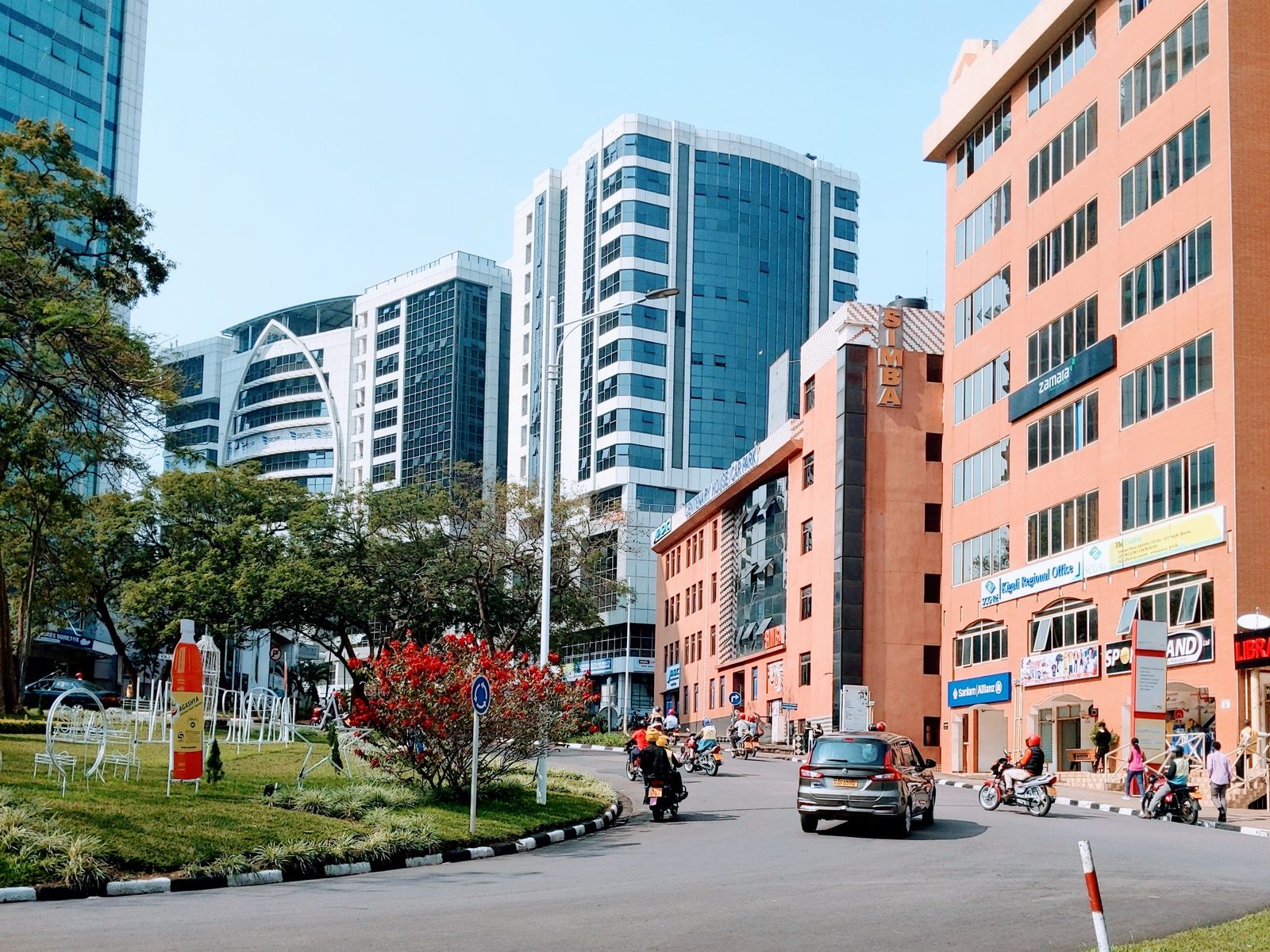
The Kigali Genocide Memorial (where 250,000 victims are buried): a profound and essential visit. Kigali’s clean hilltop streets, the Kimironko market and the Nyamirambo neighbourhood’s street life.
Photo: Gerard van de Bruinhorst, CC BY-SA 4.0

A Great Rift Valley lake shared with the DRC: the Congo Nile Trail’s 227km cycling route, the Rubavu beach resort town and the lake islands accessible by boat.
Photo: Max Chiswick, CC BY-SA 4.0

A montane rainforest of 1,000km²: chimpanzee tracking (the largest unhabituated chimpanzee community in East Africa), a 160m canopy suspension walkway and 13 primate species.
Photo: Brian Harries, CC BY 2.0

Rwanda’s Big Five savanna park: lions were reintroduced in 2015, black rhinos in 2017. The Akagera River’s hippos and the lake system’s bird life make it East Africa’s most compact Big Five experience.
Photo: Emery045, CC BY-SA 4.0

The base for gorilla trekking: Lake Burera and Ruhondo’s twin lakes reflecting the Virunga volcanoes, the Dian Fossey Gorilla Fund museum and the Iby’iwacu Cultural Village.
Photo: Adam Jones, Ph.D., CC BY-SA 3.0

A contemporary arts centre in Kigali’s Kimihurura neighbourhood: one of East Africa’s liveliest art spaces, with a Thursday-night dance session open to all.
Photo: Jim Joel, CC BY-SA 4.0

A reconstruction of the traditional royal palace with the ceremonial long-horned Inyambo cattle: a living museum of Rwandan royal culture.
Photo: Yakov Fedorov, CC BY-SA 4.0
Cassava leaves cooked with groundnut paste, dried fish and eggplant: the most distinctively Rwandan dish, eaten in households across the country.
Grilled goat meat skewers with chilli sauce: the street food of Rwanda, eaten at roadside charcoal grills at every hour.
Boiled potatoes with beans: the most frequently eaten Rwandan meal, simple and filling.
A stiff maize or cassava porridge: the East African staple, eaten by hand with stew or vegetables.
The two Rwandan lagers: cold at a Lake Kivu waterfront restaurant.
Rwanda grows award-winning washed Arabica at 1,500-2,000m: bright, acidic and floral. Bourbon Arabica from the Western Province is the benchmark.
Home-brewed from ripe bananas: slightly sour, lightly carbonated and 2-4% alcohol. The traditional Rwandan social drink.
Green bananas slow-cooked in a groundnut or meat stew: a Central African staple eaten in Rwanda’s western region.
Uber doesn't operate in Rwanda. Use the Move app for cars and Yego for moto-taxis (helmets provided).
Gorilla permit: USD 1,500. Guesthouse: USD 30-80. Restaurant: USD 8-20.
Kigali has almost zero street crime. Rwandans are reserved but warm.
The 80 daily permits (8 groups of 10) sell out 6-12 months ahead.
The Kigali Genocide Memorial is essential but requires emotional preparation.
Both give good 4G coverage.
All activity stops 8am-11am for mandatory community service. Plan accordingly.
Thank you in Kinyarwanda: warmly received.
Kigali International (KGL) is the only commercial airport. RwandAir is the national carrier with a rapidly expanding network. Ethiopian Airlines and Kenya Airways provide the strongest international connections. For trip planning, see the official Visit Rwanda portal.
RwandAir has operated a direct London Heathrow–Kigali route since 2016 — a rare non-stop sub-Saharan African connection from the UK in 8h30.
Nairobi and Addis Ababa are the primary African hub connections. Rwanda, Uganda and Kenya combine naturally as an East Africa gorilla-and-safari circuit.
A private vehicle with driver (booked through your lodge or Kigali-based operators) is the recommended way to navigate Rwanda — public buses exist but timetables are unreliable for tight gorilla permit schedules.
Rwanda’s roads are excellent by East African standards — paved, well-maintained and signposted. The mountain routes (Volcanoes to Nyungwe) are winding but entirely manageable in a standard car.
June to September is the long dry season — the best window for gorilla trekking, Nyungwe forest and the lake shores. January to February is a shorter dry period. The rains (March–May and October–December) keep the country lush and green; gorilla trekking is possible year-round but muddy tracks make it harder.
📅 Rwanda is in its best season in June, July, August, September. See where else is good to go in those months, or browse where to go by month.
Kigali for one day, Volcanoes National Park for two (gorillas), Nyungwe Forest for two, Lake Kivu for two. Rwanda is the most striking country in Africa — a genocide survived and a nation rebuilt, with mountain gorillas at the end of a muddy path.
Kigali is demonstrably the cleanest, safest and most organised capital in sub-Saharan Africa — plastic bags have been banned since 2008, the streets are swept every Saturday morning by citizens in a national umuganda (community work) tradition, and the city centre looks designed rather than assembled.
Kigali has grown from a city of 235,000 in 1994 (the year of the genocide) to 1.7 million today. The transformation — clean streets, excellent infrastructure, low corruption, strong economic growth — is often cited as the most successful post-conflict development story in African history.
The Kigali Genocide Memorial (burial site of 250,000 victims, documentation centre, a permanent exhibition on the 100 days of the 1994 genocide in which 800,000–1,000,000 Tutsi and moderate Hutu were killed) is the most important historical site in Rwanda. It is direct, unflinching and essential.
The Rwandan genocide was planned and executed over 100 days (April–July 1994) using radio broadcasts, roadblocks and lists of names. International intervention was absent. The Arusha Tribunal and Gacaca community courts have since prosecuted approximately 2 million cases. Rwanda now has the world’s highest proportion of women in parliament.
2h30 from Kigali. Volcanoes National Park — the Virunga Mountains, a chain of dormant volcanoes forming the border with the DRC and Uganda at 2,200–4,507m, home to approximately 400 mountain gorillas (roughly half the world population) — is Rwanda’s most transformative experience.
Mountain gorillas (Gorilla beringei beringei) were first described scientifically in 1902. They were down to approximately 254 individuals in 1981; the population has since recovered to about 1,063 due to conservation — the only great ape population currently increasing. They cannot survive in captivity.
Gorilla treks begin at 7am from the park headquarters. The hike (1–6 hours each way, depending on where the habituated family is that day) ends with 1 hour in the presence of the gorilla family — infants playing, silverbacks at 2–3m, the eye contact of an animal that shares 98.3% of human DNA.
The gorilla permit ($1,500 per person at the time of writing) includes the full-day guided trek and 1 hour with the family. It is the most expensive wildlife permit in Africa and the most defensible — the permit fees directly fund park protection, community development and anti-poaching. The gorilla population has increased 26% since 2010.
5h from Volcanoes. Nyungwe Forest National Park (970km² of montane rainforest, one of the oldest in Africa, uninterrupted since the last ice age) has 13 primate species including chimpanzees and the endemic colobus monkey, 310 bird species and the canopy walkway (70m above the forest floor, 200m long, the highest in Africa).
Nyungwe is the most important freshwater catchment in central Africa — the source of the Nile’s longest tributary (the Rukarara River) begins here. The forest has been continuously forested since the last ice age due to its position as a refugium — surrounded by high volcanoes that prevented desiccation.
1h30 from Nyungwe. Lake Kivu — one of the African Great Lakes, at 1,460m altitude, 89km long, surrounded by steep green hills and dotted with islands — sits above an enormous reservoir of dissolved carbon dioxide and methane gas (the lake is technically one of only three explosive lakes in the world, along with Nyos and Monoun in Cameroon).
Lake Kivu contains approximately 300km³ of dissolved CO⊂2; and 60km³ of methane — products of volcanic activity below the lake floor. The gas is now being commercially extracted via a floating platform and converted to electricity for Rwanda’s grid — turning a geological hazard into a resource.
Morning kayaking on Lake Kivu — the clarity of the water at altitude, the terraced hill farms running to the water’s edge, the fishing boats with outriggers — is entirely peaceful despite the lake’s geological character. Fly from Kigali International Airport (KGL) for international connections.
The Rwanda Development Board has deliberately positioned Lake Kivu as a luxury eco-tourism destination — the boutique hotels on the shore (Cormoran Lodge, Mantis Kivu Queen) are among the finest in East Africa, combining the lake scenery with the most consistent service quality in the region.
Rwanda is mid-range for Africa — Kigali is priced like a mid-tier European city. The gorilla permit ($1,500) dominates any budget. Outside the permit, daily costs are moderate.
Brochettes (grilled meat skewers, usually goat, beef or chicken, served with frites and a salad of onion and tomato) are Rwanda’s go-to street food and cost RWF 1,000–3,000 from roadside grills throughout the country.
Rwandan coffee — single-origin Arabica from the highland washing stations of the Western Province, Nyamasheke and Gakenke — is some of the finest in Africa.
Bisate Lodge (&Beyond, 6 villas on a volcanic crater rim above Volcanoes NP, full board included, gorilla trek access from the doorstep) and One&Only Nyungwe House (on a working tea estate above Nyungwe Forest) are Rwanda’s finest.
Quick answers to the questions people most often ask before visiting Rwanda.
June to September is the long dry season — the best window for gorilla trekking, Nyungwe forest and the lake shores. January to February is a shorter dry period.
Kigali International (KGL) is the only commercial airport. RwandAir is the national carrier with a rapidly expanding network. Ethiopian Airlines and Kenya Airways provide the strongest international connections.
Expect roughly RWF 25,000–50,000 (ex permit) a day on a budget and RWF 80,000–150,000 mid-range, or US$400+ for a more luxurious trip, per person and excluding flights.
Rwanda uses the RWF.
Plug types: Type C / J (two-pin, 230V).
Ride-hailing in Kigali — widely used and the safest transport option in the Rwandan capital.
FreeBook mountain gorilla trekking permits, Volcanoes National Park tours and Kigali genocide memorial visits.
FreeRwanda’s primary messaging platform — essential for contacting guides, lodges and local operators.
FreeBook hotels and eco-lodges near Volcanoes National Park — gorilla trekking lodges fill up months ahead.
FreeTrack RWF (Rwandan Franc) exchange rates — large denominations are normal in Rwanda.
FreeMountain gorillas in the Virungas, chimpanzees in Nyungwe, the sparkling waters of Lake Kivu, Africa’s most inspiring capital in Kigali, and the cultural heritage of Huye.
Rwanda sits within easy reach of several other destinations — each with a completely different character.


