KR
Busan
The Beach City of the South
The Beach City of the South

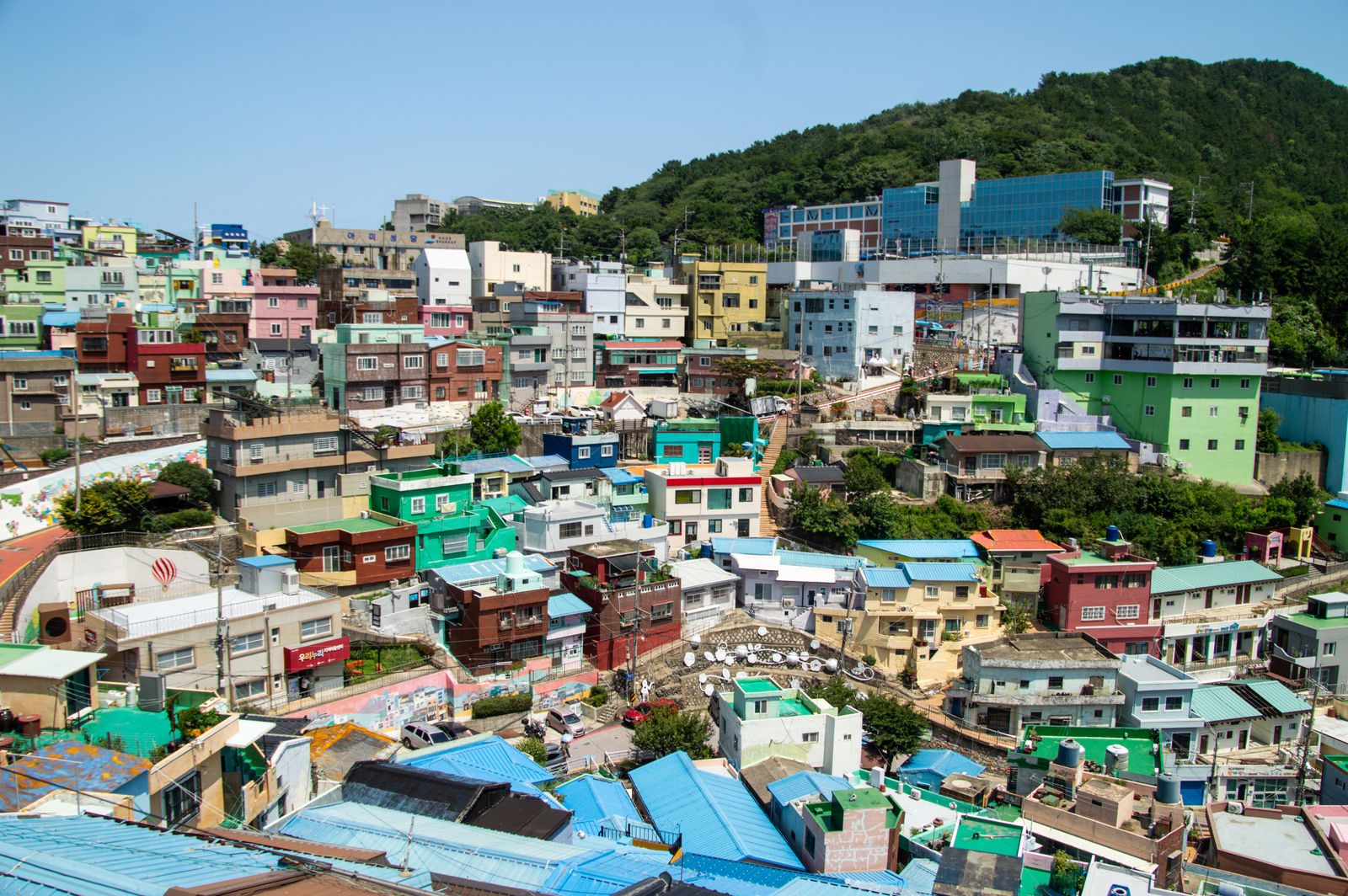
Gamcheon Culture Village tumbles down a steep hillside in Saha-gu — the pastel-painted houses of a 1950s wartime settlement transformed from 2009 by a community art project into the most photographed neighbourhood in Busan. The maze of staircase lanes, the fish-shaped postboxes, and the views across the rooftops to the port are all free.
Haedong Yonggungsa at sunrise (4:30am taxi from Haeundae; ₩18,000–22,000) is the finest dawn photograph in Korea — the temple on the rocks above the East Sea as the sun rises behind the pagoda.
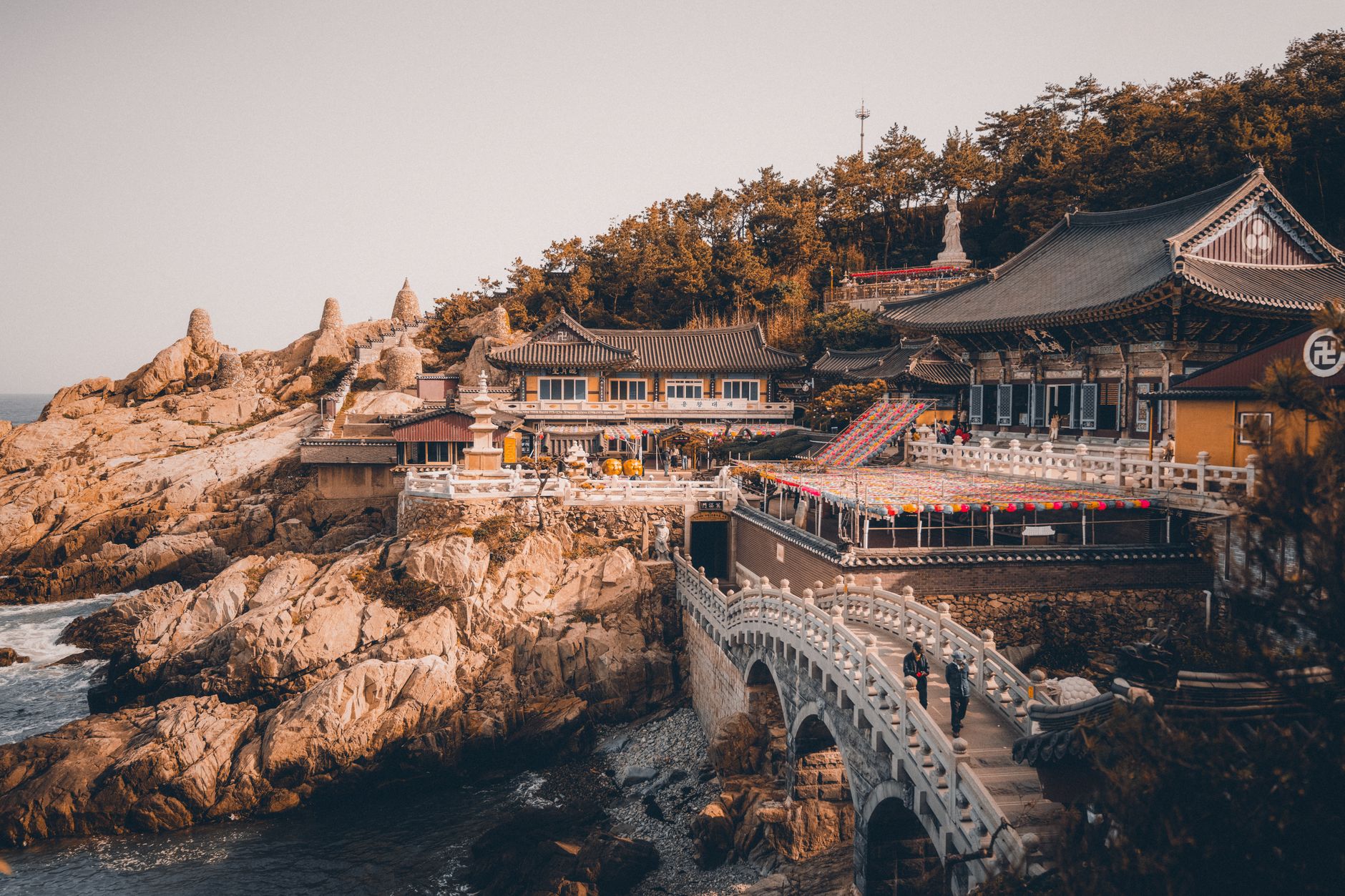
Haedong Yonggungsa is the only major Korean Buddhist temple built directly on the coast — the 15th-century halls and pagodas rise from the rocks above the East Sea, the waves occasionally breaking at the foot of the main gate. The sunrise here is the finest in Korea and the dawn light on the temple stone is the most reproduced image in Busan.
At Jagalchi Market, choose your fish on the ground floor (price per 100g marked; ₩30,000–50,000 for two), take the receipt upstairs to any restaurant, and pay ₩10,000–15,000 for the cutting and side dishes.
Haedong Yonggungsa Temple →
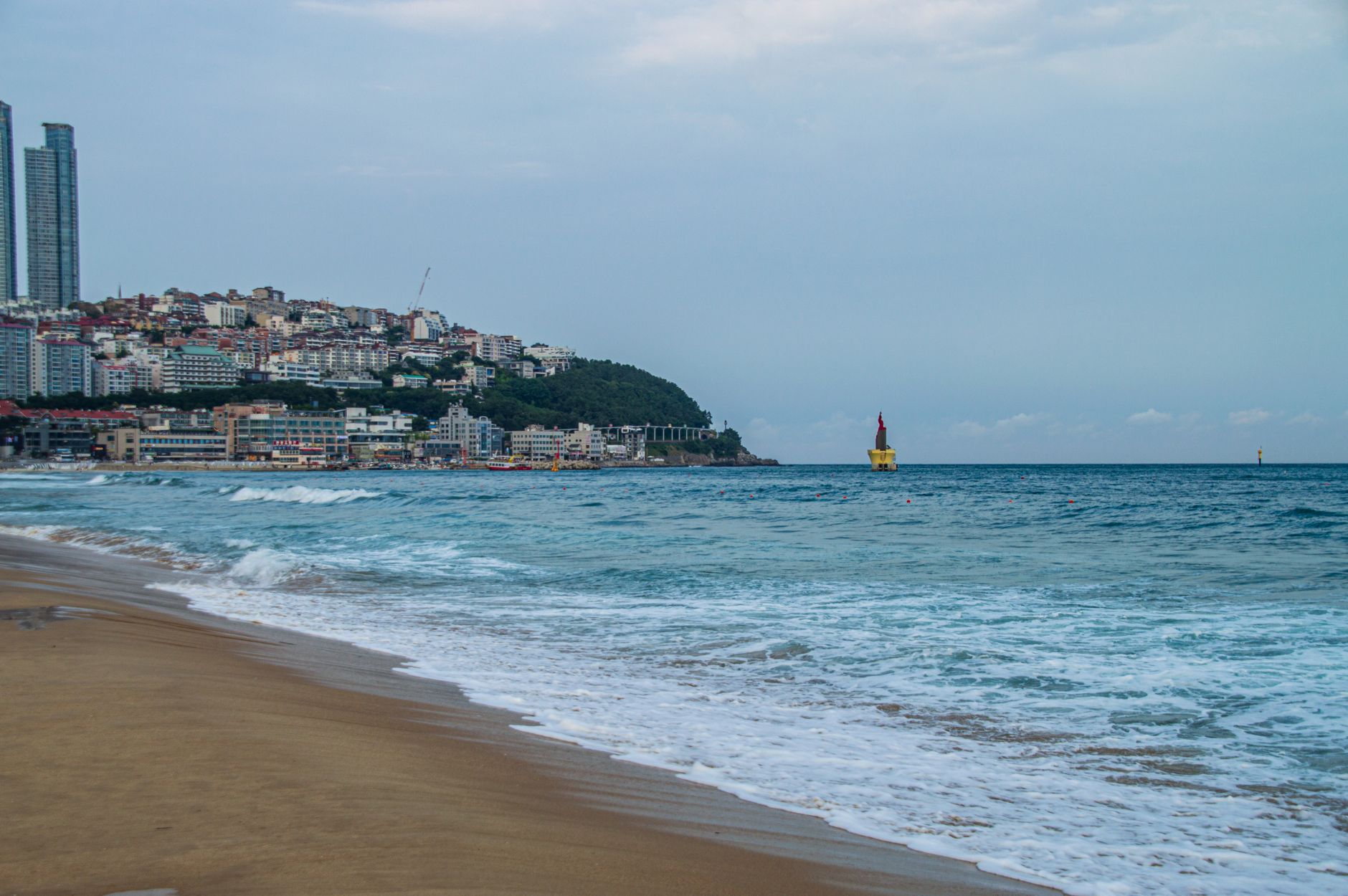
Haeundae Beach is 1.5km of white sand backed by the Busan skyline — the finest urban beach in Northeast Asia. In July and August the sand becomes one of the most concentrated human gatherings on earth; in April, September, and October it is almost empty and at its most pleasant for swimming and walking.
Gamcheon is best at 8am before the tour buses arrive — the pastel staircase lanes, the murals, and the port views are all free. Many houses are still occupied by original residents.
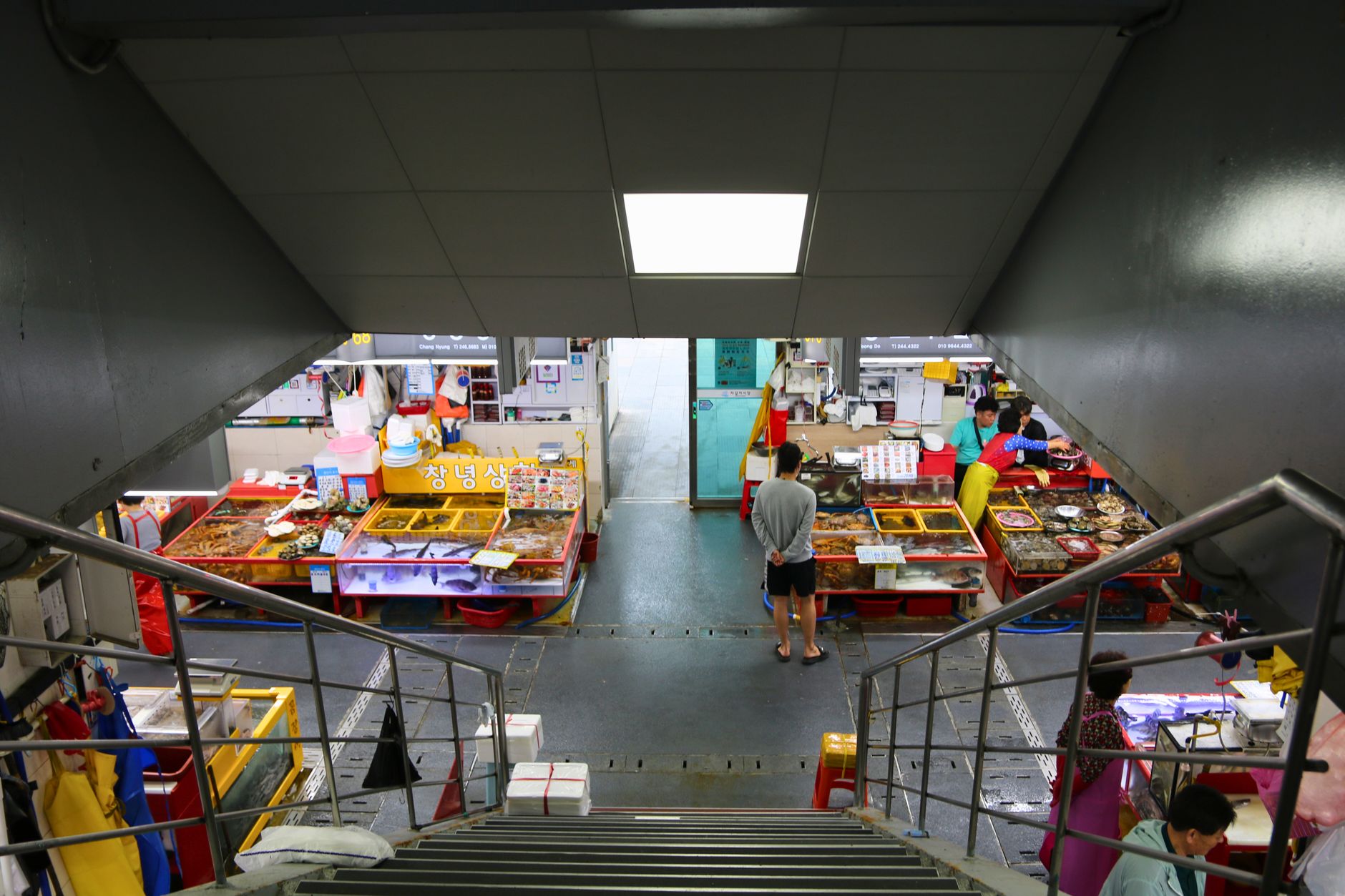
Jagalchi is the largest fish market in Korea — the ground floor stalls sell the East Sea catch at market price. Point at what you want and take it upstairs to the adjacent restaurants for hoe (raw fish) preparation and side dishes. Best before 9am when the overnight catch is freshest.
Haeundae Beach in April, September, or October is almost empty — the water temperature is 15–20°C, the sand is clean, and the mountain backdrop behind the Busan skyline is at its clearest.
Busan has a more specifically local food culture than Seoul: the milmyeon (the cold wheat noodle in chilled beef broth; the ice cubes in the bowl; the gochujang sauce mixed in; the defining Busan noodle; KRW 7,000–9,000; created by the Korean War refugees from Hamheung who replaced the cold noodle’s buckwheat with wheat flour from US army supply; the Gaya Milmyeon restaurant near Seomyeon is the most celebrated address), the dwaeji gukbap (the pork and rice soup; the Busan breakfast; the soft pork, the rice, the kimchi stirred in; KRW 7,000–10,000; the Ssiat Dwaeji Gukbap restaurant in Seomyeon is the most famous), the hoe raw fish sashimi at the Jagalchi Market (the hand-sliced flat fish with the gochujang, the sesame oil, the garlic and the doenjang paste; KRW 30,000–80,000 for a full platter for two at the upstairs restaurants), the ganjang gejang (the soy-marinated raw crab; KRW 20,000–40,000 per portion; the most addictive Korean side dish; called “rice thief” because a single portion of the crab causes a bowl of rice to disappear immediately), and the Haeundae night market street food (the odeng fish cake soup IDR 2,000 per skewer; the tteokbokki KRW 3,000) give Busan the most specifically local and most seafood-focused food culture in Korea.
The Busan Metro (4 lines; 98 stations; KRW 1,400–1,700 with T-money card; Line 1 for Jagalchi, Nampo-dong and Seomyeon; Line 2 for Haeundae, Gwangalli and the Busan Exhibition and Convention Centre; Line 3 for Gimhae Airport; covers all the main tourist sites except Haedong Yonggungsa and Gamcheon Village) is the backbone of Busan transport. The Busan City Tour Bus (KRW 15,000/day unlimited hops; 2 circular routes — the Blue Route covers Gamcheon, Jagalchi and the old town; the Red Route covers Haeundae, Haedong Yonggungsa and the new town; the bus departs from the BIFF Square area every 30–60 min) is the most practical option for first-time visitors wanting to cover the main sights efficiently. Kakao T taxi (the KRW 4,800 base fare; KRW 8,000–20,000 for most Busan journeys; the Haeundae to Haedong Yonggungsa temple run: KRW 15,000–20,000) fills the gaps in the metro network.
The 4:30am taxi from Haeundae to Haedong Yonggungsa (₩18,000–22,000; 20 min) arrives as the sun rises over the East Sea behind the temple’s pagoda — the finest dawn photograph in Korea.
At Jagalchi Market, walk through the ground floor stalls pointing at the fish you want (price per 100g is marked; ₩30,000–50,000 feeds two).
BIFF Square (Busan International Film Festival; October; Nampo-dong) has the handprints of Korean and international directors set in the pavement — the finest film festival walk in Asia.
Gamcheon Culture Village is best at 8am before the tour buses arrive from Seoul — the pastel staircase lanes, the fish-shaped postboxes, and the murals are all free.
Milmyeon (Busan’s cold wheat noodle) is the most specific Busan food experience — either spicy (bibim) or in broth (mul).
The haenyeo (women divers) at Gijang Seafood Market (30km north) still free-dive for abalone and sea urchin in the traditional manner.
Sep–Nov is the finest window (clear air; warm sea; BIFF October; fewer beach crowds). Apr–Jun is the spring option (cherry blossoms at Haeundae; warm; uncrowded). Jul–Aug is beach season (crowded; book hotels far ahead). Dec–Feb is mild by Korean standards (2–10°C; the freshest seafood season).
Two full days: Haedong Yonggungsa sunrise, Gamcheon Village, Jagalchi Market hoe, Haeundae Beach, and the Gwangalli bridge illumination evening.
Haedong Yonggungsa Temple at sunrise (4:30am taxi; the rocks above the East Sea). Return to Haeundae for breakfast. Gamcheon Culture Village. Jagalchi Market for hoe in the afternoon.
The taxi from Haeundae to Haedong Yonggungsa at 4:30am takes 20 minutes and costs ₩18,000–22,000 — the only practical way to arrive before sunrise. The first buses don’t reach the temple until 7am.
Haeundae Beach (morning swim or walk). BIFF Square and Nampo-dong street food tents. Gukje Market. Seomyeon for milmyeon noodles and the evening nightlife.
Jagalchi Market is most atmospheric on Saturday mornings when the full trawler catch arrives — the noise, the scale, and the Korean seafood culture are at their most vivid.
Busan is 15–20% cheaper than Seoul for accommodation and has lower restaurant prices. The Jagalchi hoe (KRW 50,000 for two) and the milmyeon (KRW 8,000) are the essential meals. The beach season (Jul–Aug) doubles hotel prices. Per person per day.
The milmyeon (KRW 8,000) and the Jagalchi hoe (KRW 30,000–50,000 for two) give the two most specifically Busan meals for under KRW 60,000 (€38) combined for two people.
The Busan City Tour Bus (KRW 15,000; unlimited hops on 2 circular routes; covers Gamcheon, Jagalchi, Haedong Yonggungsa and Haeundae in a single day with no metro juggling) is the most efficient Busan day-one option for first-time visitors.
The Paradise Hotel Busan (the Haeundae beachfront; the Paradise Art Space contemporary art collection within the hotel; the Michelin-recommended Park Hyatt restaurants; USD 200–400/night) gives the finest Haeundae Beach address.
Busan taxi booking and ride tracking — the fastest way to reach Haedong Yonggungsa and Gamcheon.
Free
Busan Metro navigation with T-money recharge and real-time line status.
Free
Busan restaurant discovery with Jagalchi hoe, milmyeon, and Haeundae seafood restaurant filtering.
Free
Download the Busan offline map before arrival — Gamcheon Village’s maze of lanes has no consistent street addresses.
Free
Quick answers to the questions travellers most often ask before visiting Busan.
Spring and autumn are ideal, with mild weather; summer is hot, humid and the peak beach season (with the film festival in October), while winters are relatively mild.
Two to three days for the beaches, the colourful Gamcheon Culture Village, the Jagalchi fish market and the cliffside Haedong Yonggungsa temple.
By an efficient metro and buses; many areas are walkable, and the KTX bullet train links it to Seoul in around 2.5 hours.
South Korea’s coastal second city — the beaches of Haeundae and Gwangalli, the hillside Gamcheon Culture Village, the bustling Jagalchi fish market, the seaside Haedong Yonggungsa temple, fresh seafood, and its international film festival.
Explore more of South Korea’s extraordinary cities and landscapes.
Planning a wider trip? Our South Korea travel guide covers getting there, costs, when to go and more.