KR
Jeonju
The Bibimbap Capital
The Bibimbap Capital

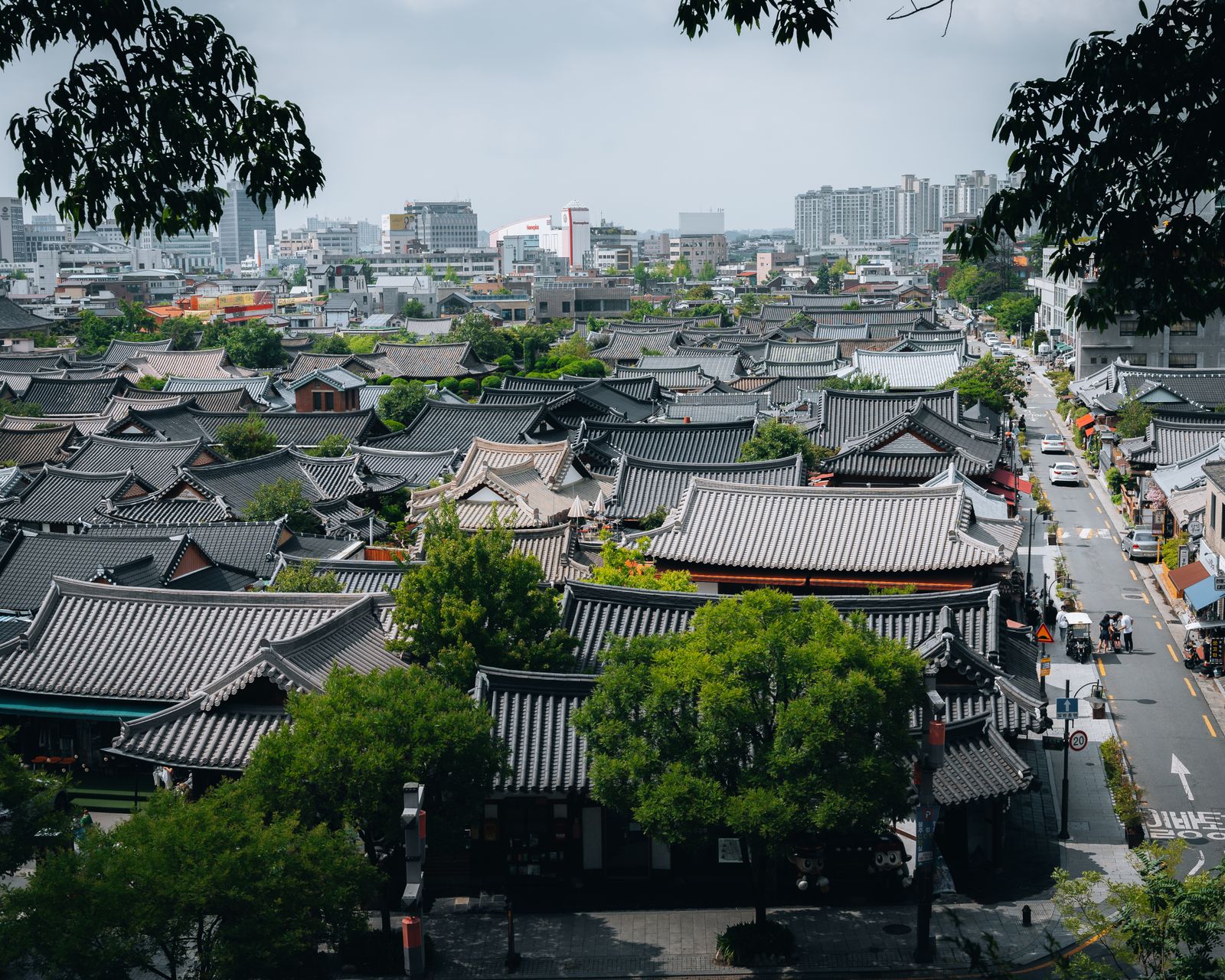
The Jeonju Hanok Village (Hanok Maeul) is the finest intact traditional Korean urban neighbourhood — 690 hanok (tile-roofed wooden houses) in their original pre-20th-century grid, covering 2.5km² of central Jeonju. The concentration of traditional architecture, hanji paper shops, bibimbap restaurants, and makgeolli bars makes it the finest 24-hour neighbourhood in Korea.
Gyeonggijeon Shrine at 9am (₩3,000) has the stone pathway and the ginkgo tree to yourself — the Joseon founder’s portrait in the morning light before the tourist groups is the finest quiet moment in Jeonju.

Jeonju bibimbap — rice topped with namul vegetables, egg, gochujang, and sesame oil, served in a stone pot — is the most famous version of Korea’s signature dish. The Jeonju original uses rice cooked in beef stock with sesame oil and topped with 16 seasonal vegetables, each prepared separately.
The makgeolli alley (₩5,000 for rice wine + 12 refillable banchan) is best on a weekday afternoon — the tables fill quickly on evenings and weekends.
Hanji is traditional Korean mulberry-bark paper — stronger, thicker, and more durable than Chinese or Japanese paper, used for over 1,500 years. Jeonju is the primary centre of hanji production; the Hanji Centre gives demonstrations and sells sheets, books, and crafts made from the paper.
Jeonju bibimbap at Gajok Hoegwan (₩14,000; 16 ingredients; the stone pot dolsot) is the definitive version — book ahead for dinner, walk in at lunch.
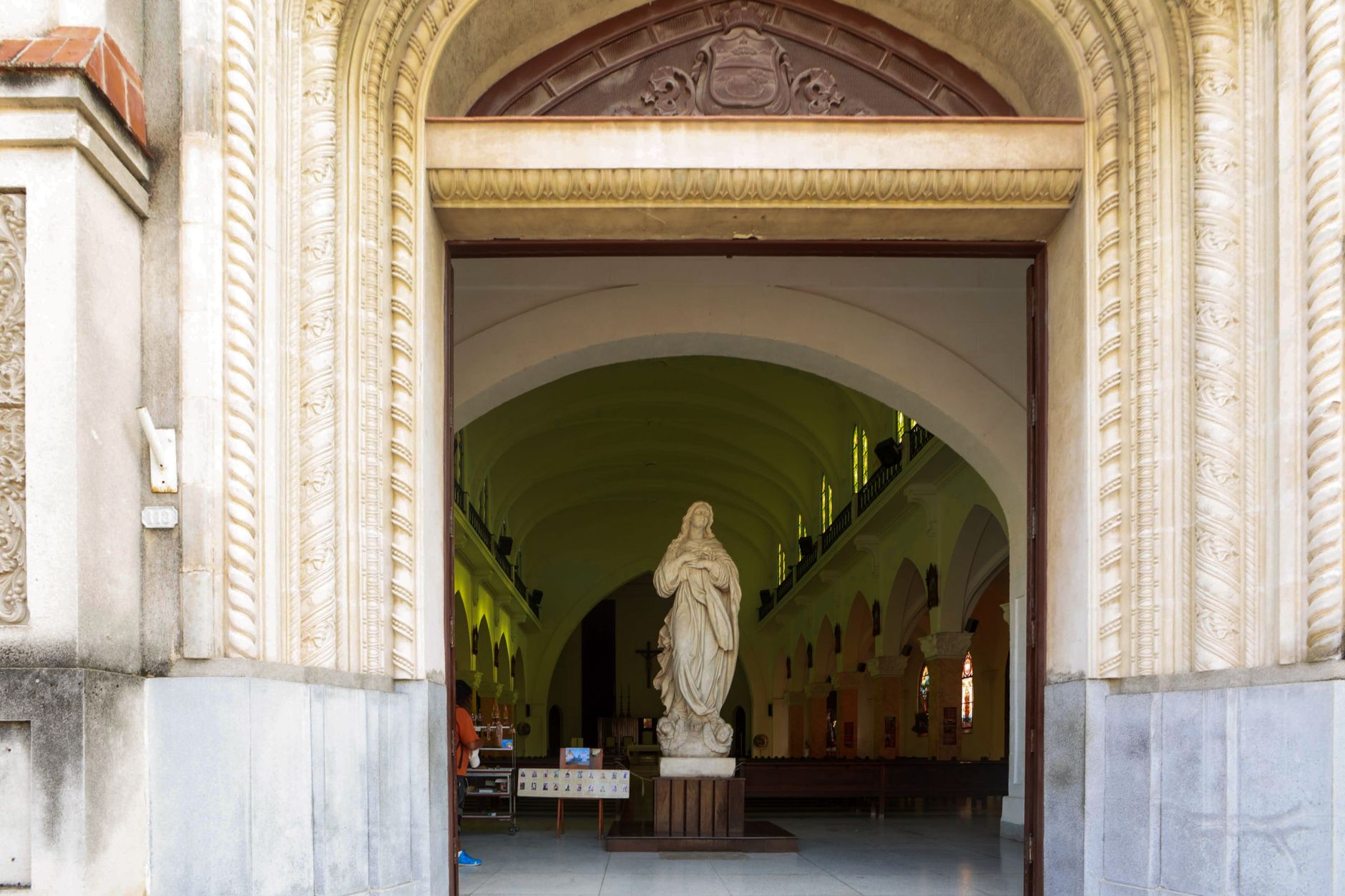
Gyeonggijeon (built 1410) houses the official portrait of Yi Seonggye, founder of the Joseon Dynasty — the finest royal portrait in Korea. Directly adjacent stands the Jeondong Catholic Cathedral (1914), built on the site of the first Korean Catholic martyrdom — the most charged historic pairing in Jeonju.
The Hanok Village on a rainy weekday afternoon is the most atmospheric Jeonju — the crowds disappear, the roof tiles glisten, and the ondol-heated restaurant windows glow from within.
Gyeonggijeon Shrine →
Jeonju has a claim to be the finest food city in South Korea: the Jeolla province is the most fertile agricultural region in Korea (the Honam Plain; the most productive rice-growing area; the freshest vegetables; the most abundant raw ingredients), and the Jeonju food culture reflects this abundance in the banchan culture (the side dishes; a Jeonju meal typically comes with 12–30 banchan side dishes; the most elaborate banchan provision in any Korean city), the bibimbap (the defining dish; KRW 8,000–15,000; dozens of restaurants in the Hanok Village), the kongnamul gukbap (the Jeonju bean sprout rice soup; the kongnamul grown in the local mineral water; the rice cooked directly in the bean sprout broth; KRW 5,000–8,000; the most specifically Jeonju dish; the accepted hangover cure; available at any of the kongnamul gukbap restaurants around the Hanok Village perimeter), the makgeolli (the unfiltered milky rice wine; the Jeonju version served in a brass bowl with 12 complimentary anju snacks — the most generous makgeolli service in Korea; KRW 5,000–8,000 for the makgeolli plus free food; the makgeolli alley near the Jaman Mural Village), and the Wansan Market night food (the largest traditional market in the Jeolla region; the bibimbap; the tteok rice cakes; the hotteok sweet pancakes; the grilled skewers; most active 6pm–10pm). The Hanok Village food alley (the main pedestrian street; the tteok rice cake stalls, the hotteok with walnut filling, the dakgangjeong spicy fried chicken bites, the injeolmi powder-covered rice cake on a stick; the most complete Korean street food experience outside Seoul).
The Jeonju Hanok Village is entirely walkable: the entire 0.3 km² core area can be crossed in 10 minutes on foot; the Gyeonggijeon Shrine, the Jeondong Cathedral, the craft alley, the bibimbap restaurants, the hanji workshops, and the Jaman Mural Village are all within a 20-min walking circuit. From the Jeonju Express Bus Terminal to the Hanok Village: taxi (KRW 3,000–5,000; 5 min) or city bus No. 5 or 79 (KRW 1,300; 20 min). From the Jeonju KTX Station: taxi (KRW 5,000–8,000; 10 min) or bus No. 3 or 5 (KRW 1,300; 25 min). The Wansan Market (KRW 1,300 by bus or KRW 3,000 by taxi) and the Jaman Mural Village (10 min walk uphill from the Hanok Village) are both reachable on foot from the Hanok Village centre.
The definitive Jeonju bibimbap is at Gajok Hoegwan — a 16-ingredient version in a stone pot (dolsot) with yellow stock-cooked rice and gochujang paste. ₩14,000; walk-in at lunch usually possible; reservations recommended for dinner.
The makgeolli alley (₩5,000 for 500ml rice wine + 12 free banchan side dishes — jeon pancakes, kimchi, japchae — refilled as you drink) is the finest ₩5,000 spent in Korea.
Gyeonggijeon Shrine (₩3,000; 9am–7pm) houses the portrait of Yi Seonggye, founder of the Joseon Dynasty — the finest royal portrait in Korea and the only one to survive the Japanese occupation.
A half-day hanji workshop (the Hanji Centre; Rp 8,000; book ahead) teaches the traditional mulberry-bark papermaking technique used in Jeonju since the Goryeo period.
The Jeonju Hanok Village is most atmospheric on a rainy weekday afternoon — the tourist crowds disappear, the black roof tiles glisten, and the paper-screen windows glow from the heated rooms inside.
The egg bread (gyeran ppang; ₩2,000) and the Choco Pie variations at the Hanok Village entrance stalls are the finest versions available.
Apr–May is the finest season (cherry blossoms in the Hanok Village alleys; 25–27°C; the most photogenic). Sep–Oct is the autumn alternative (maple colour; the Jeonju Film Festival). Dec–Feb is the quietest and coldest — but the ondol floor heating makes it the most cosy.
Two days: the Hanok Village at dawn, the Gyeonggijeon Shrine, bibimbap, hanji workshop, makgeolli alley, and an optional Boseong tea field day trip.
Hanok Village at 8am (the empty lanes and rooftops). Gyeonggijeon Shrine (9am; the Joseon royal portrait). Hanji papermaking demonstration. Jeonju bibimbap lunch at Gajok Hoegwan. Makgeolli alley in the afternoon.
The Hanok Village is best on two visits: 8–9am (empty lanes; rooftops in the morning light) and after dark (the paper-screen windows glowing; the bibimbap restaurants at full energy).
Boseong Green Tea Fields (88km south; 2h by bus; the finest tea plantation rows in Korea; best in May for the new harvest). Return to Jeonju for the Hanok Village at night.
The KTX from Seoul to Jeonju (2h; from Seoul Station; from ₩27,400) is faster than the bus — book in advance at the Korail website or KAI Access app.
Jeonju is the most affordable domestic destination in South Korea. The bibimbap (KRW 10,000), the makgeolli (KRW 5,000 including 12 free dishes), and the hanji guesthouse (KRW 30,000–60,000 pp) make it a remarkable-value cultural destination. Per person per day.
The makgeolli alley evening (KRW 5,000 for the rice wine with 12 free banchan snack dishes) is the most generous food value in any Korean tourist destination.
The Gajok Hoegwan bibimbap restaurant (the oldest Jeonju bibimbap restaurant; in business since 1952; the full stone pot bibimbap with 30 side dishes; KRW 13,000–16,000) is the single most important meal in Jeonju and costs the same.
The Korean royal court cuisine (gungmul) experience (the full Joseon dynasty royal banquet menu adapted for contemporary diners)
KTX Korail booking for Seoul–Jeonju and intercity Korea train routes.
Free
Jeonju Hanok Village guide with audio commentary on the 690 houses, hanji workshops, and culinary district.
Free
Korean translation with camera OCR — essential for cash-only menus in traditional bibimbap restaurants.
Free
Jeonju restaurant discovery with bibimbap, makgeolli alley, and hanjeongsik royal cuisine filtering.
Free
Download the Jeonju offline map before arrival — the Hanok Village alleys are too narrow for sat-nav.
Free
Quick answers to the questions travellers most often ask before visiting Jeonju.
Spring and autumn are the most pleasant, ideal for wandering the Hanok Village. Summers are hot and humid, and winters cold.
One to two days for the Hanok Village, the birthplace of bibimbap, hanbok-clad strolls, the Gyeonggijeon shrine and the makgeolli alleys.
The Hanok Village is very walkable, with buses for the wider city; the KTX bullet train reaches it from Seoul in around 1.5 to 2 hours.
The Jeonju Hanok Village, with hundreds of traditional Korean houses — the birthplace of bibimbap and a UNESCO City of Gastronomy — along with hanbok strolls, makgeolli rice-wine alleys, and a rich culinary heritage.
Explore more of South Korea’s extraordinary cities and landscapes.
Planning a wider trip? Our South Korea travel guide covers getting there, costs, when to go and more.