KR
Seoul
Where Tradition Meets Technology
Where Tradition Meets Technology
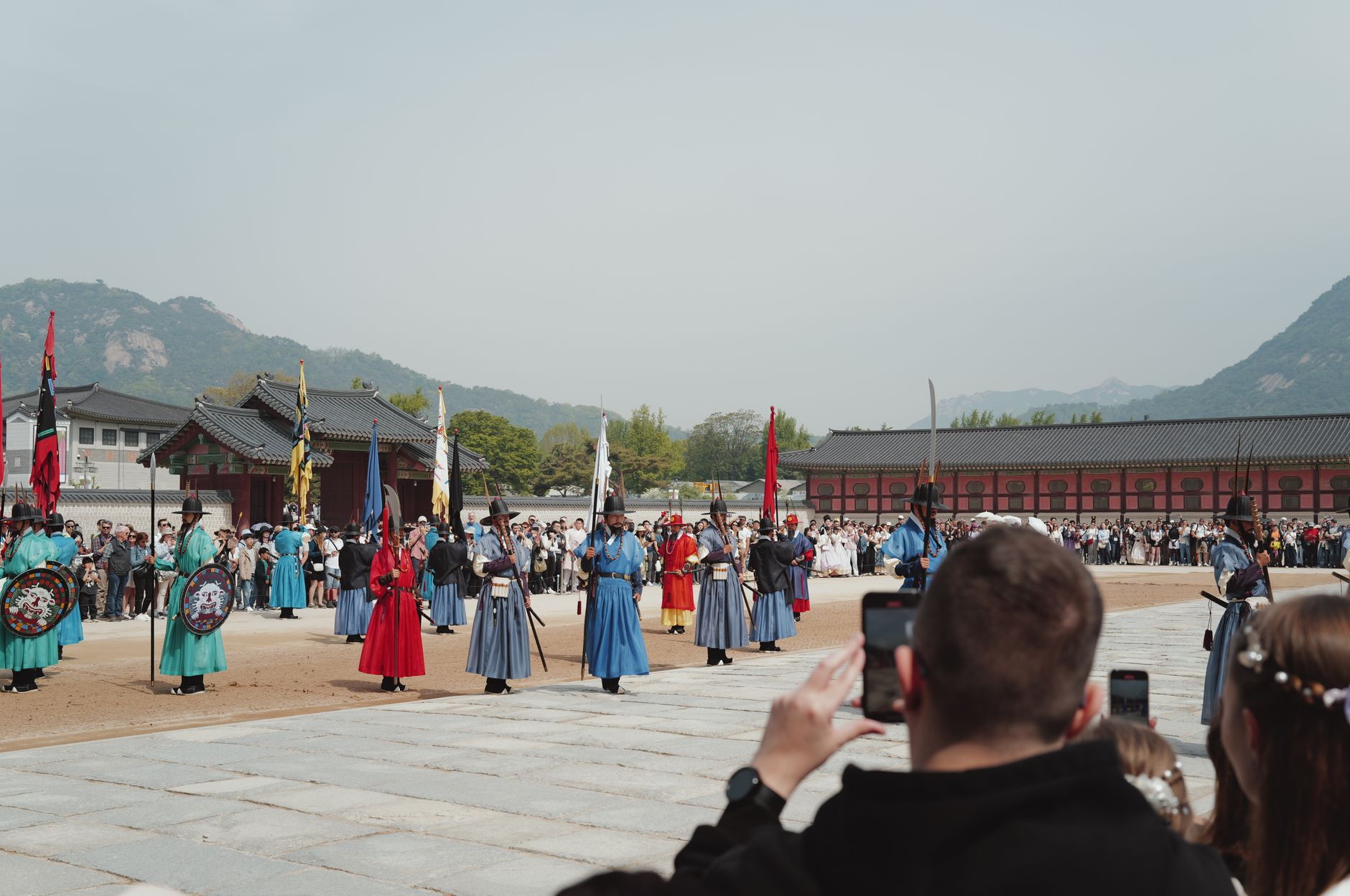
Gyeongbokgung is the largest of Seoul’s five Joseon palaces — rebuilt in 1867 after Japanese destruction, 500 metres deep, with the Bugaksan mountain ridge directly behind. The Changing of the Guard ceremony at 10am and 2pm on the main gate is free; the National Folk Museum is within the grounds.
Gyeongbokgung’s Changing of the Guard (free; 10am and 2pm; closed Tue) at Heungnyemun Gate lasts 20 minutes — the Joseon-era guards in full ceremonial armour are the finest free performance in Seoul.
Gyeongbokgung Palace →

Bukchon (North Village) is the finest traditional Korean townscape in Seoul — a hillside of 900 hanok (traditional tile-roofed wooden houses) between Gyeongbokgung and Changdeokgung Palaces. The lane on Gahoe-dong Hill has the most photographed roofline view in Seoul; the village is still residential.
Bukchon Hanok Village is best at 7am before the tour groups arrive — the narrow hanok lanes are empty and the tile rooftops catch the morning light. The residents are walking to work.
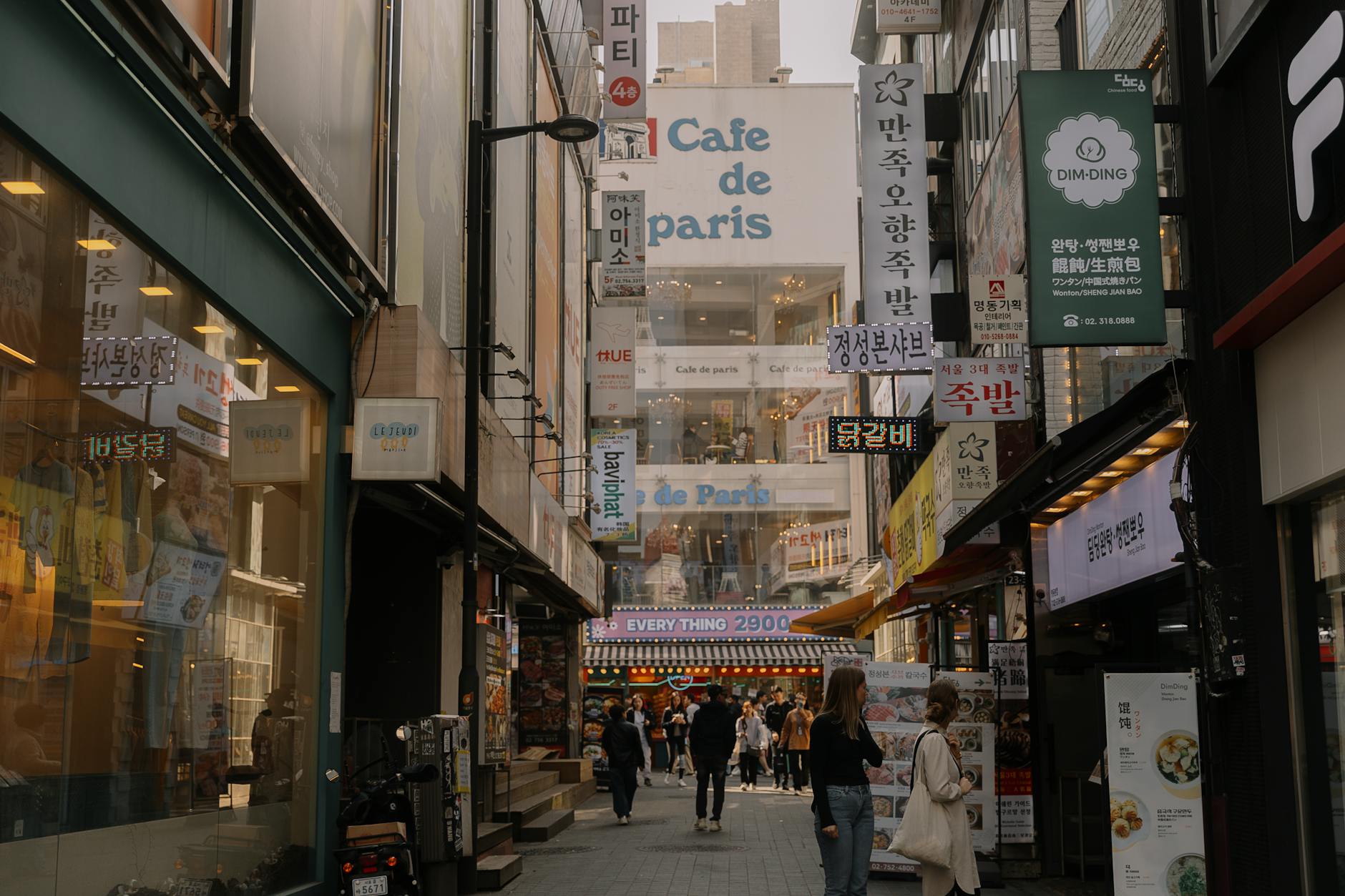
Myeongdong’s evening alleys run with vendors selling hotteok (sweet pancakes), tteokbokki (spicy rice cakes), tornado potatoes, and lobster skewers — the finest street food district in Seoul, all within 500m. The surrounding shops are the densest concentration of Korean beauty brands in the country.
Myeongdong street food peaks between 6pm and 10pm when the vendors set up shoulder to shoulder — the back alleys have prices 20–30% lower and shorter queues than the main road.

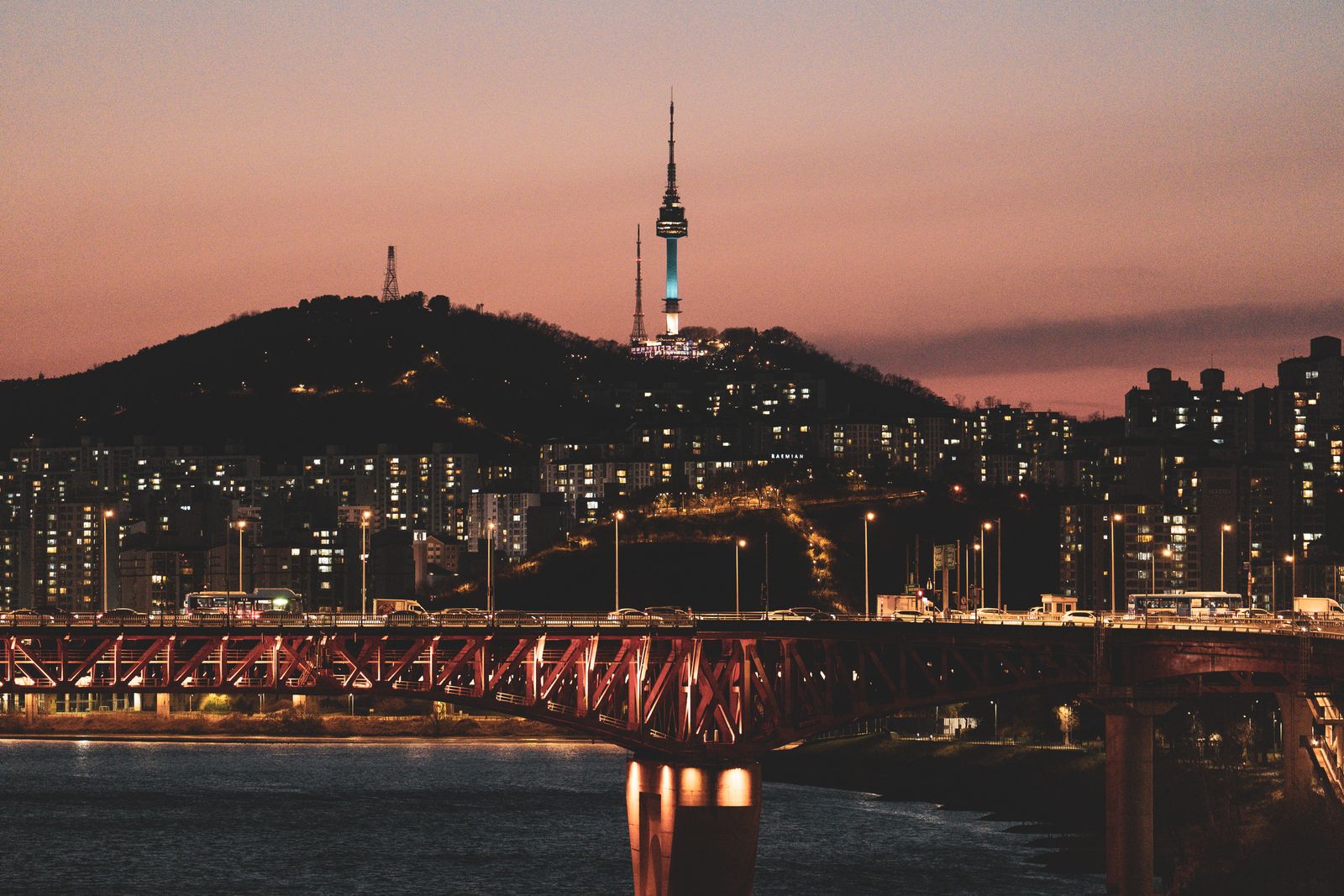
N Seoul Tower stands at 479m above sea level on Namsan Mountain — the cable car from Myeongdong takes 5 minutes (₩12,000 return) and the observation deck (₩21,000) gives the finest 360° city panorama in Seoul. The locks on the fence below are the most reproduced romantic gesture in Korean cinema.
N Seoul Tower is best at dusk — the cable car from Myeongdong (₩12,000 return; 5 min) reaches the summit as the city lights come on. The 7pm–9pm window is the finest time to be at the top.
Seoul is the finest city for eating in Asia: the Korean BBQ (samgyeopsal — the thick-cut pork belly grilled at the table over charcoal or gas; the scissors cut into bite-sized pieces; the lettuce wrap with the grilled meat, the ssamjang fermented paste, the raw garlic and the green chilli; the soju poured by the oldest person at the table — never by yourself; the banchan — the 6–12 side dishes of kimchi, japchae, namul vegetables, fishcake and pickled radish served alongside; KRW 12,000–20,000 per person for the full samgyeopsal experience at any of the Mapo-gu or Mapo Bridge area restaurants), the Gwangjang Market (the covered market on Jongno 5-ga; the raw meat yukhoe beef tartare with the quail egg; the bindaetteok mung bean pancakes fried in the pan in front of you; the bibimbap; the mayak gimbap — the “addictive” sesame-seeded rice rolls; the most authentic Seoul market eating; KRW 5,000–15,000 for a market meal), the chimaek (Korean fried chicken + beer; the Kyochon or Bhc chains; the soy and garlic glaze; the spicy seasoning; KRW 18,000–25,000 for a half chicken), and the Hongdae cafe culture (the Instagram-optimised dessert cafes; the Korean bingsu shaved ice; the rice cake tteok shops; the most concentrated cafe density outside of Tokyo) make Seoul the best-eating city in Asia for the combination of quality, diversity and price.
The Seoul Metro (23 lines; 348 stations; KRW 1,400 base fare with T-money card; +100 KRW per 5km over the 10km base distance; the cleanest, most punctual and most extensive metro in Asia; runs 5:30am–midnight; all station announcements in Korean, English, Chinese and Japanese) is the correct transport for all Seoul sightseeing. Every major tourist site has a metro station within 5 minutes: Gyeongbokgung (Line 3, Gyeongbokgung); Bukchon (Line 3, Anguk); Myeongdong (Lines 2 and 4, Myeongdong); Insadong (Line 3, Anguk); Hongdae (Lines 2 and 6, Hongik University); Gangnam (Line 2, Gangnam). The T-money card (purchased at any GS25, CU or 7-Eleven convenience store; KRW 2,500 card + credit loaded; the single most important purchase on arrival in Seoul; also works on city buses and in taxis) is the universal payment tool. Kakao Taxi (the Korean ride-hailing app; more reliable than Uber in Seoul; the standard metered fare; KRW 4,800 base; KRW 5,000–20,000 for most city journeys) is the correct taxi for journeys outside the metro network.
Buy a T-money card at any convenience store (CU, GS25, 7-Eleven; ₩2,500 deposit) before taking any public transport — it gives a 100–200₩.
Gwangjang Market’s raw beef yukhoe (hand-cut tartare with sesame oil and egg yolk; ₩15,000) is the most famous dish in the market.
Seoul’s cherry blossoms peak in the first week of April — Yeouido Hangang Park and Changdeokgung’s rear garden are the two finest locations.
Bukchon Hanok Village is best at 7am before the tour groups arrive — the narrow hanok lanes are empty and the tile rooftops catch the early light.
Korean fried chicken and soju (chimaek) is the national evening ritual.
The Changing of the Guard at Gyeongbokgung Palace (free; 10am and 2pm; closed Tue; 20 min) takes place at Heungnyemun Gate.
Apr–May (cherry blossoms; 10–22°C; the finest Seoul weather) and Oct–Nov (autumn foliage; 8–20°C; the clearest air) are the two best windows. Jun–Jul is the monsoon rainy season; Aug is hot and humid but the Han River parks are at their most lively. Dec–Feb is cold (−10 to 5°C) but dry, festive, and the ski resorts nearby are open.
Three days: Gyeongbokgung in hanbok, Bukchon at dawn, Gwangjang Market, Korean BBQ, N Seoul Tower, Hongdae, and a DMZ day trip.
Gyeongbokgung Palace at 10am (Changing of the Guard; free). Bukchon Hanok Village. Insadong for Korean crafts. Gwangjang Market for yukhoe and bindaetteok. Myeongdong street food evening.
The T-money card saves 100–200₩ per ride and works on every subway, bus, and most taxis — buy it at a CU or GS25 convenience store before taking any Seoul public transport.
Hongdae arts district (street music; vintage shopping). Myeongdong for K-beauty. N Seoul Tower at dusk (cable car from Myeongdong). Chimaek evening (fried chicken and soju).
Gwangjang Market’s yukhoe (₩15,000; central covered section; choose the stall with the longest Korean queue) is the finest single dish in Seoul’s market food scene. Come at 11am for the freshest preparation.
6am bus to the DMZ Joint Security Area (55km north; half-day tour; returns by noon). Han River cycling in the afternoon. Gangnam evening (COEX, Cheongdam-dong).
Seoul’s subway runs until 1am every night — the Line 2 green circle line connects Hongdae, Myeongdong, and Gangnam without any transfers.
Seoul is cheaper than Tokyo and comparable to European capitals for accommodation; significantly cheaper for food. The street food (KRW 3,000–5,000), the metro (KRW 1,400) and the palace entries (KRW 3,000) make the cultural essentials extremely affordable. Per person per day.
The GS25 or CU convenience store breakfast (triangle kimbap KRW 1,200; cup ramyeon KRW 1,500; banana milk KRW 800) is the most Korean morning meal at the lowest Seoul price.
The Myeong-dong Kyoja (the handmade knife-cut kalguksu noodle; the mandu dumplings; the simplest and most specifically Korean lunch; KRW 9,000; the queue at noon is the only indicator of quality needed) is the finest KRW 9,000 lunch in Seoul.
La Yeon (The Shilla Hotel, 23rd floor; the Michelin 3-star Korean cuisine restaurant — one of only 2 restaurants in Korea to hold the 3-star rating; the Joseon court cuisine refined for the contemporary palate; the most beautifully)
Essential Seoul taxi booking — fastest way to get a cab and pay without cash or Korean language.
Free
Seoul subway navigation with real-time line status and step-by-step directions to any address.
Free
T-money card management, KTX booking, and subway rechargeable top-up from your phone.
Free
Download the Seoul offline map before arrival — the subway grid is complex and offline navigation is essential.
Free
Quick answers to the questions travellers most often ask before visiting Seoul.
Spring (April-May), for the cherry blossom, and autumn (September-November), for the foliage, are the most beautiful. Summers are hot, humid and monsoonal, and winters are cold and dry.
Four to five days for the palaces like Gyeongbokgung, the Bukchon hanok village, the shopping and food of Myeongdong and Gangnam, N Seoul Tower, and a day trip to the DMZ.
By an excellent, cheap and extensive metro (with a T-money card), plus buses and taxis; many neighbourhoods are walkable. No car needed.
A hyper-modern megacity that blends ancient palaces like Gyeongbokgung with cutting-edge K-pop, tech and fashion — the Bukchon hanok village, buzzing shopping and street food, the nearby DMZ, and round-the-clock energy.
Explore more of South Korea’s extraordinary cities and landscapes.
Planning a wider trip? Our South Korea travel guide covers getting there, costs, when to go and more.