KR
Sokcho
Gateway to Seoraksan
Gateway to Seoraksan
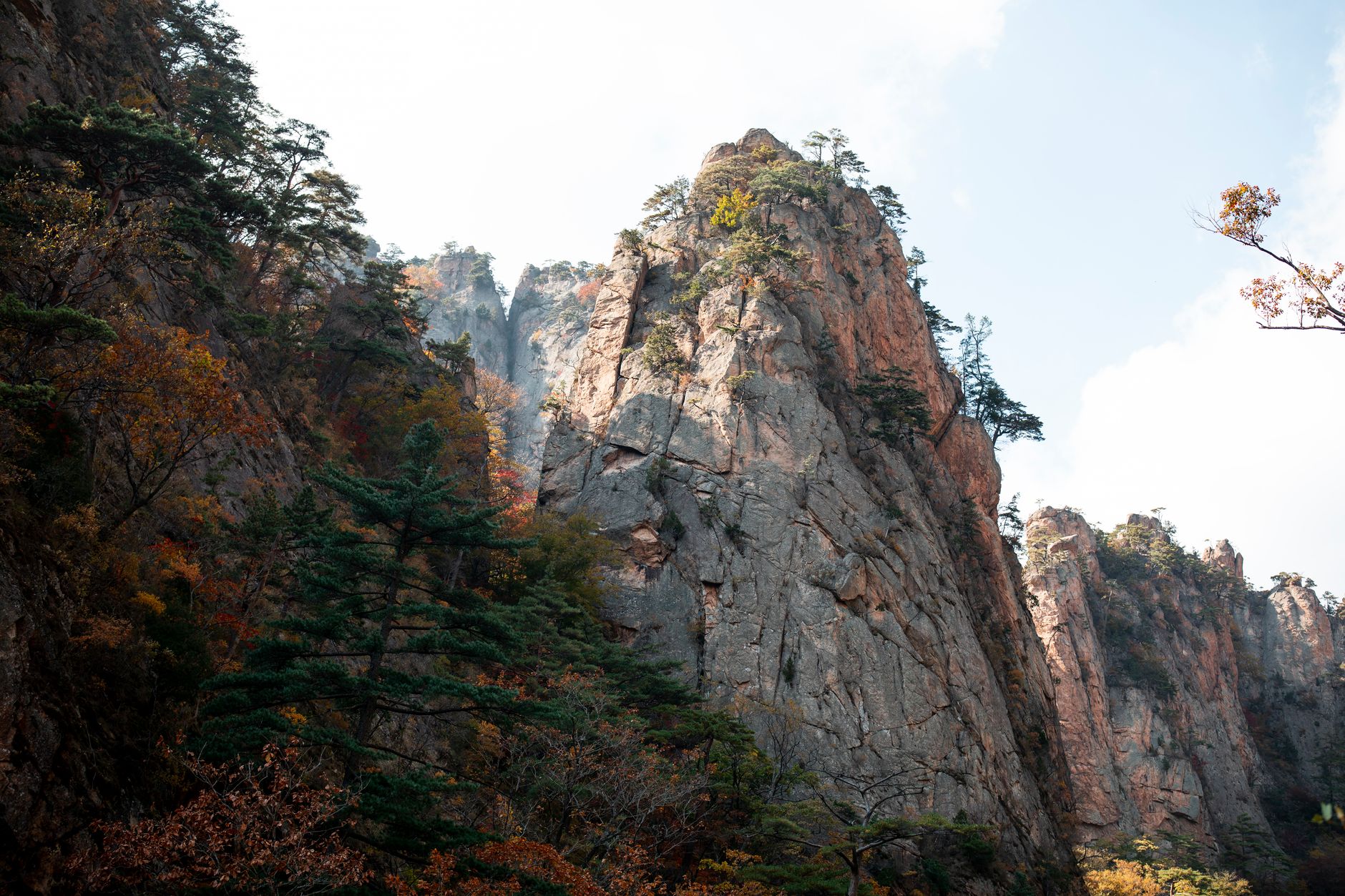
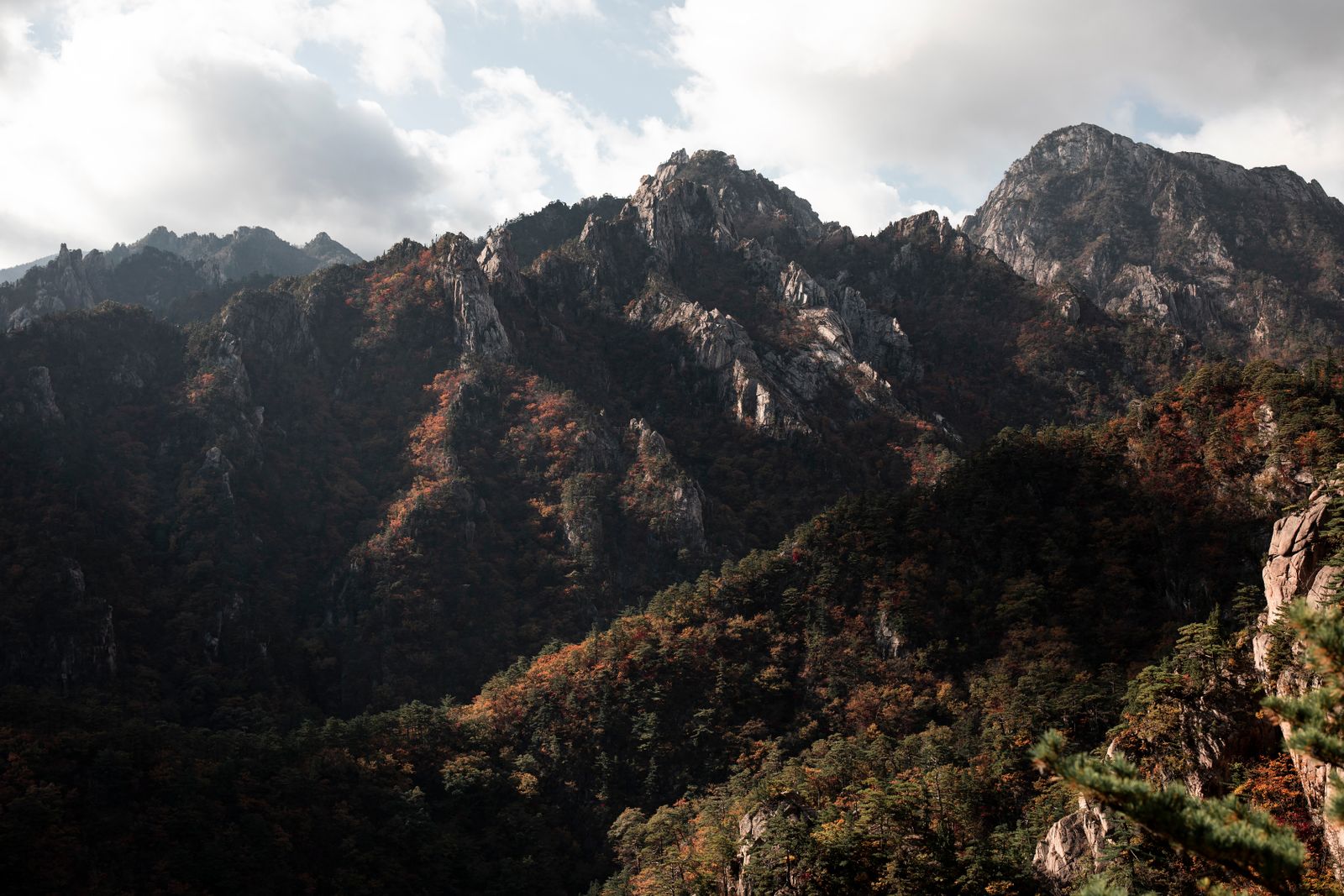
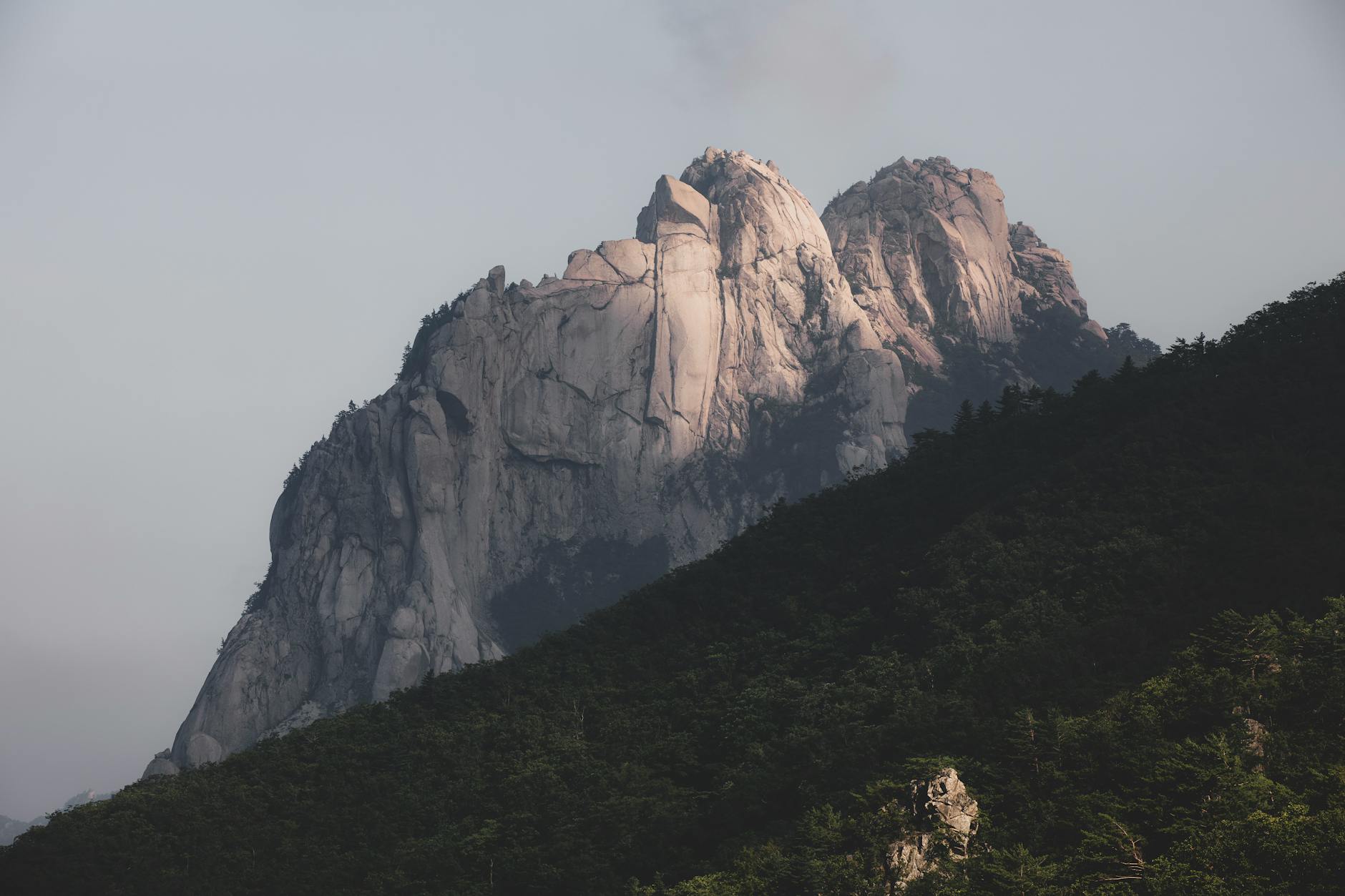
Seoraksan (1,708m; “Snowy Mountain”) is the finest mountain landscape in Korea — granite peaks above the treeline, deep valley forests, and the Ulsanbawi rock cluster (six granite pillars visible from Sokcho city). The park entrance at Seorakdong has the Sinheungsa Temple and a 14.6m bronze seated Buddha at its base.
Ulsanbawi at dawn (5am start in summer; 1.5h up via the metal staircase) reaches the granite summit cluster in the sunrise — the East Sea is visible behind Sokcho on clear mornings.
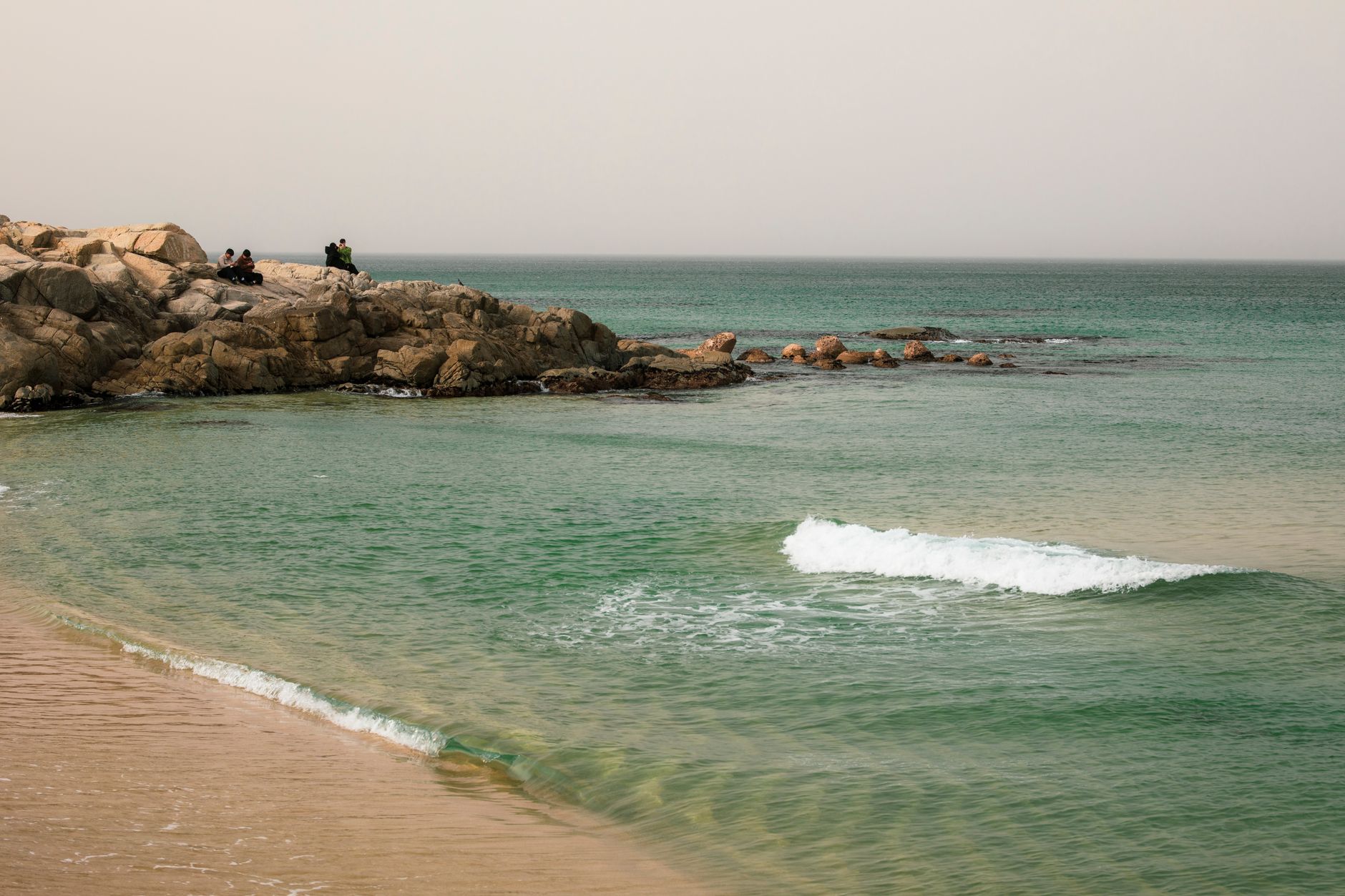
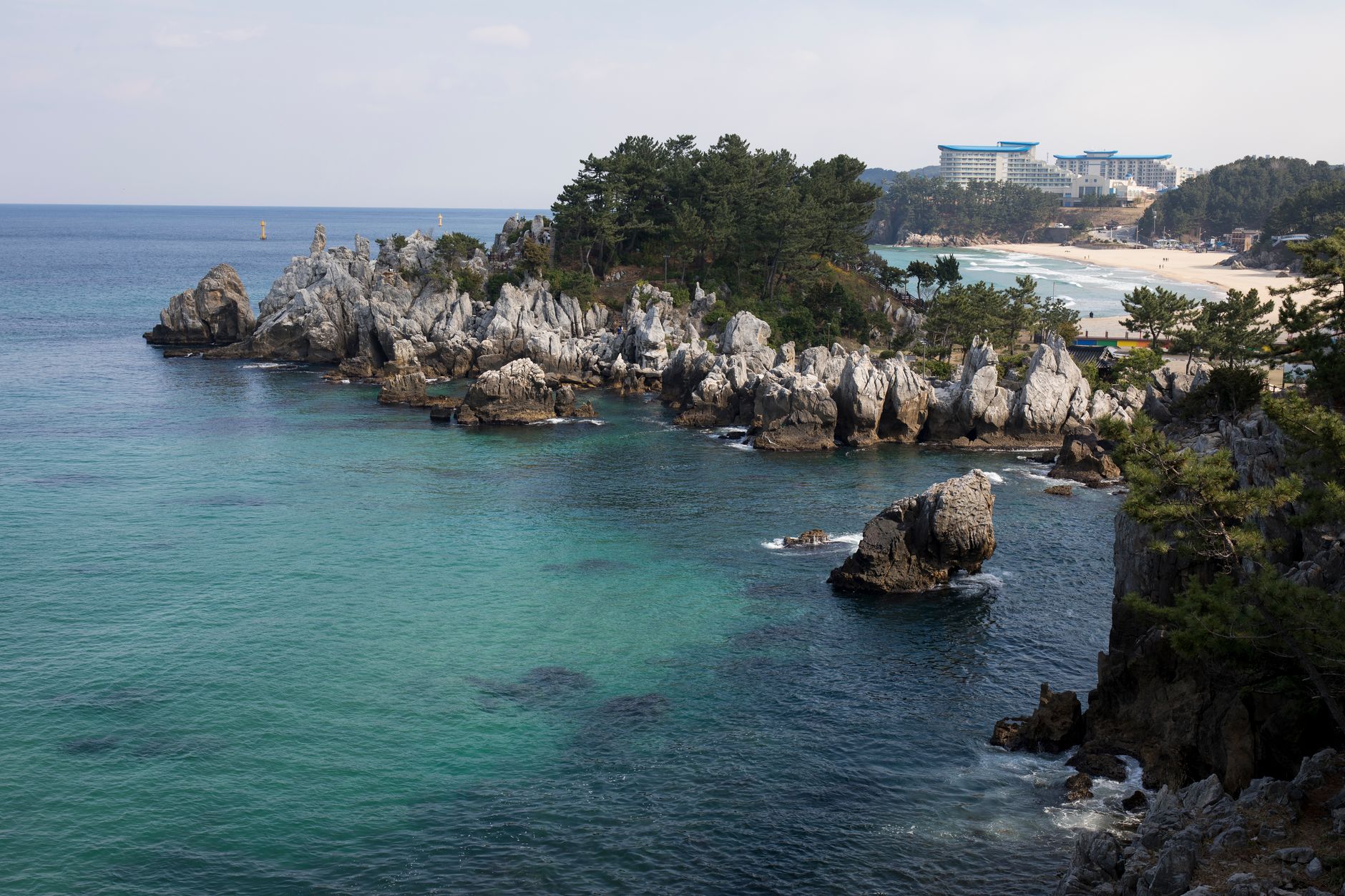
Naksansa Temple (15km south; bus ₩1,300; ₩3,000 entry) hangs above the East Sea cliffs on a forested headland — the finest coastal temple atmosphere in Korea outside Busan. The 16m white Gwaneumsang (Goddess of Mercy) statue faces the sea; the dawn bell ceremony at 4am is open to visitors.
The Sokcho fish market pojangmacha tents at 4–5am, when the trawlers are unloading, serve the freshest crab and squid in Korea at the prices charged at source.
Seoraksan in October has the finest autumn foliage in Korea — the granite peaks above the coloured forest, the announcement of peak colour by the meteorological service, and the subsequent surge of hikers that fills every guesthouse in Seorakdong. Book accommodation 2 months ahead for the peak 5-day window.
The Abai Village hand-pulled ferry (₩1 symbolic fare; pull the rope yourself) is the most affecting short journey in Korea — the village on the lagoon shore built by North Korean refugees who could never go home.
Abai Village is a settlement on the Sokcho sandbar built by North Korean refugees after the 1953 armistice — displaced people from Hamgyong Province who couldn’t return north. The hand-pulled ferry crossing costs ₩1 symbolic fare; the squid sausage (ojeong-eosundae) served at the landing stall is the only authentic version of the dish in the south.
The Seoraksan cable car (₩16,000 return; to 700m) reaches the Gwongeumseong fortress ruins with the finest view of the Sokcho coastline and Cheongcho Lagoon in 40 minutes of total effort.
Sokcho city tourism →
Sokcho has a fishing port food culture defined by the East Sea catch: the ojingeo (the dried and fresh squid; the most purchased Sokcho souvenir food; the dried squid jerky sold at every market stall and the bus terminal shops; the most distinctively Korean dried seafood); the chodang sundubu (the silken soft tofu made in the nearby Gangneung–Gangneung area from the East Sea brine water; the most delicate sundubu in Korea; available at the Sokcho tofu restaurants for KRW 8,000–12,000); the mul naengmyeon (the cold noodle soup; the North Korean tradition brought by the Abai Village settlers; the clear iced broth; the buckwheat noodles; the vinegar and mustard condiments; KRW 8,000–12,000); and the fresh grilled fish restaurants near the Cheongchoho Lagoon (the morning fish market; the restaurants that open at 6am for the early hikers returning from the Seoraksan dawn; the mackerel, the pollack and the sea bass grilled over charcoal; KRW 10,000–25,000). The Sokcho night market (the Sokcho Jungang Market; the seafood; the tteokbokki; the fried snacks; the liveliest night market on the East Sea coast; open 6pm–midnight; KRW 3,000–10,000 for snacks).
The Sokcho Express Bus Terminal is the central arrival point (the express buses from Seoul Dong-Seoul Terminal, every 15–30 min, 2h 30 min; the city bus No. 7 from the terminal to the Seoraksan park entrance: KRW 1,300; 20 min). The Abai Village is 15 min walk from the central Sokcho area (or the hand-pulled rope ferry from the Yeongrang Park dock; KRW 200; 2 min; the most atmospheric transport option in Sokcho). Taxis in Sokcho are inexpensive (KRW 3,000–5,000 for most in-city journeys; KRW 7,000–12,000 to the Seoraksan entrance; KRW 25,000–35,000 to the Naksansa Temple) and the most practical transport for the Naksansa Temple day trip. Within the Seoraksan National Park: on foot (the marked trail network) and the cable car (the Gwongeumseong Cable Car; KRW 16,000 return; the queue manages 5,000+ visitors/day at peak; arrive before 8am).
The Ulsanbawi rock trail (2.4km from the Seoraksan park entrance; 1.5h up; 900m elevation gain via metal staircase) is best started at 5am in summer to reach the granite summit cluster at sunrise.
The Sokcho fish market opens at 4am when the trawlers arrive.
The Abai Village hand-pulled ferry (₩1 symbolic fare; pull the rope yourself) crosses Cheongcho Lagoon to the North Korean refugee settlement built in 1953.
The Seoraksan cable car (₩16,000 return; 10 min; to 700m) is the easiest way to gain elevation in the park.
Seoraksan in October has the finest autumn foliage in Korea — the peak colour announcement (typically first or second week of October) triggers a surge that fills every guesthouse in the valley.
Naksansa Temple (15km south; bus ₩1,300; ₩3,000 entry) hangs above the East Sea cliffs and has the finest coastal temple atmosphere in Korea outside Busan.
Late Sep–early Nov is the legendary foliage season — South Korea’s finest autumn colour. May–Jun is the spring ideal (green; uncrowded; waterfall-full). Jul–Aug is beach and summer hiking. Dec–Feb: snow on the peaks; uncrowded; very cold.
Three days: the cable car ridge at dawn, the Ulsanbawi summit hike, the Abai Village rope ferry and ojingeo-sundae, the Biryong Waterfall, and the Naksansa sunrise.
Sokcho fish market at 4am (the trawler arrivals; fresh crab and squid at the pojangmacha tents). Abai Village hand-pulled ferry. Seoraksan cable car and Gwongeumseong fortress walk. Sinheungsa Temple.
Sokcho’s express bus from Seoul takes 2.5 hours (₩16,500; runs every 30 minutes from 6am) — faster and cheaper than any train option for reaching the east coast mountain region.
5am start for Ulsanbawi rock cluster hike (2.4km; 1.5h up; granite summit at sunrise). Return by 9am. Cheongcho Lagoon cycle path. Naksansa Temple at sunset (15km south).
Seoraksan autumn foliage peaks in the first or second week of October, announced on the Korea Meteorological Administration website — accommodation in Seorakdong valley sells out in 48 hours of the announcement.
Taxi to Naksansa Temple at 5am (KRW 25,000–30,000; arrange the evening before; ask the driver to wait or return at 7:30am). Naksansa Uisangdae Pavilion sunrise (5:30–6:30am; the cliff above the East Sea; the horizon sunrise; the most dramatic temple sunrise in Korea). Naksansa Temple walk after sunrise (KRW 4,000 entry; the rebuilt temple complex; the 16m white stone Guanyin statue on the cliff; the lotus pond; 1h). Return taxi to Sokcho. Ojingeo (dried squid) shopping at the Sokcho bus terminal market (the most economical squid jerky prices in Korea; the vacuum-packed dried ojingeo; the best Sokcho souvenir food for the journey home). Express bus back to Seoul Dong-Seoul (KRW 13,000–22,000; 2h 30 min).
The squid sausage in Abai Village is the only place in the world it is still authentically made in the Hamgyong Province style — the grilled version (₩5,000) from the stall at the ferry landing is the original.
Sokcho is affordable for a Korean domestic destination. The cable car (KRW 16,000) and the accommodation (higher during the October foliage peak) are the main costs. Per person per day.
The Abai Village hand-pulled rope ferry (KRW 200; the self-propelled lagoon crossing; the most specific and most local experience in Sokcho) and the ojingeo-sundae (KRW 5,000–8,000; the squid-stuffed North Korean sausage unique to)
The Ulsanbawi summit hike (4km; the 1,708 metal staircases; the 2h ascent; the East Sea summit panorama; KRW 3,500 park entry; free to hike) and the cable car ridge (KRW 16,000 return; the autumn panorama from 1,000m) cover the two.
The Hangyeryeong mountain pass autumn drive (the 920m mountain road from Sokcho to Yangyang passing through the autumn colour at road level)
Sokcho seafood restaurant discovery with East Sea crab, squid, and freshwater eel filtering.
Free
Korean translation with camera OCR — essential for the Sokcho fish market price boards and Abai Village menus.
Free
Download the Seoraksan and Sokcho offline map before arrival — the mountain trails have no signal above 400m.
Free
Download the Korean offline pack and use camera mode for menus and signs.
Free
Quick answers to the questions travellers most often ask before visiting Sokcho.
Autumn is spectacular for the foliage in Seoraksan, and summer is popular for the beaches; spring is pleasant, while winters are cold.
One to two days to hike or ride the cable car in Seoraksan National Park, relax on the beach, visit the Abai Village and enjoy the fresh seafood.
The town is walkable, with local buses to Seoraksan; express buses connect it with Seoul in around 2.5 hours. The Abai Village is reached by a hand-pulled raft ferry.
The coastal gateway to Seoraksan National Park — dramatic granite peaks with hiking and a cable car — plus East Sea beaches, the Abai Village reached by raft ferry, and famously fresh seafood.
Explore more of South Korea’s extraordinary cities and landscapes.
Planning a wider trip? Our South Korea travel guide covers getting there, costs, when to go and more.