SJ
Svalbard
Polar bears, midnight sun & Soviet ghost town at 78° North
Polar bears, midnight sun & Soviet ghost town at 78° North
Svalbard is the world’s most accessible High Arctic destination — a Norwegian archipelago at 78° North, just 1,300 km from the North Pole, where polar bears outnumber people, glaciers flow to the sea and the midnight sun lasts for four months. Longyearbyen, the world’s northernmost town of significant size, is a former mining settlement turned gateway to extraordinary Arctic wilderness. In summer (May–August), the midnight sun illuminates glacier cruises, polar bear safaris by snowmobile or RIB boat, hikes across the tundra and encounters with walrus, reindeer, Arctic fox and belugas. In winter (January–March), the polar night and northern lights, dog sledding and snowmobile safaris across frozen fjords create a completely different — and equally striking — experience. Svalbard is unique in having no visa requirement for any nationality.
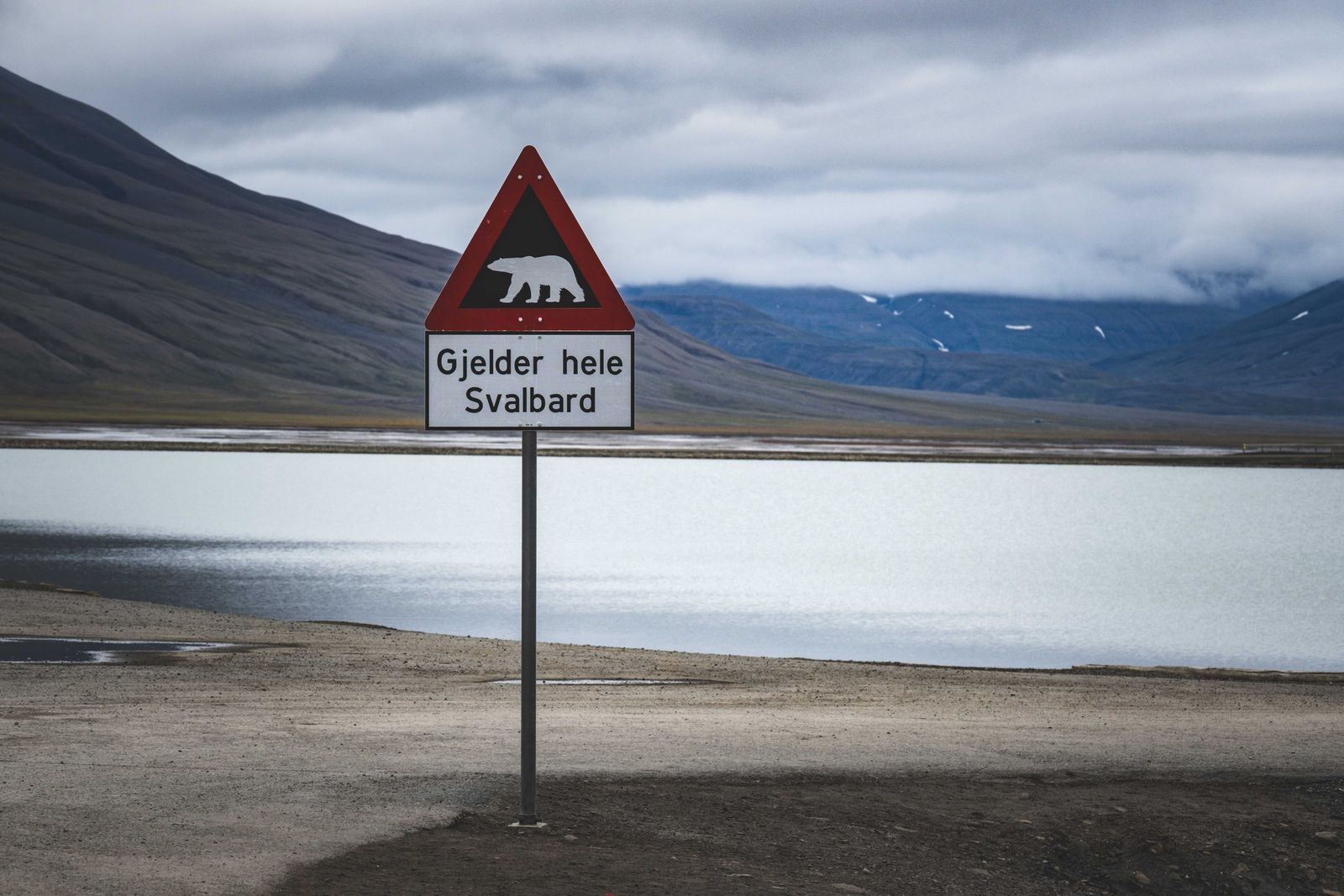
Svalbard has more polar bears than people (approx. 3,000 bears vs 2,700 residents). Boat-based safaris along the west coast and snowmobile expeditions into the eastern wilderness offer encounters with the world’s largest land predator in its natural Arctic habitat. Guides are required by law outside Longyearbyen — because the bears are real and dangerous.
Svalbard has over 300 glaciers, many of them calving tidewater glaciers that reach the sea and produce blue-tinged icebergs. Boat tours to Nordenskioldbreen, Kronebreen and the remote Kong Karls Land traverse fjords of beauty, with glacier fronts 20–50 metres high reflected in perfectly calm Arctic water. In summer, beluga whales and walrus colonies are regularly encountered.
The world’s northernmost town is a place — former coal-mining infrastructure converted into a small city with an excellent museum (the Svalbard Museum), art gallery, several good restaurants serving Arctic cuisine (reindeer, guillemot, cloudberry) and a frontier atmosphere unique to 78° North. You must carry a rifle outside town — polar bear encounters on the tundra are a real possibility.
Svalbard (Wikipedia) →smaller and fatter than mainland reindeer, having evolved in extreme isolation) is the local speciality — seared rare with cloudberry sauce is outstanding.
Cold-water char from Svalbard’s glacial lakes and fjords — smoked or pan-fried, served at Longyearbyen’s restaurants as the islands’ finest fresh fish. Its flesh is a deep pink-orange, buttery and clean.
Thick-billed murres (guillemots) are sustainably harvested by Svalbard hunters and eaten as a traditional food by the local community — dark, rich meat with a strong flavour reflecting their marine diet, pan-fried or roasted with Arctic berry sauce.
The red king crab (introduced from the Barents Sea in the 1960s) is now a booming Svalbard industry — cracked and eaten hot with drawn butter in Longyearbyen restaurants. Legs can reach 1.5m across; the sweet, dense claw meat is excellent.
mølter) picked from the tundra in August and served with cream are a seasonal highlight.
, the world’s northernmost brewery, produces glacier-water beer in Longyearbyen.
Svalbard Airport Longyear (LYR) is surprisingly well-connected. Norwegian and SAS fly direct from Oslo and Tromso. No visa required for any nationality under the Svalbard Treaty. For trip planning, see the official Svalbard tourism portal.
Oslo (3h direct) is the primary gateway; Norwegian and SAS both operate multiple weekly flights. Tromsø (1h40) is the closest Norwegian mainland city and a natural addition to a Northern Norway circuit.
Svalbard combines naturally with mainland Norway (Northern Lights, fjords) and Iceland (3h flight from Longyearbyen to Reykjavik). The winter dog-sledding circuit (February–March) is the most popular multi-destination trip.
Longyearbyen town is compact and walkable. Any travel outside the town boundary requires a licensed armed guide — polar bear encounters are a real risk. Snowmobiles and dog sleds are available for hire with a guide included.
The boat is the best way to see Svalbard’s wildlife and glaciers — the fjords are only accessible by sea, and polar bears are most reliably seen from the water. Day cruises depart from Longyearbyen harbour daily in summer.
June to August is the prime window — midnight sun (24-hour daylight from late April to late August), accessible fjords, puffins and polar bears active, boat tours operating. July is warmest (4–8°C). February to March is peak Northern Lights season with increasing light; November to January is polar night.
📅 Svalbard is in its best season in January, February, March, May, June, July, August. See where else is good to go in those months, or browse where to go by month.
Svalbard uses the Norwegian krone (NOK) but with no income tax and VAT-free goods — alcohol and electronics are significantly cheaper than mainland Norway. Accommodation and guided tours are expensive.
Svalbard reindeer meat (from the endemic Svalbard reindeer, hunted under a managed quota system and sold in the Longyearbyen supermarket and restaurants) is the defining local food.
The Svalbard Brewery (the world’s northernmost brewery, in Longyearbyen) produces the Arctic Lager and Polar Bear Wheat — available at the brewery tap and in Longyearbyen bars.
Huset restaurant (Longyearbyen, the world’s northernmost Michelin-level restaurant, serving reindeer carpaccio, king crab and cloudberry tarts, with a wine cellar of 20,000 bottles)
Longyearbyen for two days, fjord boat cruise for one, tundra hiking for one, Magdalenefjorden boat for one, Ny-Ålesund for one. Svalbard — the Norwegian archipelago at 78°N — is the most accessible High Arctic destination in the world.
Longyearbyen (78°N — the world’s northernmost town with a permanent civilian population of 2,400, a former coal-mining company town now the gateway to the Svalbard wilderness) — the Global Seed Vault (built in a mountain above town, containing 1.3 million seed samples from 4,000 years of agricultural history, a backup copy of the world’s food supply against catastrophe) and the Svalbard Museum.
The Svalbard Global Seed Vault (opened 2008, built in permafrost at 130m above sea level inside a mountain on Svalbard — the location was chosen for geological stability, cold storage and political neutrality) holds over 1.3 million seed varieties from virtually every country. In 2015 seeds were withdrawn for the first time, by the International Centre for Agricultural Research in the Dry Areas, whose original seed bank in Aleppo was destroyed in the Syrian civil war.
In winter: dog sledding on the Longyearbyen valley (Greenlandic huskies, wooden sleds, guided tours at –20°C under the aurora borealis). In summer: glacier hiking on Longyearbreen (the closest glacier to Longyearbyen, 20 min by snowmobile in winter or on foot in summer). The Svalbard Brewery (the world’s northernmost brewery) for an Arctic Lager.
The Northern Lights are visible from Longyearbyen approximately 100 nights per year (September to March), when the sky is dark enough — the midnight sun prevents aurora sightings from late April to late August. The best conditions combine clear skies, a new moon and geomagnetic activity (Kp index 3+), which occurs several times per month in season.
Full-day boat cruise from Longyearbyen into Isfjorden (the largest fjord system in Svalbard, 107km long) — walrus hauled out on sea ice, bearded seals on ice floes, ringed seals, little auks, Arctic skuas and the possibility of polar bears on the shore. The Nordenskioldbreen (a tidewater glacier calving directly into the fjord with a 3km-wide ice cliff).
Svalbard has approximately 3,000 polar bears — more than the human population. The bears are protected; all guided excursions outside Longyearbyen require a licensed guide armed with a rifle. Meeting a polar bear is considered the highest wildlife encounter in the Arctic; encounters on boat tours are common from July to September when sea ice retreats.
Guided hiking on the tundra plateau above Longyearbyen — the Platafjellet (a flat-topped mountain with 360-degree Arctic views, 2h hike from town), the abandoned coal-mining settlement of Svea (accessible by snowmobile in winter) and the polar fox dens on the hillside above the airstrip (Arctic fox cubs visible June–August at dawn).
The Svalbard reindeer (Rangifer tarandus platyrhynchus — the smallest and most northerly reindeer subspecies, endemic to Svalbard, with shorter legs and a thicker coat than Eurasian reindeer) can be found grazing on the tundra around Longyearbyen year-round. They were hunted to near-extinction and have recovered to 10,000+ since protection in 1925.
Full-day boat north. Magdalenefjorden (at 79°45′ N, one of the most dramatic Arctic fjords — a bay enclosed by blue glaciers on three sides, with 17th-century Dutch whaling grave mounds on the beach, the ruins of the whaling station and the Waggonwaybreen glacier calving into the bay) — the most photographed landscape in Svalbard.
Svalbard was a major centre of the 17th-century European whale hunting industry — Dutch, English and Basque whalers operated from bases at Smeerenburg and Magdalenefjorden from 1614 to 1770, hunting the Greenland right whale to commercial extinction in these waters. The whale oil went primarily to soap and lamp oil production in Amsterdam. Bone piles and processing vats are still visible on the beaches.
Flight or boat to Ny-Ålesund (78°55′ N — the world’s northernmost permanent human settlement, a research station of 35 scientists in winter, 180 in summer, operated by Norway with research stations from 10 countries). The Zeppelin Observatory (an atmospheric research station on the mountain above, monitoring Arctic air quality since 1989) and the Roald Amundsen monument.
Ny-Ålesund was the departure point for Roald Amundsen’s 1926 airship expedition to the North Pole (the first confirmed flight over the pole, using the airship Norge — designed by Umberto Nobile). The mooring mast still stands. The same year, Amundsen and Nobile competed in a race to be first over the pole; Amundsen disappeared in 1928 while searching for Nobile after his second airship crashed.
A final morning in Longyearbyen — the Huset restaurant (reindeer carpaccio, Arctic char, Svalbard king crab and cloudberry desserts — the finest Arctic cuisine in the world, in the world’s northernmost restaurant with wine cellar) and the settlement’s quirks: no income tax, no visa required for any nationality, no right to be born or die here (the only hospital is a clinic; pregnant women are flown to Norway). Fly from Svalbard (LYR).
Svalbard has no border controls — anyone may live and work here regardless of nationality under the 1920 Svalbard Treaty, which gave Norway sovereignty while granting all signatory nations equal rights to commercial activity. There are no income taxes and goods are exempt from Norwegian VAT, making alcohol and electronic goods significantly cheaper than mainland Norway.
Svalbard has no visa requirement — any nationality may live and work here under the 1920 Svalbard Treaty. Flights via Oslo (Norwegian Air, SAS) to Longyearbyen year-round.
The polar bear population outnumbers the human population on Svalbard. Outside the town of Longyearbyen, carrying a rifle (or hiring a guide who carries one) is a legal requirement.
Connections from Oslo and Tromsø. No visa required for most nationalities — Svalbard is visa-free for all nationalities under the 1920 Svalbard Treaty.
The Svalbard Global Seed Vault, buried in permafrost 120m into a mountain, holds over 1.3 million seed samples from every country on earth as a doomsday backup for global agriculture. The building exterior can be visited.
A firearm or guide with firearm is required by law when leaving Longyearbyen. All guided tours include this protection.
Quick answers to the questions people most often ask before visiting Svalbard.
Fly into Svalbard Airport in Longyearbyen (LYR). Direct flights take about 3 hours from Oslo and about 1h40 from Tromsø.
Svalbard itself has no visa requirement for any nationality under the Svalbard Treaty. However, flights go via mainland Norway, which is in the Schengen Area, so you must meet Schengen entry rules to get there.
Anyone leaving the Longyearbyen settlement area must be protected against polar bears, which in practice means carrying a firearm or travelling with an armed guide. All guided tours include this.
June to August for the midnight sun, boat trips and wildlife; February to March for the northern lights, snowmobiling and the return of daylight. From about mid-November to late January there is polar night.
Yes — expect around NOK 1,200–2,200 per day on a budget and NOK 3,500–6,000 mid-range. Svalbard is tax-favoured, so some goods are cheaper than in mainland Norway.
Download offline maps before you travel so navigation works without mobile data — essential for walking, driving and finding local spots.
FreePoint your camera at menus, signs or street text for instant translation. Download the language pack offline before you arrive for full use without data.
FreeReal-time and offline exchange rates for all world currencies — converts prices instantly so you always know what you are paying in your home currency.
FreeFind and book hotels, guesthouses and apartments with free cancellation on most rates — one of the widest selections of accommodation worldwide.
FreeSvalbard sits within easy reach of several other destinations — each with a completely different character.
Svalbard is one of the world’s least-visited places. See all 90 in our guide to the world’s least-visited countries & territories.


