CZ
Czech Republic
Storybook Prague and bohemian countryside
Storybook Prague and bohemian countryside

Charles Bridge’s 30 Baroque statues above the Vltava River, the Old Town Square’s 15th-century Astronomical Clock (which performs a mechanical show on the hour) and the Josefov Jewish Quarter.
Photo: A.Savin, FAL

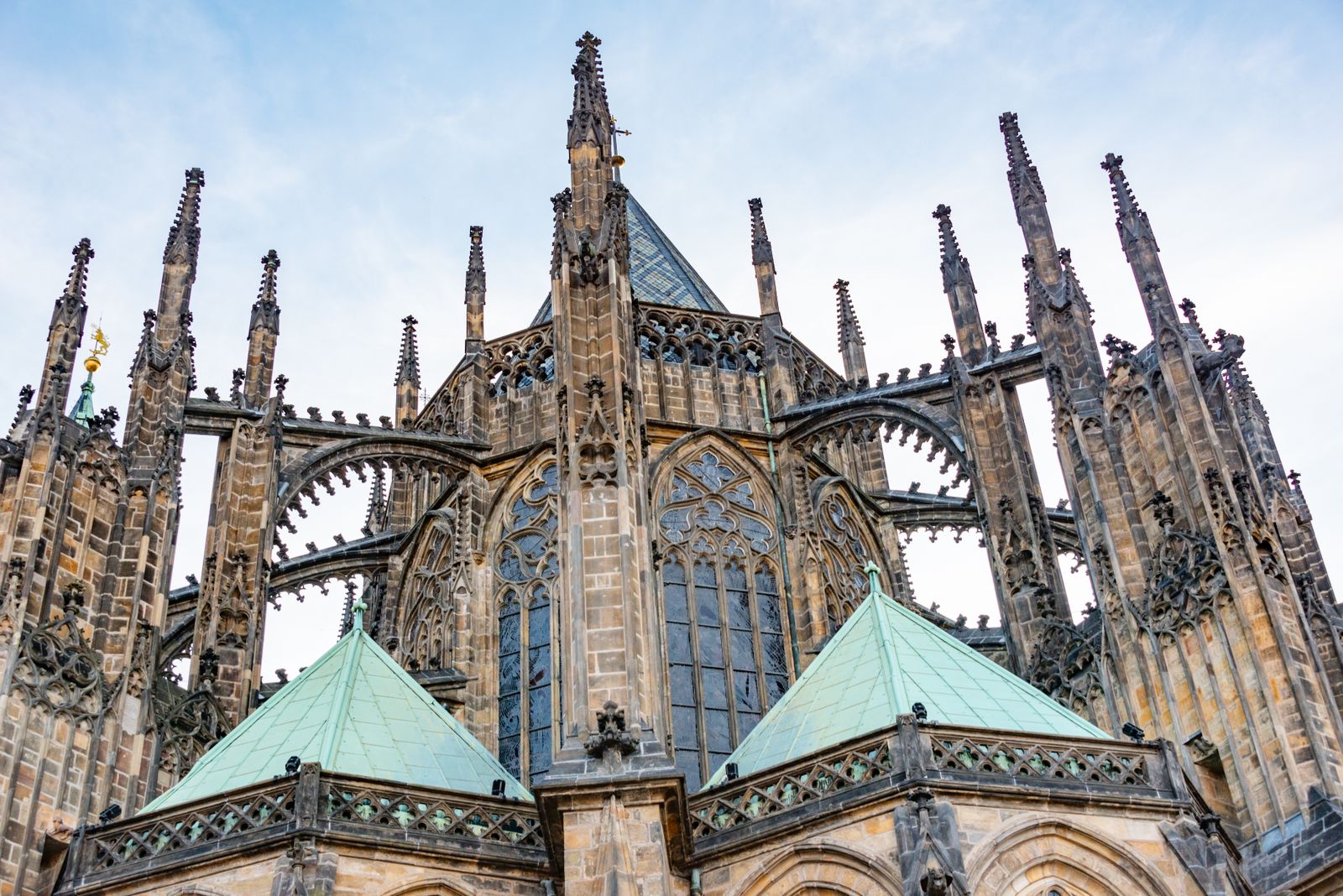
The world’s largest ancient castle complex (70,000m²): St Vitus Cathedral (the Czech national coronation church), the Lobkowicz Palace and the view over the city from the castle garden.
Photo: Tilman2007, CC BY-SA 4.0

A UNESCO-listed castle town in a horseshoe bend of the Vltava: the second-largest castle in the Czech Republic above a perfectly preserved medieval town of 13,000 inhabitants.
Photo: Jakub Hałun, CC BY 4.0

The Pravcicka Brana – the largest natural rock arch in Europe (26.5m high) – and the Edmund Gorge sandstone canyon accessible by boat.
Photo: Perituss, CC0

A medieval silver-mining city 70km from Prague with a Gothic cathedral UNESCO-listed and the Sedlec Ossuary – a chapel decorated with the bones of 40,000 people, including a bone chandelier.
Photo: Scotch Mist, CC BY-SA 4.0

The Czech Republic’s second city: Villa Tugendhat (Mies van der Rohe, 1930, UNESCO) and the Špilberk castle above the city where Napoleon watched the Battle of Austerlitz.
Photo: Michal Klajban, CC BY-SA 3.0

A beautifully preserved baroque university city: the Holy Trinity Column (UNESCO, the tallest plague column in Central Europe), six baroque fountains and an Astronomical Clock with communist-era workers instead of saints.
Photo: Wikimedia Commons contributor, Public domain

A UNESCO-listed Renaissance square with identical arcaded houses arranged around a long pool: one of the finest Renaissance city squares in Europe.
Photo: Scotch Mist, CC BY-SA 4.0
Pilsner Urquell (born 1842 in Pilsen) invented the world’s most copied beer style: pale lager. The brewery tour involves drinking unfiltered tank beer directly from the cellar. Kozel, Budvar and Staropramen are the other great Czech lagers.
Beef sirloin in a cream and root vegetable sauce, served with bread dumplings and cranberry jam. The most ceremonial Czech dish.
Pork or beef goulash (more strongly spiced than Hungarian) with bread dumplings (knedliky). The Czech pub staple.
A spiral of sweet dough wound around a cylinder, roasted over coal and rolled in sugar and cinnamon. Prague street food sold at every Christmas market and tourist area.
The Moravia region produces 95% of Czech wine: Welschriesling, Gruner Veltliner and Palava (a unique Moravian variety) are the finest.
A 38-herb-and-spice bitters made in Karlovy Vary since 1807. Drunk neat as a digestif or with tonic water. The definitive Czech spirit.
Open sandwiches on a baguette slice, topped with potato salad, ham, egg, pickles and paprika mayonnaise. The Czech party food and delicatessen staple.
Strong black coffee with the grounds in the cup – the Czech version of Turkish coffee – is still served in older establishments alongside the modern cafe scene.
Prague Václav Havel Airport (PRG) is the main hub, 17km west of the centre. Prague is also an excellent rail hub: Vienna (4h), Berlin (4h30), Budapest (6h), Warsaw (7h30) direct by train. For trip planning, see the Czech Tourism portal.
Prague is under 2h15 from London — one of the closest capital-to-capital European short-hauls. A long weekend makes perfect sense.
Prague is easily combined with Vienna, Budapest or Berlin — all within 4–5 hours by train.
RegioJet (regiojet.com) and FlixBus are cheaper than Czech Railways (CD) on most intercity routes and often faster. Book online for the best fares.
The Airport Express bus (AE) runs directly to the main train station and is the easiest option. Buy the ticket on the bus.
May to September is the warmest window. June and September are the sweet spots — warm, not yet peak crowds. July and August bring Prague’s tourist peak. December’s Christmas markets are among the finest in Europe.
📅 Czech Republic is in its best season in May, June, July, August, September. See where else is good to go in those months, or browse where to go by month.
The Czech Republic is excellent value — significantly cheaper than Germany or Austria, comparable to Poland and Hungary. Prague’s tourist centre is pricier than elsewhere; one block back and prices drop dramatically.
A half-litre of Pilsner Urquell or Kozel dark at a Prague pub away from the Old Town costs CZK 45–60 (€1.80–2.40). In the main square: CZK 120+.
Svíčková (beef sirloin in cream sauce with bread dumplings) is the national dish. At a good Vinohrady restaurant: CZK 280–380. In the Old Town: CZK 450+. Go to Vinohrady.
Field (one Michelin star) and Alcron are Prague’s top tasting menu restaurants — at CZK 2,000–3,500pp (€80–140), among the best-value Michelin dining in Europe.
Prague for four days (it earns it), then Ceský Krumlov for the day, Kutná Hora for the macabre, Brno for the locals’ Prague.
Cross the Charles Bridge at dawn — 6am, before the crowds, when the statues loom out of the mist. Walk to the Old Town Square for the Astronomical Clock at the hour. Josefov (the Jewish Quarter) in the afternoon.
The Astronomical Clock strikes on the hour — the mechanical procession takes about 45 seconds. The clock itself (1410) is impressive. The viewing terrace of the Old Town Hall gives the best overview.
Prague Castle (the largest ancient castle complex in the world by area — 70,000 sq m) takes a full morning. St Vitus Cathedral, the Royal Palace, the Golden Lane. Afternoon: walk down through Malá Strana (the Little Quarter) to the Kampa watermill area.
The Prague Castle complex requires a ticket for the key sights but the courtyards and gardens are free — worth exploring even without buying entry.
Vinohrady: the most beautiful residential neighbourhood, tree-lined streets, Art Nouveau buildings, local cafes. Holešovice: the National Gallery at the Veletržní Palác (20th-century Czech and international art), the DOX Centre for Contemporary Art.
Prague outside the tourist centre is worth exploring. Naméstí Míru (Peace Square) in Vinohrady has some of the best restaurants in the city, at half the Old Town prices.
1h by train from Praha Hlavni Nádraží. The Sedlec Ossuary (Bone Church) — the interior decorated with the bones of 40,000–70,000 people, including a chandelier made from every bone in the human body. Disturbing and extraordinary. The neighbouring Gothic cathedral of St Barbara is equally impressive.
The Bone Church requires advance ticket booking at kostnice.cz, especially in summer. The site closes for lunch — time your visit around it.
3h by bus from Prague. The second-most visited town in the Czech Republic: a UNESCO-listed medieval walled city wrapped in a river meander, dominated by a Renaissance castle with a 19th-century Baroque theatre still in operation.
Stay overnight if possible — Ceský Krumlov in the evening, after the day-trippers have left, is entirely different. The castle gardens are free and open late.
3h by RegioJet from Ceský Krumlov to Brno (via České Budējovice). Brno is the Czech Republic’s second city — university town, a serious food and bar scene, the Villa Tugendhat (UNESCO Modernist masterpiece by Mies van der Rohe). Almost no tourists.
Villa Tugendhat requires advance booking at tugendhat.eu. One of the 20th century’s most important buildings, designed for a Jewish family who fled the Nazis in 1938.
1h45 train from Brno back to Prague for your flight. Last stop: a svíčková (beef in cream sauce) at a central Prague restaurant and one final Pilsner Urquell at the source.
Vaclav Havel Airport (PRG) is 30 minutes from the centre by Airport Express bus (AE), which runs directly to Praha Hlavni nádraží for CZK 100 (€4).
🛂 Entry rules: EES and ETIAS
Czech Republic is in the Schengen area, which has two EU border systems for non-EU visitors.
EES (in force): since 10 April 2026 the EU’s Entry/Exit System registers non-EU visitors’ passport details, fingerprints and a photo the first time they enter the Schengen area, replacing passport stamps. Allow extra time at the border on your first trip; later crossings are quicker. EU, EEA and Swiss citizens are not registered.
ETIAS (not yet running): a €20 online travel authorisation for visitors who don’t need a visa, such as UK, US, Canadian and Australian citizens. It hasn’t started and no start date has been confirmed, so nobody can apply yet; ignore websites that offer to “pre-register” you for a fee.
Visa-free visitors can stay up to 90 days in any 180-day period across the whole Schengen area, not per country.
Official information: EU: Travel to Europe (EES & ETIAS) · Reviewed September 2026
Both work in Prague. Prague’s tram network is excellent and covers most tourist areas.
A half-litre of Pilsner Urquell in a Prague pub: CZK 50-80 (EUR 2-3). A restaurant meal: CZK 200-400 (EUR 8-16).
Prague to Brno: 2h30. Prague to Cesky Krumlov: 3h by bus (Leo Express or Flixbus is faster and cheaper).
The Charles Bridge at dawn (5-7am) is empty. The same bridge at 11am in August has 10,000 people.
The Czech cultural tradition (Kafka, Hasek’s Svejk, Forman’s films) is rooted in dark comedy. Engage with it.
Prague is among Europe’s most visited cities. Good hotels at fair prices sell out months ahead in peak season.
The Prague Christmas market (mid-November to January 6) is among the finest in Europe.
Initial formality dissolves quickly when genuine interest is shown.
Quick answers to the questions people most often ask before visiting Czech Republic.
May to September is the warmest window. June and September are the sweet spots — warm, not yet peak crowds.
Prague Václav Havel Airport (PRG) is the main hub, 17km west of the centre. Prague is also an excellent rail hub: Vienna (4h), Berlin (4h30), Budapest (6h), Warsaw (7h30) direct by train. For trip planning, see the Czech Tourism portal.
Expect roughly CZK 600–1,000 (about €24–40) a day on a budget and CZK 1,500–2,500 (about €60–100) mid-range, or CZK 4,000+ (about €160+) for a more luxurious trip, per person and excluding flights.
Czech Republic uses the CZK.
Plug types: Type C / E (two-pin, 230V).
Ride-hailing in Prague, Brno and major Czech cities — cheaper than street taxis.
FreeFood delivery across Prague and Czech cities with a wide restaurant selection.
FreeBook Prague Castle tours, Kutna Hora day trips, Czech beer tasting and Bohemian experiences.
FreePrague’s official transit app — buy tickets for metro, tram and bus; includes zone maps.
FreeExplore Czech Republic’s top city destinations — from Český Krumlov to Prague, each with its own distinct character.
Czech Republic sits within easy reach of several other destinations — each with a completely different character.


