BZ
Belize
Blue holes, barrier reef and jungle Mayan ruins
Blue holes, barrier reef and jungle Mayan ruins

A 300m-wide submarine sinkhole: stalactites 40m underwater, Caribbean reef sharks and nurse sharks at 40m depth. Day-trip by boat from Ambergris Caye or Caye Caulker.
Photo: U.S. Geological Survey (USGS), Public domain

The most visited destination in Belize: golf carts on sand streets, Hol Chan Marine Reserve snorkelling 3km from shore and the finest beach bars in Central America.
Photo: Jeff Williams (NASA), Public domain

A 4km Maya cave accessible by swimming a river: the Crystal Maiden skeleton (a 1,000-year-old Maya sacrifice victim whose bones have calcified white) and 14 other human remains.
Photo: Peter Andersen, CC BY-SA 3.0

The world’s first jaguar sanctuary: the highest density of jaguars in Central America, tapir, puma and Harpy eagle in a cloud forest reserve.
Photo: Cephas, CC BY-SA 4.0

A car-free sand island with a split caused by Hurricane Hattie (1961): snorkelling from the dock, manatees in the lagoon and the most laid-back Caribbean village accessible from the mainland.
Photo: dronepicr, CC BY 2.0

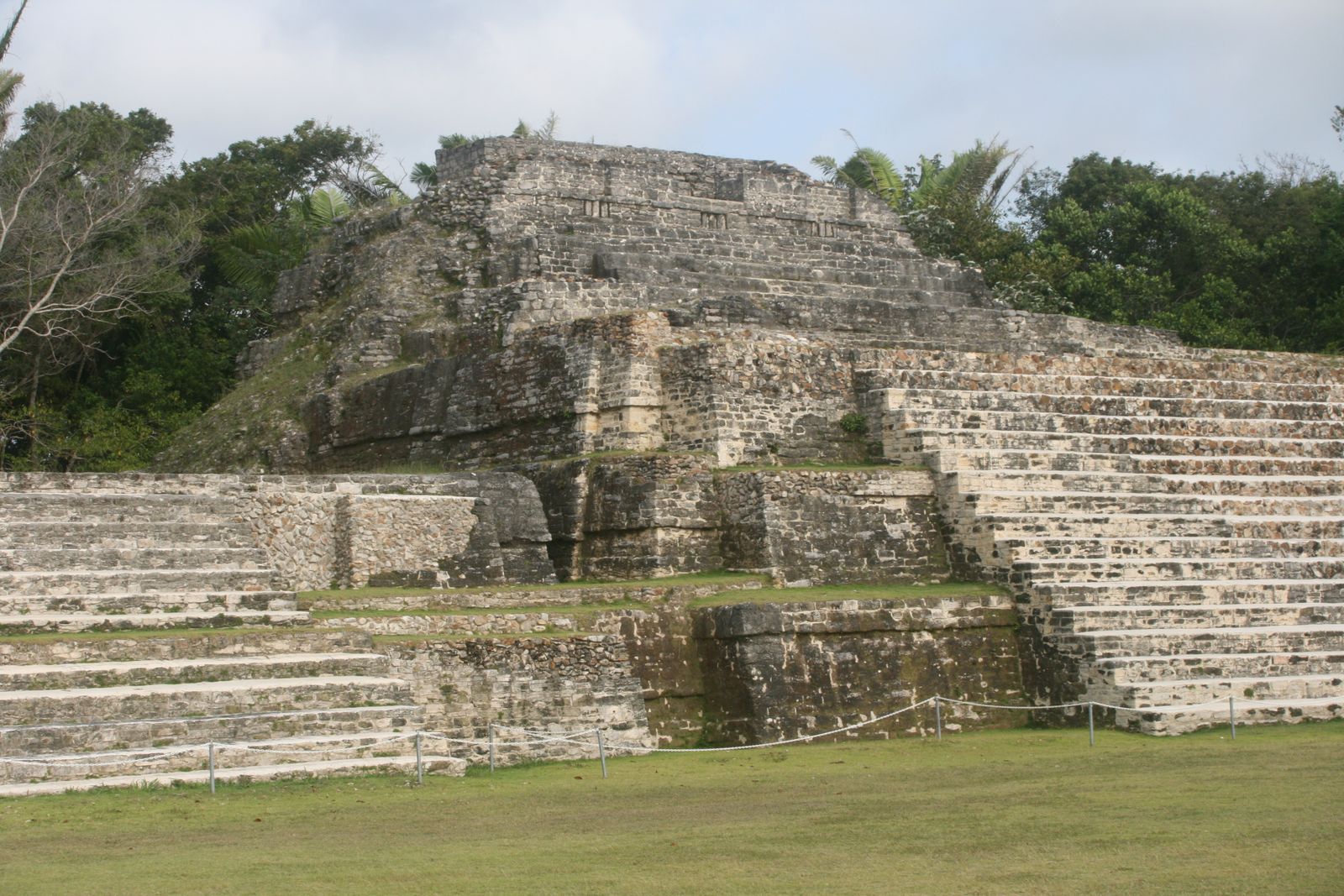
A Maya ceremonial centre accessible by hand-cranked ferry across the Mopan River: El Castillo (40m) has the most elaborate carved frieze in Belize.
Photo: Josh from new rochelle, CC BY 2.0

The largest Maya site in Belize: Caana (the Sky Palace, 43m) is the tallest man-made structure in Belize and was larger than Tikal at its peak.
Photo: Devon Jones, CC BY-SA 3.0

A 35km peninsula with both Caribbean sea and lagoon: the Sidewalk (the narrowest main street in the world per Guinness) and the finest beaches in mainland Belize.
Belize (Wikipedia) →Photo: Nosferattus, CC0
White rice cooked in coconut milk with kidney beans: the national dish of Belize (different from Guatemalan frijoles). Eaten with stewed chicken and plantain.
Chicken marinated in recado (achiote paste) and slow-stewed with onions and peppers: the most commonly eaten main course in Belize.
Deep-fried dough puffs: the Belizean breakfast, eaten with refried beans, cheese and hot sauce.
Fresh conch or shrimp in lime juice with habanero, onion and coriander: the standout seafood appetiser on the Cayes.
The national lager since 1969: cold, light and the correct beer on any Belizean beach.
Belizean rum: smooth and aged in tropical heat. Travellers’s 5-Year is the benchmark.
A glass of chilled sugarcane juice at a roadside vendor: the most refreshing drink in the Belizean heat.
Fried corn tortillas topped with refried beans, cabbage and cheese: the cheapest and most available street food in Belize City.
San Pedro and Caye Caulker: 45-75 minutes by water taxi from Belize City.
A rice and beans plate: BZD 6-10 (USD 3-5). Ambergris Caye resorts: USD 100-300/night.
English, Creole warmth and Caribbean pace.
Belize City to San Ignacio (Cayo): 2h by bus. Belize City to Dangriga: 3h.
Both give reasonable coverage on the mainland.
Golf carts on Ambergris Caye; bicycles and walking on Caye Caulker.
Belize is within the Caribbean hurricane belt. Check forecasts and get insurance.
The rhythm and vocabulary of Belizean Creole is distinctive: easy to understand, wonderful to listen to.
Philip Goldson International (BZE) in Belize City is the main hub. No direct flights from the UK — all routes connect via the US. Maya Island Air and Tropic Air serve domestic airstrips and cayes. For trip planning, see the official Belize tourism portal.
Miami is the primary hub for Belize from Europe — American and United both connect from MIA in 2h. From the UK, Miami connections with British Airways or American are most common.
Miami–Belize City direct (2h) is the most common US gateway. American, United and Delta all serve Belize City with connecting or direct service from major US hubs.
Domestic flights to the cayes cost US$35–70 one-way and take 15–20 minutes vs 45–90 minutes by water taxi. The time saving is worth the price for most itineraries.
The water taxi between Belize City and Caye Caulker (45 min) is the most-used transport in Belize. Boats depart every 2 hours from the Water Taxi Terminal on North Front Street.
November to April is the dry season — the best time for diving the Great Blue Hole, the cayes and the jungle lodges. May to October is the wet season — the reef is still excellent (visibility stays good), but inland rivers rise and some jungle roads become difficult. Hurricane season peaks August–October.
📅 Belize is in its best season in January, February, March, April, May, November, December. See where else is good to go in those months, or browse where to go by month.
Caye Caulker for two days, the Great Blue Hole for one, Tikal (Guatemala) for one, the Cayo District caves and jungle for two, Placencia for one. Belize is tiny — the whole country fits inside Wales — but every ecosystem from reef to rainforest to Mayan ruins is within reach.
Caye Caulker (3km long, population 2,000, no cars) is the more relaxed alternative to Ambergris Caye. The Split — a channel cut through the island by a hurricane in 1961 — is the social and swimming hub. The main street has no proper name; everyone calls it Front Street.
The Belize Barrier Reef (the second longest in the world after the Great Barrier Reef at 300km) lies 300m offshore from Caye Caulker and is directly accessible by local boat. Snorkelling with nurse sharks and rays at Shark Ray Alley costs BZ$50–80pp.
Full snorkelling day on the reef: Hol Chan Marine Reserve, Shark Ray Alley (nurse sharks and southern stingrays at arm’s length) and the Coral Garden. The reef is at its most diverse within Hol Chan — over 100 species of fish, eagle rays, sea turtles and moray eels visible on a standard 3h tour.
The nurse sharks at Shark Ray Alley are completely habituated to snorkellers — they circle at waist depth and the rays swim directly under you. Despite their size (1.5–2m) nurse sharks are docile. The experience is memorable and slightly alarming.
The Great Blue Hole — a 300m-wide, 125m-deep underwater sinkhole 70km offshore, formed during the last ice age when sea levels were lower — is one of the top ten dive sites in the world. The 3h boat trip from Caye Caulker, two dives in the hole (stalactites at 40m), snorkelling at Half Moon Caye.
The Great Blue Hole dives are at 30–40m depth and require Advanced Open Water certification at minimum. The visibility inside is impressive — the walls drop vertically and the stalactites prove the hole was once a dry cave above sea level.
3h drive to the Guatemala border, then 1h to Tikal. Tikal National Park (UNESCO, 576km² of tropical forest) — the largest excavated Maya city, with Temple I (47m high pyramid) and Temple IV (65m, the tallest pre-Columbian structure in the western hemisphere) rising above the jungle canopy. Howler monkeys in the trees.
The sunrise tour of Tikal (enter the park at 5am, climb Temple IV before dawn) gives 30 minutes of complete silence broken only by howler monkeys and the jungle waking up, before the day-trippers arrive. The experience of sitting 65m above the forest canopy as the sun rises over Maya temples is unlike anything else in Central America.
3h from the Tikal border. The Actun Tunichil Muknal (ATM) cave — a 5km underground cave system entered by swimming, with Mayan ceramics, altars and skeletal remains of sacrificial victims left exactly where they were deposited 1,000–1,200 years ago — is one of the most striking archaeological experiences in Central America.
The ATM cave requires a guided tour (BZ$120pp), swimming through subterranean rivers and climbing into chambers. The Crystal Maiden — a 1,000-year-old skeleton of a young woman, her bones entirely crystallised by calcite, still in situ on the cave floor — is the most striking object.
Xunantunich (the “Stone Maiden”) — a Maya ceremonial centre with El Castillo pyramid (40m, a carved frieze of deities and astronomical symbols near the summit) overlooking the Mopan River — is 15km from San Ignacio. An afternoon canoeing or kayaking on the Macal River through jungle.
Xunantunich is accessible by a hand-cranked ferry across the Mopan River — a flat-bottomed raft pulled across by a cable, unchanged since 1930. The entry fee is BZ$10 and the site is almost entirely free of crowds.
3h from San Ignacio. Placencia is a 16km sand peninsula on the southern Caribbean coast — a walkable village with a sidewalk (officially the narrowest in the world at 90cm) and excellent beachfront restaurants. Whale shark season (March–June) brings the world’s largest fish to Gladden Spit offshore.
The whale sharks that aggregate at Gladden Spit (40km offshore from Placencia) at the full moon March–June reach 12–14m in length. Snorkelling with them — not diving, they surface to feed on fish spawn — is legal and managed. A permit-controlled experience of scale.
Belize is the most expensive country in Central America — comparable to Costa Rica, with USD and BZD both accepted (US$1 = BZ$2 fixed rate). The barrier reef and cave experiences justify the premium.
Fry jacks — deep-fried dough pockets served with beans, eggs and cheese — are the Belizean breakfast staple and cost BZ$5–8 (US$2.50–4) at any local cook shop.
The Great Blue Hole dive trip costs US$200–250pp (boat, guide, 2 dives, park fees, half-day at Half Moon Caye) and is one of the most expensive single dive days in the Caribbean — also one of the most striking.
Turtle Inn (Francis Ford Coppola’s beach resort in Placencia) and the inland Blancaneaux Lodge (also Coppola) are Belize’s most celebrated luxury addresses.
Quick answers to the questions people most often ask before visiting Belize.
November to April is the dry season — the best time for diving the Great Blue Hole, the cayes and the jungle lodges. May to October is the wet season — the reef is still excellent (visibility stays good), but inland rivers rise and some jungle roads become difficult.
Philip Goldson International (BZE) in Belize City is the main hub. No direct flights from the UK — all routes connect via the US. Maya Island Air and Tropic Air serve domestic airstrips and cayes.
Expect roughly US$60–100 a day on a budget and US$180–280 mid-range, or US$400+ for a more luxurious trip, per person and excluding flights.
Belize uses the BZD.
Plug types: Type B / G (US and UK pins, 110V/220V).
Book Great Blue Hole diving day trips, Actun Tunichil Muknal cave tours, Tikal excursions and Belizean adventures.
FreeBelize’s primary messaging platform — essential for booking water taxis, tour operators and guesthouses.
FreeBook jungle lodges, beach cabanas and resorts across Belize — popular resorts fill up early in winter.
FreeBook private villas and eco-lodges across the cayes and jungle inland.
FreeTrack BZD (Belize Dollar) rates — the BZD is pegged to the USD at 2:1.
FreeDownload offline maps of Belize — cell coverage is unreliable in the jungle and outer cayes.
FreeThe Great Blue Hole, the Belize Barrier Reef, Garifuna culture in Hopkins, Maya ruins at Caracol, and the jaguar sanctuary at Cockscomb Basin.
Belize borders some of Central America and the Caribbean’s most rewarding destinations — each with its own distinct character.


