TV
Tuvalu
The sinking Pacific nation — pristine atolls on the front line of climate change
The sinking Pacific nation — pristine atolls on the front line of climate change
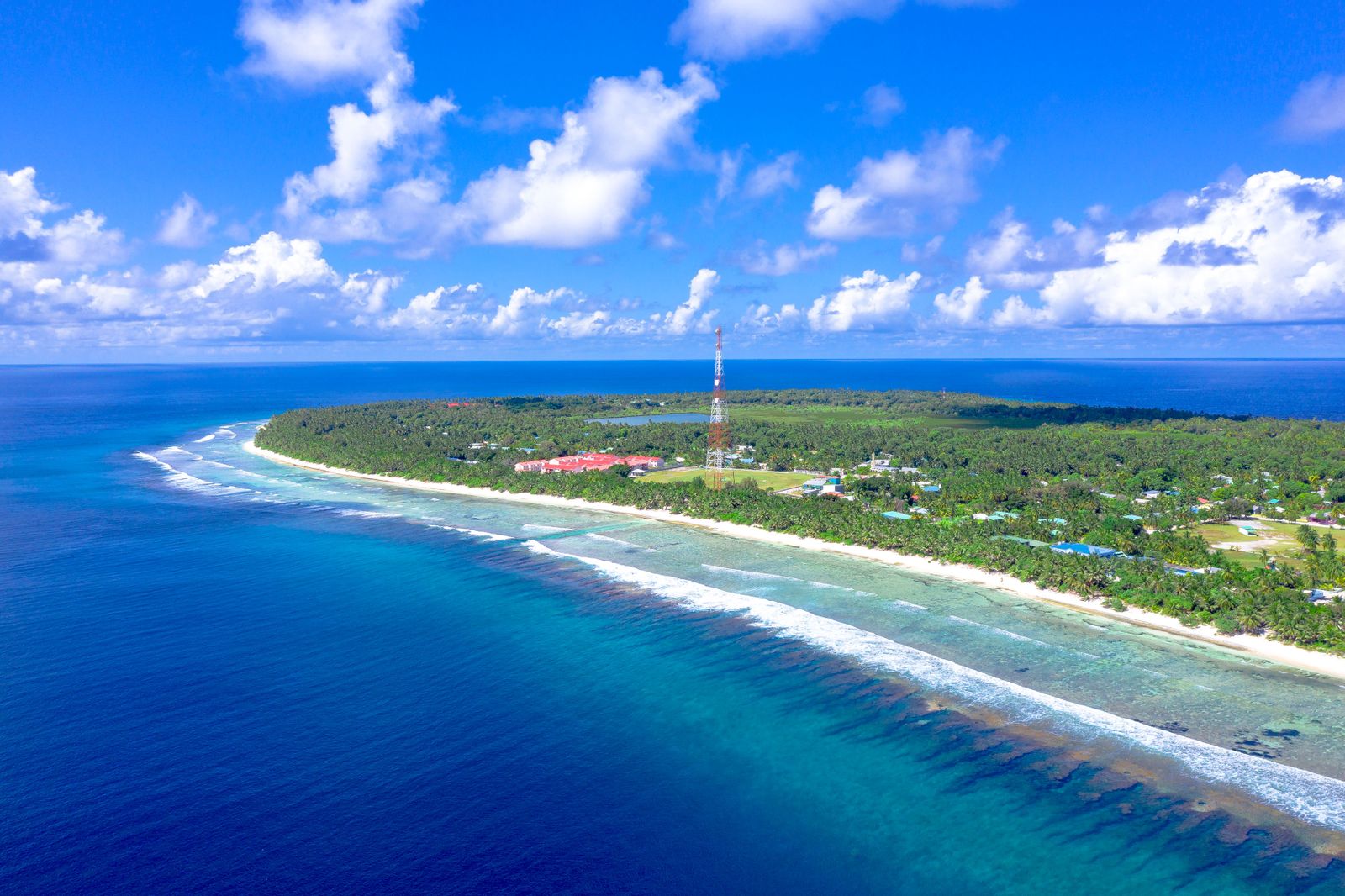
Tuvalu is the world’s fourth-smallest country and one of the lowest-lying — nine atolls and reef islands in the central Pacific with an average elevation of less than 2 metres, making it the country most likely to be entirely submerged by rising sea levels within this century. This gives Tuvalu a melancholy and urgent significance beyond its tiny size: it is the front line of climate change, and its government has become one of the world’s most vocal advocates for climate action. For those who make the considerable journey, Funafuti Atoll — a lagoon of extraordinary turquoise beauty with pristine snorkelling reefs and WWII relics from the US airbase built here in 1943 — offers one of the Pacific’s most authentic and least-visited atoll experiences.
The vast lagoon of Funafuti Atoll — 25 kilometres wide, ringed by narrow sandy islets — has extraordinarily clear water for snorkelling the outer reef’s coral gardens, a WWII bomber wreck visible in the shallow lagoon, and the Te Namo conservation area protecting pristine reef and sea turtle nesting beaches. The motu (outer islets) are accessible by small boat.
The Tuvaluan fatele — a full-community dance performed at island celebrations, with the entire village participating in choreographed movements and song — is one of the most joyful and communal cultural performances in the Pacific. The Philatelic Bureau (Tuvalu’s famous stamps were the island’s main revenue source before the .tv internet domain) tells the island’s history through miniature art.
Tuvalu (Wikipedia) →giant swamp taro grown in coral pits), fresh fish, coconut in every form and imported rice and canned food. The
Giant swamp taro grown in underground pits, a storable staple that provides food security on low coral islands. Eaten boiled with coconut cream at every meal.
Fermented sap from the coconut palm, tapped at dawn and drunk fresh (sweet, non-alcoholic) or left to ferment (mildly alcoholic). The social drink of Tuvaluan gatherings.
Young taro leaves stuffed with coconut cream and onion, wrapped in banana leaf and baked — the feast dish of the Pacific, shared with Samoa and Tonga.
income (Tuvalu sold the rights to its internet domain suffix) has improved food imports. Fresh-caught tuna and flying fish grilled over coconut husks are outstanding.
Funafuti International Airport (FUN) is the only international entry point. Fiji Airways serves the only scheduled international route. For trip planning, see the official Tuvalu tourism portal.
💡 Fiji (3h, Fiji Airways, twice weekly) is the only scheduled international service to Tuvalu. The limited frequency makes Tuvalu one of the most logistically challenging Pacific island nations to visit — most visitors stay a minimum of 4 nights due to the flight schedule.
💡 Nadi (NAN) is one of the best-connected Pacific hubs — direct flights from Sydney, Auckland, Los Angeles and Tokyo make Fiji the natural gateway for all Tuvalu visits.
💡 The airport is a 10-minute walk from all accommodation in Funafuti. Outer atolls are served by Air Moana (domestic ATR flights, AUD 150–280 per leg) or the government supply ship.
💡 Funafuti’s main island (Fongafale) is completely flat and only 400m at its widest — a bicycle is the ideal transport. The lagoon motus (uninhabited islets on the western atoll rim) require a boat charter.
April to October is the driest and most comfortable period (27–30°C, less humidity, calmer seas). November to March is the wet season with high humidity and occasional cyclones. The island is hot and sticky year-round; there is no cool season.
The Australian dollar (AUD) is the currency. Basic but not cheap due to remoteness and limited accommodation.
Pulaka (giant swamp taro — Cyrtosperma merkusii, a massive taro grown in excavated pits dug below the water table of the atoll, the primary traditional starch of Tuvalu, taking 5–15 years to mature — baked, boiled or)
The Tuvalu climate change guided tour (led by local community members or university researchers who explain the visible impacts of sea level rise &mdash)
Tuvalu is one of the world’s rarest passport stamps — fewer than 2,000 tourists visit per year, and the limited flights make it a true “passport collector’s destination.” The Tuvalu Philatelic Bureau produces some.
Funafuti for two days, climate crisis walk for one, cultural Fongafale for one, outer island for one, reef walk for one, sunset farewell for one. Tuvalu — the world’s most endangered nation — has the clearest window onto climate change’s consequences, funded its hospital with a .tv internet domain, and is creating the world’s first digital nation to survive submersion.
Funafuti — the capital of Tuvalu (a nation of 9 coral atolls in the central Pacific, population 11,000 — the fourth-smallest country in the world by population, the second-smallest by land area at 26km², independent since 1978, famous primarily as the most endangered nation on earth from sea level rise) on the main island of Fongafale — with the Funafuti Conservation Area (a 33km² marine protected area in the lagoon) and the WWII airstrip that still functions as the runway.
💡 Tuvalu sold its internet country code top-level domain “.tv” to a California company in 2000 for US$50 million over 12 years — a windfall equivalent to several times the country’s annual GDP, which funded the construction of Tuvalu’s roads, a hospital and the establishment of the Tuvalu Trust Fund. The .tv domain is used by thousands of television networks and streaming services worldwide (Twitch, for example, uses .tv URLs) — Tuvalu earns ongoing royalties from this arrangement.
The Funafuti Lagoon (25km² of turquoise water enclosed by the atoll reef — boat trip to the uninhabited motus (islets) on the western rim of the atoll, with the finest snorkelling in Tuvalu at the channel passages, hawksbill and green turtles feeding on the reef, and the WWII flying boat wreck accessible by free-diving at 5m in the lagoon) and the Conservation Area (the 33km² protected lagoon with the Tuvaluan sea turtle nesting programme).
💡 The Funafuti Conservation Area (established 1999 — the first community-protected marine area in Tuvalu, covering 33km² of reef and lagoon on the western atoll rim, managed by the Funafuti community through traditional governance) was established specifically to protect the declining fish stocks that represent the primary food security for Funafuti. It is one of the first Pacific atoll community marine reserves established before external NGO involvement.
The Te Fenua Moana (Tuvalu Climate Change Centre) and a walking tour of Funafuti’s climate crisis (the houses being abandoned as storm surge floods the lowest-lying areas, the newly built seawall already overtopped in king tide events, the freshwater lens contaminated by saltwater intrusion, the cemetery where graves have been washed out by king tide — the most tangible experience of climate change impact anywhere accessible to tourists) and a meeting with the Tuvalu National University climate researchers.
💡 Tuvalu’s highest point is approximately 4.5m above sea level — the entire country could be submerged within 80–100 years under medium sea level rise projections. The Tuvaluan government has been negotiating “climate mobility” agreements with Australia and New Zealand (allowing Tuvaluans to migrate before forced displacement) and is creating a “digital nation” on the Metaverse to preserve Tuvaluan sovereignty even if the physical territory is submerged. The legal precedent of a submerged sovereign nation has no precedent in international law.
A walking tour of Fongafale (the main island of Funafuti atoll — 14km long but only 20–400m wide — with the traditional maneapa (community meeting house), the traditional fatele (group dance) performed at community gatherings, the Tuvalu Philatelic Bureau (the island’s most important export after .tv domains — Tuvaluan stamps are highly sought by collectors for their elaborate designs and limited runs) and the local market with fresh fish and taro from the outer islands.
💡 The Tuvaluan fatele (a traditional form of group dancing and singing, performed sitting on mats in the maneapa, with groups of performers creating complex rhythmic patterns through hand movements, body sways and call-and-response singing) is the most important cultural expression in Tuvaluan society. The fatele is performed at every significant community event — weddings, farewells, political celebrations — and is the primary vehicle for preserving Tuvaluan oral history and traditional knowledge.
By domestic flight: Nanumea (the northernmost atoll of Tuvalu — a traditional outer island community of 800 people with the finest WWII airstrip on Tuvalu and the most intact traditional Tuvaluan community life, with the village maneapa at the centre, the traditional canoe-building still practised and the coral church dating from the London Missionary Society’s arrival in 1865) — or Vaitupu (the most populous outer island, with the Motufoua Secondary School where most Tuvaluans are educated).
💡 Nanumea was the first island in Tuvalu to be missionised by the London Missionary Society (1865 — a Samoan missionary, Eleaza, arrived by canoe from Samoa and converted the entire island to Christianity within a year) and is considered the most devoutly Christian island in Tuvalu. The coral church at Nanumea (built from coral limestone blocks by the community in the 1870s) is the oldest intact building in Tuvalu.
The Funafuti Reef Walk (at extreme low tide, the outer reef flat of Funafuti becomes walkable for 1–2 hours — a vast expanse of coral pavement, tide pools, sea cucumbers, giant clams and small reef fish stranded in pools — one of the most surreal walking experiences in the Pacific, crossing what is normally open ocean on foot, with the blue water of the open Pacific visible 200m away and the atoll lagoon on the other side) and the traditional fishing trap demonstration.
💡 Giant clams (Tridacna gigas — the world’s largest bivalve mollusc, reaching 1.2m and 200kg in extreme age, found on the Funafuti outer reef at 1–10m depth) were nearly extirpated from Tuvalu by over-harvesting in the 1970s–1980s; the Funafuti Conservation Area has allowed their partial recovery. The Tuvalu Fisheries Department maintains a giant clam nursery seeded from the Funafuti reef to restore populations on outer islands.
A final sunset on Fongafale (watching the sun set from the seawall that protects the island’s western shore — the most emotionally affecting sunset in the Pacific, watching the ocean that threatens the island’s existence from the wall built to hold it back) and the Tuvalu Philatelic Bureau (picking up limited-edition Tuvalu stamps and coins — the most collectible philatelic items in the Pacific) before flying from Funafuti (FUN) via Fiji.
💡 Tuvalu’s digital nation initiative (announced 2023 — the Tuvalu government’s plan to create a virtual representation of the nation in the digital realm, preserving its laws, culture, and data on servers hosted abroad, to maintain sovereign existence even if the physical islands are submerged — “if the land goes under the sea, we’ll continue as a nation in the cloud”, Prime Minister Kausea Natano, 2023) is the first serious attempt by any government to create a post-territorial state.
Twice-weekly flights from Suva, Fiji (Fiji Airways). Only around 2,000 visitors per year — one of the world’s least-visited countries.
Tuvalu’s highest point is 5 metres above sea level. With less than 15,000 people and facing total inundation within decades, Tuvalu is one of the most significant places to visit for climate awareness.
Fiji Airways serves Tuvalu weekly from Suva. The country is closed to cruise ships to protect the reef.
Tuvalu uses AUD. Card transactions are impossible outside the main bank; bring cash.
Visa-free for most nationalities for up to 30 days.
Point your camera at menus, signs or street text for instant translation. Download the language pack offline before you arrive for full use without data.
FreeReal-time and offline exchange rates for all world currencies — converts prices instantly so you always know what you are paying in your home currency.
FreeFind and book hotels, guesthouses and apartments with free cancellation on most rates — one of the widest selections of accommodation worldwide.
FreeBrowse millions of traveller reviews for restaurants, attractions and hotels — helps identify the best local spots and avoid tourist traps.
FreeThe most widely used messaging app worldwide — used heavily for bookings, tour operators and local contact throughout most of the world outside the US.
FreeTuvalu sits within easy reach of several other destinations — each with a completely different character.
