KR
Gyeongju
The Museum Without Walls
The Museum Without Walls
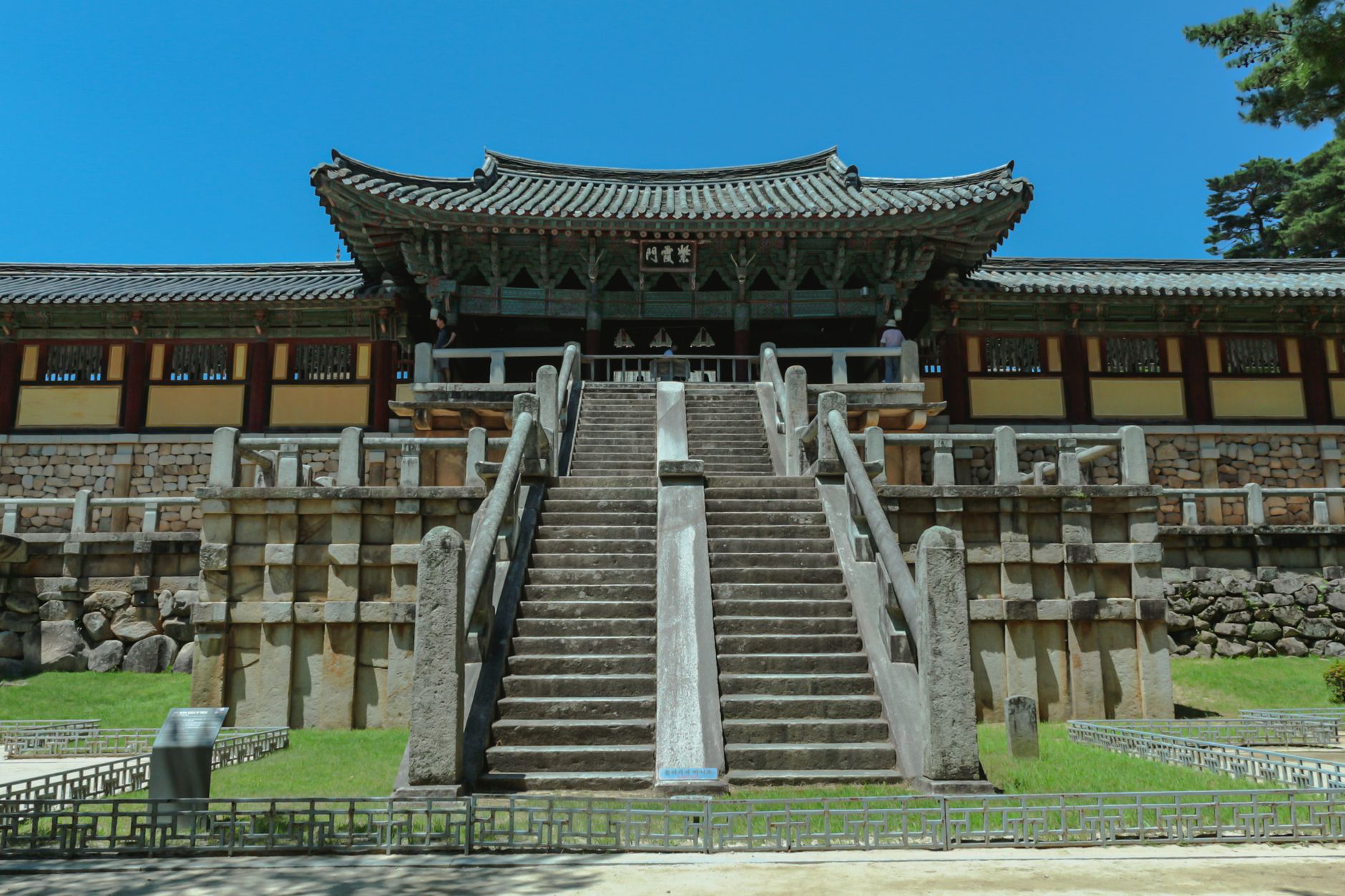
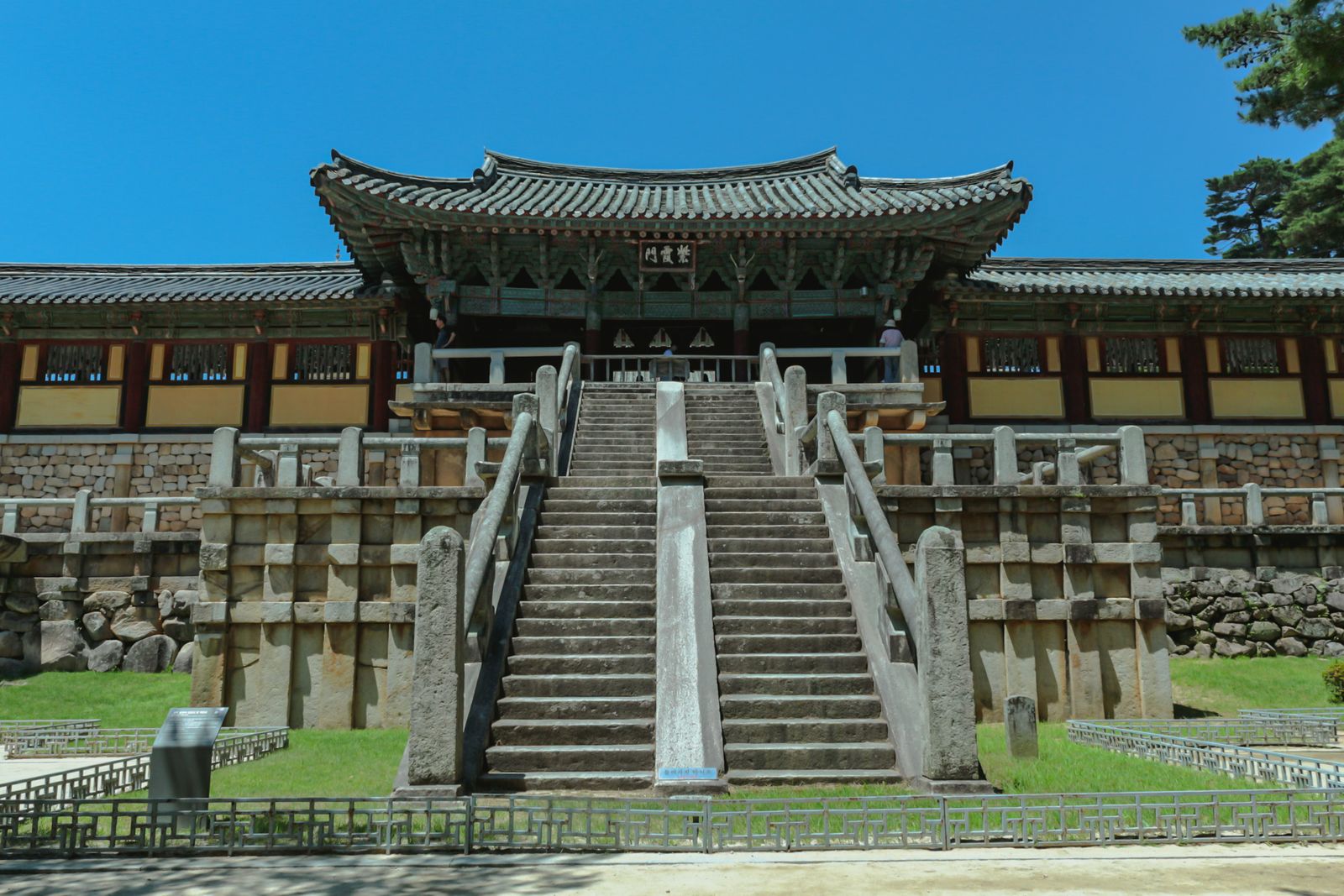
Bulguksa (Temple of the Buddhist Land) was founded in 528 AD and rebuilt in 751 AD — the finest Buddhist temple complex in Korea. The stone stairways (Cheongungyo and Baegungyo bridges) are the finest stone bridges in Korean architecture; the two pagodas in the main courtyard (Dabotap and Seokgatap) represent the finest Silla stone pagoda art.
Anapji Pond is best at 7pm when the transition from sunset to night illumination occurs — the pavilion lights come on and the still water reflects the entire reconstructed Silla palace complex.
Bulguksa Temple →

Tumuli Park in central Gyeongju contains 23 enormous grass-covered royal burial mounds of the Silla Kingdom — the largest (Hwangnam Daechong) is 87m wide and 22m high. The only interior you can enter is Cheonmachong (Heavenly Horse Tomb), where a 5th-century king was buried with 11,500 grave goods.
Seokguram Grotto at 9am opening (bus or taxi from Bulguksa) — the granite Buddha in the morning light before the tour groups is the finest Buddhist sculptural experience in Korea.
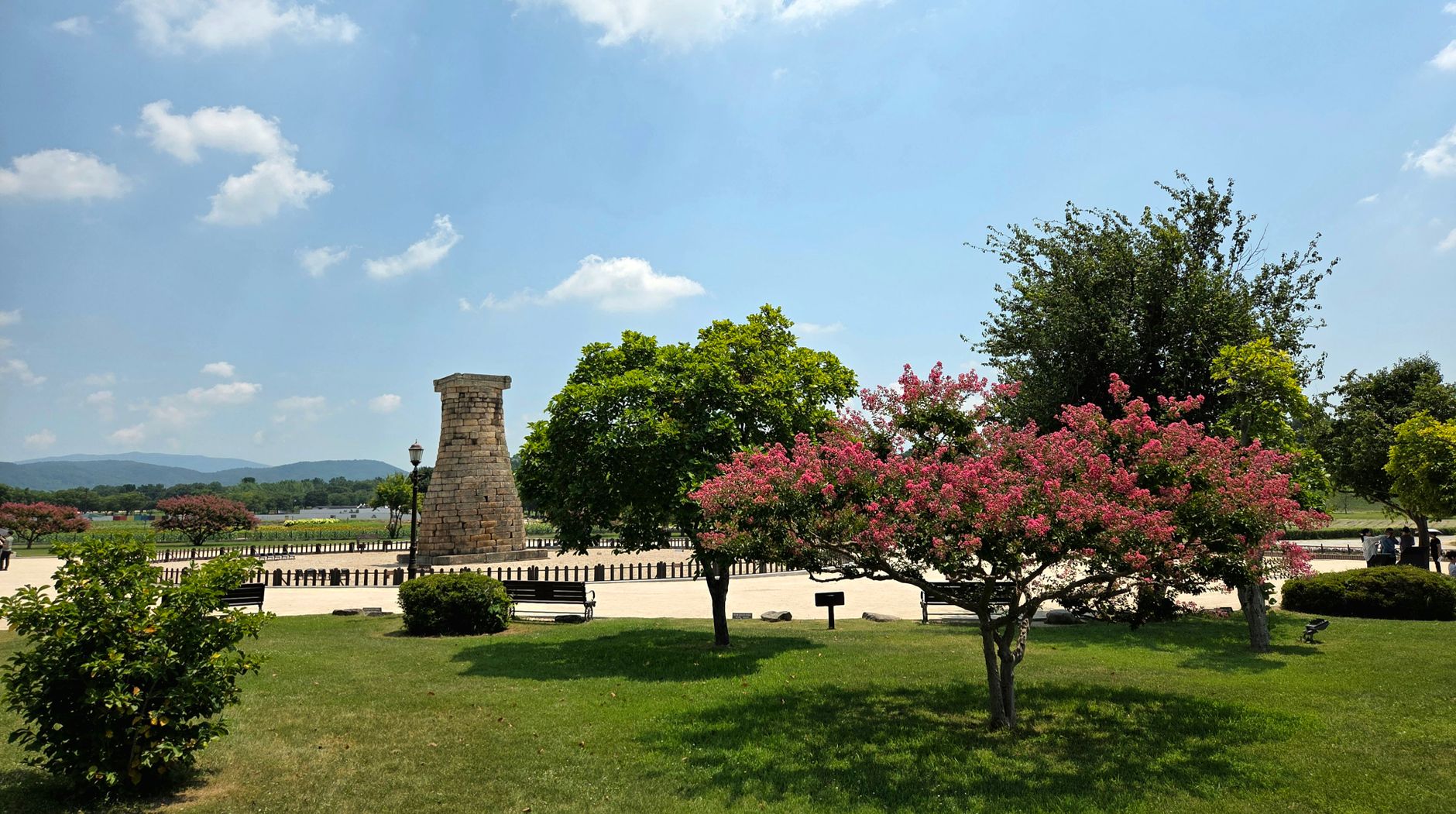
Cheomseongdae (Tower for Observing the Stars) was built in 632 AD during the reign of Queen Seondeok — the oldest surviving astronomical observatory in East Asia. The granite cylindrical tower, 9.4m high, has 365 courses of stone (the days of the year) and still stands in its original field.
Rent a bicycle from Gyeongju station (₩10,000/day) and cycle the 8km flat route through Tumuli Park, past Cheomseongdae, to Anapji Pond — the finest way to see the city heritage without a tour.

Anapji Pond was built in 674 AD within the Unified Silla royal garden. Three of the original palace buildings have been reconstructed on the shore. After dark, when the pavilions are lit and reflected in the still water, it is the most atmospheric place in Gyeongju.
Bulguksa’s Dabotap pagoda (the 10-won coin design) is best photographed from the east side of the main courtyard in the morning light before the tour coaches arrive from Busan.
Gyeongju’s most famous food export is the Gyeongju bppang (the Gyeongju bread; the walnut-shell-shaped pastry filled with sweet red bean paste; invented in 1939; available from the street stalls and the specialist shops on the Seongdong Market street near the city centre; KRW 1,000–1,500 per piece; the most popular Korean regional pastry; eaten warm from the pan; the shops can sell 5,000 pieces per day). The Gyodong Beopju rice wine (the traditional rice makgeolli brewed in Gyeongju using the 1,000-year-old Gyeongju Gyodong method; KRW 5,000–10,000 per 700ml bottle; the most celebrated regional rice wine in Korea; the Gyeongju National Museum gift shop is the most reliable retail source; also available at the Bomun Lake area hotels), the ssambap (the herb and vegetable rice wrap; the traditional Gyeongju lunch; KRW 12,000–18,000 at the Ssambap restaurants near the National Museum), and the haemul pajeon (the seafood and green onion pancake; the standard Gyeongju drinking food alongside the Beopju rice wine) give Gyeongju a specific food identity rooted in the Gyeongsang province agricultural tradition.
A rental bicycle (KRW 3,000–8,000/h; available from the bike rental shops at the Gyeongju train station, the Tumuli Park entrance and the Bomun Lake area; the electric bike KRW 8,000–15,000/h) is the most atmospheric and most practical Gyeongju transport: the city is flat; the Cheomseongdae, the Tumuli Park and the Anapji Pond are all within a 2km cycling radius of the city centre; the Namsan mountain circuit (the Goimjeong route; 15km; the Buddhist rock carvings) is well-suited to the electric bike. For Bulguksa and Seokguram (16km east), the city bus 10 or 11 (KRW 1,400 with T-money; 40 min from the city bus terminal) is the most economical; a taxi (KRW 12,000–18,000 one way) or a rental scooter (KRW 20,000–30,000/day) are the faster alternatives.
Anapji Pond (₩3,000; open until 10pm) is the finest after-dark experience in Gyeongju.
Gyeongju bread (gyeongju ppang; a small pastry filled with sweet red bean paste) is the most famous regional confection in Korea — sold from bakeries at the bus terminal and near Bulguksa.
Seokguram Grotto opens at 9am — take the bus (₩1,200) or taxi (₩5,000–8,000 one-way) from Bulguksa. Arrive at opening to see the granite Buddha in the morning light before the tour groups arrive.
The flat cycling route from Gyeongju station through Tumuli Park, past Cheomseongdae, to Anapji Pond covers 8km and all the main city heritage sites.
Gyeongju’s Namsan Mountain (494m) has 150 Buddhist rock carvings spread across the ridgeline — the images carved directly into the cliff face date from the 7th to 10th centuries.
Hanyeongsik (Korean royal cuisine in the style of the Silla and Joseon courts) is available at specialist Gyeongju restaurants — a 10–15 course meal of seasonal ingredients in lacquer bowls for ₩30,000–50,000 per person.
Apr (cherry blossoms on the Bulguksa approach road), Sep–Nov (autumn foliage; Namsan hiking; clear air; the Anapji Pond reflection at its finest). Oct is the lantern festival month. Summer is hot but not prohibitive. Winter is cold but the tombs in snow are unexpectedly beautiful.
Two days: Bulguksa and Seokguram, the Tumuli Park Cheonmachong, Cheomseongdae, the National Museum Emille Bell, and the Anapji Pond at night.
Bulguksa Temple at 9am (the stone stairways, the two pagodas). Seokguram Grotto (bus up; the granite Buddha). Gyeongju National Museum in the afternoon.
The Bulguksa–Seokguram combination takes a full morning — Bulguksa needs 90 minutes, the bus to Seokguram takes 20 minutes, and the grotto needs 30 minutes. Start at 9am, done by 1pm.
Bicycle from the station: Tumuli Park (Cheonmachong interior), Cheomseongdae Observatory (the stone tower in the field), Anapji Pond at 7pm (the night illumination).
Cheonmachong (the only open Tumuli Park burial mound interior) shows 11,500 Silla grave goods in the original burial chamber position — the gold crown, the golden belt, and the painted birch bark with a flying horse.
Gyeongju is the most affordable of the main South Korea destinations. The Bulguksa+Seokguram entry (KRW 12,000), the Tumuli Park (KRW 3,000) and the National Museum (free) make the world-class Silla heritage extraordinarily cheap. Per person per day.
The Gyeongju National Museum (KRW 0; the finest Silla artefact collection in the world), the Namsan mountain Buddhist carvings (free to hike), the Tumuli Park mounds (KRW 3,000) and the Gyeongju bppang bread (KRW 1,000/piece) give.
The Bomun Lake Gyeongju area hotel.
The private Gyeongju heritage tour with an art historian (KRW 200,000–400,000 for a full day; arranged through the Gyeongju National Research Institute or the Korea Cultural Heritage Foundation) covering all 5 UNESCO zones.
Gyeongju bicycle route navigation and heritage site entry ticket booking.
Free
Gyeongju restaurant discovery with hanyeongsik royal cuisine and local jjimdak filtering.
Free
Gyeongju Namsan Mountain trail map and rock carving GPS location guide.
Free
Download the Gyeongju offline map before arrival — the Namsan trail rock carvings have no English signage.
Free
Quick answers to the questions travellers most often ask before visiting Gyeongju.
Spring, for the cherry blossom, and autumn, for the foliage, are the most beautiful. Summers are hot and humid, and winters cold.
One to two days for the Bulguksa Temple and Seokguram Grotto, the royal burial mounds, the Cheomseongdae observatory, and the Donggung Palace and Wolji pond.
The historic areas are spread out but bike-friendly, with buses linking the sights; the KTX reaches nearby Singyeongju station.
The ancient capital of the Silla kingdom, often called a “museum without walls” (a UNESCO site) — the Bulguksa Temple and Seokguram Grotto, grassy royal tombs, the Cheomseongdae observatory, and Korea’s richest concentration of historic treasures.
Explore more of South Korea’s extraordinary cities and landscapes.
Planning a wider trip? Our South Korea travel guide covers getting there, costs, when to go and more.