PE
Peru
Land of the Incas and the Amazon jungle
Land of the Incas and the Amazon jungle
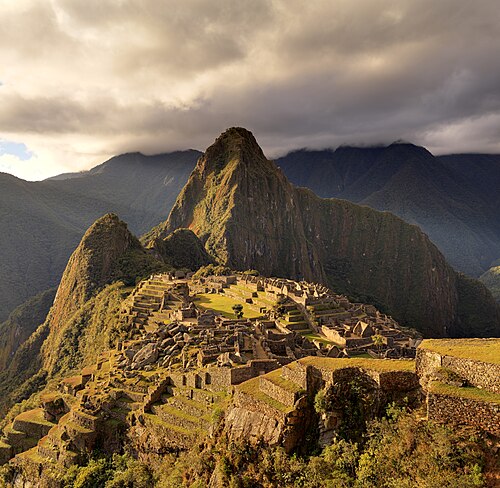
The 15th-century Inca citadel at 2,430m: discovered by Hiram Bingham in 1911, now the most visited site in South America. The Sun Gate (Inti Punku) viewpoint at dawn gives the classic terraced-citadel-in-clouds photograph. Book timed entry tickets well in advance.
Photo: Martin St-Amant (S23678), CC BY-SA 3.0

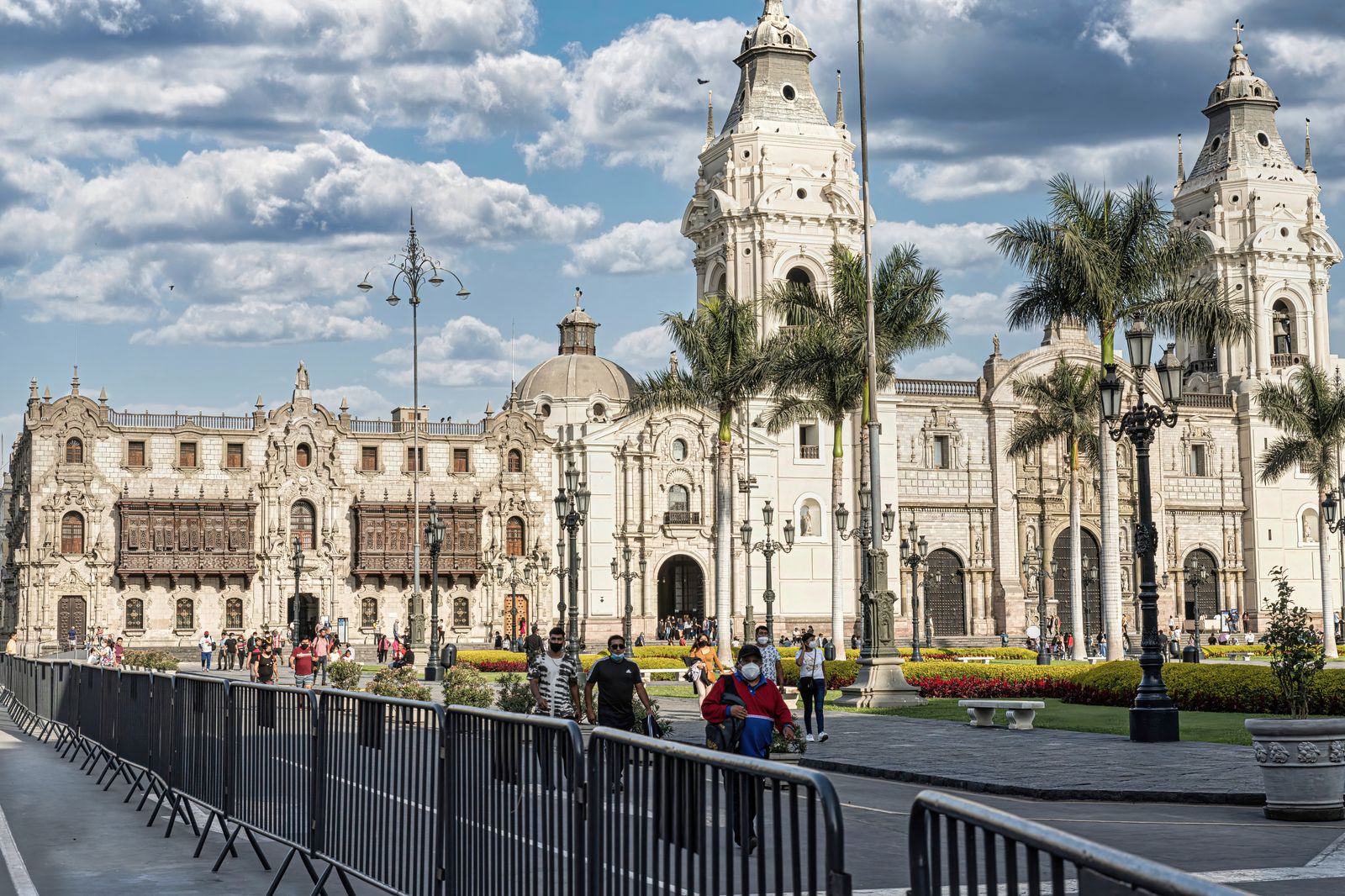
The former Inca capital: the Plaza de Armas with its cathedral (built over the Inca Huiracocha palace), the Temple of the Sun (Qorikancha) and the Sacred Valley’s Pisac and Ollantaytambo markets.
Photo: McKay Savage from London, UK, CC BY 2.0

Giant geoglyphs on the desert floor: a 50m astronaut, a 285m condor and a 96m spider, created by the Nazca culture 2,000 years ago. Visible only from the air (light aircraft from Nazca airport).
Photo: Diego Delso, CC BY-SA 4.0

The world’s highest navigable lake (3,812m): the Uros floating islands made entirely from totora reeds, the Taquile Island’s Quechua weaving tradition and the moonrise over the altiplano from the lake surface.
Photo: bobistraveling, CC BY 2.0

The White City of volcanic sillar stone below three volcanoes: the Colca Canyon (one of the world’s deepest, at 3,400m from rim to floor) with Andean condors soaring on thermal updrafts.
Photo: Alex Proimos from Sydney, Australia, CC BY 2.0

The Manu Biosphere Reserve: the world’s most biodiverse protected area by species count, with 1,000 bird species, 200+ mammal species and a macaw clay lick of 1,000 birds.
Photo: As578, CC BY-SA 2.5

The Larco Museum’s 45,000 pre-Columbian objects (including the world’s most significant erotic pottery collection) and the Miraflores clifftop restaurants serving Lima’s seafood.
Photo: Velvet, CC BY-SA 4.0

A turquoise lagoon surrounded by 100m sand dunes in a coastal desert: sandboarding and dune buggy rides at sunset.
Photo: Diego Delso, CC BY-SA 4.0
Raw white fish cured in lime juice with aji amarillo chilli, red onion and coriander: eaten with cancha (toasted corn) and sweet potato. The national dish; best in Lima’s La Mar or Punto Azul.
A Cantonese-Peruvian stir-fry (chifa cooking): beef strips with tomato, yellow pepper, soy sauce and French fries, served over rice. The definitive chifa dish.
Mashed yellow potato (with lime and aji amarillo) layered with tuna, avocado and egg: a cold entree of great elegance.
Shredded chicken in a creamy aji amarillo and walnut sauce over rice. The definitive Peruvian comfort food.
Pisco (grape brandy), lime juice, sugar syrup, egg white and Angostura bitters: the national cocktail of Peru (disputed with Chile). The foam is from the egg white and a 10-second vigorous shake.
An infusion of dried coca leaves: a mild stimulant that alleviates altitude sickness. Served at every hotel and restaurant in Cusco and the altiplano. Legal throughout Peru.
Beef heart on skewers marinated in vinegar, cumin and aji panca, grilled over charcoal. Sold by street vendors at night throughout Lima and Cusco.
Chicha morada: a purple corn cold drink with cloves and pineapple. Chicha de jora: fermented corn beer drunk at festivals, prepared by chewing corn to activate the starch.
Lima Jorge Chávez (LIM) is the main international hub. Cusco (CUZ) and Arequipa (AQP) also receive direct international flights from some Latin American cities. LATAM Peru and Sky Airline serve domestic routes. For trip planning, see the official Peru tourism portal.
Iberia via Madrid offers the most convenient European connection to Lima — Madrid–Lima direct in 11 hours, with good feeder connections from the UK and Northern Europe.
Miami is the closest US city to Lima — LATAM and American both fly direct in 5h30. Useful for East Coast travellers combining Peru with a Miami stop.
Book domestic flights at least 3–4 weeks ahead — Cusco flights fill quickly in dry season. LATAM has the most reliable schedule; Sky is cheaper but cancellations are more common.
The train to Aguas Calientes (the base town for Machu Picchu) is the only access — there is no road. Book at incarail.com or perurail.com well ahead. The Vistadome glass-roof car is worth the upgrade.
May to September is the dry season and the best time to visit — clear skies over Machu Picchu, accessible Inca Trail, good conditions in the Amazon. October–April is the wet season: Machu Picchu gets cloud and the trails are muddy, but the landscape is green and tourist numbers lower.
📅 Peru is in its best season in May, June, July, August, September, October. See where else is good to go in those months, or browse where to go by month.
Peru is excellent value — particularly outside Lima, where daily costs are very low. The food is excellent at all price points.
The menú del día (daily set lunch menu) at a local restaurant — soup, main, dessert and a drink — costs SOL 15–30 (≈US$4–8) and is the best-value meal in Peru.
Astrid y Gastón (Gastón Acurio’s flagship Lima restaurant) serves a tasting menu of modern Peruvian cuisine at SOL 350–450pp (≈US$95–120) — excellent cooking at a fraction of equivalent European prices.
The Belmond Sanctuary Lodge is the only hotel directly at the Machu Picchu entrance gate — from US$1,500/night, it allows access before the gates open to day visitors.
Lima for one day, Cusco for two (acclimatisation), Sacred Valley for one, Machu Picchu for one, Amazon for one day trip. The essential Peru in a week — though the country rewards a longer stay.
Lima is one of the great food cities of the world — the confluence of Japanese, Chinese, Andean, Amazon and Spanish influences has produced a cuisine that chefs and food writers from around the world come specifically to study. The Huaca Pucllana (a pre-Inca mud-brick pyramid in the middle of Miraflores) for orientation.
Book Centrál (ranked consistently among the world’s top 10 restaurants) weeks or months ahead at centralrestaurante.com.pe. The menu traces Peru’s ecosystems from sea level to mountain.
1h15 flight from Lima. Cusco was the capital of the Inca Empire (Tawantinsuyu) and sits at 3,400m. The first day must be for acclimatisation — rest, coca tea, short walks only. The Plaza de Armas, the Cathedral built on top of an Inca palace, the Qorikancha temple (Inca sun temple, foundations still intact under the colonial church above).
Coca tea (mate de coca) is available everywhere in Cusco and is effective for mild altitude symptoms. Drink it constantly on your first day.
The Sacsayhuamán fortress above Cusco — massive zigzag walls of limestone blocks weighing up to 130 tonnes, fitted without mortar. The morning market at San Pedro. The Boleto Turístico (tourist pass, SOL 130) covers 16 sites including Sacsayhuamán and the Sacred Valley.
The largest stones at Sacsayhuamán weigh an estimated 130 tonnes — moved from 30km away without wheels or iron tools. The engineering remains unexplained at full scale.
The Sacred Valley (Valle Sagrado): Pisac market (Tuesday, Thursday, Sunday — the best artisan market in Peru) and the Pisac ruins above the town. Ollantaytambo: a living Inca town, the best-preserved urban Inca settlement in existence. Train from Ollantaytambo to Aguas Calientes (1h30 — train only, no road).
Ollantaytambo’s upper agricultural terraces and the Temple of the Sun are among the finest Inca stonework outside Machu Picchu. Go late afternoon when the light is warm and tour groups have left.
Bus up from Aguas Calientes (25 min, SOL 24 one-way) to the citadel. Machu Picchu (2,430m, built ~1450 CE, abandoned ~1572, rediscovered by Bingham in 1911) — a complete Inca urban complex, agricultural terraces, temples and residences, in mountain landscape.
Machu Picchu entry requires a timed ticket booked in advance at machupicchu.gob.pe — morning circuits only enter at 6am, afternoon at 12pm. The circuit 1 route (around the entire citadel) is the most complete.
1h flight from Cusco to Puerto Maldonado (the Amazon gateway). Madre de Dios rainforest: macaws at clay licks, giant otters, caimans, capybaras and tapirs in the Tambopata National Reserve. A jungle lodge 1–3 hours up the Madre de Dios River.
The Tambopata Research Center (3h upriver) is adjacent to one of the world’s largest macaw clay licks — where hundreds of birds gather each morning to eat mineral-rich clay. The dawn display is impressive.
1h30 flight from Puerto Maldonado to Lima. Last meal at a cevicheria in Miraflores — ceviche (raw fish cured in lime, with chilli and onion, served with corn and sweet potato) is Peru’s national dish and best eaten in Lima.
La Mar in Miraflores is Lima’s most celebrated cevicheria — queue-only (no reservations) from noon. The classic ceviche mixto, the tiradito and the leche de tigre shots are the order.
Daily visitor numbers are capped. Tickets sell out weeks ahead; book at machupicchu.gob.pe.
Cusco is at 3,400m; altitude sickness affects ~25% of visitors. Rest the first day, drink coca tea, avoid alcohol.
Uber and InDriver work in Lima. Agree fare before entering any taxi.
The highland culture is formal; the coastal culture is expressive.
A ceviche at a local market: PEN 15-25 (EUR 4-6). Lima fine dining: PEN 80-150 per person.
Both services run from Ollantaytambo to Aguas Calientes. Book months ahead in high season.
Best coverage throughout Peru including the Sacred Valley.
Napaykullayki (hello) and Sulpayki (thank you) in Quechua are received with genuine delight in Cusco.
Quick answers to the questions people most often ask before visiting Peru.
May to September is the dry season and the best time to visit — clear skies over Machu Picchu, accessible Inca Trail, good conditions in the Amazon. October–April is the wet season: Machu Picchu gets cloud and the trails are muddy, but the landscape is green and tourist numbers lower.
Lima Jorge Chávez (LIM) is the main international hub. Cusco (CUZ) and Arequipa (AQP) also receive direct international flights from some Latin American cities. LATAM Peru and Sky Airline serve domestic routes.
Expect roughly SOL 80–150 (about US$21–40) a day on a budget and SOL 300–600 (about US$80–160) mid-range, or SOL 1,000+ (about US$267+) for a more luxurious trip, per person and excluding flights.
Peru uses the PEN.
Plug types: Type A / B / C (mixed, 220V).
Negotiate ride fares with drivers — popular across Lima and major Peruvian cities.
FreeRide-hailing in Lima, Cusco and major Peruvian cities — safer than hailing street taxis.
FreeBook Machu Picchu entry tickets, Inca Trail permits, Colca Canyon treks and Amazon jungle tours.
FreePeru’s primary messaging platform — essential for contacting guides, accommodation and transport.
FreeFind and book hotels and hostels across Peru — important to book Cusco accommodation well ahead.
FreeExplore Peru’s top city destinations — from Cusco to Lima, each with its own distinct character.
Peru sits within easy reach of several other destinations — each with a completely different character.


