SI
Slovenia
Alpine lake jewels and karst cave wonders
Alpine lake jewels and karst cave wonders

A glacial lake with a church on a tiny island accessible by traditional wooden pletna boat, and Bled Castle (11th century) on the cliff above: the most photographed landscape in Slovenia.
Photo: Canadianhockey91, CC BY-SA 3.0

A compact medieval city on the Ljubljanica River: the Dragon Bridge (1901, with four bronze dragons), the Ljubljana Castle above on a forested hill and the street market at Vodnikov trg.
Photo: Andrew Milligan Sumo, CC BY 2.0

Slovenia’s only national park: Triglav (2,864m, the country’s symbol), the Souca River’s electric turquoise water and the Vrsic Pass (50 hairpin bends).
Photo: Johann Jaritz, CC BY-SA 4.0

A 24km cave system explored by electric train: 5 million years of stalactite formations and the olm (Proteus anguinus) — the world’s longest-lived cave animal (100 years). Predjama Castle is built into a cliff cave 9km away.
Photo: Phyrexian, CC BY-SA 4.0

A perfectly preserved Venetian Gothic town on a triangular peninsula: the campanile with a 360-degree view of the Adriatic and the Slovenian Istrian coast.
Photo: Jakub Hałun, CC BY 4.0

The most beautifully coloured river in Europe: electric turquoise water from glacial minerals, kayaking, canyoning and the Bovec village as the adventure sports base.
Photo: Tomassk (talk) 16:09, 2 March 2009 (UTC), Public domain

A 1.6km wooden walkway through a narrow gorge 4km from Bled: the Radovna River’s turquoise pools and the Sum waterfall at the exit.
Photo: TadejM, CC BY-SA 4.0

UNESCO Skocjan: the world’s largest underground canyon (120m wide, 60m deep), with a river flowing through it.
Photo: Jakub Hałun, CC BY 4.0
A rolled pastry of yeast dough with walnut, poppy seed or tarragon filling: Slovenia’s national pastry, made at Christmas and Easter by every Slovenian grandmother.
A pork sausage with 20% bacon, seasoned with garlic and pepper, cooked in broth: protected geographical status, served with mustard and bread rolls.
Small folded dumplings of potato, lard and herbs filling: from Idrija, a UNESCO craft town. Served with mutton stew.
A sour turnip (or sauerkraut) and bean soup with smoked pork ribs: Slovenia’s most robust winter dish, a legacy of the Karst region.
The Vipava Valley and Brda produce outstanding wines: the Rebula grape (a Slovenian white) and the orange wine tradition (white grapes fermented on skins) are Slovenia’s international contribution to wine culture.
The two Slovenian lagers, both owned by Heineken. Cold and light at any outdoor beer garden in Ljubljana.
A layered pastry of poppyseed, walnut, apple and cottage cheese filling: from the Prekmurje region, Slovenia’s most complex pastry.
Ljubljana has an excellent specialty coffee scene: Stow Coffee and Tozd are the benchmarks.
Ljubljana Jo&zetilde;e Puçnik (LJU) is the main hub. Adria Airways ceased operations in 2019; most flights now operate via Vienna, Frankfurt, Amsterdam or London. The country is compact and best explored by car. For trip planning, see the official Slovenia tourism portal.
easyJet flies Stansted–Ljubljana direct in 2h30 — one of the most convenient Central European connections from the UK.
Vienna’s ÖBB Railjet to Ljubljana is smooth and scenic through the Alpine approaches — one of Central Europe’s best train journeys. Interrail passes cover Slovenia.
GoOpti (goopti.com) offers shared door-to-door transfers from Ljubljana Airport to Bled, Ljubljana and other destinations at prices between a taxi and a bus. Book online.
A car is by far the best way to explore Slovenia — the country is small (40km from Ljubljana to Bled) and the mountain roads are impressive. Vinjeta (motorway vignette) required: €15 for 7 days at border crossings or service stations.
May to September is ideal — Lake Bled at its most photogenic, the Julian Alps accessible, the Adriatic coast warm. July and August are peak with large crowds at Bled. June and September are the best shoulder months. Winter (December–March) is excellent for skiing at Kranjska Gora.
📅 Slovenia is in its best season in June, July, August, September. See where else is good to go in those months, or browse where to go by month.
Slovenia is priced like Western Central Europe — significantly more expensive than its Balkan neighbours but excellent value compared to Switzerland or Austria. Lake Bled and the Julian Alps are worth every euro.
Žlikrofi — small pasta parcels filled with potato, onion and lard, from the I&dcheck;a Valley — is Slovenia’s most distinctive regional dish.
Slovenian wine is seriously underrated — Rebula (Ribolla Gialla) from the Brda hills near the Italian border, and Teran (Refosco) from the Karst are both excellent and cost €8–20 a bottle at the winery.
Vila Bled — Tito’s former presidential residence on the lake, now a 5-star hotel — has 30 rooms, a private beach and costs €300–600/night. The breakfast view of the island and the Julian Alps is difficult to improve.
Ljubljana for two days, Lake Bled for two, the Soca Valley and Triglav for one, the Karst caves for two. Slovenia is Europe’s smallest destinations with the longest list of natural superlatives — everything is close together.
Ljubljana is one of Europe’s most liveable capital cities — a medieval old town on both banks of the Ljubljanica, completely car-free in the centre. The Dragon Bridge (1901, Art Nouveau, four bronze dragons — the dragon has been Ljubljana’s symbol since the 13th century). The Castle on the hill above for panoramic views.
Ljubljana Castle is accessible by funicular (€4 return) or a 15-minute walk up the hill. The view covers the old town rooftops, the Kamnik Alps behind and the Slovenian plain south. Best at golden hour.
The Open Market along the Ljubljanica (Jôze Plecnik’s arcaded colonnade, 1942) is the finest architect-designed food market in Central Europe — fresh produce, local cheese, honey and the dried porcini mushrooms that perfume the whole corridor. Metelkova Mesto — a former Yugoslav army barracks turned autonomous arts district.
Jože Plečnik redesigned much of central Ljubljana in the 1920s–40s — the Triple Bridge, the National Library, the Central Market and dozens of lamp-posts, benches and pavements. His influence on the city is what Gaudi’s is to Barcelona, at a quieter scale.
1h from Ljubljana. Lake Bled — a glacial lake with an island church (Bled Island, reached by pletna wooden boat) and a medieval castle on a cliff 130m above the water — is Slovenia’s most photographed landscape and one of the most recognisable in Europe.
The view of Lake Bled is best from the Ojstrica or Osojnica viewpoints above the south shore — a 30-minute hike from the town. The postcard image (island + castle + Julian Alps behind) is from here. Most tourists never leave the lakeside.
The Bled Vintgar Gorge — a 1.6km wooden boardwalk through a water-carved gorge, ending at a waterfall — is one of Slovenia’s most accessible and short walks. Afternoon: drive into Triglav National Park (the Julian Alps, 2,864m peak) — the Vrsic Pass (1,611m, 50 hairpin bends) for the alpine panorama.
The Vrsiç Pass road (road 206) was built by Russian prisoners of war in 1916 during World War I. The Russian Chapel at the 8th hairpin was built in their memory. The road is open June–October and is one of the most striking drives in Central Europe.
1h30 from Bled. The Soça River is one of the most striking rivers in Europe — a colour of turquoise-green that seems digitally enhanced, running through a steep limestone valley with World War I battlefields above. Bovec for white-water kayaking or rafting.
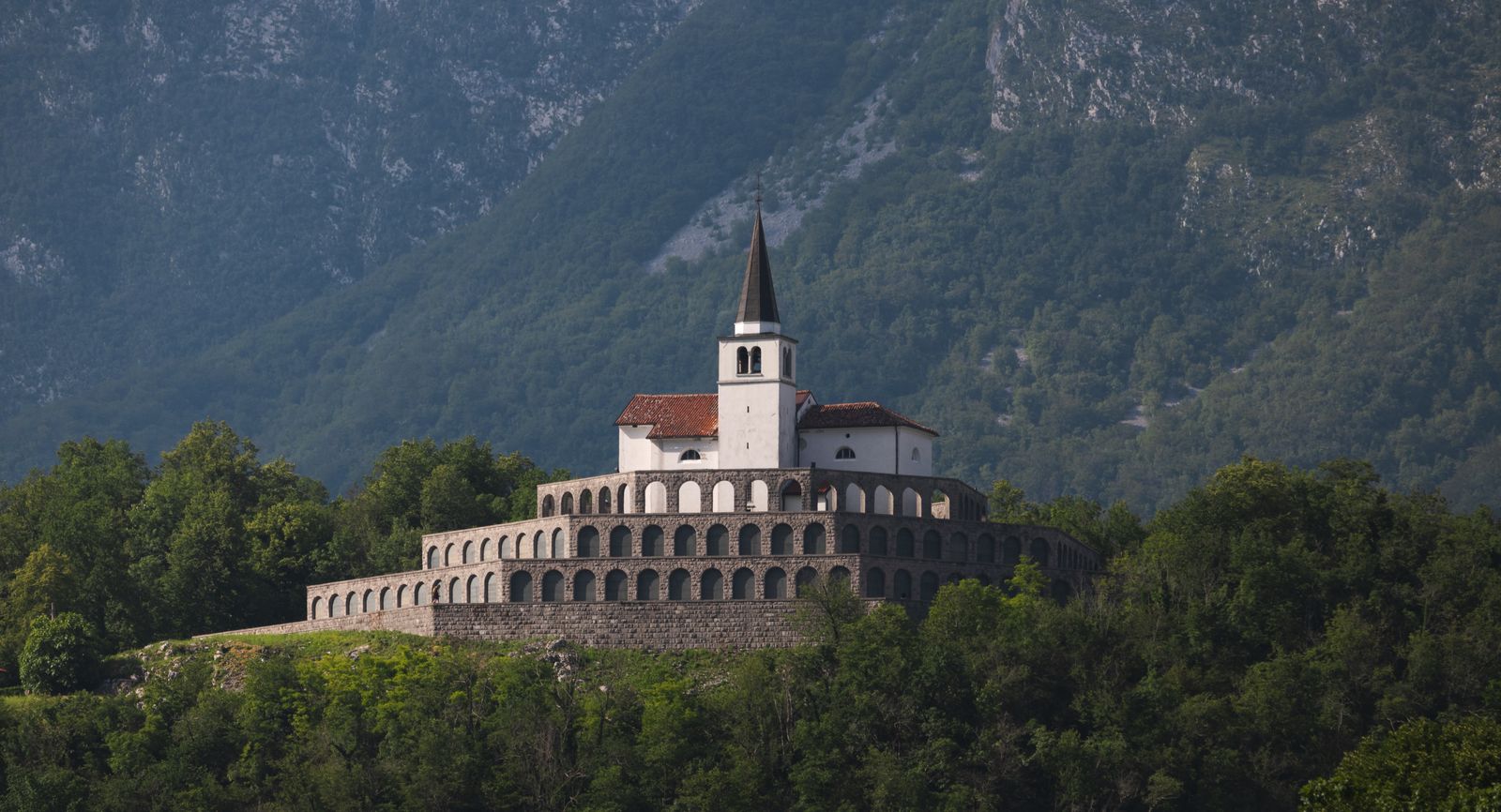
The Soça Valley was the scene of some of WWI’s most brutal mountain fighting — the Isonzo Front, 12 battles from 1915–1917. The Kobarid Museum (Hemingway’s A Farewell to Arms was based partly on events here) is the finest WWI museum in the Balkans.
1h from Bovec. Postojna Cave — 24km of caverns with a narrow-gauge train through the first 3.7km, then a guided walk through Cathedral-scale chambers with stalactites formed over 5 million years. The Proteus anguinus (human fish, a blind cave salamander found only in the Dinaric karst) lives here.
The Postojna Cave train (running since 1872, the first cave railway in the world) takes visitors 3.7km into the mountain at 10km/h through formations the size of cathedrals. The Brilliant (a 45cm pure white stalactite calcite formation) is the most famous single object.
9km from Postojna. Predjama Castle (1570) is built into a 123m cliff face, emerging from the cave behind it — the most dramatically situated castle in Europe. The cave system behind the castle allowed the 15th-century robber baron Erasmus of Lueg to be supplied for a year while under siege. Fly from Ljubljana for connections.
Erasmus of Lueg held Predjama Castle against the Habsburg army for over a year in 1484, supplied via the cave tunnel behind — until a servant revealed which window he used for his late-night toilet. He was killed by a cannonball while answering nature’s call.
🛂 Entry rules: EES and ETIAS
Slovenia is in the Schengen area, which has two EU border systems for non-EU visitors.
EES (in force): since 10 April 2026 the EU’s Entry/Exit System registers non-EU visitors’ passport details, fingerprints and a photo the first time they enter the Schengen area, replacing passport stamps. Allow extra time at the border on your first trip; later crossings are quicker. EU, EEA and Swiss citizens are not registered.
ETIAS (not yet running): a €20 online travel authorisation for visitors who don’t need a visa, such as UK, US, Canadian and Australian citizens. It hasn’t started and no start date has been confirmed, so nobody can apply yet; ignore websites that offer to “pre-register” you for a fee.
Visa-free visitors can stay up to 90 days in any 180-day period across the whole Schengen area, not per country.
Official information: EU: Travel to Europe (EES & ETIAS) · Reviewed September 2026
It uses licensed taxis at the regular fare. Ljubljana's compact centre is best explored on foot or by bicycle.
The Vrsic Pass, Souca Valley and Logarska Dolina are best by car.
Warmth comes through wine, food and outdoors conversations.
A restaurant meal: EUR 10-20. A day of kayaking on the Souca: EUR 40-60.
Ljubljana to Bled: 1h15. Ljubljana to Piran: 2h30.
Good day and thank you: appreciated by every Slovenian.
The only place to eat it properly.
The national pride is quiet and deep.
Quick answers to the questions people most often ask before visiting Slovenia.
May to September is ideal — Lake Bled at its most photogenic, the Julian Alps accessible, the Adriatic coast warm. July and August are peak with large crowds at Bled.
Ljubljana Jo&zetilde;e Puçnik (LJU) is the main hub. Adria Airways ceased operations in 2019; most flights now operate via Vienna, Frankfurt, Amsterdam or London. The country is compact and best explored by car.
Expect roughly €60–90 a day on a budget and €150–220 mid-range, or €300+ for a more luxurious trip, per person and excluding flights.
Slovenia uses the euro (€).
Plug types: Type C / F (two-pin, 230V).
Budget intercity buses across Slovenia and to neighbouring Austria, Croatia and Italy.
FreeBook Lake Bled tours, Postojna Cave entry, Triglav National Park hikes and Slovenian experiences.
FreeReserve tables at Slovenian restaurants in Ljubljana and the wine regions.
FreeBuy cross-border train tickets into Austria, Italy and Croatia from Slovenia.
FreeExplore Slovenia’s top city destinations — from Lake Bled to Ljubljana, each with its own distinct character.
Slovenia sits within easy reach of several other destinations — each with a completely different character.


