MD
Moldova
World's largest wine cellars & Europe's last Soviet republic
World's largest wine cellars & Europe's last Soviet republic
Moldova is Europe’s least-visited country and one of its most rewarding surprises — a small wine republic between Romania and Ukraine with a wine culture so embedded that underground cellars hold more wine than almost any country per capita on earth. Mileștii Mici and Cricova wine complexes are the world’s largest wine cellars, their tunnels running for tens of kilometres beneath the hills. Chisinău, the compact capital, has a pleasingly unhurried character; the monasteries of Old Orhei and Saharna are medieval cliff-face retreats of great beauty; and the breakaway territory of Transnistria offers the surreal experience of visiting a country that officially doesn’t exist. In the north, Soroca guards the Dniester with one of Eastern Europe’s finest medieval fortresses.
The world’s largest wine cellar by bottle count (over 1.5 million bottles at peak) runs through 55 kilometres of underground limestone tunnels navigated by car. Guided tours reveal the scale — streets named after wine varieties, vast vaulted chambers and a tasting room of memorable elegance. The Moldovan wines, particularly the Cabernet Sauvignon and Fetească Neagră (Black Maiden), are outstanding.
A complex of cave monasteries and stone churches carved into a limestone cliff loop above the Răut River — inhabited by monks since the 14th century. The cliff-face cells, rock-cut chapels and the surrounding Orheiul Vechi archaeological landscape of Greek, Dacian and Tatar ruins make this Moldova’s most rewarding cultural site.
A breakaway Soviet republic between the Dniester River and the Ukrainian border, unrecognised by any UN member state, Transnistria has a Lenin statue in its capital Tiraspol, its own currency, passports, army and postage stamps. Visiting is straightforward — day trips from Chișinău are popular with travellers seeking the most authentic surviving Soviet atmosphere in Europe.
Moldova (Wikipedia) →Fried or baked pastry filled with cheese, potato, sour cherry or pumpkin — the essential Moldovan street snack, sold hot from roadside stands and bakeries across the country. The fried version has a crispy, bubbly crust; the baked one is softer and lighter.
Minced pork and rice mixed with dill and thyme, rolled in fermented cabbage or vine leaves, slow-cooked in tomato and sour cream sauce — the Moldovan and Romanian national dish, served at every family celebration from Christmas to Easter.
A thick, golden polenta of coarse cornmeal — the peasant staple of Moldova and Romania, eaten with sour cream (smântânâ), sheep cheese (brinză) or fried egg. Considered comfort food in its purest form and the accompaniment to almost every traditional Moldovan dish.
Moldova has more vineyard per capita than almost any country on earth — the Purcari winery (est. 1827) produces Negru de Purcari, an excellent red blend. The local Fetească Neagră grape makes wines unlike anything found in Western Europe.
Aged brandy produced by the Divin distillery in Chişinău from local Fetească and Rkatsteli grapes — one of Europe’s finest and least-known brandies, with 10- and 15-year expressions that rival Armagnac. Moldova’s most prestigious export after wine.
Chisinau International (KIV) is the only airport. Wizz Air and FlyOne serve EU routes; Air Moldova connects to European hubs. Moldova is not in the EU but EU citizens enter visa-free.
Wizz Air has made Chisinau accessible from the UK with direct flights. Bucharest is the most convenient transit hub — 1h flight from Chisinau, and Bucharest has extensive connections to the UK and Western Europe.
Iasi in Romania is the closest major city to Chisinau (3h by bus via the Albita border crossing) — combining Moldova with Romanian Moldavia (Iasi, Suceava, the painted monasteries of Bucovina) is the natural travel circuit.
Chisinau trolleybuses and rutieras (minibuses) cover the entire city for MDL 3 per trip. The Yandex.Taxi app works well and is significantly cheaper than street taxis.
Car hire in Chisinau (MDL 400–900/day) is the most practical option for the wine route — Cricova, Milestii Mici, Chateau Vartely and Purcari are all outside the city and infrequently served by public transport.
May to September is the best window — Chisinau warm and leafy, the wine cellars of Cricova and Milestii Mici accessible, the vineyards in full growth. August and September are harvest season — the best time to visit the wineries. October brings golden vines and cooling temperatures.
📅 Moldova is in its best season in April, May, June, July, August, September, October. See where else is good to go in those months, or browse where to go by month.
Moldova is the cheapest country in Europe for travellers — cheaper than Kosovo or Albania, with wine at prices that would be unthinkable in France or Italy. The Moldovan Leu (MDL) is the currency.
Mamaliga (cornmeal polenta, Moldova’s staple food) + sarmale (cabbage rolls stuffed with pork and rice, braised in tomato) + a glass of house Cabernet costs MDL 80&ndash.
A bottle of Negru de Purcari 2019 (the wine served at King Charles III’s coronation) costs MDL 150–250 at a Chisinau supermarket or MDL 300–500 at a restaurant — approximately €7–14.
A private Cricova experience (electric car tour through the underground city, access to the historic cellars, tasting of premium vintages with a sommelier) costs MDL 1,500&ndash.
Chisinau for two days, Cricova winery for one, Milestii Mici for one, Orheiul Vechi for one, the Codru forest for one, Transnistria for one. Moldova is Europe’s least-visited country and produces some of the finest wine on the continent.
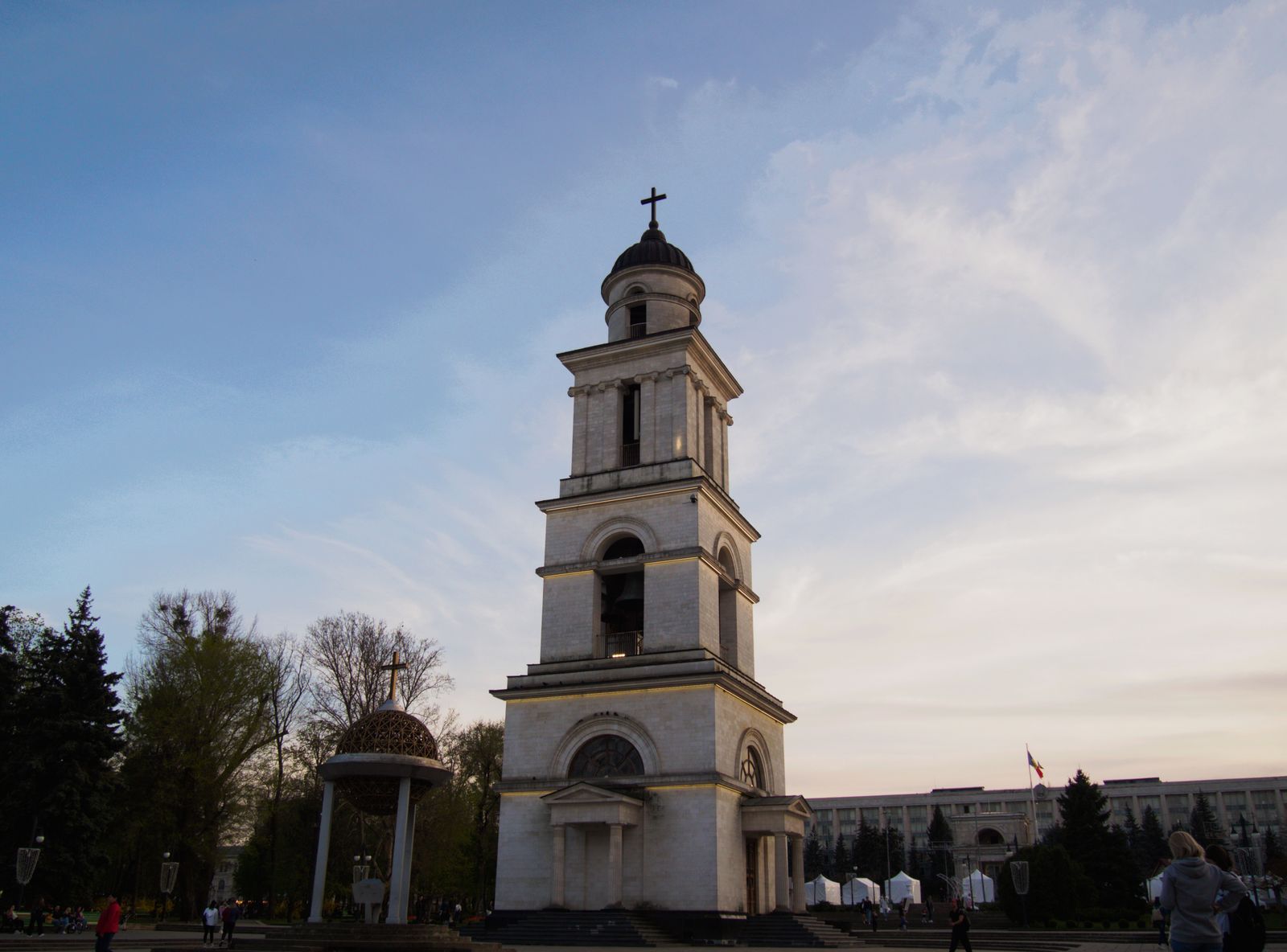
Chisinau (Kishinev) — the capital of Europe’s least-visited country — is a city of Soviet boulevards, Orthodox churches and wine bars, with a distinctive 19th-century neoclassical centre rebuilt after the 1940 earthquake. The Central Market (Piata Centrala), the Cathedral Park and the National History Museum of Moldova.
Moldova was part of the Romanian Kingdom until 1940, when Stalin annexed it as the Moldavian Soviet Socialist Republic under the Molotov-Ribbentrop Pact. The country has been independent since 1991 but remains divided — Transnistria (eastern Moldova) is a breakaway pro-Russian territory that has not been under Chisinau’s control since 1992.
Chisinau has developed one of Eastern Europe’s most notable urban wine bar scenes — the Et Cetera, Carpe Diem and La Strada bars all serve Moldovan wines by the glass, including international award-winners from Purcari, Chateau Vartely and Cricova. The National Museum of Fine Arts (the finest collection of Romanian and Moldovan painting in the country).
Moldova produces approximately 1 million hectolitres of wine per year from 148,000 hectares of vines — more wine per capita than any country in the world. The red Negru de Purcari blend (Cabernet Sauvignon + Rara Neagra + Saperavi) was served at the coronations of Queen Elizabeth II in 1953 and Charles III in 2023.
15km from Chisinau. Cricova (founded 1952 in a former limestone quarry, now 120km of underground streets with wine cellars, a vast collection including wines confiscated from Nazi Germany and Hermann Göring’s private cellar) is the most striking winery in Eastern Europe — visitors tour by electric car underground.
The Göring wine collection in Cricova — seized by Soviet forces advancing west in 1944 and transported to the underground cellars — includes thousands of bottles of German, French and Italian wine from the 1930s. Some bottles from the collection are still in the cellar; none are available for sale.
18km from Chisinau. Milestii Mici holds the Guinness World Record for the largest wine collection — 1.5 million bottles in 200km of underground passages, the streets named after grape varieties. Guests tour by car and taste directly from the barrel in chambers that maintain 12°C year-round.
Milestii Mici’s underground city has street signs, traffic rules and named boulevards (Chardonnay Street, Cabernet Avenue) — the passages are wide enough for two cars to pass. The deepest cellars are 85m below ground. The collection includes wines from every vintage from 1969 onward.
50km from Chisinau. Orheiul Vechi (Old Orhei) — a limestone cliff above the Raut River, where a 13th-century cave monastery cut directly into the rock has been inhabited by Orthodox monks almost continuously for 700 years. The surrounding landscape of river bends, orchards and Moldovan villages is the finest in the country.
The cave monastery at Orheiul Vechi was established by Orthodox monks in the 14th century in a rock face already inhabited since the Paleolithic period — the site shows 10,000 years of continuous human use. A small community of monks still lives in the cave cells, accessible by a carved staircase in the cliff face.
1h30 from Chisinau. Transnistria (officially the Pridnestrovian Moldavian Republic — recognised by no UN member state) — a pro-Russian breakaway territory that froze its politics in 1992 — has its own currency, army, passport and Lenin statues. Tiraspol, its capital, is the most Soviet-looking city in Europe.
Transnistria’s currency (the Transnistrian ruble) is legal tender only within the territory and cannot be exchanged elsewhere. It features images of the river, the presidential palace and General Suvorov (the Russian general who founded Tiraspol in 1792). Visitors receive a migration card at the border that must be returned on exit.
50km from Chisinau. The Codru Nature Reserve (the oldest nature reserve in Moldova, 5,000 hectares of ancient Moldovan oak and hornbeam forest, established 1971, accessible by trail) and the village of Hirjauca (traditional Moldovan farmhouse architecture, pottery workshops, local wine). Fly from Chisinau (KIV).
The Codru forest is dominated by pedunculate oak (Quercus robur) trees estimated at 300–500 years old — some of the oldest trees in Moldova. The reserve is one of the last remnants of the Getic Steppe forest that once covered the entire Moldovan plateau.
Visa-free for EU, UK, US, Australian and most Western nationalities for stays up to 90 days.
Connected to Bucharest (30 min), Vienna, Frankfurt, Istanbul, London, Warsaw. Very affordable European destination.
The MDL is the currency. Very low cost of living by European standards. Cards accepted in Chişinău; carry cash outside.
The eastern region of Transnistria operates as a de facto independent state with Russian peacekeepers. It can be visited as a day trip from Chişinău with relative ease — a Soviet time-capsule experience.
Wine is cheap at source; buy directly from the cellar door at Mileștii Mici or Cricova for good value.
Quick answers to the questions people most often ask before visiting Moldova.
May to September is the best window — Chisinau warm and leafy, the wine cellars of Cricova and Milestii Mici accessible, the vineyards in full growth. August and September are harvest season — the best time to visit the wineries.
Chisinau International (KIV) is the only airport. Wizz Air and FlyOne serve EU routes; Air Moldova connects to European hubs. Moldova is not in the EU but EU citizens enter visa-free.
Expect roughly MDL 350–600 a day on a budget and MDL 1,200–2,200 mid-range, or MDL 4,000+ for a more luxurious trip, per person and excluding flights.
Moldova uses the Moldovan Leu (MDL).
Plug types: Type C / F (two-pin, 230V).
Point your camera at menus, signs or street text for instant translation. Download the language pack offline before you arrive for full use without data.
FreeReal-time and offline exchange rates for all world currencies — converts prices instantly so you always know what you are paying in your home currency.
FreeFind and book hotels, guesthouses and apartments with free cancellation on most rates — one of the widest selections of accommodation worldwide.
FreeBrowse millions of traveller reviews for restaurants, attractions and hotels — helps identify the best local spots and avoid tourist traps.
FreeMoldova sits within easy reach of several other destinations — each with a completely different character.


