FR
France
From Paris cafés to Provence villages
From Paris cafés to Provence villages

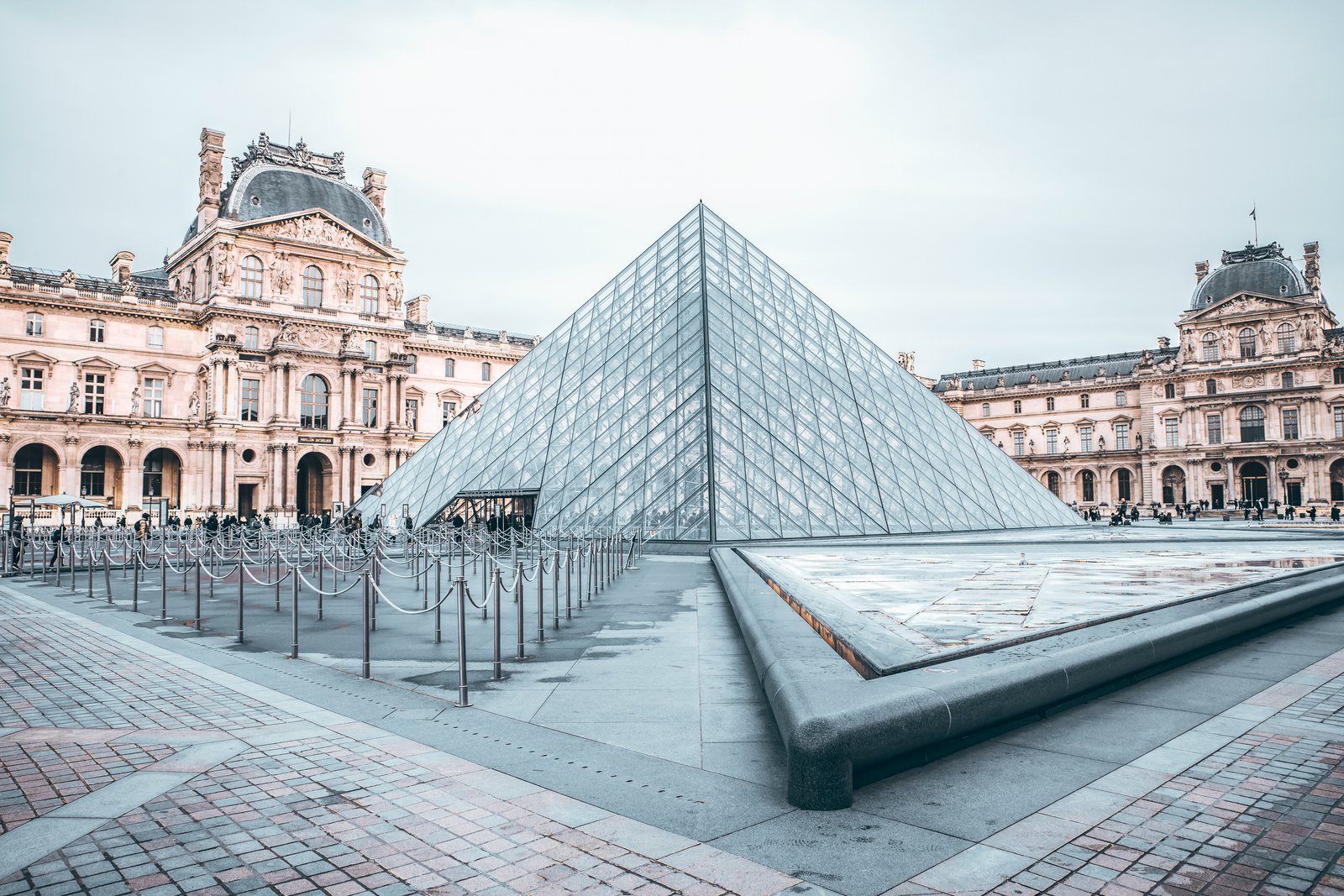
The Eiffel Tower illuminated at night above the Seine, and the Louvre’s glass pyramid above 380,000 artworks. Paris rewards those who walk: the covered passages, the Canal Saint-Martin, the Marais medieval quarter and the Left Bank bookshops are all within a walkable city.
Photo: Benh LIEU SONG, Public domain

Over 300 chateaux concentrated in one river valley: Chambord (440 rooms, double-helix staircase), Chenonceau (spanning the River Cher), Azay-le-Rideau (reflected in its moat). More Renaissance chateaux in one valley than anywhere else on earth — Chambord, Chenonceau, Azay-le-Rideau all within an hour of each other.
Photo: User:Elementerre, CC BY-SA 3.0

The lavender fields of the Valensole Plateau (June-July), the perched villages of the Luberon, the Pont du Gard Roman aqueduct and the ochre cliffs of Roussillon make the Provence countryside one of France’s most quietly beautiful regions.
Photo: Ylliab Photo, CC BY-SA 2.0

A Gothic abbey on a tidal island, connected to the mainland by a causeway that disappears at high tide. Built from the 11th century on a rocky island above the highest tidal range in Europe. Three million people visit each year, and it’s still worth every step.
Photo: Hans Hillewaert, CC BY-SA 3.0
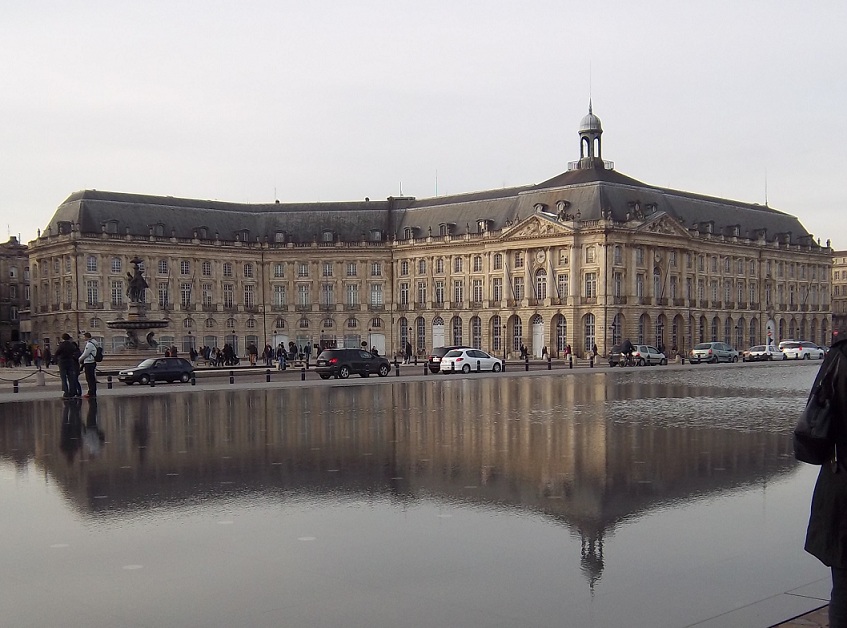
A UNESCO-listed port city rebuilt in the 18th century as the capital of the Bordeaux wine trade. Saint-Emilion’s medieval village and the Medoc chateaux are 30 minutes away. The wine museum La Cite du Vin is worth an afternoon.
Photo: Kattusa24, Public domain

The Alsace Route des Vins: 170km of half-timbered villages, Riesling and Gewurztraminer vineyards and the beautiful old city of Colmar.
Photo: Patrick Nouhailler's…, CC BY-SA 3.0

Nice’s Promenade des Anglais, the perched village of Eze, the Principality of Monaco and the most glamorous coastline in Europe. Avoid July and August. Come in May or September instead — same sea, empty beaches.
Photo: Staeiou, CC BY-SA 3.0

The Aiguille du Midi cable car to 3,842m above Chamonix, with Mont Blanc (4,808m, the highest peak in the Alps) above it. Summer hiking on the Mer de Glace and winter skiing on 150km of linked pistes.
Photo: Jacek Rużyczka, CC BY-SA 4.0
A croissant is the correct French breakfast: flaky, buttery, eaten at a zinc bar with espresso. The quality at a good boulangerie is unlike anything sold internationally under the same name.
Chicken slow-cooked in red Burgundy wine with lardons, mushrooms and pearl onions. The definitive French country dish.
A Marseille fish stew of at least three types of fish and shellfish in a saffron-garlic broth, served with rouille (chilli aioli) and croutons. Disputed versions exist; the original is from the Old Port.
Entrecote grilled to medium-rare, served with hand-cut fries and a Bearnaise or red wine reduction sauce. Order it saignant (rare) at any Parisian brasserie and you’ll understand why it needs nothing else.
Bordeaux, Burgundy, Champagne, Alsace, Rhone, Loire: the six wine regions that define world wine culture. A carafe of house wine at a Parisian bistro costs less than a soft drink.
Tuna, hard-boiled egg, anchovy, tomato, green beans, olives and potato on lettuce, dressed with vinaigrette. Disputed (purists reject tuna); universally eaten along the Riviera.
An upside-down caramelised apple tart, invented accidentally at the Hotel Tatin in Lamotte-Beuvron in the 1880s. Served warm with creme fraiche.
Order un café, stand at the bar, and watch Paris start its day. The whole thing costs under a euro and takes four minutes. That’s the point.
France is one of the world’s best-connected countries. Paris CDG is a major global hub with direct flights from 280+ destinations; from the UK, Eurostar runs city-centre to city-centre in 2h15. Within France, the TGV does the rest. For regional guides and trip inspiration, see the official France tourism portal.
United and American also codeshare into CDG. La Compagnie flies business-only from Newark — worth checking for premium fares.
Eurostar check-in closes 30 min before departure — arrive at St Pancras 45 min early. Budget OUIGO runs Paris–London from €19.
easyJet, Ryanair and Vueling connect dozens of European cities to CDG, ORY and Beauvais — often under €50 booked ahead.
Air France and SkyTeam partners connect onward to Nice, Lyon and Marseille after CDG — no need to return to Paris for a domestic connection.
CDG Terminal 2 is the Air France hub. The free CDG-Val shuttle links all terminals in under 10 minutes.
Book on SNCF Connect or Trainline. Buy 90 days out for the cheapest Ouigo fares — Paris to Lyon from €10.
April, May, September and October are the sweet spot — good weather, manageable crowds and open restaurants. July and August are France at its busiest and most expensive. Paris in August is a special case: tourists pack the landmarks while the Parisians themselves have left for the coast.
France spans a huge price range. The numbers below are per person per day — excluding flights — assuming you’re travelling as a couple.
The €14.50 formule — starter, main and a glass of wine — at a neighbourhood bistro is one of the best-value meals in Europe.
A hotel in the Marais or Saint-Germain, lunch with wine, and a dinner worth remembering. This is the sweet spot.
Paris palaces (Le Bristol, Ritz, George V) start around €800/night. Michelin tasting menus at top tables run €280–400 per person.
Three days in Paris, a Loire Valley day trip, an overnight in Lyon (non-negotiable for the food), and two days in Provence and the Riviera. This covers Paris without exhausting it, and gives a real sense of the country beyond the capital — all on the TGV.
Drop your bags in the Marais and walk to the Seine. Grab a wine on Rue de Bretagne. Don’t try to do too much on day one — jet lag is real and Paris rewards the unhurried.
Load tickets onto a Navigo Easy card or use the Bonjour RATP app; a single metro ticket is €2.55. The Marais puts you within walking distance of Notre-Dame, the Louvre and the Bastille.
Book the Louvre in advance and arrive at 9am sharp. Head straight for the Denon wing. Afternoon: cross to Saint-Germain — Shakespeare & Company, the Luxembourg Gardens, a coffee at Café de Flore.
Skip the Eiffel Tower queue today. The view from the Trocadéro at sunset is free and just as good.
Walk up to Montmartre early (before 9am) — Sacré-Cœur, the vineyard, the quiet backstreets. Afternoon: Musée d’Orsay for the Impressionists. Evening: Eiffel Tower (book the summit in advance).
The tower sparkles for five minutes on the hour after dark. The 11pm display from the Trocadéro is worth staying up for.
Rent a car or join a tour — drive 2h to Chambord (440 rooms, a double-helix staircase Leonardo da Vinci may have designed). Then 45 min south to Chenonceau, spanning the River Cher. Back to Paris by evening.
Chambord opens at 9am. Arrive early — it fills by midday. Hire bikes on-site to explore the estate without the crowds.
TGV to Lyon: 2 hours, trains every 30 minutes. Check in, then spend the afternoon in Vieux-Lyon’s traboules — hidden passageways cut through Renaissance buildings. Dinner at a bouchon lyonnais.
The Halles de Lyon Paul Bocuse market (Tue–Sun mornings) is the best place in France to understand what serious food actually looks like.
TGV south to Avignon (1h from Lyon). The Palais des Papes dominates the city. An hour’s drive brings you to the Pont du Gard: a Roman aqueduct built in 19 BC, still standing to its full height, still extraordinary.
Arles is smaller and less touristy than Avignon — Van Gogh painted 300 works here. You can follow his exact spots on a self-guided walk.
Train from Avignon to Nice (3h). Walk the Promenade des Anglais, then get lost in Vieux-Nice. Take the bus to Èze village for the view. Evening flight home from NCE, or stay another night and take your time.
The Chemin Nietzsche — a steep path from Èze village down to the sea — is one of the most beautiful short walks on the Riviera. Wear proper shoes.
🛂 Entry rules: EES and ETIAS
France is in the Schengen area, which has two EU border systems for non-EU visitors.
EES (in force): since 10 April 2026 the EU’s Entry/Exit System registers non-EU visitors’ passport details, fingerprints and a photo the first time they enter the Schengen area, replacing passport stamps. Allow extra time at the border on your first trip; later crossings are quicker. EU, EEA and Swiss citizens are not registered.
ETIAS (not yet running): a €20 online travel authorisation for visitors who don’t need a visa, such as UK, US, Canadian and Australian citizens. It hasn’t started and no start date has been confirmed, so nobody can apply yet; ignore websites that offer to “pre-register” you for a fee.
Visa-free visitors can stay up to 90 days in any 180-day period across the whole Schengen area, not per country.
Official information: EU: Travel to Europe (EES & ETIAS) · Reviewed September 2026
The TGV high-speed rail network connects Paris to Lyon (2h), Bordeaux (2h), Marseille (3h10) and Nice (5h30).
A Paris brasserie meal: EUR 25-40. A provincial French restaurant serving better food: EUR 15-25.
Say Bonjour first — always, before any request. It changes everything.
The 20 arrondissements are all walkable from each other. Public bikes (Velib) are available throughout.
Paris’s best restaurants book out weeks ahead. For a same-day table, arrive when they open (noon or 7pm).
Half of Paris leaves in August. Boulangeries close, restaurants shut for weeks, the city feels hollowed out. September is when Paris is at its best — golden light, open tables, fewer tourists.
Many shops close on Sundays. Markets run Sunday morning. Plan accordingly.
These three words alone will get you very far. The French appreciate effort, not perfection.
Quick answers to the questions people most often ask before visiting France.
April to June and September to October are the most pleasant months, with mild weather and fewer crowds than July and August, when the coast is busiest. Ski season in the Alps runs roughly December to April.
Paris Charles de Gaulle (CDG) and Orly (ORY) are the main international airports, with Nice, Lyon and Marseille also well served. Eurostar trains link London and Paris in about 2 hours 20 minutes, and high-speed TGV trains connect Paris with most major cities.
Expect roughly €60–80 a day on a budget and €150–200 mid-range, or €350+ for a more luxurious trip, per person and excluding flights.
France uses the euro (€).
Plug types: Type C / E (two-pin, 230V).
France’s official rail app — book TGV and intercity tickets, check live departure boards and manage your journey on the go.
FreeDoor-to-door urban transit routing — metro, bus, bike and walking combined.
FreeBook a seat in a private car between French cities from €5–15 — France’s most popular and affordable intercity travel option.
FreeReserve a table at 12,000+ French restaurants with instant confirmation — many slots include discounts of up to 50%.
FreeBuy TGV, TER and Eurostar tickets in English with fare comparison — also covers FlixBus and long-distance coaches across France.
FreeFrance’s six great city destinations each have a completely distinct personality — from the Riviera glamour of Nice to the medieval wine village streets of Strasbourg.
France shares borders with eight countries and sits within easy reach of several more — each with a completely different character.


