XK
Kosovo
Europe's youngest country, frescoed monasteries & Prokletije peaks
Europe's youngest country, frescoed monasteries & Prokletije peaks
Kosovo, Europe’s newest country (declared independence 2008), is a small but energetic republic whose young, predominantly Muslim population has channelled extraordinary creative energy into a capital city that punches far above its weight. Pristina buzzes with street art, craft coffee shops, a pulsing arts scene and a population whose median age is 28 — the youngest in Europe. The medieval Serbian Orthodox monasteries of Visoki Dečani and Gračanica, both UNESCO World Heritage Sites, are masterpieces of medieval fresco painting — extraordinary that they stand intact after centuries of tumult. The Rugova Canyon and the mountains of the Prokletije (“Accursed Mountains”) offer some of the Balkans’ finest hiking.
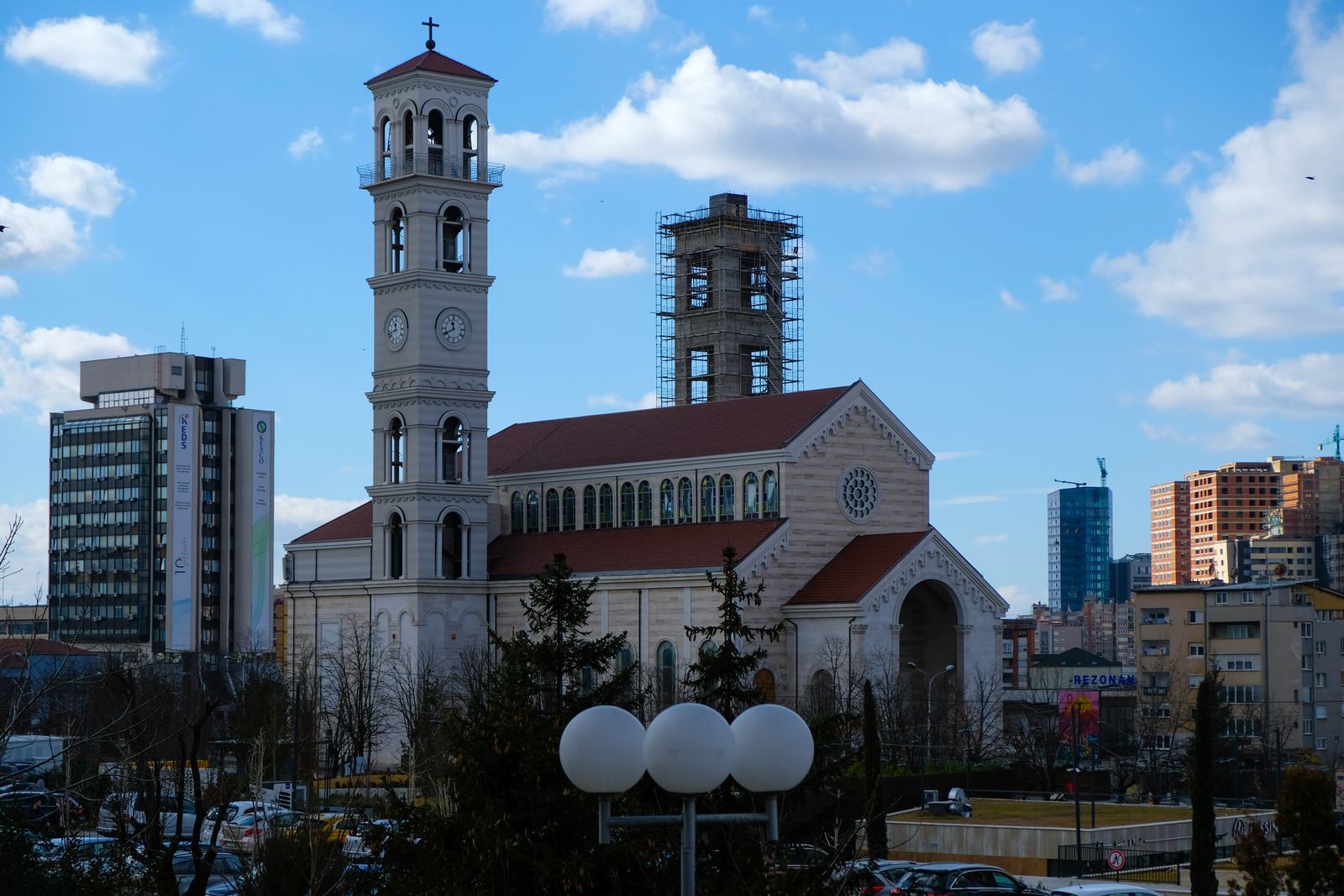
The world’s youngest capital city has an infectious energy — the NEWBORN sculpture, the enormous Bill Clinton Boulevard, the National Library (a deliberate architectural provocation), the Ottoman Bazaar and the Grand Hotel are all imbued with the particular spirit of a people who have survived remarkable adversity. The café and bar scene is excellent; the street art district around Zahir Pajaziti Square is among the most creative in the Balkans.
Serbia’s greatest medieval monument, built in the 14th century and containing the most complete cycle of medieval fresco painting in the world — over 1,000 individual compositions in extraordinary condition. The monastery, guarded by NATO peacekeepers, stands in a beech forest near the Albanian border and is one of the most moving and beautiful religious sites in the Balkans.
The Rugova Canyon near Peć (Peja) is a dramatic limestone gorge leading into the Prokletije Alps — called the Accursed Mountains because their vertical rock faces once made passage almost impossible. Today they offer some of the Balkans’ finest hiking with waymarked trails, mountain huts and peaks above 2,500 metres.
Kosovo (Wikipedia) →A layered crepe pastry cooked slowly under a metal lid (saç) with live embers — the most important ceremonial dish of Kosovo, served at weddings and Eid celebrations. Each layer of batter is poured and cooked in turn; a large flia takes hours to prepare.
Lamb baked in a casserole of thick yogurt, eggs and butter until set with a golden crust — one of the oldest Albanian-Kosovar dishes, eaten at family celebrations. The Elbasan version is considered definitive; Kosovo cooks add their own spicing.
Flaky filo pastry filled with minced meat, cheese or spinach, baked in a round pan and eaten for breakfast with cold yoghurt — the shared culinary legacy of the Ottoman Balkans and one of the defining everyday foods of Kosovo.
Albanian and Kosovar baklava uses walnut filling soaked in a lighter honey and rose water syrup — less sweet than Turkish versions, eaten in thin strips. Pristina has pastry shops making baklava since the Ottoman era.
Plum or grape fruit brandy produced in farmhouses and shared at gatherings — the traditional spirit of Kosovo and the wider Balkans. Domestic raki is considerably stronger than commercial versions; a glass before a meal is an expression of hospitality throughout the country.
Beef and lamb sausage seasoned with paprika, garlic and black pepper, dried then grilled — a Kosovar speciality with Ottoman origins, sold at every pazar (market) and grilled to order at traditional restaurants alongside ajvar (roasted pepper spread).
Pristina Adem Jashari (PRN) is the only international airport. Wizz Air, easyJet and Turkish Airlines serve European routes. Kosovo is not in the EU or Schengen; a separate visa may be required for some nationalities. For trip planning, see the official Kosovo tourism portal.
💡 Wizz Air operates multiple weekly London–Pristina direct flights from Gatwick and Luton in 3 hours. Turkish Airlines via Istanbul has the highest frequency and most connections.
💡 Kosovo combines naturally with Albania (4h) and North Macedonia (2h) for a western Balkans circuit. Note: entry to Kosovo via Serbia can complicate subsequent Serbian visa stamps — research current border crossing rules.
💡 Pristina Bus Station connects to all Kosovo cities and neighbouring Albania, North Macedonia and Montenegro. The Pristina–Prizren bus runs hourly for €3 and is the most used intercity route in Kosovo.
💡 Car hire in Pristina (€20–35/day) is the best option for the monastery circuit (Decani–Patriarchate–Gracanica) in a single day. Roads between main cities are good; the Rugova Canyon road is winding but sealed.
April to October is the best window — Pristina’s cafe terraces at full tilt, the Rugova mountains accessible, the medieval monasteries clear of snow. July and August are warm (28–32°C). Winter brings snow to the Balkans’ newest country but the ski resort of Brezovica has good conditions.
Kosovo is one of the cheapest countries in Europe — cheaper than Albania or North Macedonia, with excellent Balkan food at prices that reflect the GDP of Europe’s poorest country. The euro is used despite Kosovo not being in the EU.
Tavall — a traditional Kosovo set meal served in clay pots: white bean soup (fasulja), pickled vegetables, bread, cheese and a main of grilled lamb or veal — costs €4–8 at a traditional restaurant and is the most.
Kosovan rakia — grape or plum brandy, home-produced by virtually every rural family, served as welcome and farewell and at every meal — is the region’s most important social lubricant.
Hotel Dukagjini in Peja and the DoubleTree by Hilton in Pristina are Kosovo’s best hotels — from €80–180/night, at Western hotel standards in a country where everything else costs a fraction of European prices.
Pristina for two days, the Peç/Peć monasteries for one, Prizren for two, the Rugova Canyon for one, Gracanica for one. Kosovo — Europe’s newest country (independence 2008) — is one of the most undervisited destinations on the continent.
Pristina is Europe’s youngest capital city — Kosovo declared independence from Serbia on 17 February 2008, recognised by 102 countries. The city’s energy is remarkable for its size: the NEWBORN sculpture (orange block letters, redecorated every independence anniversary), the Bill Clinton Boulevard (named for the US president whose NATO intervention ended the 1998–1999 war), the packed Dardania cafe strip.
💡 The Bill Clinton statue on Bill Clinton Boulevard shows the former president with his right hand raised, a rolled-up document in his left — directly in front of the Hillary Clinton boutique. Clinton’s decision to intervene with NATO air strikes in 1999 is credited by most Kosovars with preventing mass ethnic cleansing.
The Kosovo Museum (archaeological collection from the Neolithic to the Ottoman period, in the former Ottoman-era Grand Bazaar building) and Germia Regional Park (beech forest 3km from the city centre, the outdoor recreation space for the entire Pristina population). The Grand Café strip on Agim Ramadani Street for the evening.
💡 Kosovo’s Neolithic settlement at Vinsa (near Pristina) dates from 5700–4500 BCE — one of the most important prehistoric sites in the Balkans, with evidence of Europe’s first writing system (the Vinca script, predating Sumerian cuneiform by 2,000 years according to some researchers).
2h30 from Pristina. Visoki Deçani (founded 1327–1335 by the Serbian King Stefan Urôs III, UNESCO World Heritage Site) is the largest and best-preserved medieval church in the Balkans — the frescoes covering 1,000m² of interior wall space are the most extensive and finest survival of medieval Serbian art anywhere.
💡 Visoki Deçani is guarded by a KFOR (NATO Kosovo Force) military detachment — it has been protected by Italian and other NATO troops since 1999 to prevent attacks by ethnic Albanian extremists who consider it a Serbian nationalist symbol. The monks and the NATO soldiers coexist in a genuinely unique arrangement.
40 min from Deçani. The Patriarchate of Peć (a complex of four medieval churches from the 13th–14th century, the seat of the Serbian Orthodox Patriarchate, with frescoes of extraordinary quality) and the Rugova Canyon — a 25km limestone gorge with vertical walls 1,000m high and the fastest-growing adventure sports destination in the western Balkans.
💡 The Rugova Canyon Peaks of the Balkans trail (a 192km multi-day hiking circuit through the mountains of Kosovo, Montenegro and Albania) has become one of Europe’s most acclaimed long-distance trekking routes since its development in 2013. The trail opens in June and closes with snow in October.
2h from Peja. Prizren — Kosovo’s most beautiful city, a mixture of Ottoman mosques and bazaars, Byzantine churches and Albanian stone houses in a river valley below a medieval fortress — is the cultural capital of Kosovo. The Sinan Pasha Mosque (1615), the Old Stone Bridge and the Kosovo Dokufest film festival (August).
💡 Prizren’s old town is the best-preserved Ottoman urban landscape in Kosovo — the Shadervan fountain, the arched stone bridge over the Bistrica, the bazaar streets with coppersmiths and textile sellers. The annual Dokufest documentary film festival has made Prizren one of the most unexpectedly cultural cities in the western Balkans.
The Prizren Fortress (Kalaja, a medieval Albanian-Serbian-Ottoman fortress above the city with panoramic views of the Pashtrik mountains) and the League of Prizren building (1878, where Albanian leaders met to resist Ottoman withdrawal from Albanian-populated lands — the founding moment of the Albanian national movement).
💡 The League of Prizren (1878) was the first formal Albanian national political organization — a response to the Congress of Berlin’s transfer of Albanian-populated territories to Montenegro and Serbia. It is the foundational event of Albanian national identity and deeply revered in both Kosovo and Albania.
20 min from Pristina. Gracanica Monastery (1321, Serbian Orthodox, UNESCO World Heritage Site) — a perfectly proportioned Byzantine church with the finest 14th-century frescoes in Kosovo, still an active monastery — surrounded by a Serbian community in the middle of predominantly Albanian Kosovo. Fly from Pristina Adem Jashari (PRN).
💡 Gracanica Monastery is painted with 900-year-old frescoes covering every centimetre of the interior in overlapping layers of Byzantine iconography — the Last Judgement, the Dormition of the Virgin, the full Menologion (saints for every day of the year). It is one of the finest medieval interiors in the Balkans and still used for daily services.
EU/UK/US/Australian citizens enter visa-free. Kosovo is not recognised by all countries — check if a Kosovo entry stamp will cause issues with any other country you plan to visit (notably Serbia).
Kosovo and Serbia do not recognise each other. Entering Kosovo from Serbia may bar entry to Serbia later. Check current rules for your nationality.
Kosovo uses the euro as its official currency despite not being an EU member. Cards accepted in Pristina; cash elsewhere.
Kosovo has the youngest population in Europe. People are genuinely welcoming to foreign visitors and proud to share their country’s story.
Kosovo uses the euro despite not being an EU member — convenient for most European visitors.
Pristina and tourist areas are generally safe. The monasteries are in areas with some political sensitivity — normal precautions apply.
— Good coverage in towns; useful for monastery and canyon visits.
FreePoint your camera at menus, signs or street text for instant translation. Download the language pack offline before you arrive for full use without data.
FreeReal-time and offline exchange rates for all world currencies — converts prices instantly so you always know what you are paying in your home currency.
FreeBrowse millions of traveller reviews for restaurants, attractions and hotels — helps identify the best local spots and avoid tourist traps.
FreeFrom the young capital Pristina to the Ottoman bazaar of Gjakova and the divided bridge of Mitrovica — Kosovo’s most extraordinary destinations.
Kosovo sits within easy reach of several other destinations — each with a completely different character.


