PF
French Polynesia
Bora Bora, drift-diving sharks & the soul of the South Pacific
Bora Bora, drift-diving sharks & the soul of the South Pacific
French Polynesia is 118 islands scattered across an ocean territory the size of Western Europe — five archipelagos of volcanic peaks, coral atolls and turquoise lagoons that represent the South Pacific ideal at its most perfect. Bora Bora, with its dramatic basalt peak rising above a turquoise lagoon ringed by white-sand motu (islets) and overwater bungalows, is arguably the world’s most recognisable luxury destination. Mo’orea’s twin bays and volcanic spires are equally striking. The Marquesas Islands — remote, rugged and archaeologically rich — inspired Herman Melville, Robert Louis Stevenson and Paul Gauguin, who is buried in Hiva Oa. The Tuamotu atolls offer the world’s finest drift diving through passes teeming with sharks, manta rays and dolphins.
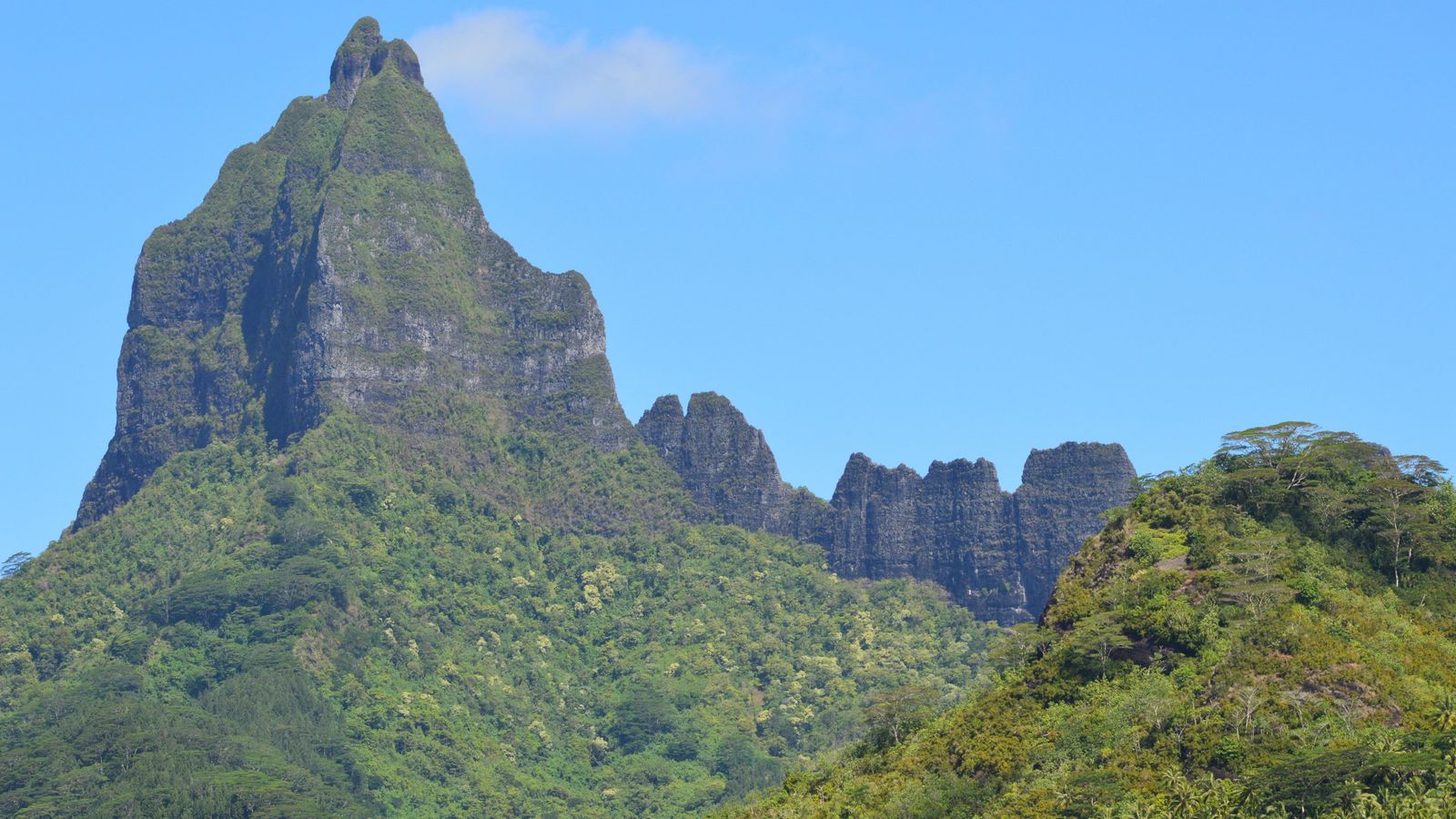
The world’s most famous island — a dramatic basalt peak (Mount Otemanu, 727m) rising from a turquoise lagoon of colour and clarity, surrounded by a coral reef enclosing white-sand motu. Overwater bungalows were invented here. Snorkelling with lemon sharks and sting rays in the lagoon, watching the sunset from the motu with Mount Otemanu in silhouette, and the drive around the main island are experiences that match any photograph.
Tahiti’s sister island, visible across the 17-kilometre strait, is a more affordable and arguably more beautiful alternative — Cook’s Bay and Opunohu Bay cut deep into the island between volcanic spires, with black-sand beaches, vanilla plantations and excellent hiking to the Belvedere viewpoint. Mo’orea is also one of the world’s best places to swim with spinner dolphins and humpback whales (July–November).
A UNESCO Biosphere Reserve and one of the world’s premier drift-diving destinations — the Garuae Pass and Tumakohua Pass at Fakarava funnel fish-rich Pacific water through the atoll at several knots, carrying divers past walls of hundreds of grey reef sharks and schools of fish in an underwater current of great power and beauty.
The remotest inhabited islands in the world — the Marquesas are dramatic, densely forested volcanic peaks with ancient stone tiki statues, marae (ceremonial platforms), traditional tattooing culture and the graves of Gauguin and Jacques Brel on Hiva Oa. The Aranui cargo-passenger ship makes a 14-day circuit of the islands from Papeete — one of the great voyages of the Pacific.
French Polynesia (Wikipedia) →Raw tuna marinated in lime juice and coconut milk with tomato and cucumber — the national dish of French Polynesia, eaten daily and served everywhere from beach shacks to resort restaurants.
Grilled mahi-mahi with lime butter and coconut rice — a common local catch.
A traditional feast cooked in an ahima’a earth oven: pork, fish, taro, breadfruit and po’e, a sweet fruit pudding.
The local lager, with the Tahitian woman on the label. Fresh coconut water is everywhere.
Highly aromatic vanilla, grown mainly on Taha’a and used in desserts and sauces.
Tahiti Fa’a’a International (PPT) in Papeete is the main hub. Air Tahiti Nui is the long-haul carrier; Air Tahiti serves all domestic inter-island routes. Los Angeles and Paris are the primary long-haul gateways. For trip planning, see the official Tahiti tourism portal.
Paris is the only European city with a direct connection to Papeete (Air Tahiti Nui, 17h). From the UK, route via Paris or Los Angeles.
Los Angeles is the most frequent gateway — Air Tahiti Nui and French Bee both operate LAX–PPT direct. Auckland is 5h and the most natural Pacific circuit connection.
Air Tahiti connects all major islands from Papeete. The Bora Bora Air Pass (Air Tahiti multi-island pass) offers discounted fares for pre-booked island-hopping sequences — the most cost-effective way to visit multiple archipelagos.
Car hire on Tahiti (XPF 6,000–12,000/day) and Mo’orea (XPF 5,000–10,000/day) gives freedom to explore. Bora Bora is small enough for a bicycle or motorscooter (XPF 2,000–4,000/day).
May to October is the dry season — Bora Bora’s lagoon at its clearest, the Marquesas most accessible, the humpback whale season peaking (August–October). July and August are the coolest and driest months (26–28°C). November to April is warmer and wetter; the overwater bungalows remain beautiful but brief tropical showers are frequent.
📅 French Polynesia is in its best season in May, June, July, August, September, October. See where else is good to go in those months, or browse where to go by month.
French Polynesia is the most expensive destination in the Pacific — higher than Hawaii and comparable to the Maldives. The CFP Franc (XPF) is pegged to the euro. Budget travel is possible but the famous overwater bungalows are in the splurge tier.
Poisson cru au lait de coco — raw tuna (a’hi) marinated in lime juice, mixed with fresh coconut cream, cucumber and tomato — is the national dish of French Polynesia.
Hinano (the Tahitian lager, brewed since 1955, the most recognisable brand in French Polynesia) costs XPF 400&ndash.
The Brando (Tetiaroa atoll, Marlon Brando’s private island, accessible only by private jet chartered through the hotel, with carbon-neutral electricity from coconut oil and desalination)
Tahiti for one day, Bora Bora for two, Moorea for two, the Tuamotu atolls (Rangiroa) for one, the Marquesas (Nuku Hiva) for one. French Polynesia — 118 islands spread across an ocean area the size of Europe — is the most beautiful island group on earth.
Tahiti (the main island, 1,042km², population 190,000) — Papeete market (the finest in the Pacific — vanilla, monoï oil, black pearls, fresh fish, taro and the poisson cru au lait de coco), the Museum of Tahiti and the Islands (the finest collection of Polynesian cultural objects in the Pacific, including navigational instruments used for open-ocean voyaging without instruments across 4,000km).
Paul Gauguin arrived in Tahiti in 1891, aged 43, fleeing European bourgeois society and looking for a primitive paradise. He found a Christianised, colonised society already changed by 100 years of European contact. His paintings, which depicted this partly imagined arcadia, produced some of the most valuable artworks in history; his personal conduct toward the local women he painted was, by modern standards, deeply problematic.
45-min flight from Tahiti. Bora Bora (29km², surrounded by a massive turquoise lagoon of 40km², with Mt Otemanu (727m) rising from the interior, visible from every direction on the lagoon) — consistently called the most beautiful island in the world, and not unconvincingly. The overwater bungalow, invented here in 1967, still defines the Bora Bora experience.
The first overwater bungalows were built at the Hôtel Bali Hai Mo’orea in 1967, created by three American backpackers who had run out of money and built basic bungalows on stilts over the lagoon as a budget solution. The concept spread to Bora Bora within a year and then to the Maldives, Southeast Asia and the entire luxury travel industry. The entire category began as a backpacker improvisation.
A full day on the Bora Bora lagoon — a half-day boat tour to the manta ray and black-tip reef shark snorkelling sites (the rays feed in a shallow sand channel, completely habituated to human contact, passing within arm’s reach) and the Coral Garden (a sheltered coral nursery in 1–3m of turquoise water). The sunset from Mount Pahia (661m, 3h hike from the road).
The Bora Bora black-tip reef sharks (Carcharhinus melanopterus) that gather at the shark feeding sites are one of the oldest tourist attractions in French Polynesia — the morning lagoon tour feeding site has been operating since the 1980s. The sharks show no aggression toward snorkellers; they are attracted by the fish offal from the tour operators.
30-min fast ferry from Tahiti or 10-min flight from Papeete. Mo’orea — heart-shaped, volcanic, surrounded by a turquoise lagoon and two perfect bays (Cook Bay and Opunohu Bay) flanked by jagged peaks — was where Marlon Brando fell in love with his co-star Tarita while filming Mutiny on the Bounty in 1960 and subsequently bought a nearby atoll (Tetiaroa).
Marlon Brando bought Tetiaroa atoll (a private atoll 50km from Tahiti) after filming Mutiny on the Bounty in 1962, married his Tahitian co-star Tarita, and spent the rest of his life periodically there. The atoll is now the most exclusive resort in French Polynesia: The Brando, from US$2,500–10,000/night for a private villa.
The Belvedere lookout (8km above Mo’orea, a paved road to 200m altitude giving a 360-degree view over the entire island, Opunohu Bay and Tahiti in the distance) and — August to October — humpback whale watching in the Mo’orea channel (humpbacks birth and nurse calves in the warm water between the islands; mother-and-calf pairs are reliably seen).
Mo’orea’s humpback whale population (Megaptera novaeangliae) arrives from Antarctic feeding grounds in July and departs in November. The calves are born in August–October in the warm, shallow channel between Tahiti and Mo’orea. Whale watching from shore is possible from the Belvedere; boat tours approach to within 30m of mother-calf pairs.
1h flight from Tahiti. Rangiroa (the world’s second-largest atoll by lagoon area, 79km × 32km, 245 motu — the Blue Lagoon, a turquoise pool within the lagoon with a natural sandbar) — the Tiputa Pass (drift diving through the atoll pass with dolphins, sharks and rays in the current, the finest drift dive in the Pacific).
The Tiputa Pass at Rangiroa is the most famous dive in French Polynesia — an incoming tidal current pushes divers effortlessly through the 100m-wide channel between the lagoon and the open Pacific, past grey reef sharks, silvertip sharks, manta rays, dolphin pods and the largest fish populations in the Tuamotu. The current can reach 4 knots; divers float rather than swim.
3h flight from Tahiti. Nuku Hiva (the largest Marquesan island, 339km², accessible jungle valleys, ancient stone tiki, the Hakaui Valley with the world’s second-highest waterfall and Herman Melville’s inspiration for Typee) — the most remote archipelago in French Polynesia, 1,500km from Tahiti. Fly from Nuku Hiva (NHV) to Tahiti (PPT).
Herman Melville deserted his whaling ship in Nuku Hiva in 1842 and lived for 4 weeks with the Typee people in the Taipivai valley — the experience he fictionalised in Typee (1846), his first and most popular book. The Taipivai valley is still accessible by boat from Taiohae; the Typee people’s descendants still live there.
French territory — EU citizens enter freely. UK, US, Australian and most Western nationalities enter visa-free up to 90 days.
The main hub. Air Tahiti connects to the other archipelagos: Society (Bora Bora), Marquesas, Tuamotus, Australs, Gambier.
French Polynesia is among the world’s most expensive destinations. Bora Bora overwater bungalows start at USD 1,000/night. Budget travellers should focus on pension (guesthouse) accommodation.
The overwater bungalow was invented at the Hotel Bali Hai on Raiatea in 1967. Bora Bora popularised the concept globally.
1 EUR = 119 XPF. Credit cards accepted in resorts and Papeete; carry cash on outer islands.
French Polynesia is very expensive — among the most expensive destinations in the world. Budget and mid-range options exist on Tahiti and Mo’orea; the overwater bungalow experience is luxurious but comes at a price.
Air Tahiti connects the main islands; the Aranui ship serves the Marquesas on a 14-day loop departing every 3 weeks.
Quick answers to the questions people most often ask before visiting French Polynesia.
Fly into Tahiti's Fa'a'ā International Airport (PPT) in Papeete. Direct flights take about 8 hours from Los Angeles and San Francisco and around 17 hours from Paris. Air Tahiti's domestic flights then connect to Bora Bora, Moorea by ferry, and the other islands.
French Polynesia is a French overseas collectivity. EU citizens enter freely, and UK, US, Australian and most Western nationalities can visit visa-free for short stays.
May to October, the dry season, with July and August the coolest and driest months. Humpback whales visit from about August to October. November to April is warmer and wetter.
Very — it's one of the world's most expensive destinations, especially Bora Bora. Guesthouses (pensions) on islands like Moorea, Huahine and the Tuamotus offer better value than the famous overwater resorts.
The CFP franc (XPF), pegged to the euro. Cards are accepted in resorts and Papeete, but bring cash for the outer islands.
Point your camera at menus, signs or street text for instant translation. Download the language pack offline before you arrive for full use without data.
FreeReal-time and offline exchange rates for all world currencies — converts prices instantly so you always know what you are paying in your home currency.
FreeFind and book hotels, guesthouses and apartments with free cancellation on most rates — one of the widest selections of accommodation worldwide.
FreeFrench Polynesia sits within easy reach of several other destinations — each with a completely different character.
French Polynesia is one of the world’s least-visited places. See all 90 in our guide to the world’s least-visited countries & territories.


