EG
Egypt
Ancient wonders along the Nile
Ancient wonders along the Nile
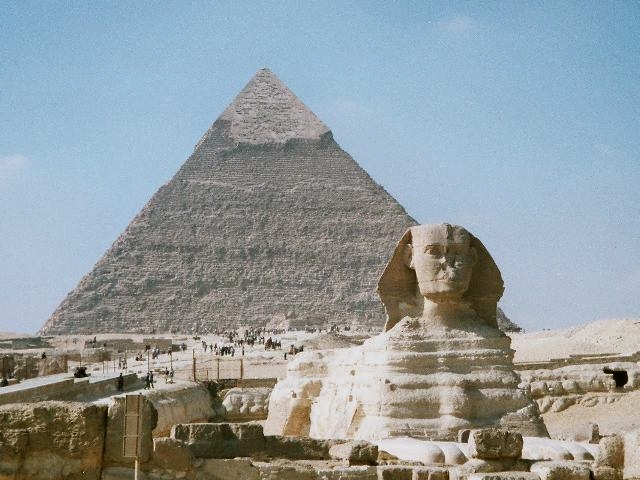
The last surviving Wonder of the Ancient World: 2.3 million limestone blocks, originally 146.5m high, built in 20 years with a precision that modern engineers still cannot fully explain. The Sphinx guards the complex.
Photo: en:User:Hajor, CC BY-SA 3.0

The Cairo Egyptian Museum (120,000 objects) and the Grand Egyptian Museum (Giza, opened 2023): Tutankhamun’s golden death mask, mummies of Ramesses II and Thutmose III, and the Narmer Palette (the world’s oldest historical document).
Photo: Amr F.Nagy, Public domain

Karnak: the largest religious complex ever built (20 pharaohs adding to it over 1,500 years), with 134 columns in the Hypostyle Hall. Luxor Temple: illuminated at night, with Avenue of Sphinxes.
Photo: Marc Ryckaert (MJJR), CC BY 3.0

65 royal tombs cut into a desert valley: KV62 (Tutankhamun), KV57 (Horemheb) and KV17 (Seti I, with the finest painted ceiling in Egypt). The mortuary temple of Hatshepsut (female pharaoh) opposite.
Photo: Vyacheslav Argenberg, CC BY 4.0

Two rock-cut temples built by Ramesses II (1264 BC) and relocated in their entirety (UNESCO saved them from Lake Nasser’s rising waters in 1968). Four 20m colossal statues of Ramesses II facing the sunrise.
Photo: Diego Delso, CC BY-SA 4.0

A 3-7 day cruise on the world’s most famous river: temples appearing from the riverside at dawn, felucca (traditional sailboat) sunset, the Edfu and Kom Ombo temples accessible by motorboat.
Photo: Marc Ryckaert, CC BY-SA 4.0

The Blue Hole at Dahab (one of the world’s most famous dive sites), the SS Thistlegorm wreck (WWII cargo ship, one of the world’s top ten dives) and the coral gardens of Ras Mohammed National Park.
Photo: NeilsPhotography, CC BY 2.0

The Khan el-Khalili market (600 years of continuous operation), the Al-Azhar Mosque (970 AD, the world’s oldest operating university), the Citadel of Saladin and the Mosque of Muhammad Ali above the city.
Photo: Daniel Mayer, CC BY-SA 4.0
A street food of rice, lentils, macaroni, chickpeas, fried onions and spiced tomato sauce: the definitive Egyptian fast food, eaten from stands throughout Cairo at any time of day.
Slow-cooked fava beans with olive oil, garlic, lemon and cumin: the Egyptian breakfast, eaten with bread throughout the country. The world’s oldest continuously eaten dish.
Shawarma: rotating lamb or chicken carved into bread with tahini. Hawawshi: spiced minced meat in a baladi (flatbread) pocket, baked or fried. Egyptian street food staples.
A thick green soup of Jew’s mallow leaves with garlic and coriander, poured over rice with roast chicken. One of Egypt’s oldest dishes (eaten since pharaonic times).
A deep crimson infusion of dried hibiscus flowers: served hot in winter and iced in summer. Sweet, tart and refreshing. The most distinctively Egyptian drink.
Very strong, heavily sweetened coffee served in small cups. Shisha (hookah) culture in Cairo’s ahwas (coffeehouses) is a 500-year-old social institution.
A flaky layered pastry of multiple butter-drenched dough layers, baked in a stone oven and filled or topped with honey, sweet cheese, jam or savoury minced meat.
Made from fava beans (not chickpeas as in Lebanon): greener, more aromatic, crispier. Served in bread with salad for an Egyptian street breakfast.
Cairo International (CAI) is the main hub. Hurghada (HRG) and Sharm el-Sheikh (SSH) receive direct European charter and scheduled flights for Red Sea resort tourism. Luxor (LXR) has seasonal European connections.
EgyptAir and British Airways fly Heathrow–Cairo direct in ~5 hours. Red Sea charter flights (Hurghada, Sharm) are the cheapest Egypt option from the UK — from £200 return in winter.
Cairo is well-connected from Gulf cities — a practical addition to any Middle East itinerary. EgyptAir flies JFK–Cairo direct, the most convenient US East Coast option.
EgyptAir dominates domestic routes and is reasonably reliable. Book at egyptair.com. The Luxor–Aswan Nile cruise is the preferred way to travel between those cities — far more scenic than flying.
The Cairo–Luxor sleeper train (Watania or Abela Egypt) runs overnight — a private compartment with dinner and breakfast. Book via the station or through a local agent. Foreigners pay the hard-currency fare in USD.
October to April is ideal — cool enough to walk and explore comfortably. Cairo and Luxor are pleasant in winter (18–25°C). May to September brings extreme heat (40–46°C in Luxor — dangerous for outdoor exploration). The Red Sea (Hurghada, Sharm el-Sheikh) is good year-round for diving.
📅 Egypt is in its best season in January, February, March, April, October, November, December. See where else is good to go in those months, or browse where to go by month.
Egypt is excellent value for foreign visitors — the Egyptian pound has weakened significantly against major currencies, making it one of the most affordable destinations in the Mediterranean and Middle East.
Koshary — rice, lentils, macaroni, fried onion and spiced tomato sauce — is Egypt’s national street food dish, costs EGP 30–80, and is excellent. Every city has dedicated koshary restaurants.
A 3-night Nile cruise from Luxor to Aswan (cabin, all meals, all temple entries included) costs US$150–300pp at mid-range — one of the best-value multi-day travel experiences in the world.
A hot-air balloon flight over the Valley of the Kings at dawn costs US$80–150pp — one of the most memorable experiences in Egypt, with the Nile, the desert and the temples spread below at first light.
Cairo for three days (Pyramids, Egyptian Museum, Islamic Cairo), a Nile cruise from Luxor to Aswan for three days, Abu Simbel to close. The essential Egypt in a week.
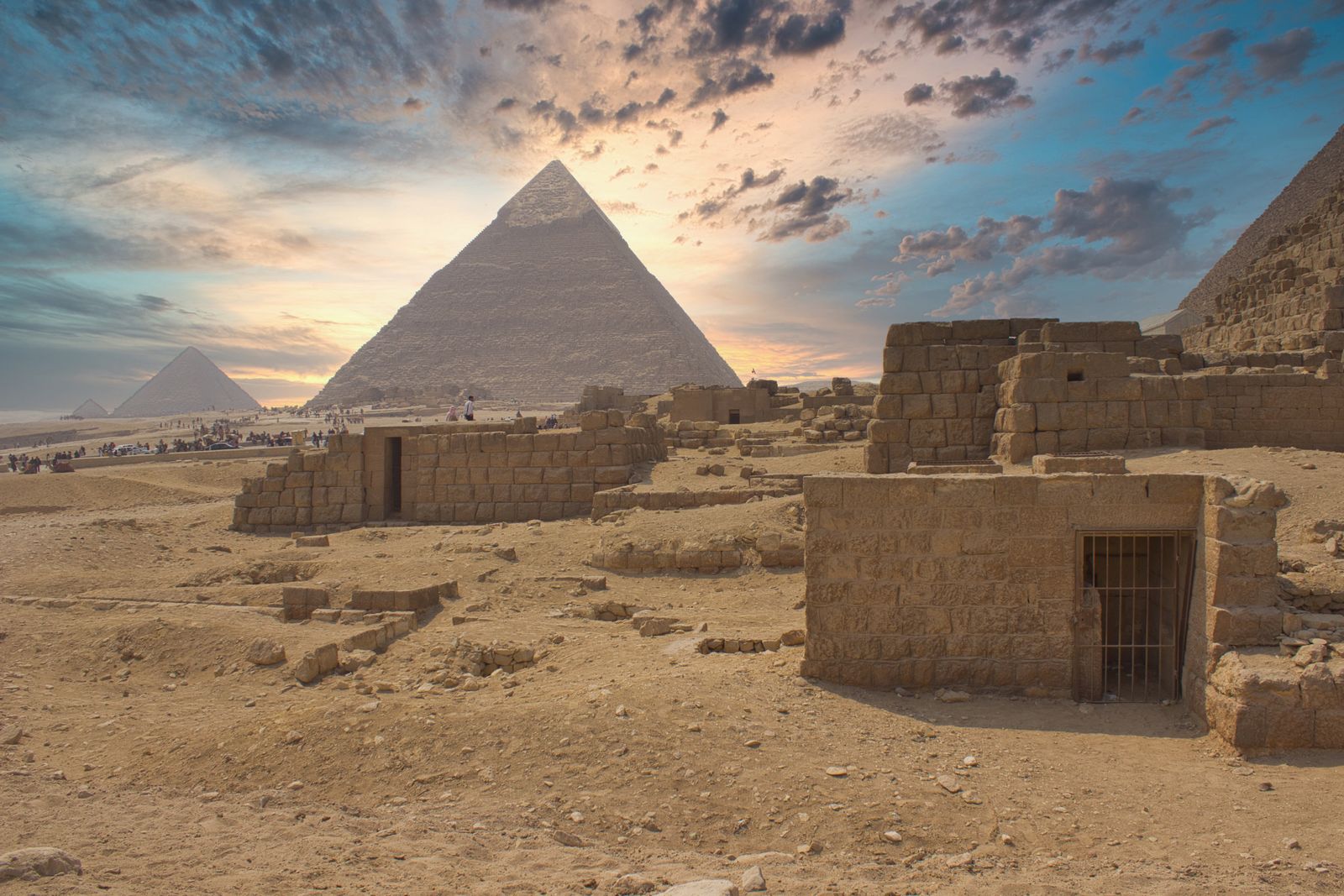
The Great Pyramid of Khufu (2560 BCE, 146m tall, built with 2.3 million stone blocks averaging 2.5 tonnes) is the only one of the Seven Wonders of the Ancient World still standing. The Sphinx. Best at dawn before the coach tours arrive.
Enter the Great Pyramid (the King’s Chamber) while you can — access is restricted and may be suspended. The chamber is claustrophobic and extraordinary. Tickets are separate from the site entry.
The Egyptian Museum on Tahrir Square: the Tutankhamun galleries (the gold death mask, the innermost coffin of solid gold, the throne) are the highlight of any Egyptian visit. The new Grand Egyptian Museum at Giza is the most ambitious new museum in the world.
The new Grand Egyptian Museum (GEM) at Giza opened in phases from 2022 — the world’s largest archaeological museum, built specifically to house the Tutankhamun collection in full (5,000+ objects). Budget a full day.
Khan el-Khalili bazaar — one of the oldest markets in the world (founded 1382), a warren of copper, spice, perfume and textile stalls. The Al-Azhar mosque (built 970 CE, the oldest functioning university in the world). The Citadel of Saladin above the city.
The Al-Muizz Street in Islamic Cairo, running north from Khan el-Khalili, is lined with Mamluk architecture from the 10th–16th centuries — largely car-free, one of the most atmospheric streets in Egypt.
1h flight from Cairo. Luxor contains the highest concentration of ancient monuments in the world — Karnak Temple (the largest religious building ever constructed, covering 100 hectares), Luxor Temple (lit magnificently at night), and the West Bank where the pharaohs were buried.
Karnak Temple was built by 30 successive pharaohs over 1,300 years — the Hypostyle Hall alone has 134 columns up to 24m tall. Go at opening (6am) in the cool hour before tour groups arrive.
The Valley of the Kings: 63 tombs cut into the limestone cliffs, including Tutankhamun’s (small but significant), Ramesses VI (the finest paintings) and Seti I (the deepest and most elaborately decorated). The Temple of Hatshepsut (mortuary temple of Egypt’s most successful female pharaoh).
The Valley of the Kings standard ticket covers 3 tombs — buy the premium ticket for KV9 (Ramesses VI, the most complete paintings) and KV17 (Seti I, the deepest). Don’t miss them.
The 3-night Nile cruise from Luxor to Aswan passes the Edfu Temple (the best-preserved temple in Egypt, built to honour Horus, 237–57 BCE) and the Kom Ombo double temple (dedicated simultaneously to Sobek the crocodile god and Horus the Falcon). Aswan: the Philae Temple on an island.
The Edfu Temple at Edfu is the best single temple in Egypt after Karnak — almost perfectly preserved, 36m-high pylon gate, complete roof, vivid painted reliefs. Most tour groups rush through in 45 minutes. Take 2 hours.
3h drive (or 45-min flight) south from Aswan. Abu Simbel: two temples carved directly into a cliff face by Ramesses II (1264 BCE), relocated in 1968 to save them from the Aswan High Dam waters. The four 20m seated colossi of Ramesses II at the entrance are impressive.
The Abu Simbel temples are oriented so that twice a year (21 February and 21 October — Ramesses II’s birthday and coronation) the sun shines directly into the sanctuary and illuminates the seated statues. Crowds gather for this alignment annually.
Both work in Cairo. Better than negotiating with metered taxis.
A koshari: EGP 20-40 (EUR 0.50-1). Museum entry: EGP 200-450 (EUR 5-10).
Opening prices are typically 5-10x the expected final price. Engage with good humour and walk away if necessary.
Dress modestly at religious sites. Photographing inside tombs (using flash) is prohibited.
Cairo to Luxor: 1h flight vs 8h train. Cairo to Aswan: 1h15 flight vs 12h train.
Street conversations, tea invitations and recommendations are sincere.
Both available at Cairo airport. Orange has the best coverage in Upper Egypt.
Some areas of the Sinai Peninsula have elevated security advisories. Dahab and Sharm el-Sheikh are considered safe.
Quick answers to the questions people most often ask before visiting Egypt.
Fly into Cairo International (CAI) for Cairo and the pyramids, or directly to Hurghada, Sharm el-Sheikh or Luxor, which have many flights from Europe, especially for Red Sea holidays.
Most nationalities need a visa, which many can get as an e-visa in advance or on arrival. Check the current process for your passport.
October to April, when Cairo and Luxor are pleasant (around 18–25°C). From May to September, temperatures in Luxor and Aswan can reach 40–46°C.
Ride-hailing apps such as Uber and Careem are the easiest way to get around Cairo and avoid fare negotiations. For the Nile Valley, many travellers take the sleeper train or a Nile cruise between Luxor and Aswan.
Yes — Egypt is excellent value for foreign visitors. Expect around EGP 500–900 (about US$10–18) per day on a budget and EGP 2,000–4,000 mid-range, plus entrance fees for the main sites.
The dominant ride-hailing app in Cairo and major Egyptian cities — safer and more transparent than street taxis.
FreeRide-hailing alternative to Uber across Egypt — now owned by Uber but operates separately.
FreeBook Pyramids of Giza entry, Luxor Valley of Kings tours, Nile cruises and Egyptian experiences.
FreeEgypt’s primary messaging platform — use it to contact hotels, tour guides and transport.
FreeEgypt’s leading food delivery app — covers Cairo, Alexandria and other major Egyptian cities.
FreeFind hotels, Nile cruise boats and Red Sea resort accommodation across Egypt.
FreeExplore Egypt’s top city destinations — from Luxor to Cairo, each with its own distinct character.
Egypt sits within easy reach of several other destinations — each with a completely different character.


