DE
Germany
From Bavarian castles to Berlin nights
From Bavarian castles to Berlin nights

The Brandenburg Gate, the Holocaust Memorial, the East Side Gallery (longest surviving section of the Wall) and Museum Island: five world-class museums on a Spree River island, all UNESCO-listed.

The Marienplatz Glockenspiel, the English Garden (larger than Central Park), the Deutsches Museum (the world’s largest science museum) and the Hofbrauhaus beer hall.

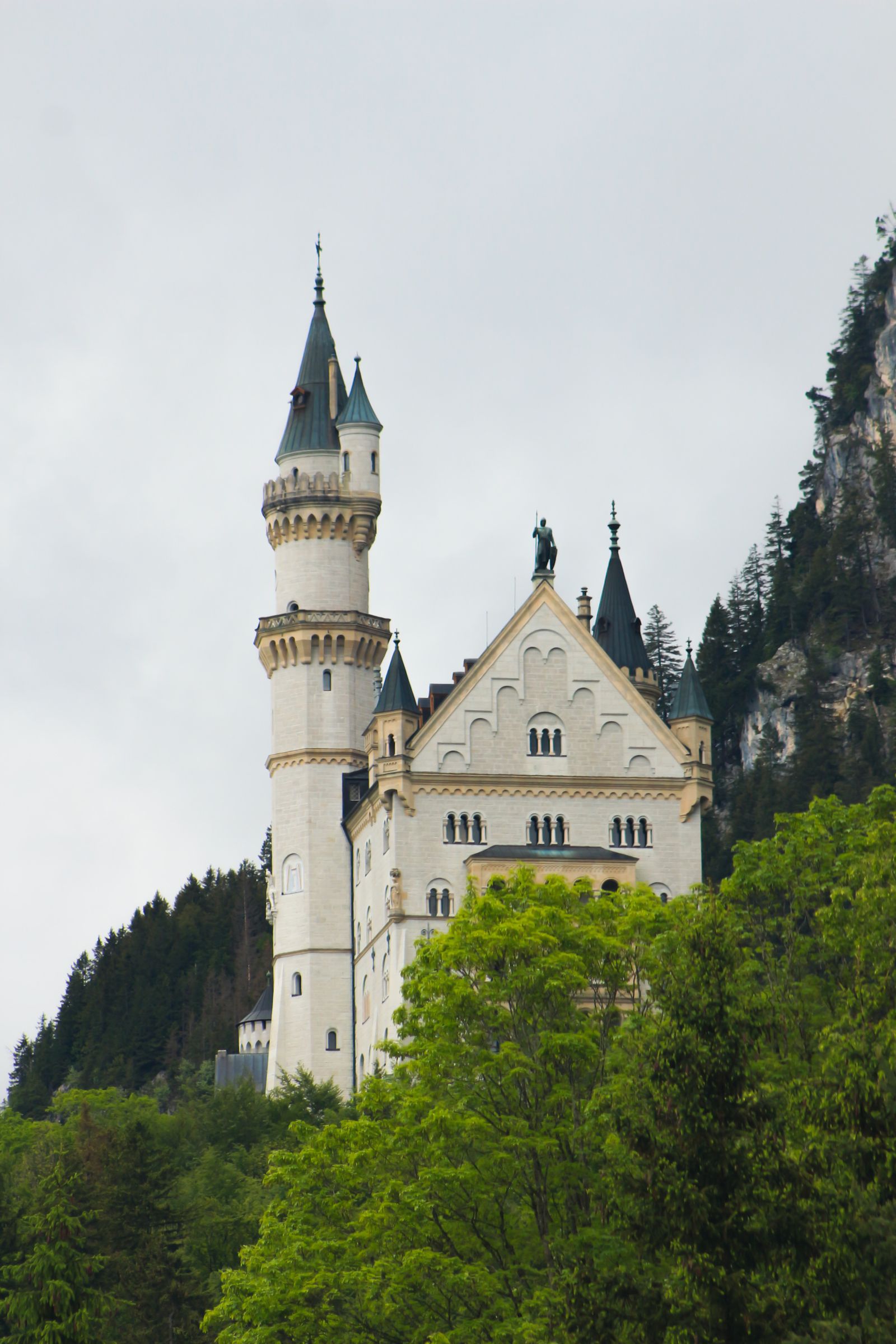
The fairy-tale castle of King Ludwig II on an alpine cliff above a gorge, built from 1869: the inspiration for Sleeping Beauty’s castle and the defining image of Romantic-era Germany.

The Cologne Cathedral (completion: 1880, height: 157m) after 632 years of construction, and the Rhine Valley from Koblenz to Bingen: 40km of UNESCO castles, vineyards and river ferries.

The best-preserved medieval walled town in Germany: half-timbered houses, a complete town wall circuit, the Plonlein (the most photographed street corner in Germany) and the Christmas Market.

The UNESCO Speicherstadt (world’s largest warehouse district on canals), the Miniatur Wunderland (the world’s largest model railway) and the Elbphilharmonie concert hall.

The Schwarzwald: cuckoo clock workshops, Baden-Baden’s thermal spas, the university city of Freiburg and the Titisee mountain lake.

The baroque skyline rebuilt after 1945: the Frauenkirche (reconstructed from original stones), the Zwinger palace complex and the Semper Opera House above the Elbe River.
Grilled pork sausage served with sauerkraut and mustard. Regional variations: Nuremberg’s thin sausages (served 6 at a time), Thuringian’s spiced version and Frankfurt’s Frankfurter.
A pounded veal or pork cutlet, breaded and fried in clarified butter until golden. Wiener Schnitzel (veal, Austrian origin) vs Jager Schnitzel (mushroom cream sauce): the eternal debate.
Sliced pork sausage topped with ketchup and curry powder. Berlin’s signature street food, invented in 1949, eaten at every late-night sausage counter in the city.
A large twisted bread knot with a dark, chewy crust from lye-dipping and baking. Eaten with butter as a Bavarian breakfast or with a beer at the Hofbrauhaus.
Brewed under the 1516 Purity Law (water, malt, hops, yeast only): Bavarian Weissbier (wheat beer), Kolsch (Cologne), Dunkels (Munich dark lager) and Pilsner are the four great regional styles.
Germany’s greatest contribution to world wine culture: dry and off-dry Riesling from the Mosel, Rhine and Rheingau valleys with mineral precision and extraordinary longevity.
Chocolate sponge, kirsch-soaked cherries, whipped cream and chocolate shavings. The most internationally recognised German dessert.
The German afternoon coffee-and-cake tradition: a slice of Streuselkuchen or Apfelstrudel with a filter coffee at 3pm. As important as the English afternoon tea.
Germany’s main international hubs are Frankfurt (FRA) — Lufthansa’s global base — Munich (MUC) and Berlin Brandenburg (BER). Deutsche Bahn’s ICE high-speed rail connects all major cities. For trip planning, see the official Germany tourism portal.
💡 The Eurostar to Brussels then ICE to Cologne (total ~4h30) is a scenic and civilised alternative to flying — city-centre to city-centre.
💡 Frankfurt Airport has a direct ICE rail connection to the main station — no bus or taxi needed from the terminal.
💡 Book on bahn.de or DB Navigator app. Buy 3+ months ahead for Sparpreis fares — Berlin–Munich from €17.90. The €49 Deutschlandticket covers unlimited regional rail for a month.
💡 Germany has excellent regional airports with strong budget carrier connections from across Europe — useful for flying directly to your destination region without transiting Frankfurt.
May to September is summer in Germany — outdoor beer gardens, Bavarian lakes, Rhine cycling. December brings the famous Christmas markets. January–February is cold and quiet — good for museums and cities.
Germany is solidly mid-range — not as cheap as Eastern Europe, not as expensive as Scandinavia. Beer garden economics are genuinely good value.
A Weisswurst breakfast in Munich (two sausages + pretzel + wheat beer) costs €8–12 — the correct way to start a Bavarian morning.
The Deutsche Bahn €49 Deutschlandticket allows unlimited travel on all local and regional trains for a month — exceptional value for exploring beyond the cities.
Berlin has a surprisingly strong fine dining scene — Tim Raue’s restaurant (2 Michelin stars, Japanese-influenced German cooking) is one of Europe’s most interesting tasting menus at €200pp.
Berlin for history and culture, Bavaria for the fairy-tale landscapes, Munich for food and beer. Germany’s Deutsche Bahn connects everything — though book in advance for the best fares.
Walk the Brandenburg Gate and the Memorial to the Murdered Jews of Europe. The East Side Gallery (longest remaining stretch of the Wall) is 1.3km of murals — do it on foot. Dinner in Prenzlauer Berg.
💡 Berlin’s Museum Island (five world-class museums in one UNESCO complex) requires a day pass — the Pergamon Museum is under restoration until 2027, so check what’s open.
The Charlottenburg Palace (the only royal palace in Berlin) and its manicured garden. Afternoon: cycle through the Tiergarten to the Reichstag (book the glass dome free online months ahead).
💡 The Checkpoint Charlie Museum is touristy but the history it covers is extraordinary. The DDR Museum nearby is more hands-on and better value.
2h by IC train from Berlin. The rebuilt Frauenkirche (destroyed in 1945, rebuilt 2005), the Semperoper and the Zwinger palace complex — one of Europe’s great Baroque ensembles. Back to Berlin in the evening.
💡 The Green Vault at Dresden Castle has the finest collection of royal jewels and treasures in Europe. Book tickets well in advance.
ICE train Berlin–Munich (4h). Afternoon in the Marienplatz — the Glockenspiel at 11am, the English Garden (larger than Central Park), swimming in the Eisbach river wave in the park.
💡 The Hofbräuhaus is a tourist institution, but it’s a genuine 400-year-old beer hall. Go once. Order a Masskrug (1-litre stein).
1.5h bus from Munich to Füssen. Neuschwanstein Castle — the inspiration for the Disney logo — sits above the Alpsee lake in the Bavarian Alps. Book tickets online (mandatory, timed entry).
💡 The view of Neuschwanstein from the Maríen Bridge above is the photograph. It’s a 15-minute uphill walk from the castle — do it first before the tours block the view.
Take the ICE to Koblenz (3h), then the slow regional train south through the Rhine Gorge to Rüdesheim — 80km of vineyards, castles and river ferries. Overnight in Rüdesheim or Mainz.
💡 The Rhine Gorge is a UNESCO World Heritage Site. The regional train (RB 26) runs the full length — sit on the right side heading south for the best castle views.
Cathedral city Cologne is 1h from Rüdesheim. The Kölner Dom (the Gothic cathedral, 6 centuries in the making) took 632 years to build and still dominates the skyline. Fly from CGN, Düsseldorf or FRA.
💡 Cologne’s old town Altstadt — and its Kölsch beer served in tiny 200ml glasses — is one of Germany’s most convivial city experiences.
ICE high-speed trains: Frankfurt to Munich 4h; Berlin to Cologne 4h30. Book at bahn.de; advance fares are significantly cheaper.
Both work in Berlin, Munich, Frankfurt and Hamburg.
A restaurant meal: EUR 12-25. A glass of wine or beer: EUR 4-7. More affordable than Switzerland or Scandinavia.
Frankfurt, Nuremberg, Cologne and Rothenburg’s Christmas markets (late November to December 24) are among the finest in Europe.
Germans are not initially warm but are very helpful and honest. First names come after trust is established.
Standing on a cycle lane in Germany is a social offence and sometimes a legal one.
Almost all German shops (except bakeries) close on Sundays. Petrol stations and railway kiosks stay open.
Bavarians, Saxons, Prussians and Rhinelanders consider themselves distinct cultures within Germany.
Deutsche Bahn’s official app — buy ICE and IC tickets, check live timetables and save journeys offline.
FreeBudget intercity buses across Germany from €5 — also covers FlixTrain on selected routes.
FreeTransit navigation for Berlin, Munich, Hamburg and all major German cities with real-time updates.
FreeGermany’s dominant food delivery app — orders from 15,000+ German restaurants and fast food chains.
FreeBook licensed taxis across German cities; also includes ride-hailing in Hamburg and Munich.
FreeBook tours of Neuschwanstein Castle, the Brandenburg Gate, Oktoberfest experiences and more.
FreeExplore Germany’s most remarkable destinations.
Germany sits within easy reach of several other destinations — each with a completely different character.


