IR
Iran
Persia: poets, palaces & Persian carpets
Persia: poets, palaces & Persian carpets
⚠️ Travel advisory: most governments advise against travel
The US, UK and many other governments advise against all travel to Iran. Foreign and dual nationals face a serious risk of arbitrary detention, and regional hostilities have led to airspace closures. This guide is kept for background and future planning.
Latest official advice: UK FCDO · US State Department · Reviewed September 2026
Iran is one of the great surprises of world travel — a country of civilisational depth, overwhelming hospitality and landscapes of bewildering variety that most visitors never expect. This is Persia, inheritor of one of the oldest and most sophisticated cultures on earth. Isfahan’s Imam Square, ranked among the world’s greatest architectural ensembles, is ringed by the turquoise-domed Sheikh Lotfollah Mosque and the soaring portal of the Ali Qapu Palace. Persepolis, the ceremonial capital of the Achaemenid Empire built by Darius the Great, rises from the dusty plain of Fars with a grandeur that echoes across 2,500 years. Shiraz, the city of poets and roses, and Yazd, the ancient Zoroastrian city of wind towers and fire temples, complete a cultural circuit of unmatched richness.
Iranians are renowned for ta’arof — an elaborate etiquette of hospitality that means strangers are routinely invited to share tea, meals and homes. The country’s Persian cuisine, saffron-scented and pomegranate-bright, is among the world’s finest.
The jewel of Persia, Isfahan contains what may be the world’s most perfect square: Naqsh-e Jahan (Imam Square), a UNESCO World Heritage Site ringed by the Sheikh Lotfollah Mosque (its interior dome a masterpiece of Islamic geometry), the Shah Mosque, the Ali Qapu Palace and the Grand Bazaar. The city’s 33 Arch Bridge glows amber at sunset over the Zayandeh River. Isfahan was once half the world, as the Persian saying goes, and walking its bazaars and bridge-side tea houses it is easy to believe.
The ceremonial capital of the Achaemenid Empire, built by Darius and Xerxes in the 5th century BC, is the greatest archaeological site in the Middle East outside Egypt. The monumental Apadana staircase, carved with delegations from 23 nations bringing tribute, and the Gate of All Nations are in condition. At sunset, the stone glows gold and the sense of lost imperial grandeur is overwhelming.
The city of poets, wine and roses — though today’s wine is metaphorical — is graced with the mausolea of Hafez and Saadi, two of the greatest Persian poets whose words still pervade daily conversation. The Pink Mosque (Nasir-ol-Molk), with its stained-glass windows casting a kaleidoscope of colour across its prayer hall each morning, is one of the most photographed spaces in Iran.
One of the world’s oldest continuously inhabited cities sits in the heart of the central desert, its labyrinthine mud-brick old town punctuated by the distinctive badgirs (wind towers) that have cooled buildings for three millennia. The Towers of Silence on the desert’s edge speak to the city’s Zoroastrian heritage; the flickering Sacred Fire at Atash Behram has burned for over 1,500 years.
Kashan’s 16th-century bazaar and the exquisite Fin Garden — a Safavid-era paradise garden — make it one of Iran’s most pleasant cities. Just beyond, the Dasht-e Kavir and Dasht-e Lut deserts offer star-filled nights in remote caravanserais, rose-water distilleries and the surreal salt crusts of the Maranjab Desert.
Grilled minced or marinated lamb skewers served over saffron-buttered rice with grilled tomato and raw egg yolk — Iran’s national dish, eaten in every city from street stalls to grand restaurants.
A slow-cooked stew of herbs, kidney beans, dried lime and lamb — often called the national dish.
Chicken or duck in a thick pomegranate and walnut sauce. Persian rice is cooked to form a golden crust, tahdig.
Minced lamb grilled on wide skewers and served with grilled tomato and saffron rice. Iran is officially dry, but tea houses (chaikhaneh) serve strong tea with sugar cubes and dates.
A salty yogurt drink with dried mint, often served with kebab.
Imam Khomeini International (IKA) south of Tehran is the main gateway. Iran Air and Mahan Air are the national carriers; Turkish Airlines and Flydubai offer key connections. Note: Western payment cards and most travel insurance policies don’t cover Iran — research carefully.
Istanbul is the primary European gateway — Turkish Airlines operates a regular IST–Tehran direct service. No major Western European carrier currently flies direct to Tehran due to sanctions compliance concerns.
Dubai (1h30) is the most convenient gateway — multiple daily flydubai connections. Turkey borders Iran overland (Van–Tabriz) and is also a natural combination destination.
The Tehran Metro is one of the best-value urban transport systems in the world — fares are under US$0.10 per trip. Shared taxis (savari) cover all inter-neighbourhood routes for similar prices.
The Golden Triangle of Iran (Tehran–Esfahan–Shiraz) is well-served by comfortable intercity buses and trains. A private car with a driver-guide (US$40–80/day) is the most comfortable option and allows stops at Kashan, Persepolis and Yazd.
March to May and September to November are the best windows — Esfahan’s mosques in spring light, the Kavir desert in October, Persepolis accessible. March (Nowruz) is the Persian New Year — culturally but crowded. June to August is very hot (40°C+ on the plateau).
📅 Iran is in its best season in March, April, May, September, October, November. See where else is good to go in those months, or browse where to go by month.
Iran is very affordable due to the devalued Rial, making it one of the cheapest destinations in the Middle East. Note: Western debit/credit cards do not work due to sanctions — bring USD or euros in cash. The Iranian Rial (IRR) or Toman (IRT, 1 Toman = 10 Rials) is used.
Doogh — a salted, diluted yoghurt drink, often carbonated, flavoured with dried mint — is Iran’s national beverage, drunk ice-cold alongside chelo kebab.
A traditional guesthouse (mehmanpazir) in a converted 19th-century mansion.
The Abbasi Hotel in Esfahan (a converted 18th-century Safavid caravanserai surrounding a garden courtyard, the finest hotel in Iran, from US&dollar)
Tehran for one day, Esfahan for two, Yazd for one, Persepolis and Shiraz for two, Kashan for one. Iran — one of the oldest civilisations on earth and the most architecturally rich country in the Middle East — has the world’s greatest concentration of UNESCO heritage in proportion to its area.
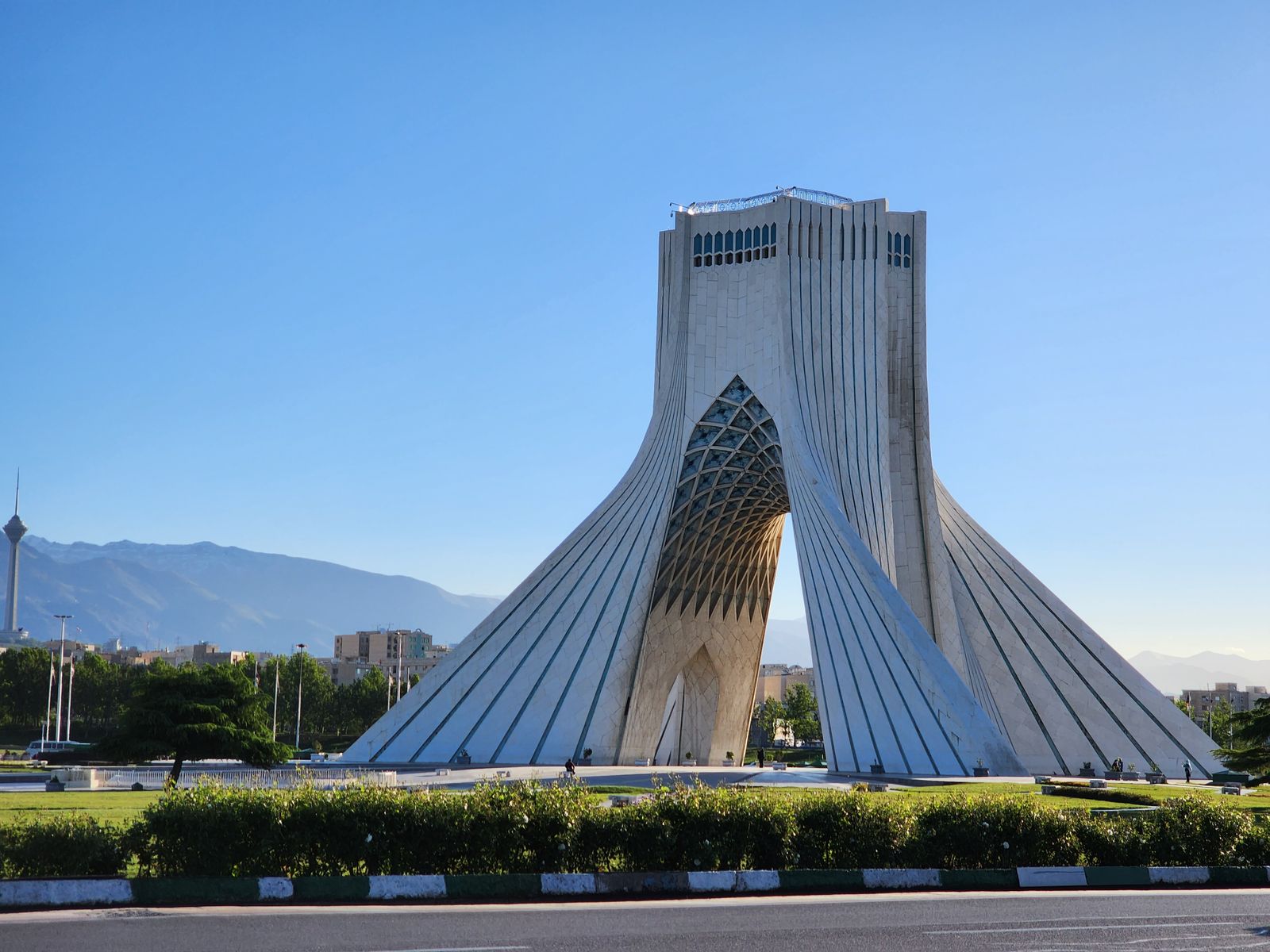
Tehran — a megacity of 9 million sprawled at the foot of the Alborz mountains (Tochal peak, 3,964m, visible from central Tehran, skiable October–April with a gondola from the city) — with the National Museum of Iran (the finest collection of pre-Islamic Iranian art in the world — Achaemenid, Parthian and Sassanid objects spanning 3,000 years), the Golestan Palace (Qajar royal palace, UNESCO WHS) and the Grand Bazaar.
The Tehran Grand Bazaar is one of the oldest and largest covered markets in the world — 10km of covered passageways connecting 5,500+ shops, caravanserais, mosques, schools and bathhouses in a labyrinthine city-within-a-city beneath vaulted brick ceilings. It has been in continuous commercial operation since the 13th century.
1h flight from Tehran. Esfahan — Abbas I’s 17th-century capital, with Naqsh-e Jahan Square (the second largest square in the world at 160,000m² — the Imam Mosque, the Sheikh Lotfollah Mosque, the Ali Qapu Palace and the Qeysarieh Bazaar arranged around a 500m reflecting pool) and the SI Pol Bridge (a 17th-century bridge of 33 arches across the Zayandeh River, a social gathering place at sunset).
The Sheikh Lotfollah Mosque (1619, built by Shah Abbas I) has no minarets and no courtyard — it was designed as a private royal mosque, accessible directly from the Ali Qapu Palace through an underground corridor. The interior dome (covered in cream tiles that glow golden-pink in the afternoon light) is considered the most beautiful single interior space in Islamic architecture.
The Vank Cathedral (1664, in the New Julfa Armenian quarter — a cathedral that combines Armenian cross-vault architecture with Persian blue-tile exterior and Baroque-influenced interior frescoes depicting Old Testament scenes — the most striking hybrid sacred building in the Middle East) and the Khaju Bridge (17th century, 23 arches, combining the functions of dam, bridge, royal pleasure pavilion and public gathering space).
Shah Abbas I forcibly relocated 150,000 Armenians from the Ararat plain (then Ottoman territory) to New Julfa in Esfahan between 1604 and 1606, to provide skilled craftsmen (particularly silk weavers and merchants) for his new capital. Their descendants have maintained the Armenian community in New Julfa for 400 years.
1h flight from Esfahan. Yazd — an ancient desert city (the oldest continuously inhabited city in Iran, perhaps the world) built entirely of mud-brick, with the forest of wind towers (badgirs) that cool the houses below, the Zoroastrian Fire Temple (a sacred flame burning continuously since 470 CE), the Tower of Silence (dakhmeh — where Zoroastrians once left their dead for the birds) and the finest traditional house district in Iran.
Yazd’s badgir (wind tower) system is the world’s oldest form of natural air conditioning — tall chimney-like structures catch the prevailing wind at height, channel it downward through the building and exit it through an underground qanat (water channel) system that cools it by evaporation. The combination can reduce interior temperature by 15°C below the exterior on a 40°C day.
3h from Yazd by road. Persepolis (Takht-e Jamshid, 518–330 BCE — the ceremonial capital of the Achaemenid Empire, the largest empire the world had seen to that point, built by Darius I and expanded by Xerxes, destroyed by Alexander in 330 BCE) — the Apadana staircase reliefs (processions of tribute-bearers from all 23 subject nations, the finest carved stone narrative in antiquity outside Egypt).
Persepolis was destroyed by Alexander the Great in 330 BCE, allegedly in revenge for the Persian burning of Athens in 480 BCE. The ancient Greek historian Diodorus Siculus describes Alexander’s general Thais as suggesting the burning; Alexander regretted it the next morning. The palace complex burned for 7 days. The ruins were covered by windblown sand until excavated by Ernst Herzfeld in 1931.
1h from Persepolis. Shiraz — the city of Hafez and Sa’di (the two greatest Persian poets, both buried in Shiraz in gardens that remain places of pilgrimage for Iranians), the Nasir ol-Molk Mosque (the Pink Mosque, 1888 — the morning light through its stained-glass windows creates a carpet of coloured light across the tiled floor, the most photographed interior in Iran) and the Arg of Karim Khan (an 18th-century citadel built as a residential palace).
Hafez (Khwaja Shams-ud-Din Muhammad Hafez-e Shirazi, c.1315–1390) is the most beloved poet in Iranian history — his Divan (collected poems) is the most widely read book in Persian-speaking cultures after the Quran. Iranians use his poems for fal (divination) by opening the book at random and interpreting the first poem encountered as guidance for a question.
5h from Shiraz. Kashan — one of the finest traditional cities in Iran, with the Tabatabaei House (a 19th-century merchant mansion of great complexity — four courtyards, 40 rooms, wind towers and stained-glass windows in the finest Qajar domestic architecture), the Fin Garden (UNESCO, the oldest surviving Persian garden, 16th century) and the rose-water distilleries (Kashan produces 90% of Iran’s rose water, harvested in May). Fly from Tehran (IKA).
The Persian garden (chahar bagh, “four gardens”) is the foundational concept in garden design worldwide — a walled garden divided by four channels representing the four rivers of paradise, with a pavilion at the centre. The design spread from Achaemenid Persia through the Mughals to India (the Taj Mahal is set in a chahar bagh), to the Islamic world and thence to the Spanish colonial Americas.
Many nationalities can obtain a visa on arrival or e-visa. Check current requirements carefully as they change. US, UK and Canadian passport holders typically need guided tours.
International bank cards do not work in Iran due to sanctions. Bring sufficient cash (euros or US dollars) to exchange locally. Inform your bank you will be carrying cash.
Women must wear a headscarf and modest clothing (covering arms and legs) in public. Men should avoid shorts in traditional areas.
Many Western apps and sites are blocked — download a VPN before arriving. Instagram and WhatsApp are frequently restricted.
Accept invitations for tea graciously — Iranian hospitality (ta’arof) is genuine and extraordinary. Many visitors receive unrepeatable experiences through chance encounters.
Quick answers to the questions people most often ask about travel to Iran.
Many Western governments advise against all or most travel to Iran, and some warn of a risk of arbitrary detention, particularly for dual nationals. The situation can change quickly, so check your government's current advice before considering a trip.
Most nationalities need a visa; many can obtain an e-visa or visa on arrival, while some nationalities must travel with an approved guide. Requirements change often, so check the current rules for your passport.
No — because of sanctions, international bank cards don't work in Iran. Bring enough cash in euros or US dollars for your whole trip.
Women must wear a headscarf and loose clothing covering the arms and legs in public; men should avoid shorts. Many Western apps and websites are blocked, so set up a VPN before arriving.
March to May and September to November are best. Nowruz, the Persian New Year in late March, is a special time to visit but very busy. Summers are extremely hot on the plateau.
— Popular Iranian mapping app with offline maps, better than Google Maps for local navigation.
Free— Persian (Farsi) camera translation helps enormously with menus, signs and general communication.
FreeReal-time and offline exchange rates for all world currencies — converts prices instantly so you always know what you are paying in your home currency.
FreeCapital Tehran, the domes of Isfahan, poetic Shiraz, desert Yazd and ancient Persepolis — the great highlights of Persia.
Iran sits within easy reach of several other destinations — each with a completely different character.


