VN
Vietnam
Ancient temples to emerald bays
Ancient temples to emerald bays

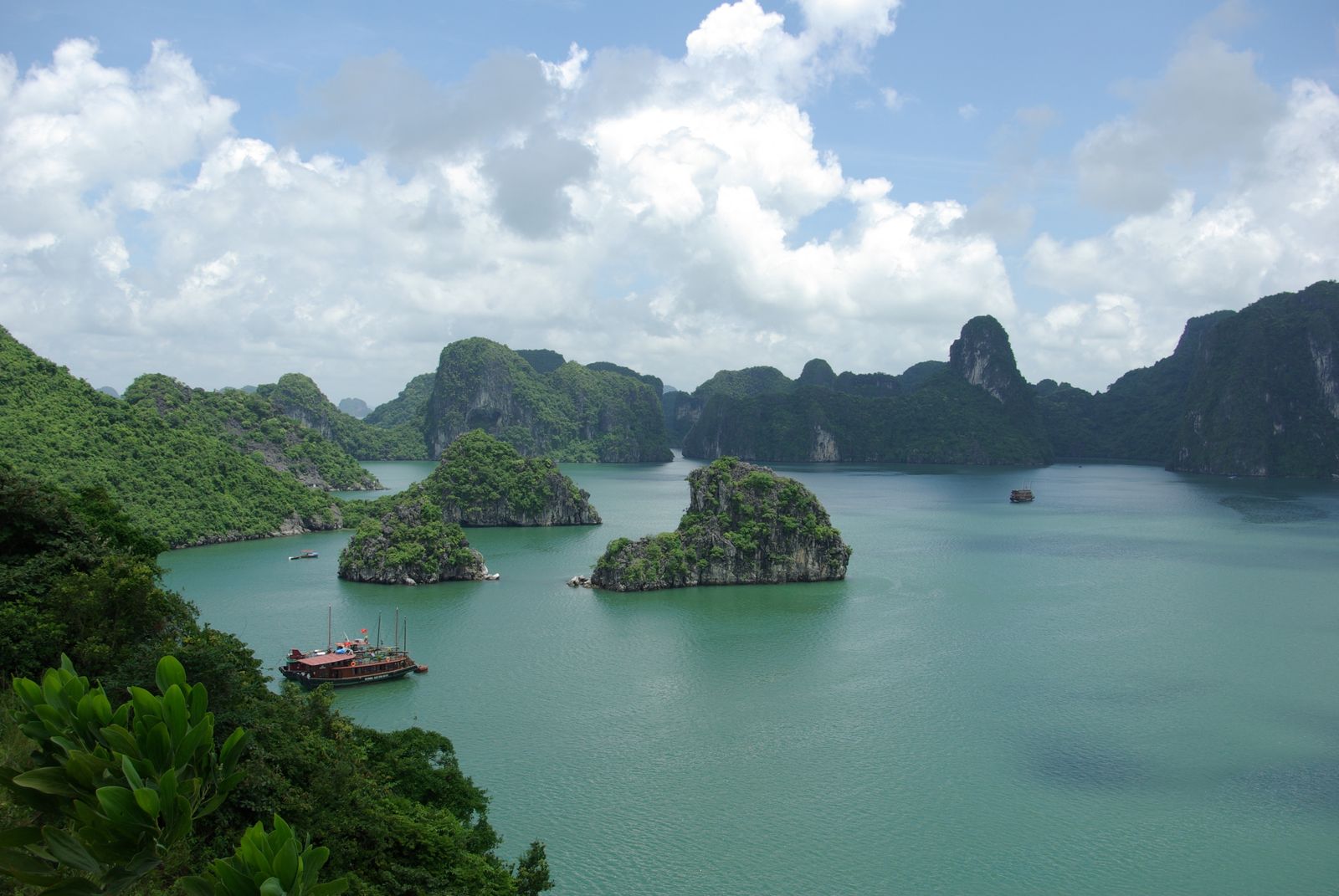
2,000 limestone karst islands rising from an emerald sea, explored by traditional junk boat: kayaking through caves, swimming in isolated coves and sleeping overnight on the water.

A UNESCO-listed 15th-century trading port of yellow houses, Japanese merchant bridges, Chinese assembly halls and more tailors per capita than anywhere on earth.

The War Remnants Museum (the most powerful anti-war museum in the world), the Cu Chi Tunnels (the Viet Cong’s underground city, partially walkable) and the food streets of District 1.
The former imperial capital: the Citadel (a 10km wall enclosing the Imperial City), the royal tombs along the Perfume River and Thien Mu Pagoda.

Rice terraces carved into mountain slopes at 1,600m: Black Hmong, Red Dao and Flower Hmong minority villages accessible by foot through the terraces.

Son Doong – the world’s largest cave by volume, discovered in 1991, with its own jungle and clouds inside. Phong Nha cave’s underground river is accessible by boat.

Floating markets (Cai Rang, Cai Be) where vendors sell produce from their boats, and a landscape of rice paddies, coconut groves and fruit orchards intersected by canals.

“Ha Long Bay on land”: karst peaks rising from flooded rice fields, explored by rowing boat through three natural caves. Bai Dinh Pagoda (the largest Buddhist complex in Vietnam) is nearby.
A clear beef bone broth with rice noodles, thin slices of beef, spring onion and herbs. The morning bowl of Hanoi: eaten standing at street-level tables at dawn.
A Vietnamese-French baguette with pate, pork belly, cucumber, pickled carrots, coriander and chilli. The finest fusion food in the world.
Rice paper rolls of shrimp, vermicelli, mint and lettuce, dipped in peanut or hoisin sauce. The lightest and most refreshing Vietnamese starter.
A Hoi An-specific dish: thick wheat noodles with char siu pork, croutons, bean sprouts and herbs. The water used to cook the noodles comes from a specific Hoi An well.
A spicy beef and pork broth with thick round noodles, lemongrass, shrimp paste and chilli: the Hue royal family’s noodle soup, richer and more complex than pho.
Robusta coffee drip-filtered through a phin into sweetened condensed milk, served over ice (ca phe sua da) or hot. Egg coffee (ca phe trung) is a Hanoi invention: egg yolk and sugar whisked into an espresso.
Draught fresh beer brewed daily and sold for USD 0.25 a glass at plastic-stool street corners throughout Vietnam. The world’s cheapest beer.
Grilled pork meatballs and belly in a dipping broth with rice vermicelli noodles and fresh herbs. The definitive Hanoi lunch (Barack Obama and Anthony Bourdain ate it together here in 2016).
Hanoi Noi Bai (HAN) and Ho Chi Minh City Tan Son Nhat (SGN) are the main international gateways. Da Nang (DAD) serves central Vietnam. Vietnam Airlines, VietJet and Bamboo Airways serve the domestic network. For trip planning, see the official Vietnam tourism portal.
💡 Singapore Airlines via Changi and Qatar Airways via Doha are the most comfortable routings from Europe to Vietnam. Both connect to Hanoi and Ho Chi Minh City.
💡 Vietnam is one of the best-connected countries in Southeast Asia for direct flights from other Asian cities — regional carriers make it easy to incorporate into a larger Asia itinerary.
💡 VietJet is Vietnam’s budget carrier — cheap (from VND 200,000/$8 booked early) and reliable for domestic routes. Book baggage separately; it’s not included on the cheapest fares.
💡 The Reunification Express train from Hanoi to Ho Chi Minh (30 hours, 1,726km) follows the coast through the Vietnamese countryside — one of Asia’s great train journeys. Soft sleeper berths from VND 1.2M ($48).
Vietnam’s climate varies dramatically north to south. Hanoi (north): best October–April (dry, mild). Hoi An and Da Nang (central): best February–August. Ho Chi Minh City (south): best December–April (dry). Ha Long Bay and Sa Pa are best April–June and September–November.
Vietnam is one of the best-value destinations in Asia — excellent food, accommodation and transport at prices that are almost universally lower than comparable destinations.
Bia hoi — fresh-brewed draught beer sold from street corners on tiny plastic stools — costs VND 5,000–10,000 per glass (≈$0.20–0.40). The Ha Noi bia hoi corner at Dinh Liet and Luong Ngoc Quyen is the best known.
A mid-range Ha Long Bay cruise on a quality junk boat costs VND 2–4M ($80–160pp) for an overnight — including all meals, kayaking and island visits. This is the right way to see Ha Long Bay.
The Sofitel Legend Metropole in Hanoi (a 1901 colonial hotel, the finest in Vietnam) and the Nam Hai resort near Hoi An (thatched villas above the South China Sea) are both exceptional. From $200/night.
Hanoi for two days, Ha Long Bay overnight, a flight south to Hoi An for two days, Ho Chi Minh City to finish. The classic Vietnam north-to-south itinerary covers the country’s most essential experiences.
Hanoi’s 36-street Old Quarter is one of the most intact historic trading districts in Southeast Asia — each street named for the guild it once served (Paper Street, Silk Street, Tin Street). Hoan Kiem Lake at the centre, the Ngoc Son Temple on the island. Street food at 6pm.
💡 The best street food in Hanoi is on the pavement — bun cha (grilled pork with noodles), pho cuon (fresh rice rolls), banh mi from a cart. Bring your own toothpick.
The Ho Chi Minh Mausoleum (Uncle Ho preserved in a glass sarcophagus in a monumental granite building — Vietnam’s equivalent of Lenin’s Tomb, equally strange). The Temple of Literature (1070 CE, Vietnam’s first university). The French Quarter’s wide boulevards and colonial architecture.
💡 The mausoleum closes frequently for preservation maintenance (Ho’s body goes to Russia periodically). Check nhandan.vn for opening hours before planning your day around it.
3h30 drive from Hanoi to Ha Long Bay, then a 2-day/1-night cruise among 1,969 limestone karst islands. Sea kayaking through caves, swimming in emerald water, sunset from the top deck. Ha Long Bay is a UNESCO World Heritage Site and one of the great Asian landscapes.
💡 Book a mid-range or above cruise rather than the cheapest option — the boats vary enormously in quality. Emeraude Classic Cruises, Paradise Cruises and Indochine are reliable mid-range operators.
Return to Hanoi (3h30 drive), fly to Da Nang (1h), transfer to Hoi An (30 min). The Hoi An ancient town — a UNESCO World Heritage Site of 15th-century Japanese merchant houses, Chinese assembly halls and French colonial facades, all pedestrianised — is best at dusk when the lanterns are lit.
💡 The Japanese Covered Bridge (1593) in the old town is the most photographed spot in Hoi An. Go early morning (7–8am) for the lantern reflections in the canal without the crowds.
An Bang Beach (7km from the old town, genuinely excellent, much quieter than Da Nang) for the morning. Afternoon: a tailoring appointment — Hoi An’s tailors can produce a fitted suit, dress or shirt in 24–48 hours at a fraction of Western prices. Evening in the old town.
💡 The tailoring reputation is real but uneven. Use a shop that’s been in business 10+ years (Yaly Couture, A Dong Silk) and book two fittings minimum. Don’t rush it.
1h flight from Da Nang to Ho Chi Minh City (Saigon). Ben Thanh Market, the Reunification Palace (frozen in time since 1975), the War Remnants Museum — one of the most affecting museums in Southeast Asia about the American War (as Vietnam calls it). Rooftop bar at dusk.
💡 The War Remnants Museum is important but graphic. The Agent Orange exhibits are particularly affecting. Allow 2 hours and don’t rush it.
The Cu Chi Tunnels (40km from the city): 250km of underground tunnels used by Viet Cong guerrillas, some expanded for tourist access. Or: a Mekong Delta day trip for floating markets and river villages. Evening international flight from Tan Son Nhat (SGN).
💡 The Cu Chi tunnels are cramped even in the tourist-widened sections. If you’re claustrophobic, the outdoor exhibits and the above-ground history are equally compelling.
Grab works throughout Vietnam. The GrabBike (motorbike taxi) is faster than a car in Vietnamese traffic.
A pho bowl: VND 30,000-60,000 (EUR 1-2). A restaurant meal: VND 100,000-250,000.
Vietnam Airlines, Vietjet and Bamboo connect all major cities. Hanoi to Ho Chi Minh: 2h flight vs 30h train.
Ho Chi Minh City traffic is chaotic. Cross roads slowly and continuously; traffic flows around you.
Questions about your age, salary and marital status are expressions of genuine interest, not impertinence.
The best coverage in rural northern Vietnam. Available at airports for a few dollars.
Custom clothing from Hoi An’s tailors is excellent value but allow 2-3 fittings (2+ days) for best results.
Every month on the 14th lunar night, Hoi An’s streets are lit only by coloured lanterns. Extraordinarily beautiful.
Dominant ride-hailing and food delivery app in Vietnam — covers GrabBike, GrabCar and GrabFood in all cities.
FreeVietnamese ride-hailing alternative to Grab — popular in Hanoi and Ho Chi Minh City; competitive pricing.
FreeBook Ha Long Bay cruises, Sapa trekking tours, Cu Chi Tunnels entry and Vietnamese experiences.
FreeBook hotels and homestays across Vietnam — strong inventory in Hoi An, Da Nang and Hanoi.
FreeVietnam’s dominant messaging app — many local businesses prefer Zalo over WhatsApp.
FreeTrack VND (Vietnamese Dong) exchange rates — transactions in the millions are normal; this prevents confusion.
FreeExplore Vietnam’s top city destinations — from Ho Chi Minh City to Hanoi, each with its own distinct character.
Vietnam sits within easy reach of several other destinations — each with a completely different character.


